Home / Articles / Hair & Beauty
Bridal Hair: Updos, Down & Half-Up
Key Takeaways
- Choose your bridal hair based on your dress, your veil, your face shape, and your personal style — in that order
- Updos are the most popular UK bridal hair choice — about 50% of brides choose them
- Half-up half-down is the most flattering and versatile style for most face shapes
- Book a hair trial 4-8 weeks before the wedding — bring your veil, accessories, and a photo of your dress
- Budget £80-250 for professional bridal hair, plus £40-100 each for bridesmaids
Your wedding hair is one of the most photographed parts of you on the day. It frames your face in every shot, every video, every memory you’ll keep forever. Getting it right matters — but it doesn’t have to be complicated.
This guide covers the four main bridal hair styles, how to choose between them, and how to make sure your wedding day hair looks exactly the way you want.
The four main bridal hair styles
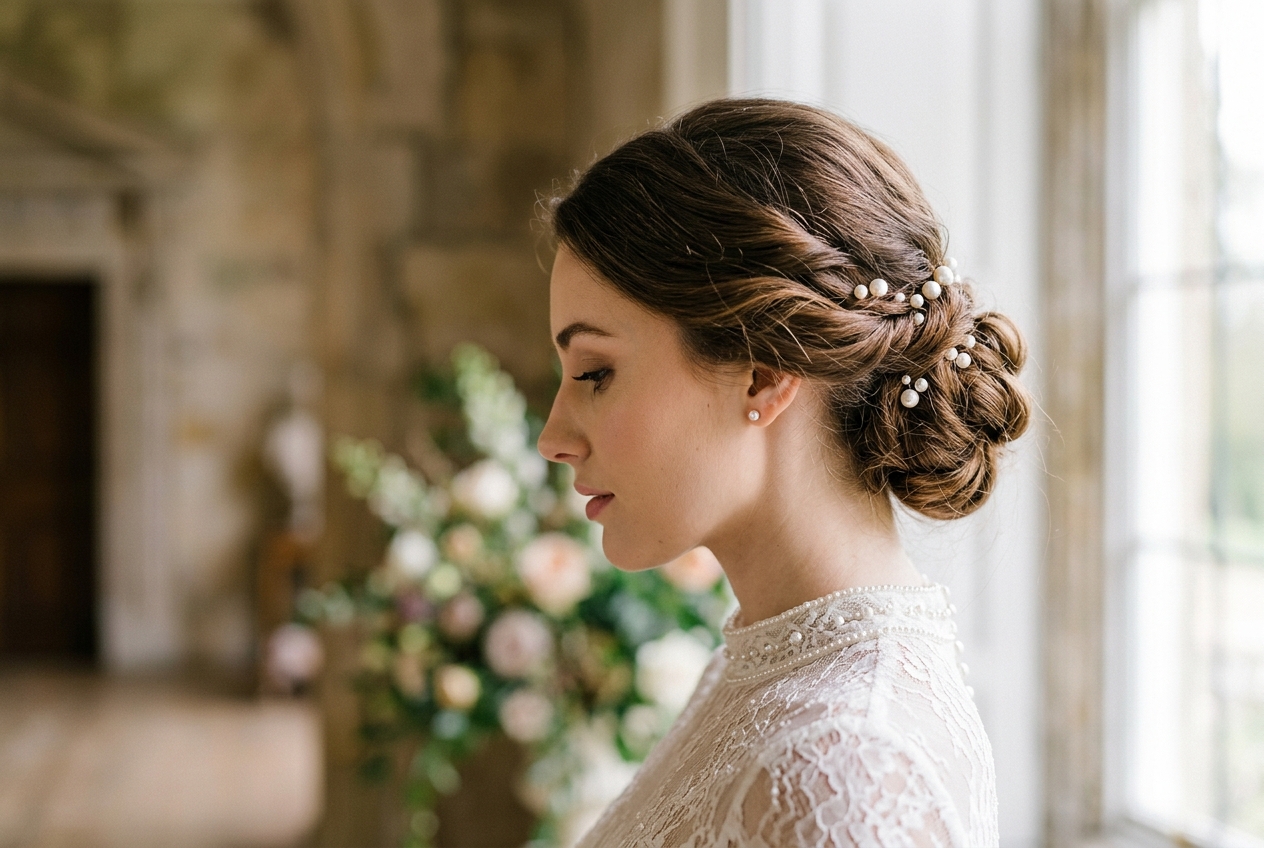
Updos
Hair gathered up and away from the face. Includes chignons, French twists, braided buns, and high updos.
Best for:
- Brides with a high-necked or strapless dress (shows off the neckline)
- Brides wearing a long veil or large hair accessory
- Summer or outdoor weddings (cooler than hair down)
- Formal or traditional weddings
- Brides who want a polished, classic look
Most popular updo styles:
- Low chignon — the classic. Sophisticated and timeless.
- Romantic messy bun — soft, with face-framing tendrils
- Braided updo — intricate, bohemian, perfect with flowers
- French twist — sleek, vintage, elegant
Hair down
Hair worn loose with curls, waves, or pin-straight. The most popular choice for modern brides.
Best for:
- Brides with naturally beautiful hair
- Beach, boho, or relaxed weddings
- Low-cut, low-back, or off-shoulder dresses
- Brides who feel more themselves with hair down
- Romantic, soft, modern looks
Most popular hair-down styles:
- Soft Hollywood waves — glamorous and timeless
- Beach waves — relaxed and natural
- Sleek straight — modern and chic
- Loose curls — romantic and feminine
Half-up half-down
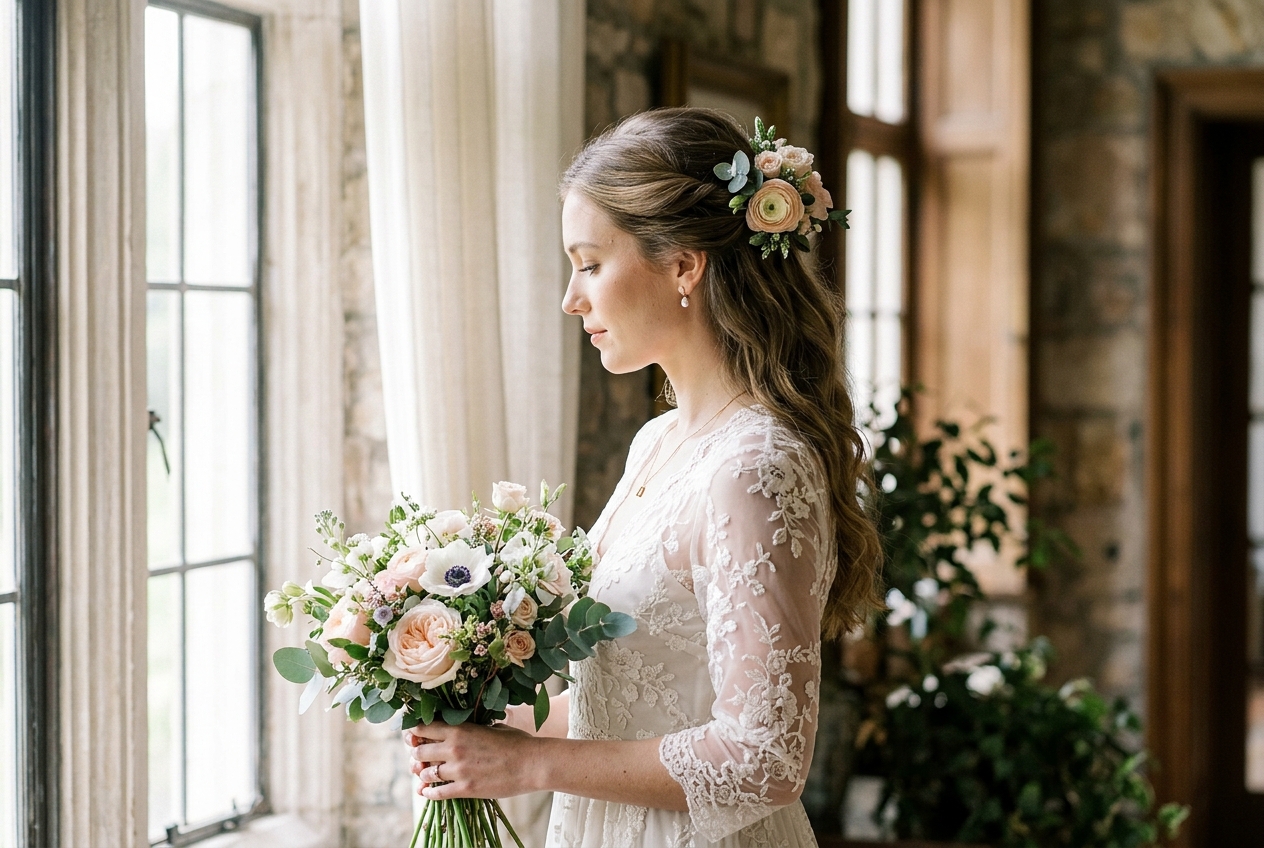
The top section gathered up, the rest worn loose. The most universally flattering style — works on almost every face shape and hair type.
Best for:
- Brides who can’t decide between up and down
- Round or heart-shaped face shapes
- Brides with medium to long hair
- Most dress styles
- Brides who want versatility (hair stays out of your face but you keep length)
Most popular half-up styles:
- Twisted half-up — soft twists secured with a pin
- Braided half-up — adds bohemian texture
- Crown braid half-up — princess-style
- Half-up bun — modern and casual
Hair with a veil
Your veil shapes your hair choice as much as your dress.
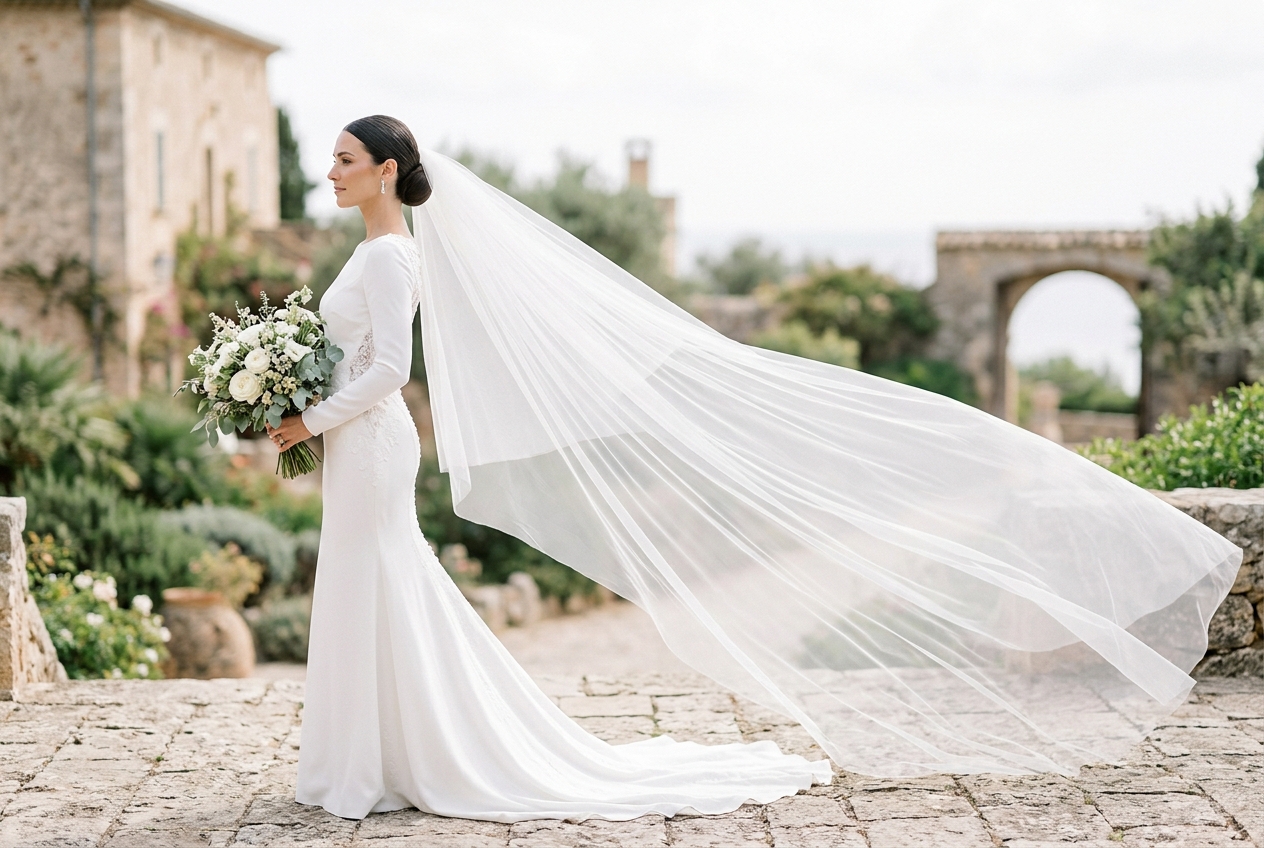
Cathedral veil (long, dramatic) — works best with sleek styles, low chignons, or hair pulled smoothly back so the veil is the focal point.
Mantilla veil (lace, draped over the head) — works with any style, but particularly beautiful with hair half-up or in soft waves.
Birdcage veil (short, vintage) — pairs perfectly with vintage updos or victory rolls.
Fingertip veil (medium length) — versatile, works with most styles.
How to choose your bridal hair
Step 1: Consider your dress
| Dress Style | Best Hair |
|---|---|
| Strapless | Updo or half-up (shows off the neckline) |
| High neck | Updo or hair pulled back |
| Low back | Hair down or low updo (so the back is visible) |
| Off-shoulder | Updo or to-the-side styles |
| Long sleeves | Anything works |
| Dramatic train | Updo (so the train is the focus) |
Step 2: Consider your face shape
- Oval — almost any style suits you
- Round — half-up styles add height; avoid full updos that emphasise width
- Square — soft waves or curls soften strong jaw
- Heart — half-up works best; avoid centre parts
- Long — side-swept styles or hair down adds width
Step 3: Consider your hair type
- Fine/thin hair — texture and volume matter; consider extensions
- Thick hair — almost any style works
- Curly/textured — embrace the natural texture; don’t fight it
- Long hair — you have the most options
- Short hair — accessories matter more; consider a vintage style
Step 4: Consider your wedding type
- Formal church wedding — updo or sleek styles
- Country house wedding — anything works
- Garden party — softer, more relaxed styles
- Beach wedding — hair down or soft updo (avoid stiff styles in humidity)
- Winter indoor wedding — anything (you don’t need to worry about wind)
The hair trial
A hair trial is essential. Don’t skip it.
When to book: 4-8 weeks before the wedding.
What to bring:
- Your veil (or a similar one)
- Any hair accessories you’re considering
- A photo of your dress
- 3-5 inspiration photos
- Your makeup (or have it done at the same time so you see the full look)
- Your phone (for photos at every angle)
What to do:
- Discuss your vision in detail
- Try 2 different styles if there’s time
- Take photos from front, side, and back
- Move your head, tilt it, simulate dancing
- Wear a similar coloured top to your dress
- Be honest if you don’t love it — better to know now
Booking and budget
| Item | Cost |
|---|---|
| Bridal hair trial | £40-80 |
| Wedding day bridal hair | £80-200 |
| Bridesmaid hair (each) | £40-100 |
| Mother of the bride hair | £40-80 |
| Travel to venue (if hair done on-site) | £30-100 extra |
| Total for a small bridal party | £280-700 |
Book your stylist 6-9 months before the wedding. Top stylists in London and major cities book up 12+ months ahead.
Day-of timing
For a 1pm wedding ceremony, your hair should start at:
- 7:30-8:00am for a bride with a long, complex updo
- 8:30-9:00am for a bride with a simpler style
- 9:30-10:00am for the bridesmaids (after the bride)
Allow 60-90 minutes for the bride and 30-45 minutes per bridesmaid. Build in buffer time — hair always takes longer than you think.
Day-before prep
- Wash your hair the day before, not on the day (clean hair is harder to style)
- Don’t try anything new the night before — no new products, no new treatments
- Sleep on it — if you have a complex style, sleep on a silk pillowcase
- Arrive on time for hair start — being late stresses everyone
Further reading
Frequently asked questions
What's the best bridal hairstyle?
There's no single best style — it depends on your dress, your veil, your face shape, and your personal style. The most popular UK bridal hair choices are: low chignon updos (sophisticated, works with any veil), half-up half-down (universally flattering and versatile), soft Hollywood waves down (romantic and modern), and braided updos (bohemian and detailed).
Should I wear my hair up or down for my wedding?
Both work beautifully. Wear it up if: you have a high necklined dress, a heavy veil, an outdoor summer wedding, or you want a formal traditional look. Wear it down if: you have a low-back or strapless dress, you naturally have great hair, you want a more relaxed look, or you're having a beach or boho wedding.
How much does bridal hair cost UK?
Professional bridal hair costs £80-250 in the UK. London prices are higher (£150-350). The cost typically includes a trial (£40-80) plus the wedding day styling (£80-200). Bridesmaid hair costs £40-100 each. Many stylists offer package deals for the whole bridal party.
When should I book my wedding hair stylist?
Book 6-9 months before the wedding for popular dates. Book your trial 4-8 weeks before the wedding day. Bring your veil, hair accessories, and a photo of your dress to the trial. Take photos of your trial hair from every angle so you can refer back later.