Bridesmaid Dress Colours: 2026 Guide
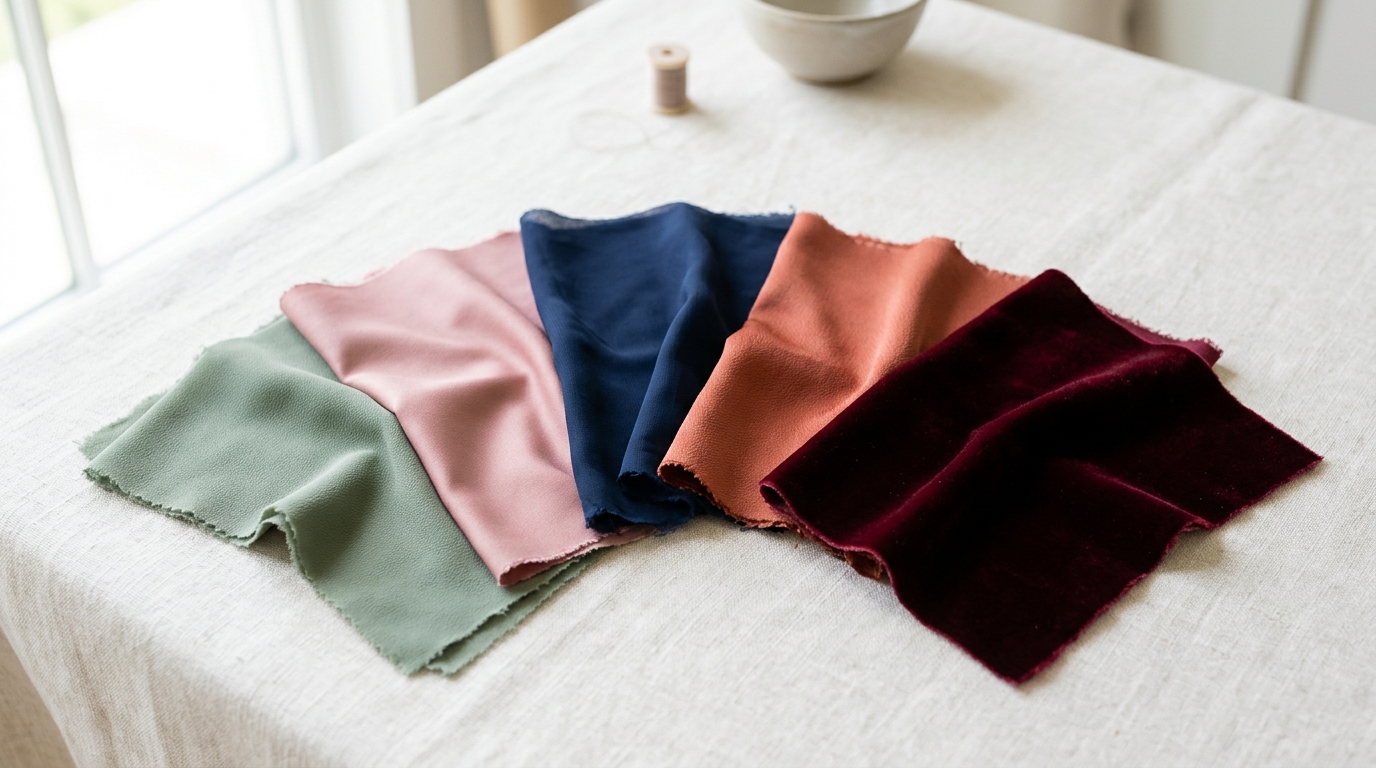
Key Takeaways
- Sage green is the #1 UK bridesmaid dress colour in 2026
- Choose colours that flatter EVERYONE in the bridal party — not just the bride
- Mix and match (different shades of the same colour) is more popular than identical
- Coordinate the colour with the wedding palette, season, and venue
- Order from one retailer to ensure colour consistency across all dresses
Choosing the right bridesmaid dress colour is one of the trickiest decisions in wedding planning. The colour needs to flatter everyone, photograph beautifully, match your wedding palette, and survive the season. This guide covers the most popular UK colours, how to choose, and the trends shaping 2026.
The most popular UK bridesmaid colours 2026
1. Sage green
The undisputed #1 colour. Universally flattering, photographs beautifully, works in every season, complements almost every wedding palette.
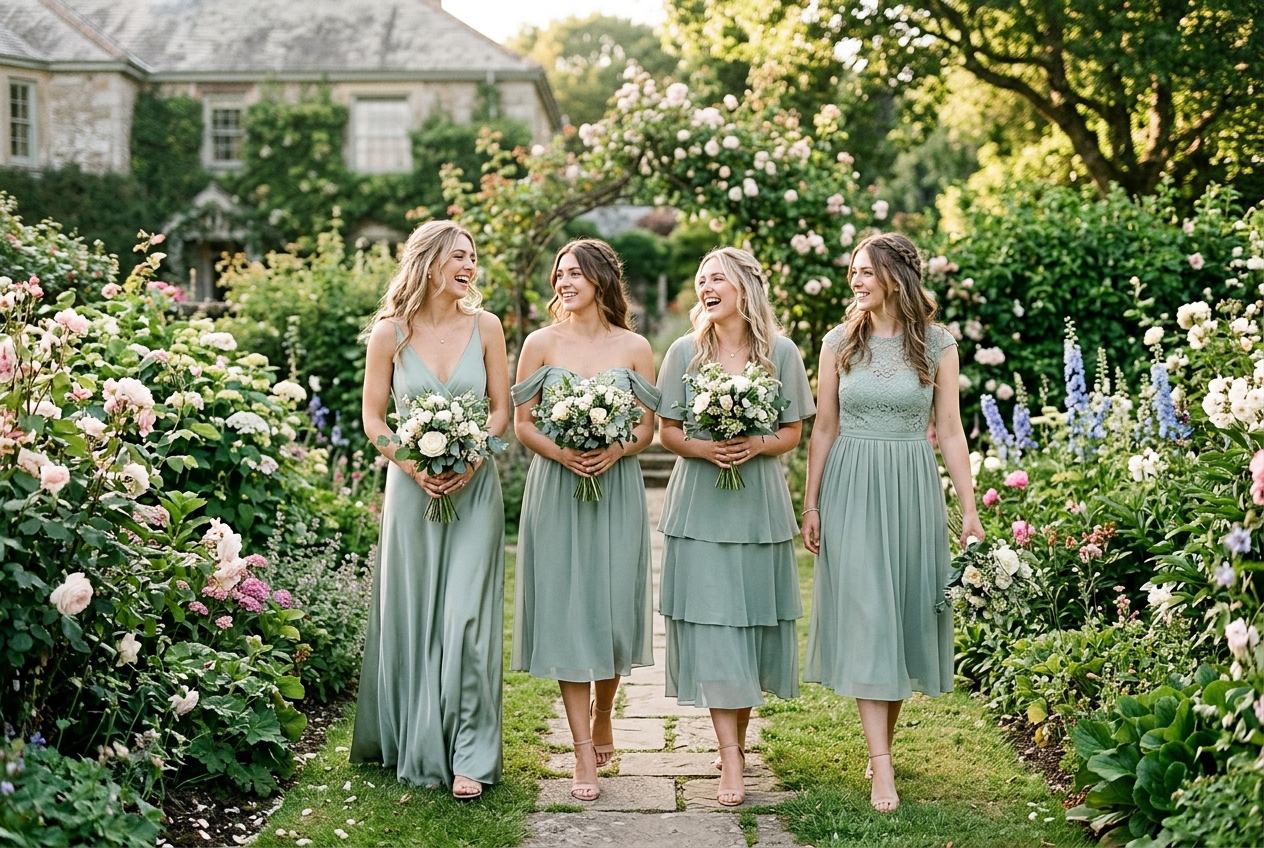
Why it works: Soft enough not to dominate, distinctive enough to look intentional. Looks great with greenery, white flowers, and gold accents. Best for: Spring, summer, autumn weddings; garden venues; any wedding palette.
2. Dusty pink (blush)
The second most popular colour, and a classic for romantic weddings.
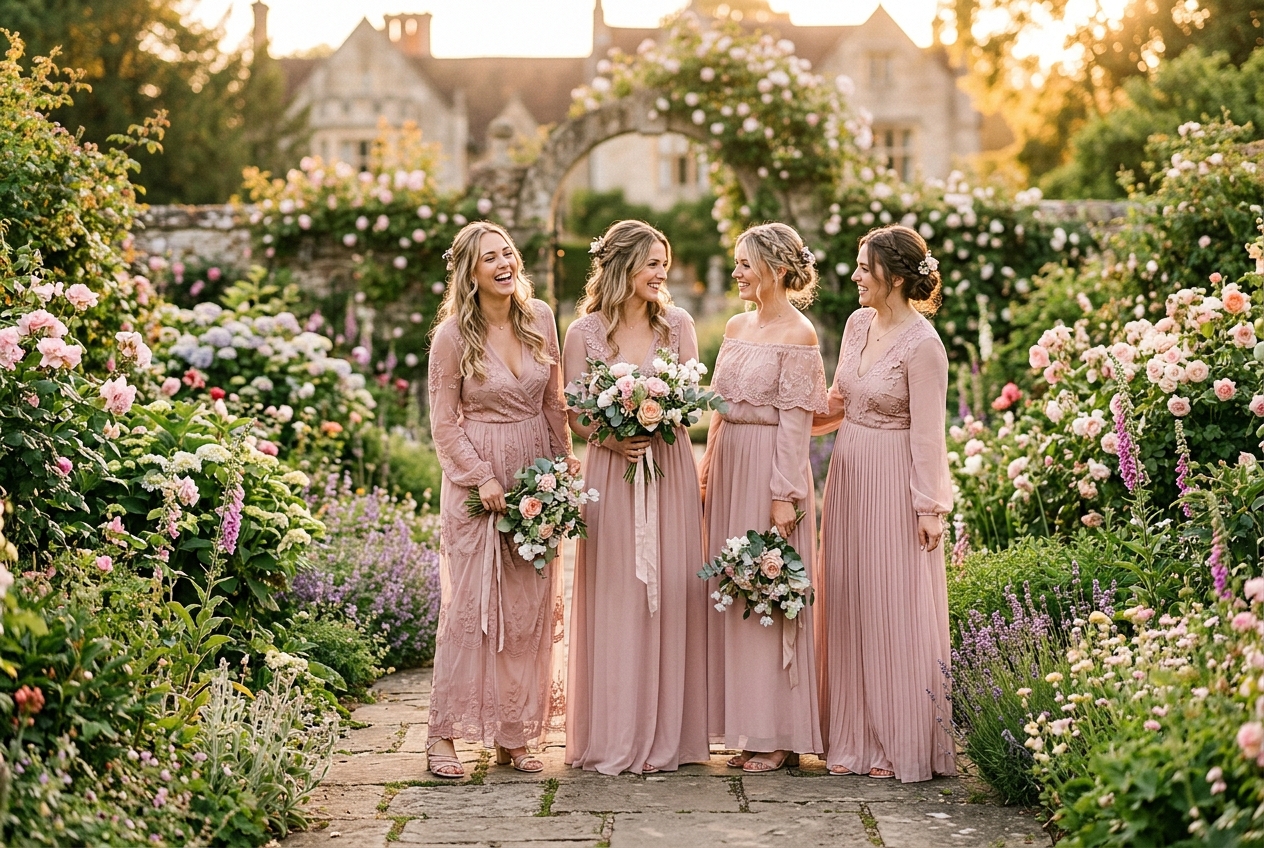
Why it works: Romantic, timeless, suits most skin tones, photographs softly. Best for: Spring/summer weddings, romantic themes, garden parties.
3. Navy blue
Classic, formal, sophisticated. The most versatile dark colour.
Why it works: Suits every body shape, formal without being severe, works year-round. Best for: Formal weddings, autumn/winter, hotel ballrooms.
4. Terracotta / rust
The trending warm tone. Earthy and rich.
Why it works: On-trend since 2023, perfect for autumn, suits a wider range of skin tones than pure orange. Best for: Autumn weddings, boho themes, rustic celebrations.
5. Burgundy / wine
Rich, dramatic, autumn-perfect.
Why it works: Sophisticated, photographs beautifully, perfect with white florals. Best for: Autumn/winter weddings, formal celebrations.
6. Emerald green
Bold, jewel-toned, increasingly popular.
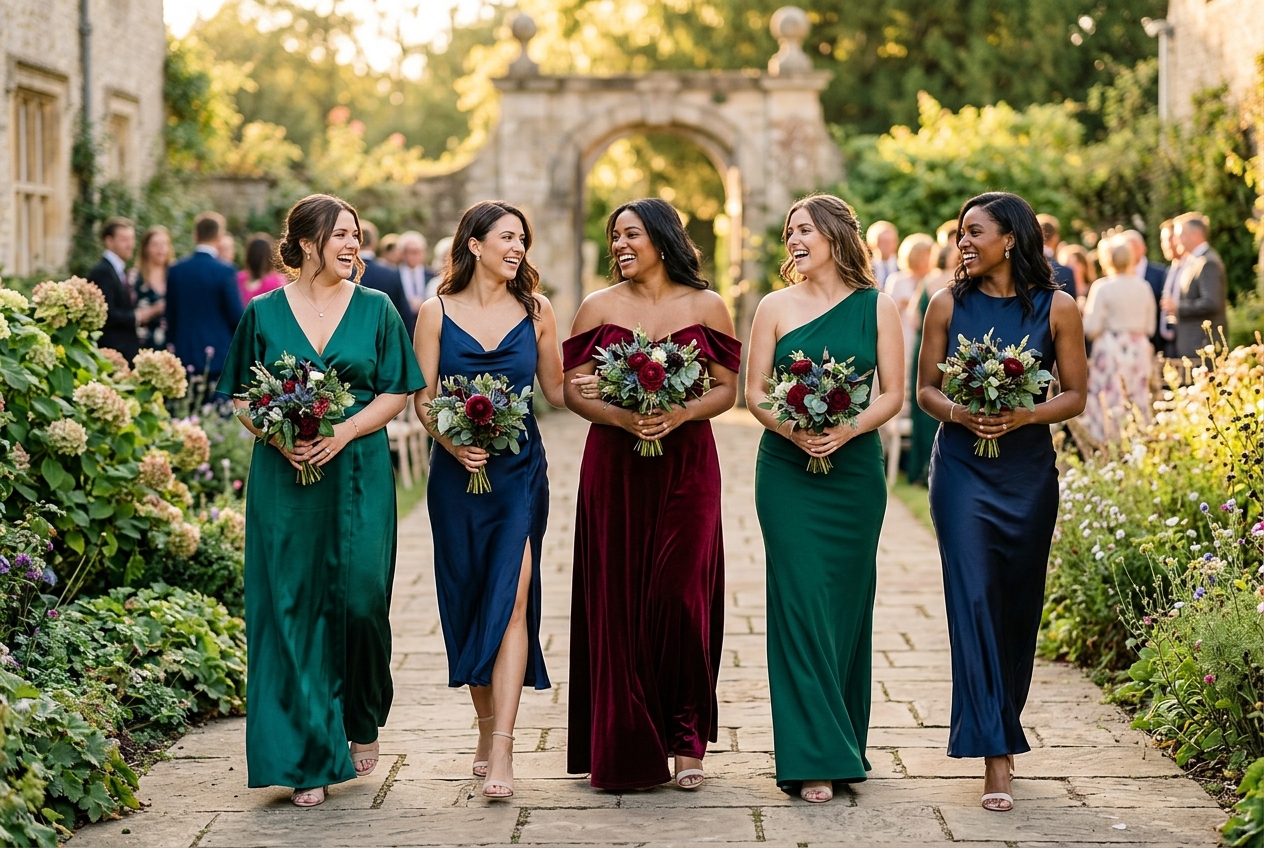
Why it works: Distinctive, luxurious, suits most skin tones. Best for: Formal weddings, jewel tone palettes, autumn/winter.
7. Champagne / cream / nude
Subtle, elegant, neutral. Verges on bride colour territory but works if the bride’s dress is distinctly white.
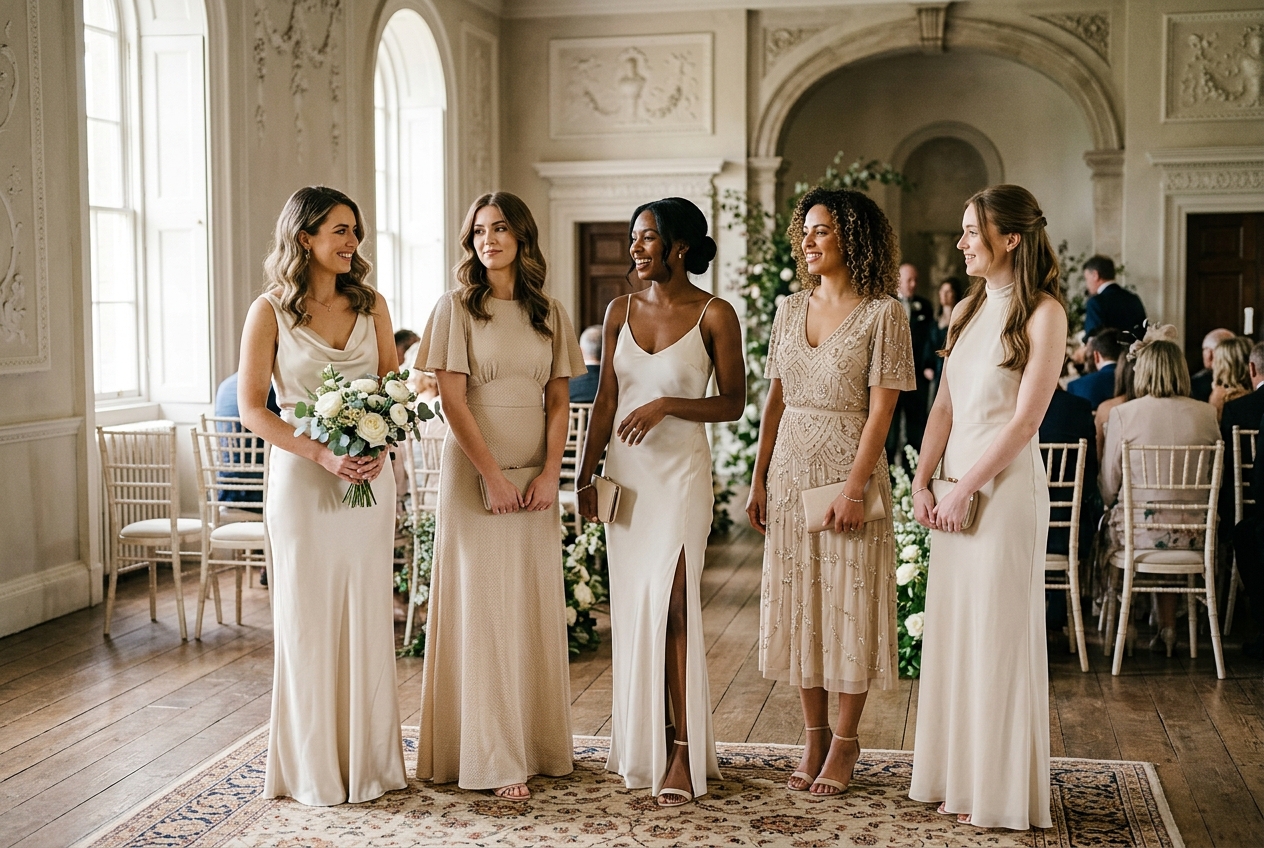
Why it works: Sophisticated, photographs beautifully, lets the bouquets stand out. Best for: Modern, minimalist weddings; neutral palettes; sophisticated celebrations.
8. Dusty blue
Soft, calm, romantic.
Why it works: Universally flattering, photographs beautifully, easy to coordinate. Best for: Spring/summer weddings, beach themes, romantic celebrations.
9. Lavender / lilac
Soft, feminine, romantic.
Why it works: Distinctive without being bold, perfect for spring. Best for: Spring weddings, garden venues, romantic themes.
10. Mustard / ochre
The trending warm yellow. Bold and modern.
Why it works: Distinctive, on-trend, perfect for autumn. Best for: Autumn weddings, boho themes, modern celebrations.
Mix and match approaches
Same colour, different shades
The easiest mix and match. All bridesmaids wear different shades of the same colour family.
Example: All bridesmaids in pinks — one in dusty rose, one in blush, one in coral, one in mauve.
Why it works: Cohesive but interesting. Each bridesmaid feels she has a unique dress.
Different shades within a palette
Each bridesmaid wears a different colour from the same palette.
Example: Jewel tones — emerald + navy + burgundy + plum Example: Pastels — blush + lavender + dusty blue + sage Example: Earth tones — terracotta + ochre + sage + cream
Why it works: More interesting than uniform; each colour suits different skin tones.
Different colours, same fabric
All bridesmaids wear the same fabric (e.g. chiffon) but different colours from a wider palette.
Why it works: The texture creates cohesion when the colours don’t.
How to choose the right colour
Step 1: Consider your wedding palette
Your bridesmaid colour should be one of your wedding’s main colours, OR a complementary colour. Don’t introduce a new colour with the bridesmaids.
Step 2: Consider the season
| Season | Best Colours |
|---|---|
| Spring | Sage, blush, dusty blue, lavender, pastels |
| Summer | Sage, blush, dusty blue, coral, white florals (no white dress) |
| Autumn | Terracotta, burgundy, mustard, navy, emerald |
| Winter | Navy, burgundy, emerald, deep purple, charcoal |
Step 3: Consider your venue
| Venue | Best Colours |
|---|---|
| Country house garden | Sage, blush, dusty blue, soft pastels |
| Barn / rustic | Terracotta, mustard, sage, dusty rose |
| Hotel ballroom | Navy, emerald, burgundy, gold |
| Beach | Pale blue, coral, white florals, sand |
| Church + reception venue | Anything formal — navy, emerald, burgundy |
Step 4: Consider your bridesmaids
Test the colour against everyone’s skin tone:
- Fair skin suits cool colours (blush, dusty blue, sage, lavender)
- Medium skin suits most colours (terracotta, sage, navy, jewel tones)
- Olive skin suits warm colours (terracotta, mustard, emerald, gold)
- Deep skin suits jewel tones (emerald, ruby, gold, deep purple)
If you have a mix of skin tones, mix-and-match within a palette works better than one identical colour.
Step 5: Order swatches
Most retailers send fabric swatches free or for a small fee. Order them and check the colour:
- In your venue’s natural light
- In photos (use your phone)
- Against the bouquet flowers
- Against the bride’s dress
Step 6: Test on a real bridesmaid
Have one bridesmaid try the dress (or order a sample). Take photos. The dress on a body looks completely different from a swatch.
Colours to avoid
| Colour | Why |
|---|---|
| White, ivory, cream | Reserved for the bride |
| Champagne (close to bride’s dress) | Risk of clashing or looking like a second bride |
| Neon colours | Clash with formal photography |
| Pure black for daytime | Traditional UK weddings consider this funeral-formal |
| Exact same colour as the venue carpet | Bridesmaids disappear in photos |
| Anything that washes out 2+ bridesmaids | Compromise rather than force it |
Coordinating with everything else
The bridesmaid colour should coordinate with:
- The wedding flowers
- The table linens
- The groom and groomsmen accessories (ties, pocket squares)
- The bride’s bouquet
- The venue’s natural colours
- The wedding stationery
It does NOT need to match these exactly — it should complement them.
For a real wedding example, Drew Afualo and Pili Tanuvasa coordinated dark-chocolate dresses and suits. The shared shade connected different outfit styles.
Further reading
- Bridesmaid Dresses UK — full dress guide
- Wedding Colour Schemes — full palette guide
- Wedding Themes — themes by colour
- Bridesmaid Hairstyles — coordinating hair
- Dresses on Weddings Hub — UK retailers
Frequently asked questions
What is the most popular bridesmaid dress colour 2026?
Sage green is the most popular bridesmaid dress colour in the UK for 2026. It's universally flattering, photographs beautifully, and works in every season. Other top choices: dusty pink (blush), navy blue, terracotta, and emerald green.
How do I choose a bridesmaid dress colour?
Consider: your wedding colour palette, the season, your venue, your bridesmaids' skin tones, and what photographs well. Order fabric swatches from your chosen retailer and look at them in your venue's natural light. Test the colour on at least 2 different skin tones before committing.
Can bridesmaids wear different colours?
Yes — mix and match is now more popular than identical. The most popular approach is the same colour in different shades (e.g. all dusty pinks). The next most popular is different colours from the same palette (e.g. jewel tones: emerald + navy + burgundy). The least popular is completely different unrelated colours.
What colours should bridesmaids avoid wearing?
Avoid: white, ivory, cream (the bride's colours); colours that exactly match the bride's veil or accessories; black at very formal daytime weddings (acceptable at evening); neon or extremely bright colours (clashes with formal photography); and colours that wash out one or more of the bridesmaids.