Engagement Ring Guide: Styles & Settings
Key Takeaways
- The average UK engagement ring costs £1,000-2,000 — but there's no 'correct' amount to spend
- The four Cs (cut, colour, clarity, carat) determine a diamond's quality and price
- Cut is the most important C — a well-cut smaller diamond sparkles more than a poorly cut larger one
- Alternative stones (sapphire, moissanite, lab-grown diamond) offer the look for 30-70% less
- Get the ring size right — borrow one of their rings or ask a close friend to find out subtly
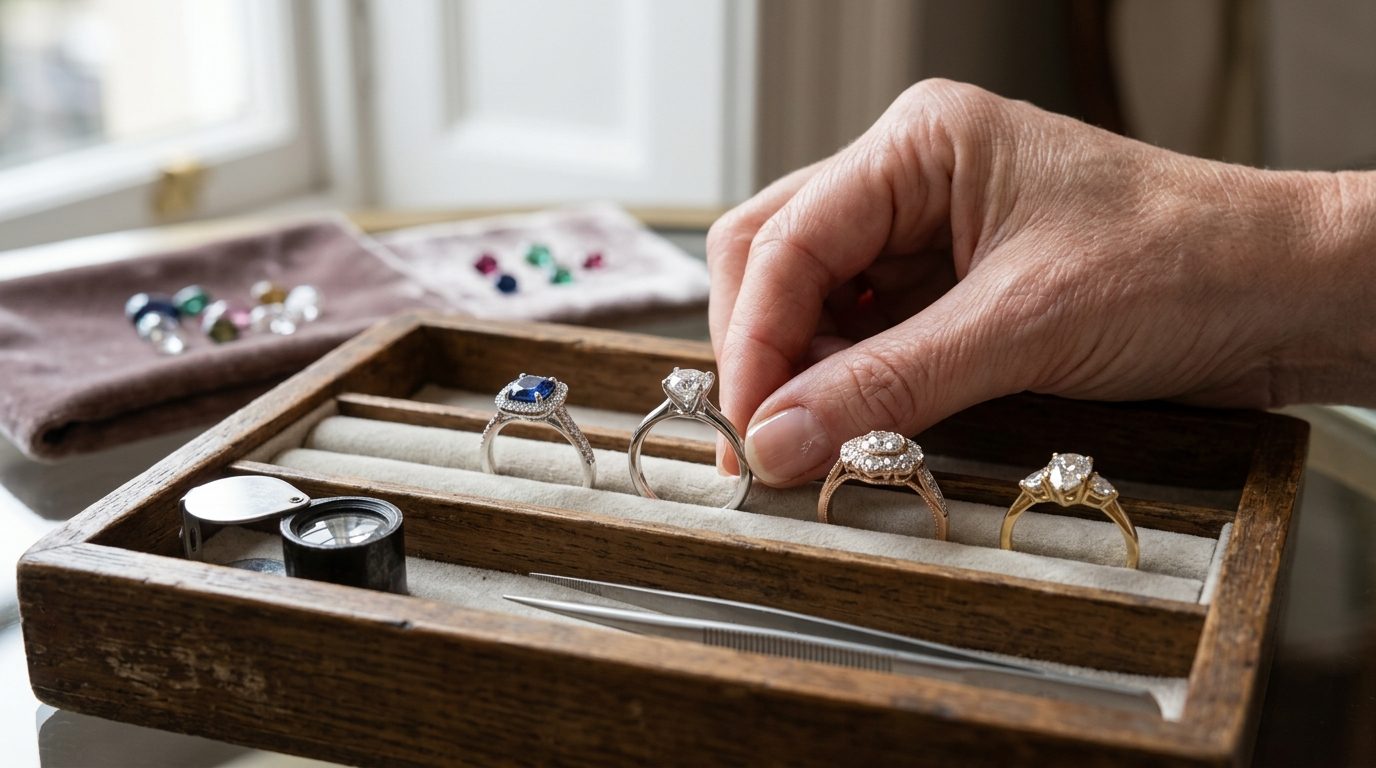
Choosing an engagement ring is one of the most significant purchases you’ll make — emotionally and financially. It’s also one where most people have no expertise. You’re comparing carats, cuts, and settings for the first time while trying to guess what your partner will love.
This guide makes it manageable.
Ring styles
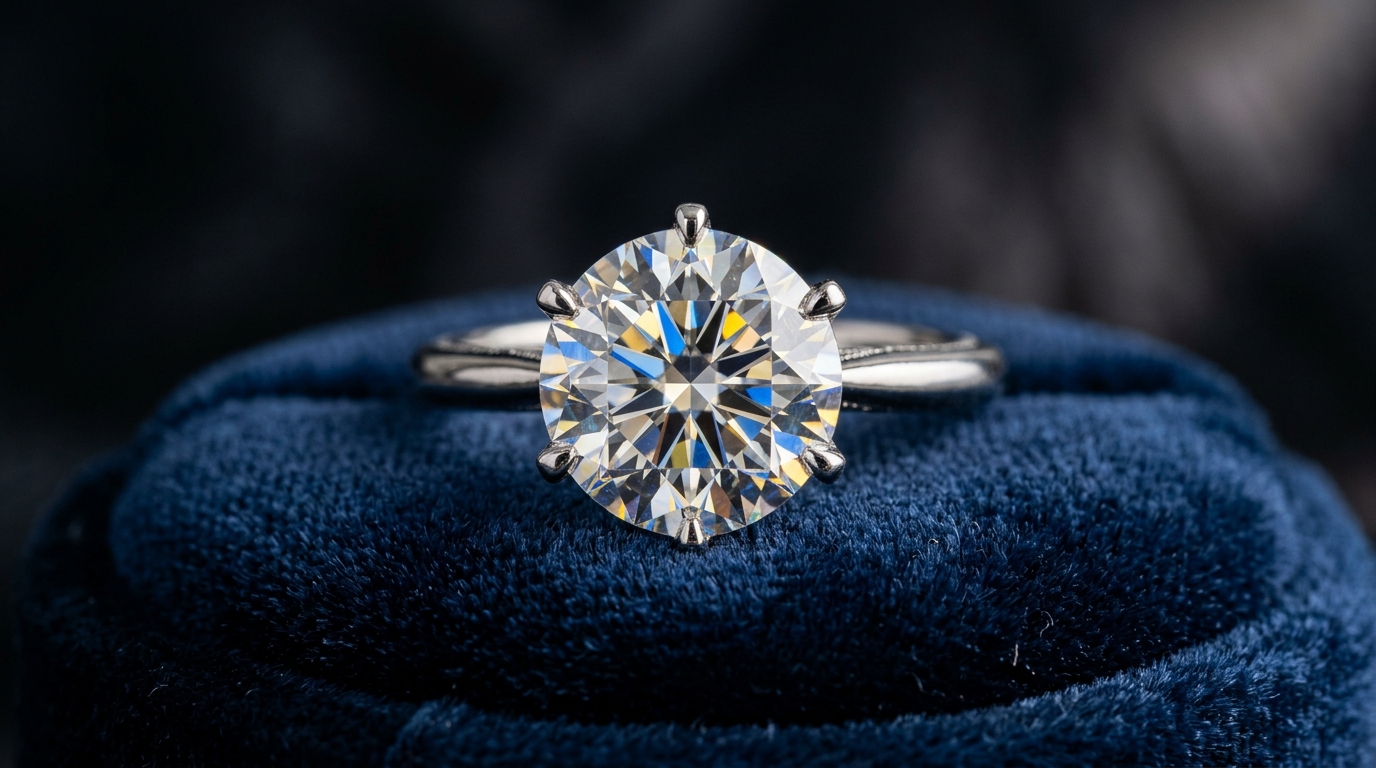
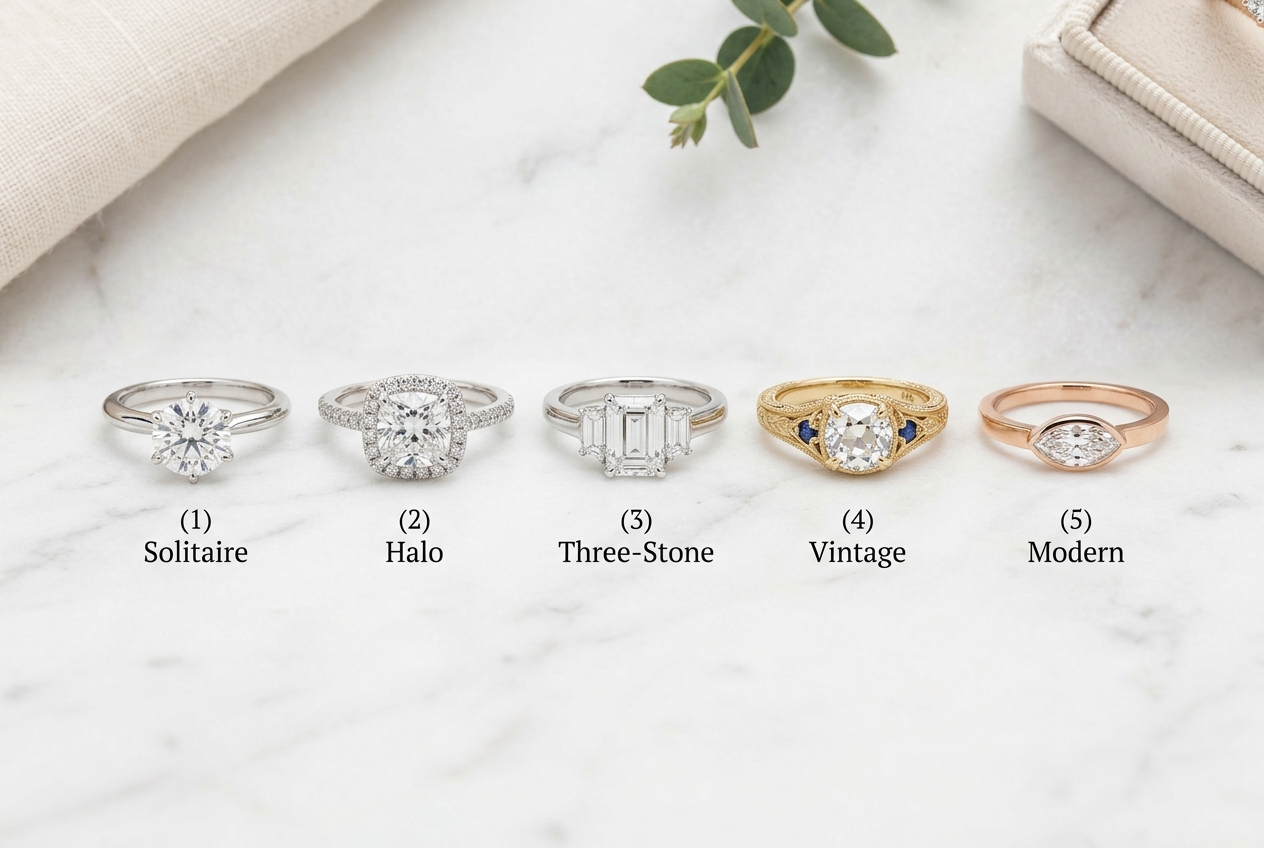
Solitaire (the classic)
A single stone on a plain band. Timeless, elegant, and the most popular style worldwide.
Best for: Classic tastes, anyone who wants the stone to be the focus. Cost range: £500-10,000+ (depends entirely on the stone).
Halo
A central stone surrounded by a ring of smaller diamonds. Makes the centre stone look larger and adds sparkle.
Best for: Maximum sparkle on a budget (the halo makes a smaller stone look bigger). Cost range: £800-5,000+.
Three-stone
Three stones across the band — traditionally representing past, present, and future. The centre stone is usually larger.
Best for: Symbolic couples, statement rings. Cost range: £1,000-6,000+.
Cluster
Multiple small stones grouped together to create the appearance of one larger stone. Vintage feel, excellent value.
Best for: Budget-conscious buyers who want sparkle and impact. Cost range: £300-2,000.
Vintage / art deco
Detailed metalwork, milgrain edges, filigree, and sometimes coloured stones. Either genuine antique or vintage-inspired modern designs.
Best for: Unique tastes, lovers of history and character. Cost range: £500-5,000+ (antique) or £400-3,000 (vintage-inspired).
Pavé band
Small diamonds set into the band itself, adding sparkle from every angle.
Best for: Those who want sparkle without a large centre stone. Cost range: £600-3,000+.
Stones
Diamonds: the four Cs
| Factor | What It Means | Impact on Price |
|---|---|---|
| Cut | How well the diamond reflects light (sparkle) | Highest impact — always prioritise cut |
| Colour | How white/colourless the diamond is (D=best, Z=yellow tint) | High impact — stay in D-H range |
| Clarity | How few inclusions (imperfections) are visible | Moderate impact — VS1-VS2 is excellent value |
| Carat | The weight (and therefore size) of the diamond | Highest visible impact — but cut matters more |
The golden rule: Prioritise cut over everything else. A well-cut 0.8 carat diamond sparkles more than a poorly cut 1.2 carat diamond. Cut is what makes a diamond beautiful.
Budget tip: Go slightly below round carat numbers. A 0.90 carat diamond looks almost identical to a 1.00 carat but costs 15-20% less. Same for 1.90 vs 2.00.
Alternative stones
| Stone | Cost vs Diamond | Durability (Mohs) | Best For |
|---|---|---|---|
| Lab-grown diamond | 50-70% less | 10/10 | Identical look, ethical, best value |
| Moissanite | 80-90% less | 9.25/10 | Exceptional sparkle, budget-friendly |
| Sapphire | 40-60% less | 9/10 | Colour (blue, pink, yellow), durability |
| Ruby | Similar to diamond | 9/10 | Bold colour, traditional in some cultures |
| Emerald | 30-50% less | 7.5/10 | Distinctive colour, less durable |
| Morganite | 80-90% less | 7.5/10 | Blush pink, trendy, affordable |
Lab-grown diamonds are the biggest trend in engagement rings. They’re real diamonds — same chemical composition, same sparkle, same hardness — but grown in a lab instead of mined. Cost: 50-70% less than equivalent natural diamonds.
Metals
| Metal | Cost | Durability | Colour | Best For |
|---|---|---|---|---|
| Platinum | ££££ | Excellent | White/silver | Luxury, hypoallergenic |
| 18ct white gold | £££ | Good | White/silver | Classic, popular, slightly cheaper than platinum |
| 18ct yellow gold | £££ | Good | Warm gold | Traditional, warm skin tones |
| 18ct rose gold | £££ | Good | Pink gold | Romantic, trendy |
| 9ct gold (white/yellow/rose) | ££ | Good | Various | Budget-friendly |
| Palladium | ££ | Excellent | White/silver | Platinum alternative, lighter weight |
White gold needs replating every 1-3 years (the white colour is rhodium plating over yellow gold). Platinum doesn’t need replating but develops a patina over time.
How to choose
Finding out what they like
- Look at what they already wear. Gold or silver? Delicate or chunky? Simple or detailed? Their existing jewellery tells you their taste.
- Check their Pinterest or Instagram. If they’ve been saving ring images, you have your answer.
- Ask their friends or family. A close friend often knows exactly what they’d choose.
- Pay attention to comments. “I love that ring” when watching a film or spotting one in a shop window is a direct hint.
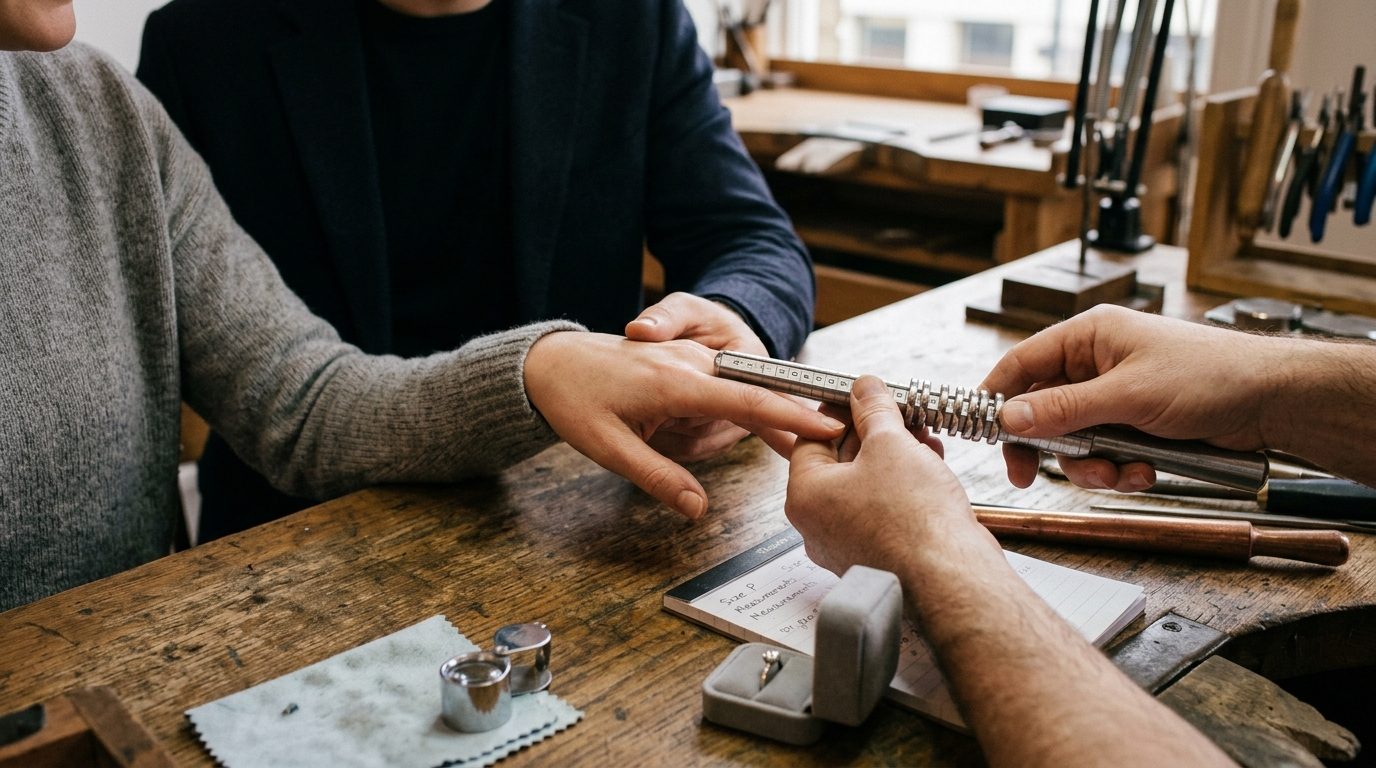
Getting the ring size
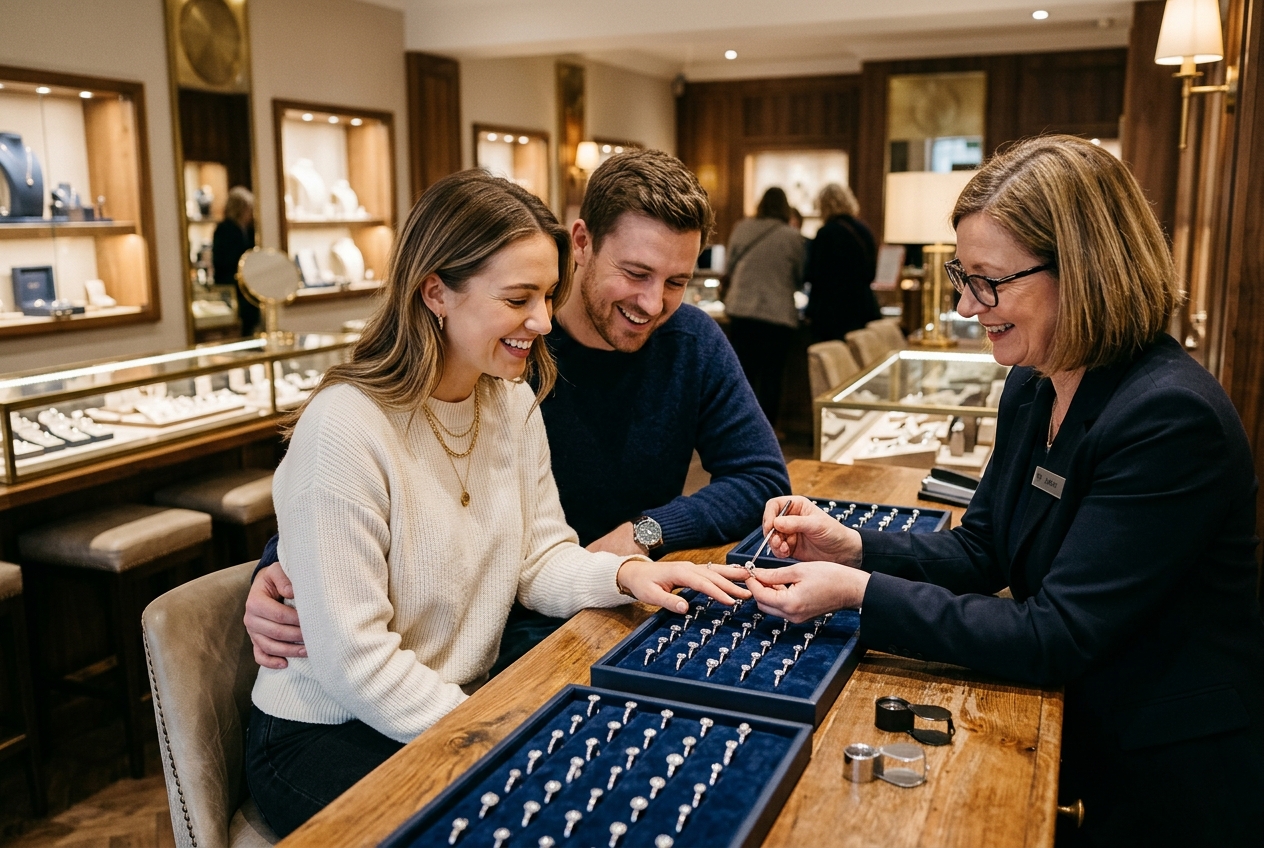
- Borrow a ring they wear on their ring finger and take it to a jeweller
- Use a ring sizer (Amazon, £3) while they’re asleep or in the shower
- Ask a friend to take them ring shopping under a different pretence
- Guess and resize. Most jewellers offer free resizing within 30-60 days
Where to buy in the UK
| Retailer | Type | Price Range | Best For |
|---|---|---|---|
| Tiffany & Co | Luxury brand | £2,000-20,000+ | The brand name, classic designs |
| Hatton Garden (London) | Jewellery quarter | £500-10,000+ | Best value for diamonds, huge choice |
| Vashi | Online/showroom | £500-5,000 | Design your own, lab-grown options |
| Brilliant Earth | Online | £500-5,000 | Ethical sourcing, custom designs |
| Ernest Jones / H. Samuel | High street | £200-3,000 | Accessible, try before you buy |
| Etsy | Independent jewellers | £200-3,000 | Unique, handmade, vintage |
| Auction houses | Antique rings | £300-5,000+ | Genuine antique, unique character |
Hatton Garden in London is the UK’s jewellery quarter — dozens of independent jewellers within a few streets. It’s the best place to compare and negotiate in person.
Costs at a glance
| Budget | What You Get |
|---|---|
| Under £500 | 9ct gold, small diamond or moissanite, simple setting |
| £500-1,000 | 18ct gold, 0.3-0.5ct diamond or lab-grown 0.7-1ct |
| £1,000-2,000 | 18ct gold/platinum, 0.5-0.8ct diamond or lab-grown 1ct+ |
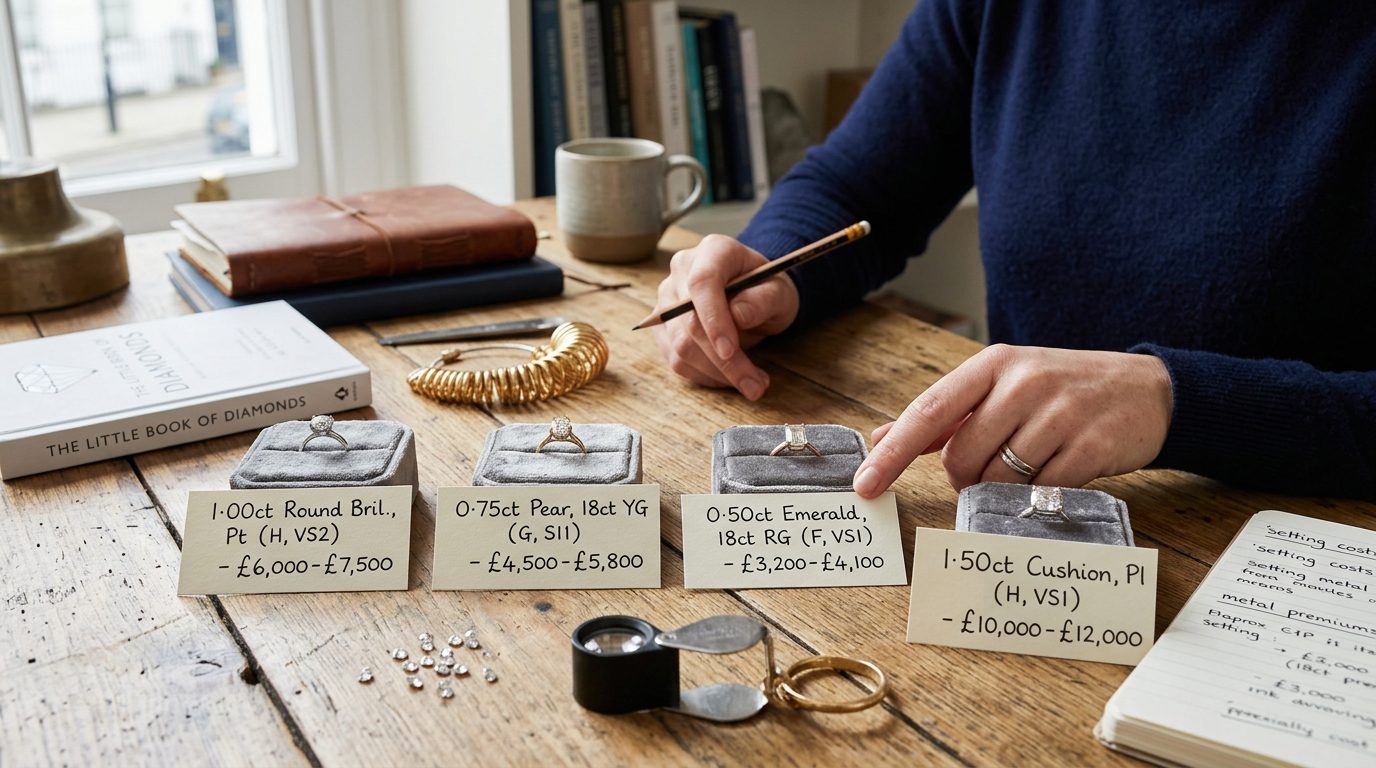
| £2,000-5,000 | Platinum, 0.8-1.2ct diamond, high-quality cut and colour |
| £5,000+ | Platinum, 1ct+ diamond, premium cut/colour/clarity |
Insurance
Engagement rings should be insured from the day you buy them. Options:
- Add to home contents insurance — usually the cheapest option if you already have a policy
- Specialist jewellery insurance (T.H. March, JBB Insurance) — covers loss, theft, and damage worldwide
- Cost: £30-100 per year for a £1,000-3,000 ring
Keep the receipt, valuation certificate, and any diamond certificates safe — you’ll need them for insurance claims.
Further reading
- Proposal Ideas — creative ways to ask
- Engagement Party Ideas — celebrating the yes
- Engagement Announcement Ideas — sharing the news
- Wedding Rings — find jewellers on Weddings Hub
- Average Wedding Cost UK — budgeting for the wedding
Frequently asked questions
How much should you spend on an engagement ring UK?
The average UK engagement ring costs £1,000-2,000. The old 'three months' salary' rule is a marketing invention from De Beers and has no basis in etiquette. Spend what you can comfortably afford without going into debt. A £300 ring chosen with love means more than a £5,000 ring bought on credit.
What is the most popular engagement ring style in the UK?
The round brilliant-cut solitaire on a plain band is the most popular engagement ring in the UK. Oval cuts have surged in popularity since 2020. Halo settings (a central stone surrounded by smaller diamonds) and three-stone rings are the next most popular. Vintage and art deco styles are growing.
Should I choose the ring or let my partner choose?
It depends on your partner's personality. If they've dropped hints about what they like, choose it as a surprise. If they have strong taste and specific preferences, either shop together or propose with a temporary/placeholder ring and choose the real one together. There's no wrong approach — the thought matters more than the surprise.
Are lab-grown diamonds worth it?
Lab-grown diamonds are chemically and optically identical to mined diamonds but cost 50-70% less. A 1-carat lab-grown diamond costs £800-2,000 vs £3,000-8,000 for a natural diamond. They're ethical, sustainable, and visually indistinguishable. The only downside: they may not hold resale value as well as natural diamonds.
How do I find out my partner's ring size secretly?
Borrow a ring they wear on their ring finger and take it to a jeweller for sizing. Ask a close friend or family member to find out (they may already know). Use a ring sizer from Amazon (£3). If all else fails, most jewellers offer free resizing within a certain period after purchase.