Home / Articles / Wedding Trends
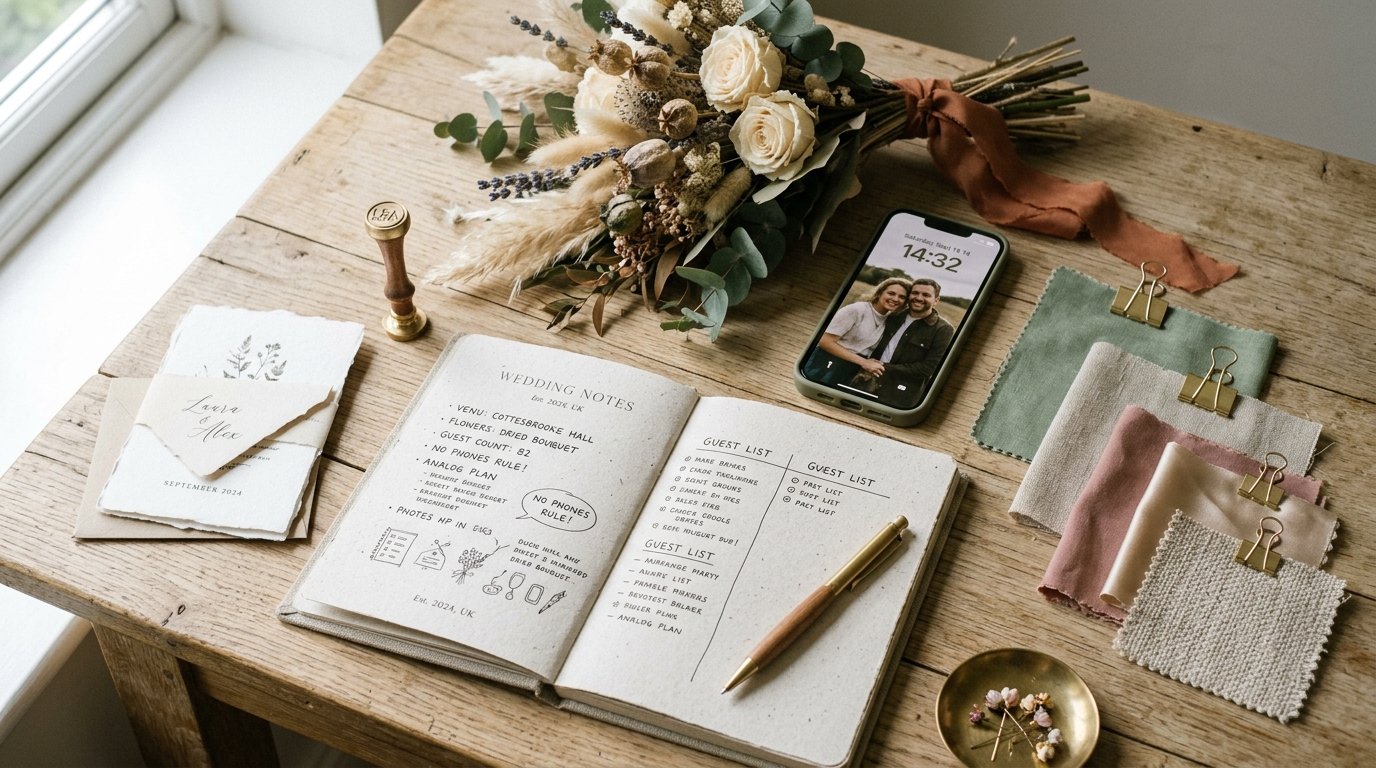
Going Analog: No-Phone Weddings Replace Photo Booths
Key Takeaways
- The analog wedding theme replaces digital photo booths (£600-£1,200) with disposable cameras (£180-£350 for 100 guests)
- Polaroid guest books outperform traditional guest books on social shares by 3:1, per wedding stationery suppliers
- The no-phone wedding extends the unplugged ceremony concept across the whole day — phones away for most or all events
- 38% of UK couples in 2026 include at least one analog photography element in their wedding
- Film processing turnaround for 100 disposables is 3-5 weeks via UK labs — factor this into planning
Why analog is back
The digital photo booth was the defining interactive wedding photography element of 2018-2023. A touchscreen, a printer, a backdrop, a box of props — the format was everywhere. At its peak, you could not attend a UK wedding reception without finding a photo booth in the corner, queue and all.
The decline has been swift. Digital photo booth hire companies in the UK report a 28% drop in bookings for 2026 versus 2024. The format has not disappeared, but it has moved from default to option, and in the 25-35 age group planning weddings in 2026, it has an air of slightly dated ubiquity.
The replacement is not more technology. It is less.
Disposable cameras, Polaroid instant prints, and 35mm film — aesthetics that the wedding market last saw in the early 2000s — have returned not as nostalgia for an older generation but as a genuine preference among couples who grew up entirely with digital photography and specifically want something different.
The drivers are cultural and aesthetic:
The grain aesthetic. Instagram and TikTok film presets have been mainstream since 2019. The generation planning weddings in 2026 has spent years applying digital filters to simulate grain, light leaks, and warm tones. The logical extension is to use the real thing. A genuine disposable camera image has a quality that even the most accurate filter cannot replicate.
The delay as experience. Digital photography delivers results immediately. Disposable camera results arrive 3-5 weeks later. This delay — historically seen as a drawback — is now reframed as a feature. The wait creates anticipation. Opening the envelope from the film lab becomes an event in itself.
The cost advantage. A digital photo booth costs £600-£1,200 for a hire package. A full disposable camera setup for 100 guests costs £180-£350. The saving funds something else — flowers, food, music.
The tactile object. A Polaroid print is a physical object. You can hold it, write on the back of it, stick it in a book. In an era of digital-everything, the physicality has become a differentiator.
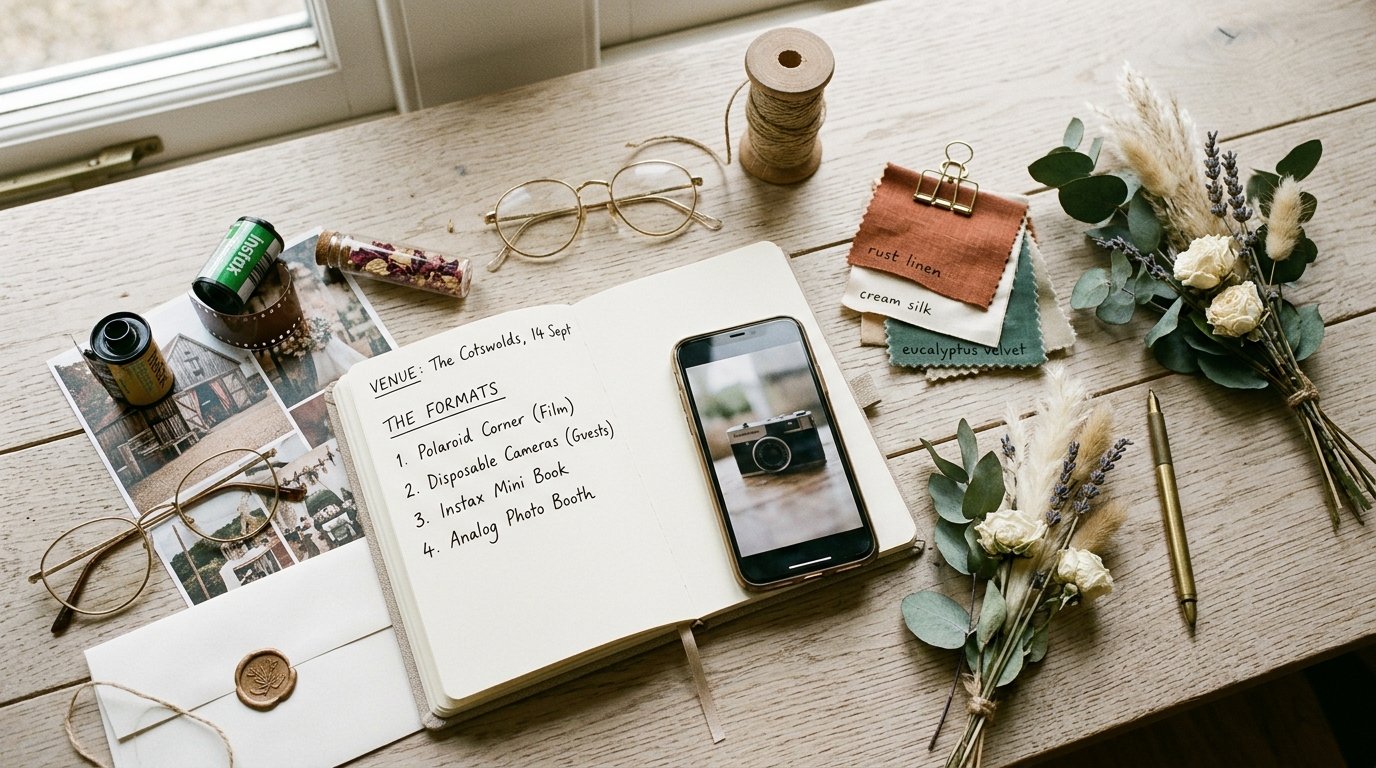
The formats
Disposable cameras on tables
The simplest and most popular analog format. One or two disposable cameras per table, placed between the centrepiece and the place settings. Guests photograph each other, the room, candid moments. At the end of the evening, cameras are collected in a labelled box or basket.
Setup cost: £30-£72 (10-12 cameras at £3-£6 each) Processing cost: £96-£144 (12 cameras at £8-£12 each including scans) Total: £126-£216
For a themed setup from a specialist supplier — branded wrappers, collection pouches, processing service included — costs range from £180-£350.
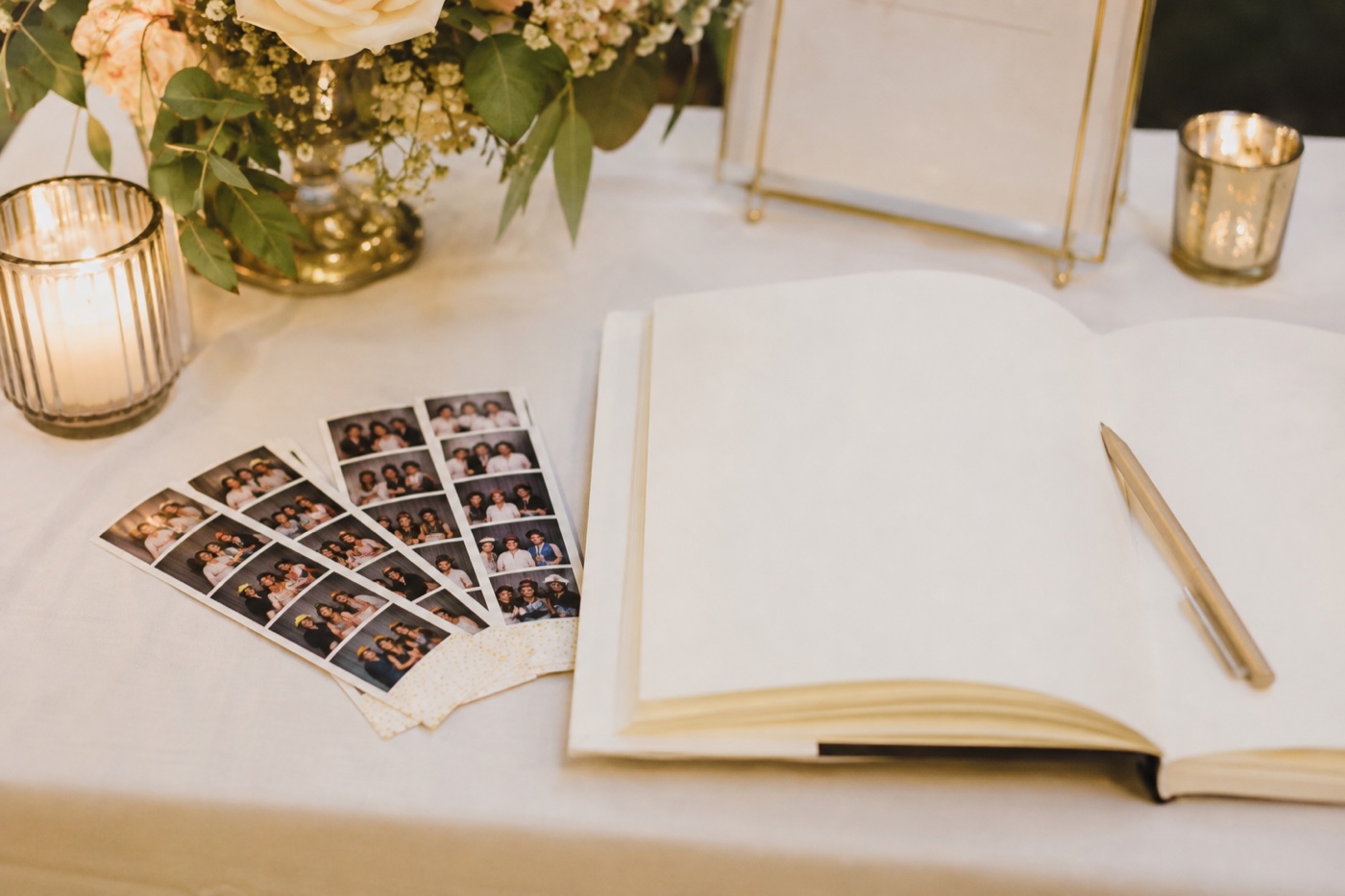
Polaroid guest book
A Polaroid camera (Instax Mini 11 at £70-£80, or Instax Wide at £90-£110) with 3-4 packs of film (£18-£22 per 20-pack) set up on a dedicated table. Guests photograph themselves or each other, the print develops in 60-90 seconds, and they stick it into a blank book with a written message. Film cost per print: approximately £1. For 100 guests (assuming each guest takes one print): approximately £100-£110 in film.
The Polaroid guest book is the highest-engagement format. Weddings Hub spoke with two UK stationery suppliers who track how often their products appear in post-wedding social media. The Polaroid guest book generates an average of 3x more social mentions than a traditional written guest book.
35mm film photography
Some couples hire a film photographer as their primary photographer, or as a second shooter alongside a digital photographer. 35mm film photographers typically charge a premium (expect £600-£1,500 for the day versus £1,500-£3,000 for a comparable digital photographer), but they also charge for film stock and processing (£100-£200 extra).
The results are dramatic — 35mm colour negative film has a rendering of skin tones and natural light that remains genuinely distinct from even the best digital processing. The constraint of 36 exposures per roll also changes the shooting style: film photographers tend to be more deliberate, more selective, and more attuned to decisive moments.
For couples who want the most distinctive photography of any 2026 wedding, 35mm film is the highest-effort, highest-reward option.
The full no-phone day
The extreme version: phones collected at the entrance in labelled pouches (similar to Yondr pouches used at concerts), held for the ceremony and reception, returned at the end.
This creates a genuinely immersive analog experience — guests cannot check social media, send messages, or photograph anything except with the disposable cameras or Polaroid equipment provided. The atmosphere is, by all accounts, notably different: more conversation, more dancing, more eye contact, less ambient screen-glow.
Only 8% of UK couples in 2026 go this far. The logistical requirement is significant: labelling and storing 100+ phones, managing the inevitable “I have a child in hospital / I’m a doctor on call” exceptions, and the staff overhead of the collection process. Most couples who want an analog feel stop short of full phone collection.
What it costs compared with a digital photo booth
| Format | Setup cost | Processing/consumables | Total |
|---|---|---|---|
| Digital photo booth (hire) | £600-£1,200 | Included | £600-£1,200 |
| Disposable cameras (DIY) | £30-£72 | £96-£144 | £126-£216 |
| Disposable cameras (supplier package) | £180-£350 | Included | £180-£350 |
| Polaroid guest book | £70-£110 (camera) | £100-£110 (film) | £170-£220 |
| 35mm film photographer | £600-£1,500/day | £100-£200 (film + processing) | £700-£1,700 |
| Full no-phone setup (Yondr-style) | £300-£600 (pouch hire) | £0 | £300-£600 |
The cost gap between a digital photo booth and an analog setup is significant. Couples who would have spent £800 on a photo booth can redirect that budget and achieve a more distinctive result.
A first-hand account: Brighton, 2025
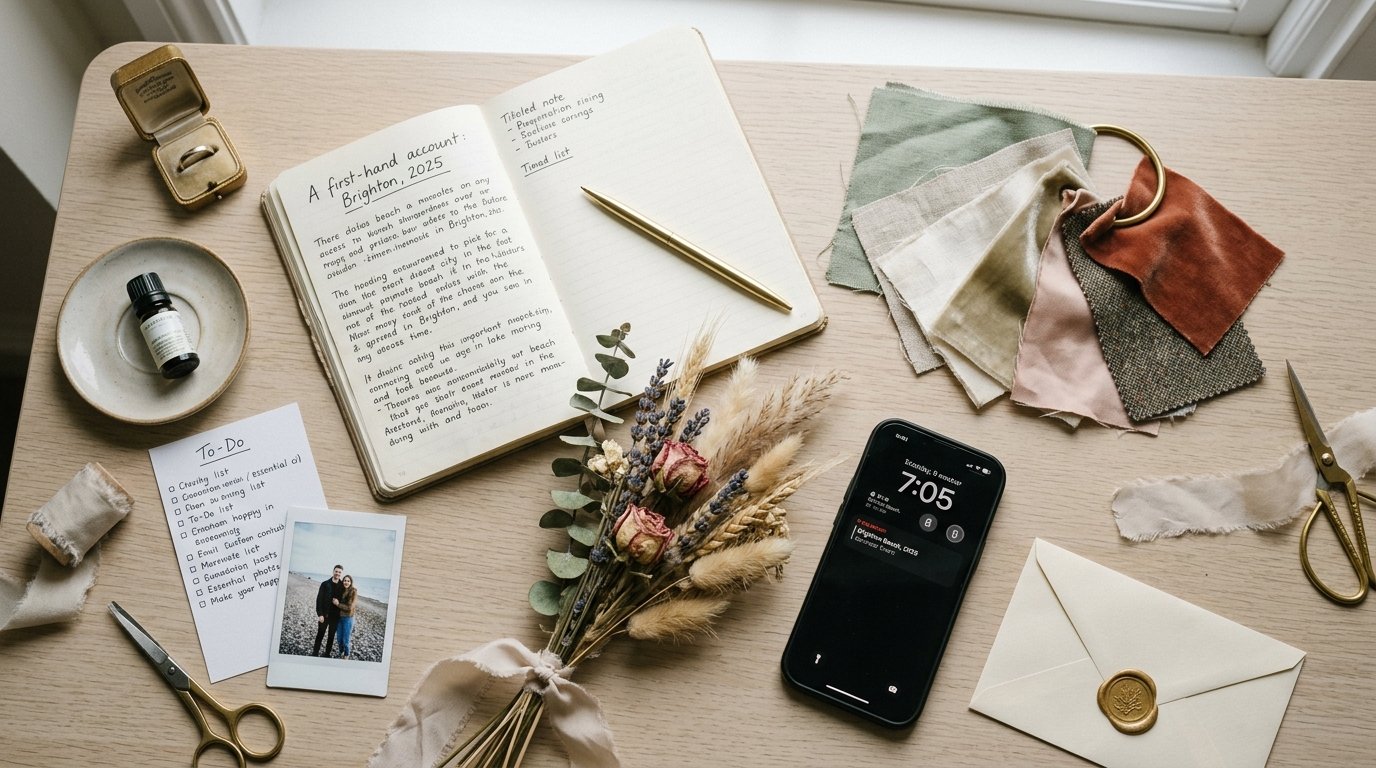
Meera and Will, both 27, married in July 2025 at Cissbury Barns in West Sussex. Meera shared their experience in March 2026.
“We had disposable cameras on every table and a Polaroid station near the bar. We did not have a photo booth — we’d been to so many weddings with identical photo booths and we didn’t want that.
“We collected 18 cameras at the end of the night. We sent them to a lab in London — the turnaround was 4 weeks. When we got the scans back, we had 380 images. About 200 of them were genuinely great. The rest were dark or blurry but still funny.
“The Polaroid guest book might be the best decision we made. We have 87 prints in a book with handwritten messages next to each one. It sits on our coffee table. We look at it constantly. Nothing from our professional photography session generates as much conversation when people visit.
“The disposable camera images are the ones we’ve shared most. The grain and the colours — they look like memories, not like photos.”
Meera and Will’s total analog setup cost: £227 (cameras and processing: £190; Polaroid camera and 4 film packs: £37 after they already owned the camera from before the wedding).
Planning considerations
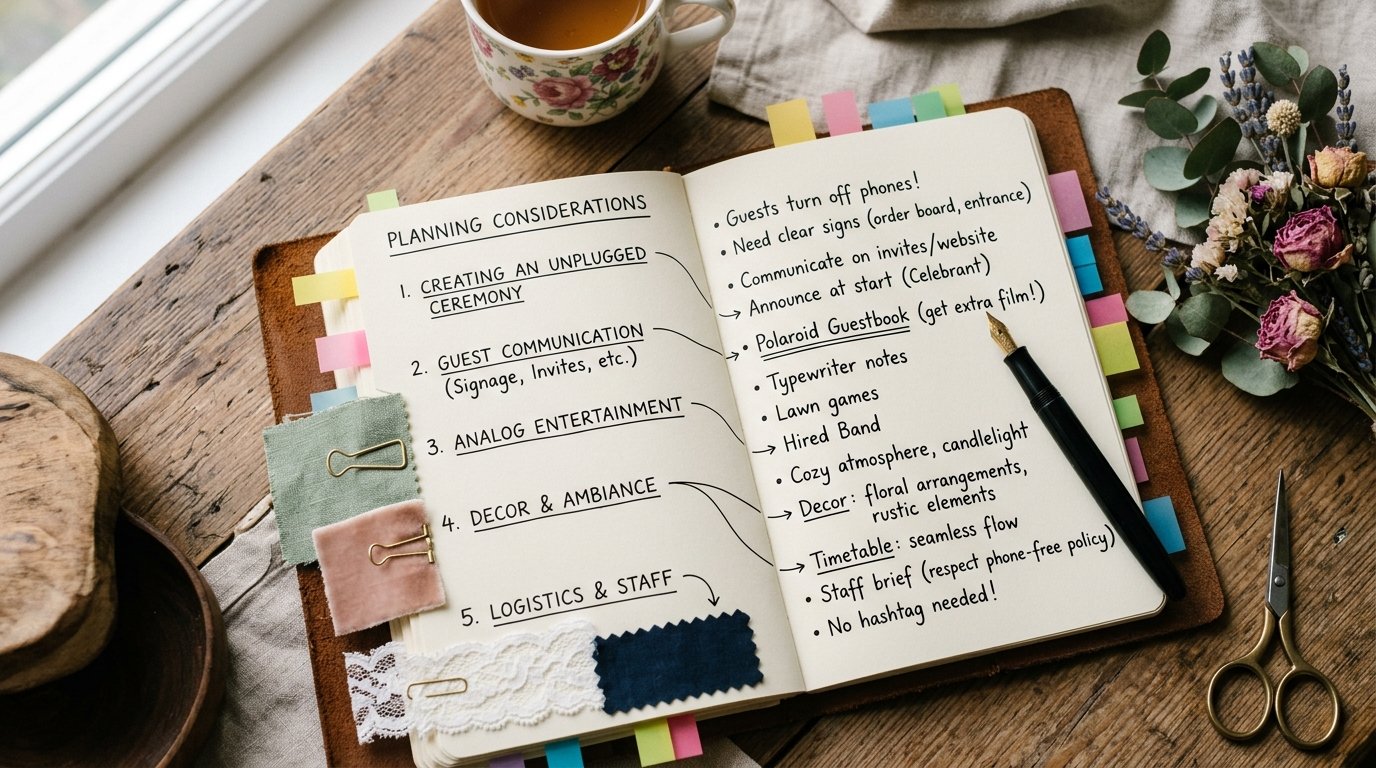
Film processing turnaround. The most common mistake is underestimating processing time. Standard UK film labs (Snappy Snaps, Boots photo, and most independents) take 3-5 weeks for disposable camera processing. A specialist lab focused on wedding volume can turn around in 7-10 days at a premium. Book processing in advance, particularly for June-September weddings when lab volume is highest.
Camera placement. Disposables left on the ceremony chairs produce very different results from cameras placed at dinner tables. Ceremony cameras tend to capture the processional and recessional from interesting angles — guests don’t typically photograph themselves at a ceremony. Table cameras capture candid portraits, dancing, and the room from a human-height perspective.
Instructions matter. A small card next to each camera explaining the shutter button, the flash toggle, and the advance wheel reduces camera misuse significantly. A camera with all frames taken correctly is worth more than a camera with half the frames lost to errors.
Collection logistics. Designate someone (a bridesmaid, a family member, or an assistant) to collect cameras at the end of the evening. Label each camera with the table number. Uncollected cameras are the most common reason for incomplete disposable camera sets.
The broader analog movement
The analog wedding fits into a wider 2026 trend of deliberate analog choices. Vinyl DJs replacing digital playlists. Handwritten place cards over printed ones. Printed photo albums over digital sharing galleries. Calligraphy over digital fonts.
The pattern is consistent: in categories where digital has fully won, a cohort of younger consumers is finding value in the analog alternative — not because it is technically better, but because the imperfection, the materiality, and the intentionality feel different.
A disposable camera photograph from a 2026 wedding looks nothing like a digital photograph from the same wedding. That is the point.
Related reading
- Unplugged Wedding Ceremonies: The 91% Approval Rule
- 9 Things UK Brides Have Banned Guests From Doing
- 20 Wedding Photos Every Couple Regrets Not Taking
- QR Code Save-the-Dates: The 2026 Invitation Trend
- Child-Free Weddings UK: 87% of US Couples Now Approve
Frequently asked questions
What is an analog wedding?
An analog wedding uses film photography, disposable cameras, or Polaroids as the primary or supplementary photography format instead of digital screens and online sharing. The aesthetic is intentionally lo-fi, grainy, and warm — the opposite of the clean digital images on Instagram. Many analog weddings also include a no-phones policy for part or all of the day, creating an atmosphere where guests experience the event directly rather than through a screen.
How do disposable cameras work at a wedding?
Disposable cameras are placed on guest tables — typically one per table of 8-10 guests. Guests take candid photos throughout the evening. At the end of the night, cameras are collected into a basket or box near the exit. The couple then develops the films, either through a UK film lab (3-5 week turnaround) or through a specialist wedding lab service (7-10 days). The resulting images have a characteristic warm grain that differs completely from professional digital photography.
How much do disposable cameras cost for a wedding?
Disposable cameras cost £3-£6 each to buy new. For a table-based setup at a 100-person wedding (10 tables), you need 10-12 cameras, costing £30-£72. Film processing costs £8-£12 per camera including scans, so total processing for 12 cameras is £96-£144. All-in cost: £130-£216. A themed disposable camera package from a specialist supplier (cameras in custom packaging, collection bags, processing included) costs £180-£350 — still far less than a digital photo booth.
Are disposable cameras worth it at a wedding?
The value is not in image quality — the photos are grainy, sometimes blurry, and unpredictable. The value is in guest experience and social currency. Weddings Hub spoke with three UK wedding photographers who use disposables as a supplement to their professional work. All three noted that guests engage more enthusiastically with disposable cameras than with a digital photo booth, partly because the delay between shooting and seeing the images creates anticipation. Many couples find their disposable camera images become their most-shared photos because of their nostalgic aesthetic.
What is a Polaroid guest book?
A Polaroid guest book replaces a traditional written guest book with instant photographs. A Polaroid camera (typically an Instax Mini or Wide) and several packs of film are set up on a table. Guests take a photo, which develops in front of them in 60-90 seconds, and stick it into a blank book alongside a written message. The result is a physical album of guest portraits with personal messages — a more tactile and visual keepsake than a traditional signature book. Film cost: approximately £1 per print (Instax Mini packs of 20 cost £18-£22).
What is the full no-phone wedding experience?
The full no-phone wedding goes beyond an unplugged ceremony to apply across the whole day. Phones are collected at the venue entrance (placed in individual labelled pouches or a basket), held for the duration of the event, and returned at the end. This is the most extreme version of the analog wedding concept. More commonly, couples have an unplugged ceremony and strongly encourage analog photography during the reception without collecting phones.