My MIL Stood Up to Give a Speech. He Stopped Her.
Key Takeaways
- The best man is not the wedding police — intervening is a judgement call, not a duty, and can make the situation worse
- The single most effective preventive measure is a printed running order given to every top-table guest and the venue coordinator before the meal
- Most UK venues and officiants will stop an uninvited speaker if they have been briefed in advance — this is the couple's best tool
- MIL speech attempts are the third most common uninvited-speech scenario after best men going long and drunk uncles
What actually happens when a MIL stands up
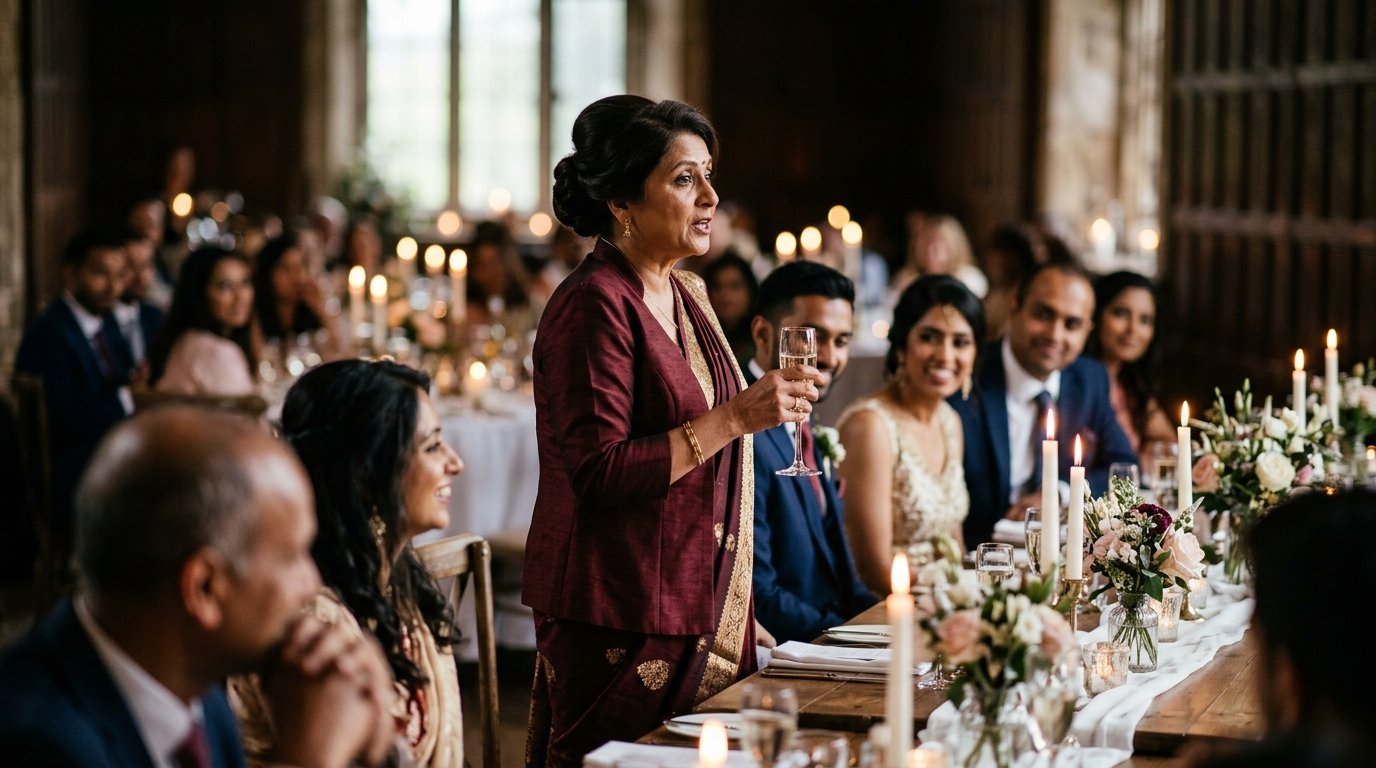
The pattern is almost always the same. The planned speeches finish. The couple relaxes — the formal part is done. Then a relative stands up, taps the glass, and begins.
In about half the cases we heard about, the MIL had told someone she was “thinking of saying a few words.” In the other half, nobody had any prior warning at all.
“She stood up during the dessert course,” one bride told us. “My husband’s face went white. She had a piece of paper. She had written a speech. She had prepared a speech and told nobody.”
The best man in that case made a decision: he let it happen. “He looked at me, I looked at him, and we both just sort of nodded,” the bride said. “What were we going to do? She was already standing. She was already talking.”
The speech lasted four minutes. It covered his childhood, his previous relationship (briefly, but it was there), and ended with a toast that was genuinely heartfelt. “By the end of it, people were laughing and clapping,” the bride said. “But I was shaking the whole time because I had no idea where it was going.”
When intervention is the right call
The best man stepping in is only the right move in specific circumstances.
Before the speech begins: If the best man — or any trusted wedding party member — sees the person standing up and reaching for the microphone, a quiet word before they get to the front of the room is appropriate. “Just a soft hand on the arm and a quiet ‘not tonight, maybe catch up with them at the end of the night’” was how one wedding coordinator described the move.
If the content is becoming harmful: A speech that begins to reveal something the couple would not want disclosed — an affair, a family secret, a previous relationship breakdown — is a different situation to a well-intentioned ramble. In these cases, intervention is justified even mid-speech, though how it is done matters enormously.
If the speaker is clearly distressed or heavily drunk: A speech given by someone who is visibly upset or significantly intoxicated is a welfare issue as much as an etiquette one. Stopping it kindly, by moving alongside the speaker and gently removing the microphone, is acceptable.
In most cases — a long-winded but well-intentioned MIL speech — the best man stopping it mid-flow will create more disruption than letting it reach its natural end. Eighty guests watching a best man physically intervene while a grandmother gives a toast is not a better outcome than sitting through four minutes of rambling.
How to prevent this entirely
This is the more useful question. Prevention is dramatically easier than intervention.
The printed running order
The most underused tool in wedding planning. A printed running order — listing exactly who is speaking, in what order, for how long, followed by “speeches are now complete” — given to every person at the top table, and to the venue coordinator, eliminates most uninvited speech attempts before they start.
When someone sees “Father of the bride, 5 minutes. Groom, 8 minutes. Best man, 10 minutes. Speeches end.” in black and white, the social pressure not to deviate is significant. Most people who would have stood up impulsively think twice when they can see the schedule is complete.
Brief the venue coordinator explicitly
Tell your venue coordinator or toastmaster exactly who is and is not speaking. Say the words: “If anyone else attempts to give a speech who is not on this list, please step in discreetly.” A good venue coordinator will position themselves to do this naturally.
Most UK wedding venues with a dedicated events team or toastmaster are experienced at handling exactly this situation. They have done it before. They will not be surprised by the request. One toastmaster we spoke with said: “About one in five weddings I do, there’s someone who wasn’t on the list who decides to say something. My job is to make sure the couple’s day runs the way they planned it, not the way someone else decided at the last minute.”
Have the conversation before the day
If you suspect your mother-in-law is likely to want to speak — and most couples who’ve thought about it have a good sense of whether this is likely — have the conversation before the wedding day.
This does not have to be confrontational. It can be as simple as: “We’ve got the speech order sorted — we wanted to keep it short so guests aren’t sitting for too long. We’d absolutely love a toast from you at the rehearsal dinner / engagement party / reception drinks.” Giving her a sanctioned moment elsewhere removes the pressure that leads to an uninvited speech at the reception.
If that conversation is not possible, a message through a trusted intermediary — her husband, her son — delivered before the day is more effective than hoping it won’t happen.
What the best man who stopped her did
We spoke with one best man — James, from Bristol — who did intervene mid-speech at a wedding in 2024. His account is instructive because it did not go well.
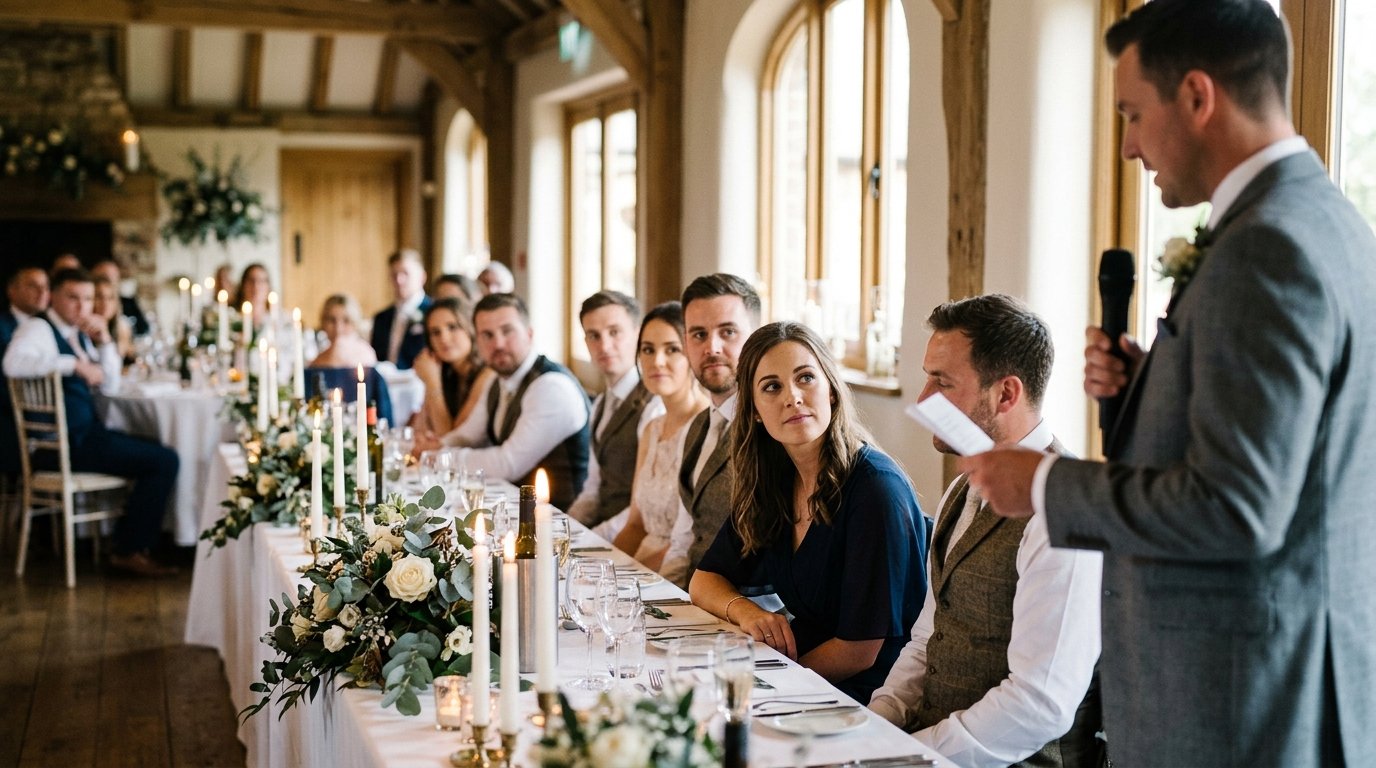
“She was about a minute in. The groom had given me a look I’d never seen from him before. I walked over and put my hand on her shoulder and said, quietly, ‘Shall we save the rest for the party?’ She looked at me, looked at the room, and sat down.”
The immediate aftermath: “The room went very quiet. Not a nice quiet. Then someone started clapping, which helped. But the MIL didn’t speak to me for the rest of the night. The groom was grateful. The bride was grateful. But the couple’s photos from the reception show a table where one person is visibly upset.”
James says he would do it again if the circumstances were the same. “The groom had told me beforehand that if she tried to speak, he wanted it stopped. So I had explicit authorisation. Without that, I wouldn’t have done it.”
The lesson: if you want the best man to be able to intervene, you have to brief him in advance and give him explicit permission. He is not the wedding police by default. He is the person the couple trusts to run the room — but only within the scope of what the couple has asked him to do.
What about the MIL’s perspective
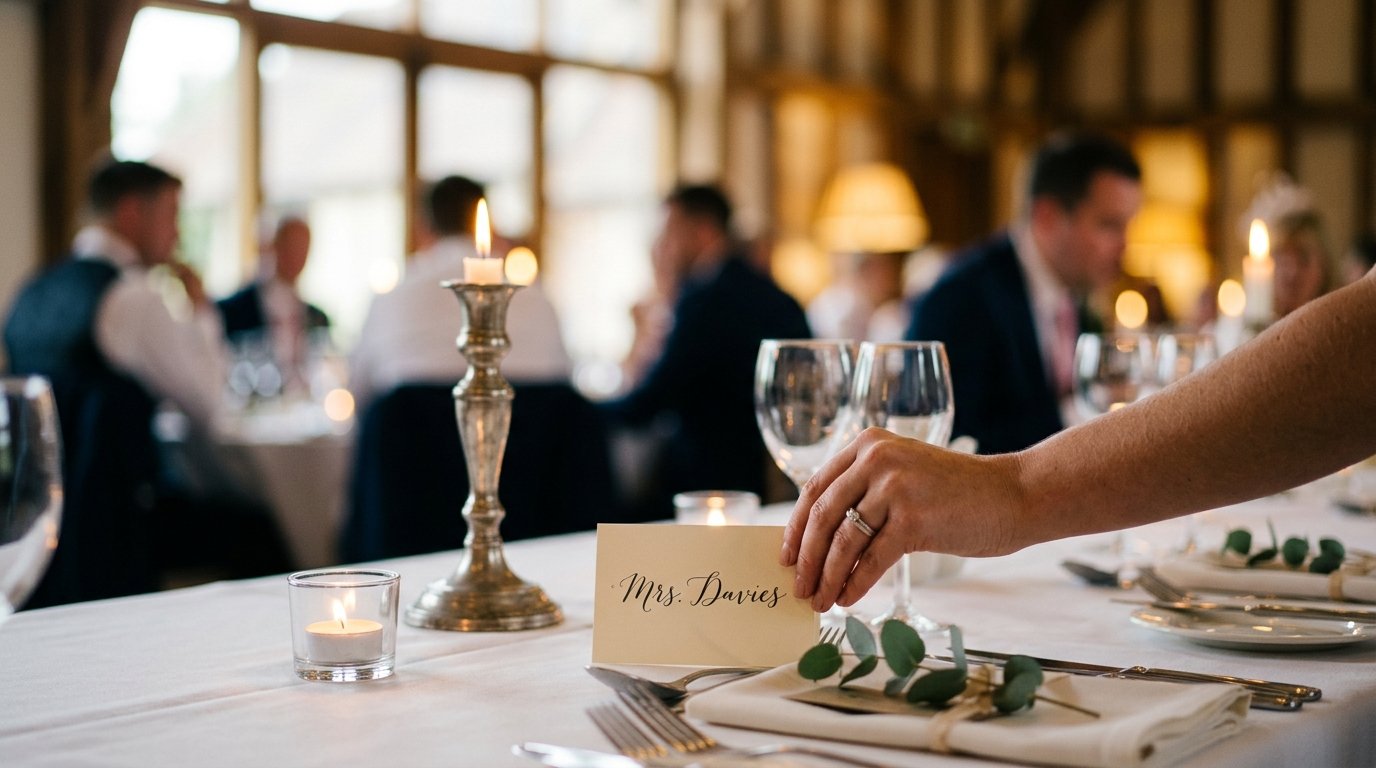
This is worth saying plainly: in most cases, the mother-in-law is not malicious. She is someone who loves her child and wants to mark the moment in the way she would mark any important family occasion.
The accounts we heard from MILs who had been stopped ranged from “completely embarrassed and devastated” to “thought it was completely unreasonable and still holds a grudge.”
Understanding the motivation matters because it shapes how intervention is best framed. “The couple wanted to keep the speeches short so guests weren’t sitting too long” is far easier for a MIL to accept than “you weren’t on the list.” The first is about logistics. The second feels like a deliberate exclusion.
If a conversation has to happen after the fact — if the intervention happened and the MIL is upset — framing it in terms of time and format rather than entitlement will repair the relationship faster.
Real accounts from UK couples
“My MIL had prepared a speech and nobody knew. The best man saw her stand up and went over. She sat down without making a scene. We only found out what he’d said to her three months later: he’d whispered that the microphone had gone off. She believed him for the whole evening.” — Couple, Manchester, married 2024.
“She gave the speech. My best man looked at me and I shook my head. It lasted six minutes and was actually quite moving. It wasn’t what we’d planned but I cried. I think if he’d stopped her it would have been worse for everyone.” — Bride, Leeds, married 2023.
“The toastmaster handled it. We’d briefed him at the venue walkthrough three weeks before. When she stood up, he was at her side in about fifteen seconds. He said something, she nodded, and sat back down. She spoke at the drinks reception instead. Problem solved.” — Groom, Edinburgh, married 2025.
Further reading
For couples planning speech order and timing, the wedding speeches guide covers format and length conventions. For broader questions about managing difficult family members in a wedding context, the what to do when parents refuse to attend your wedding covers high-conflict family dynamics. For etiquette around the best man’s role, see the wedding toast etiquette guide. For couples managing a family member who is likely to cause disruption, how to uninvite someone from your wedding addresses the hardest end of the spectrum. The wedding venue red flags guide covers what to check for in venue staff competence, including event management during speeches.
Frequently asked questions
Can someone stop a mother-in-law from giving a speech at a wedding?
Yes. The venue coordinator, toastmaster, or any trusted wedding party member can intervene if briefed in advance.
Is it rude to stop someone giving an uninvited speech at a wedding?
It depends on how it is done. A quiet word before they stand is far better than a public interruption mid-speech.
How do you prevent an uninvited speech at your wedding?
Give everyone at the top table a printed running order. Brief your venue coordinator and toastmaster explicitly.
What should the best man do if someone tries to give an uninvited speech?
If briefed by the couple, a gentle interception before they reach the microphone is appropriate. Mid-speech interruption is almost always worse.
How common are uninvited speeches at UK weddings?
No published evidence supports a reliable percentage for this question.
Should the mother-in-law give a speech at a wedding?
Only if the couple have specifically invited her to. An uninvited MIL speech — however well-intentioned — steps on the couple's planned programme.
What do you do if an uninvited speech is already happening?
Let it finish unless it becomes harmful or abusive. Interrupting a live speech in front of 80 guests rarely ends well for anyone.