Questions to Ask Your Wedding Venue
Key Takeaways
- Ask about total cost, not just hire fee — catering, corkage, staffing, and overtime charges add up fast
- Check the venue's licensing hours, noise restrictions, and latest finish time before you book
- Always ask what happens if the venue goes into administration — and get written cancellation terms
- Find out exactly what's included and what you'll need to bring in yourself (chairs, linens, PA system)
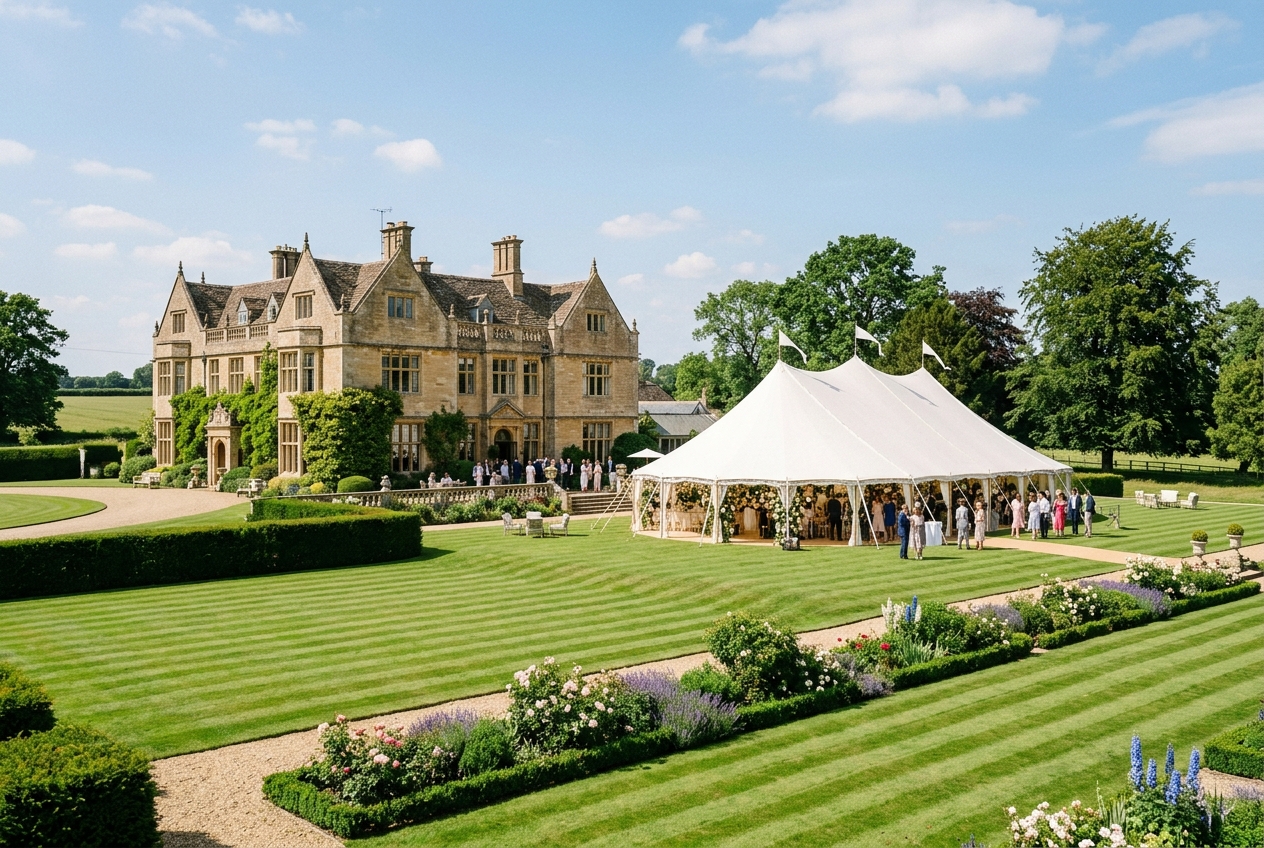
- Ask for a wet weather plan if any part of your day is outdoors
Choosing a wedding venue is the biggest decision you’ll make during planning. It sets the date, the budget, the guest list, and the tone of the entire day. Get it right and everything else falls into place. Get it wrong and you’ll be fighting the venue’s limitations for the next 12 months.
This guide covers the 30 questions you need to ask before signing anything. They’re based on what UK couples actually wish they’d asked — not vague checklists copied from American wedding blogs.
Costs and payment
Money is where most venue disputes start. The hire fee on the brochure is almost never the final number.
1. What’s the total cost for our wedding date, including VAT? Weekend dates in summer cost more than midweek dates in winter. Ask for a full quote for your specific date, not a generic price list.
2. What’s included in the hire fee? Some venues include tables, chairs, linens, a PA system, and a coordinator. Others give you an empty room. The difference can be thousands of pounds.
3. What are the catering costs per head? If the venue provides catering, get the full menu pricing — including canapes, the wedding breakfast, evening food, children’s meals, and supplier meals.
4. What’s the corkage charge if we supply our own drinks? Corkage typically runs from £8 to £25 per bottle. On 100 bottles of wine, that’s a significant hidden cost. Some venues don’t allow outside drinks at all.
5. Is there a minimum spend? Many venues require a minimum spend on food and drink rather than charging a flat hire fee. Check whether your guest numbers will hit that minimum comfortably.
6. What’s the deposit, and when is the balance due? Standard deposits are 20-50% of the hire fee. Some venues also require interim payments. Get the full payment schedule in writing.
7. What’s the overtime charge if we run past the agreed finish time? Overtime rates of £500-1,500 per hour are common. Agree the finish time upfront and know exactly what you’ll pay if the party runs late.
Capacity and layout
8. What’s the maximum capacity for a ceremony, sit-down meal, and evening reception? These three numbers are often different. A venue that seats 120 for dinner might only hold 80 for a ceremony or 200 for an evening party.
9. Can we see the room set up for a wedding of our size? An empty room gives you no sense of how it’ll feel with 100 guests, tables, a dance floor, and a band. Ask if you can visit during or after another event, or request photos from weddings of a similar size.
10. Is there a separate space for the ceremony and the reception? If the ceremony and reception are in the same room, you’ll need a turnaround time between the two. Ask how long that takes and where your guests will go during it.
11. Where will the bar, dance floor, DJ, and band be positioned? Layout affects the atmosphere. A dance floor tucked in a corner feels very different from one in the centre of the room.
Catering and drinks
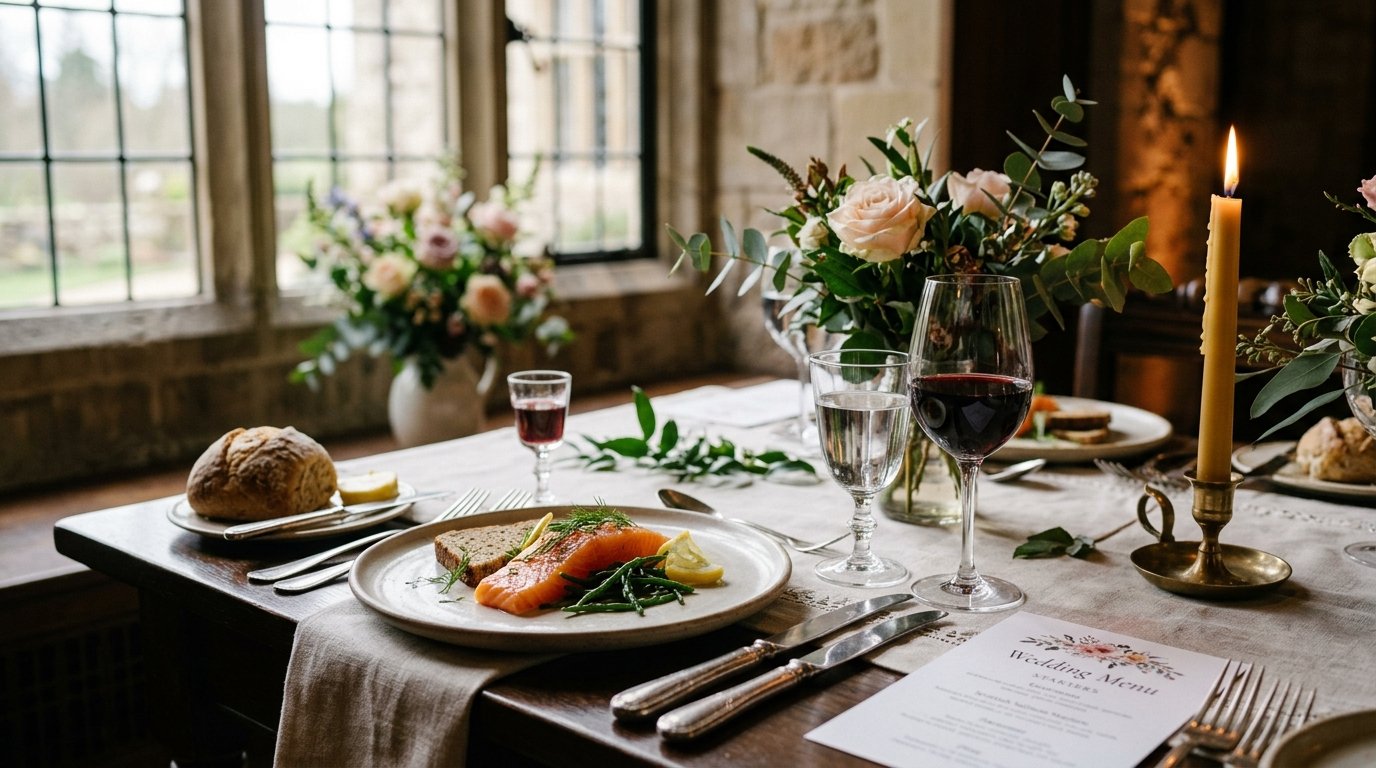
12. Can we choose our own caterer, or must we use the venue’s? Some venues have exclusive catering partnerships. If you want street food, a specific cuisine, or a caterer you’ve already found, this is a dealbreaker question.
13. Can the kitchen accommodate dietary requirements — vegan, halal, kosher, allergies? Don’t accept “yes, of course” without specifics. Ask to see example menus and check whether they have experience with your guests’ specific needs.
14. Is there a tasting session before the wedding? Most quality venues offer a tasting for the couple. Some charge for it, some include it in the price. Ask how many guests can attend the tasting.
15. What are the bar options — tab, cash bar, or a combination? An open bar for 100 guests can run to £3,000-5,000. Many couples use a tab for the drinks reception and switch to a cash bar for the evening.
Access, setup, and logistics
16. What time can we access the venue for setup? If your florist needs four hours and the band needs two, you’ll need early access. Some venues charge extra for the day before.
17. Is there accommodation on-site or nearby? Guests need somewhere to stay, especially for rural venues. Ask whether the venue has rooms, whether there’s a group rate, and how many rooms are available.
18. Is there parking, and how many spaces? For rural venues this matters. 80 guests could mean 50+ cars. Check whether the venue has overflow parking or whether you’ll need to arrange shuttle transport.
19. Is the venue accessible for guests with disabilities? Check wheelchair access to the ceremony, reception, toilets, and accommodation. Ask about hearing loops and whether the venue can provide accessible seating arrangements.
20. Where do suppliers (florist, photographer, band) load in and set up? Suppliers arriving through the front door at the same time as guests is a problem. Ask about service entrances and supplier parking.
Restrictions and rules
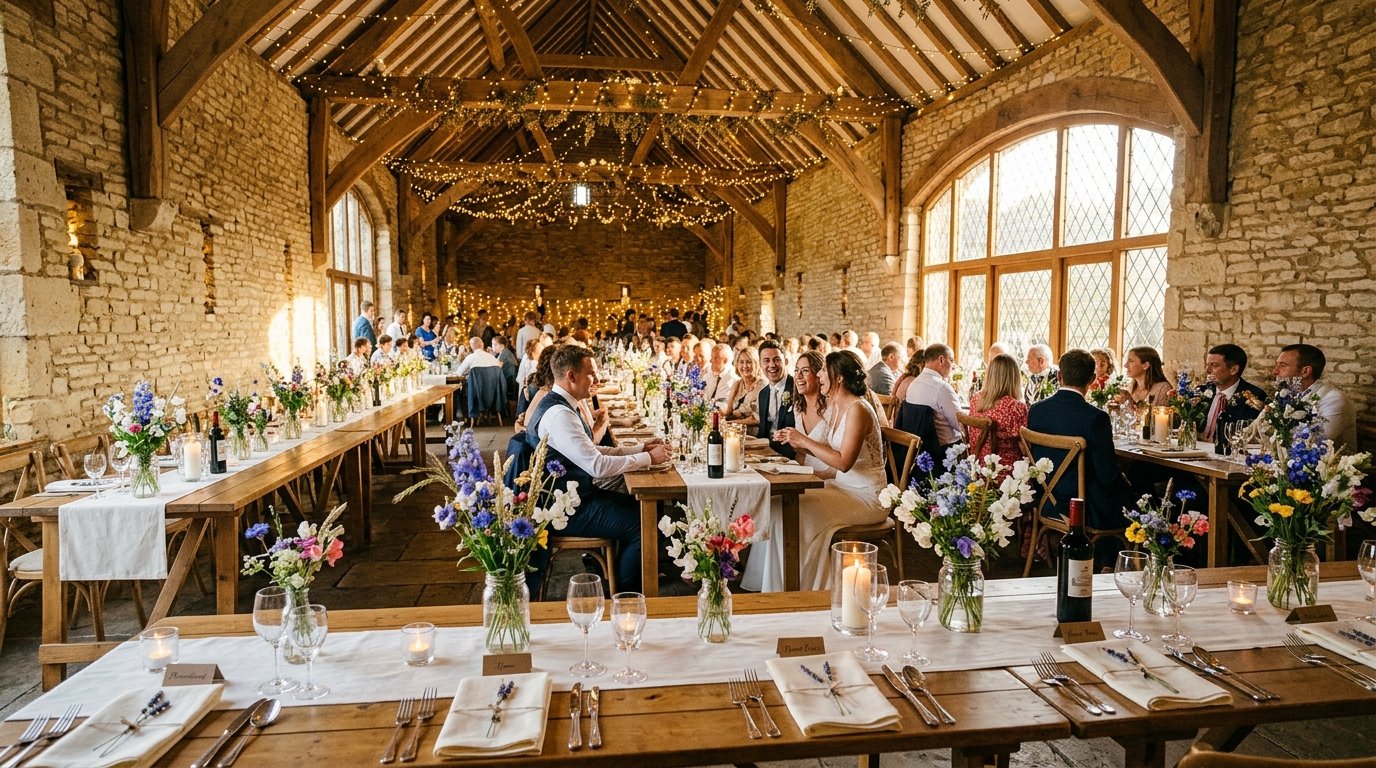
21. What are the noise restrictions and latest finish time? Many licensed venues must finish music by 11pm or midnight. Some have decibel limits. If a late party matters to you, check this before booking.
22. Are there any restrictions on confetti, candles, or decorations? Listed buildings and heritage venues often ban confetti, open flames, and anything attached to walls. Find out before your decorator starts planning.
23. Can we have fireworks, sparklers, or a fire pit? Insurance and neighbour agreements often restrict these. Ask specifically — “outdoor features” is too vague.
24. Is there a plan B if it rains? If your ceremony or drinks reception is planned for outdoors, you need a concrete wet weather plan. “We’ll move inside” only works if inside is big enough and set up for it.
Cancellation and insurance
25. What happens if we need to cancel or postpone? Get the full cancellation policy in writing. Check at what point you lose the deposit, and what happens to payments already made if you need to move the date.
26. What happens if the venue cancels on us? Venues can close, go into administration, or double-book. Ask what protections you have and whether the venue carries its own insurance.
27. Do you recommend wedding insurance, and does it cover this venue? Wedding insurance typically costs £50-150 and covers supplier failure, venue cancellation, and other risks. Some policies exclude certain venue types.
The day itself
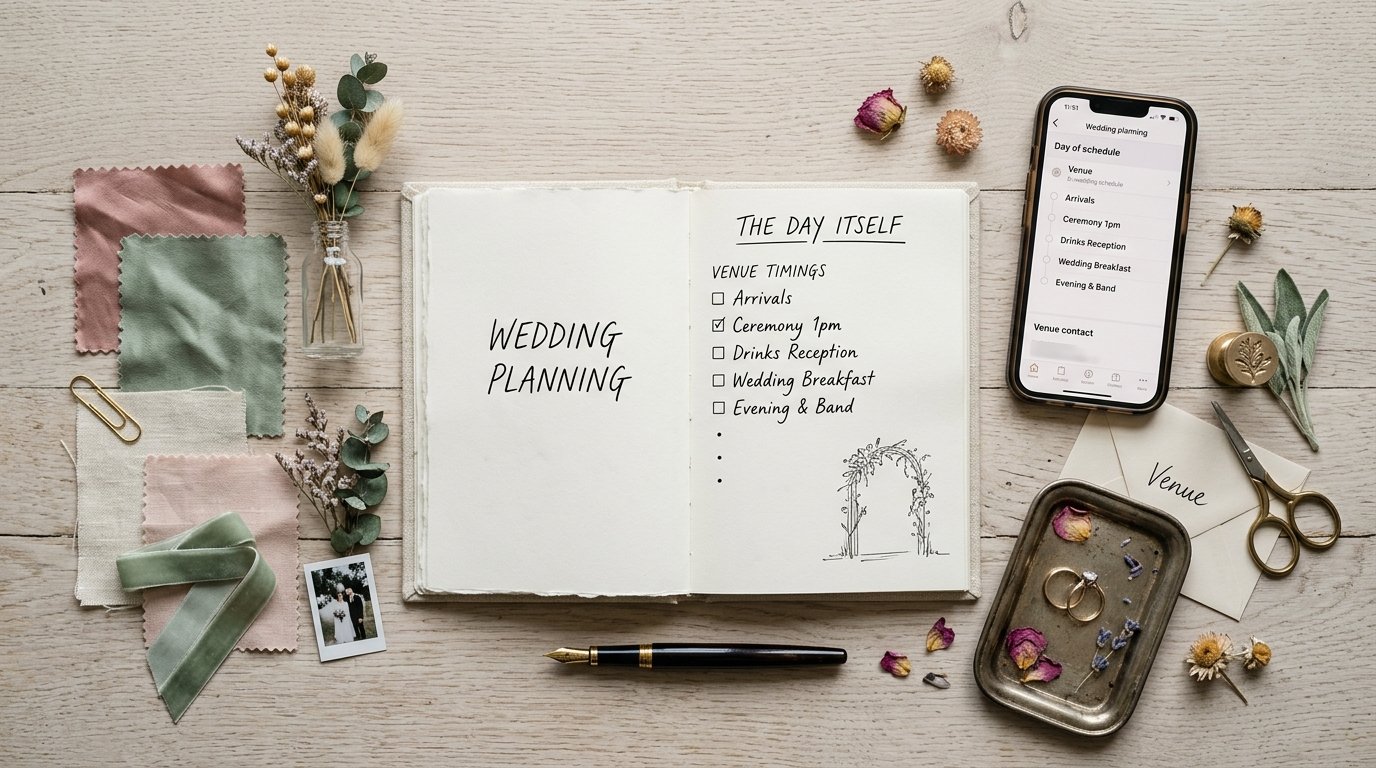
28. Will we have a dedicated venue coordinator on the day? A coordinator who knows the venue, manages the timeline, and handles problems is worth their weight in gold. Ask whether this is included or an extra cost.
29. How many other events will be happening at the venue on our date? Some venues host multiple weddings on the same day, or have other events in adjacent rooms. If exclusivity matters to you, ask about exclusive-use hire.
30. Can we see references or reviews from recent couples? Any good venue will happily share testimonials. Check Google reviews, Weddings Hub listings, and ask to speak directly to couples who married there recently.
Quick reference checklist
Use this table to compare venues side by side:
| Question | Venue 1 | Venue 2 | Venue 3 |
|---|---|---|---|
| Total cost (inc. VAT) | |||
| Capacity (ceremony / dinner / evening) | |||
| Catering included? | |||
| Corkage per bottle | |||
| Finish time | |||
| Accommodation on-site? | |||
| Wet weather plan? | |||
| Deposit amount | |||
| Cancellation terms | |||
| Coordinator included? |
Print this checklist or save it to your phone before each viewing. Venues blur together after the third or fourth visit — written notes are essential.
What to do after viewing
Take photos of every room, the grounds, the car park, and the toilets. Write down your gut reaction within 24 hours. If you’re comparing multiple venues, revisit your favourite at a different time of day before signing.
Once you’ve chosen, read the contract line by line. Every promise made during the viewing should be in the contract. If it’s not written down, it didn’t happen.
Keep planning
Frequently asked questions
How many questions should I ask a wedding venue?
Ask at least 25-30 questions covering costs, capacity, catering, restrictions, access times, and cancellation terms. Most couples regret not asking enough upfront — once you've paid the deposit, your leverage drops significantly.
When should I visit wedding venues?
Visit at the same time of day and season as your planned wedding. A venue that looks stunning on a summer afternoon may feel completely different on a dark January evening. Book at least 2-3 viewings before committing.
What is the most important question to ask a wedding venue?
The total cost. Venue hire fees rarely include everything. Ask for an itemised quote covering hire, catering, drinks, staffing, VAT, service charge, overtime, and any extras. The advertised price and the final bill are often thousands of pounds apart.
Should I book a venue before other suppliers?
Yes. The venue determines your date, guest capacity, catering options, and overall style. Every other supplier decision follows from the venue. Book it first, then build your supplier team around it.
What does dry hire mean?
Dry hire means renting the venue space only, with no catering, drinks, or staffing included. You arrange everything yourself through external suppliers. It gives you more freedom but requires significantly more planning and coordination.