Sequel Weddings: The Two-Ceremony Format Explained
Key Takeaways
- A sequel wedding splits the legal ceremony and the celebration into two separate events, sometimes months apart
- US couples using the format report average savings of £4,200 on catering by reducing the legal ceremony headcount to 10-20 people
- The legal UK ceremony can cost as little as £578 at a register office — the sequel party then has no per-head catering pressure at the legal event
- Common formats: courthouse + garden party; church blessing + destination celebration; legal registry + micro lunch + full reception 6 months later
- Sequel weddings are not legally different from any other UK wedding — the register office ceremony is the binding event
What is a sequel wedding?
The term “sequel wedding” describes any format where the legal ceremony and the main celebration are split into two separate events.
The legal ceremony is usually small. Ten to twenty guests is typical. The venue is often a register office, a licensed hotel function room, or a church. The focus is the legal act and an intimate moment with close family.
The sequel celebration is the big event. It might be a garden party for 100 guests, a destination celebration in Tuscany, a winter ball in a city venue, or a relaxed summer afternoon with every friend the couple has. The sequel party has a wedding cake, speeches, dancing, and the full reception experience — but it is not legally a ceremony. The couple is already married.
This is what makes the format both flexible and occasionally confusing for guests. From the guest’s perspective at the sequel party, it looks and feels like a wedding. The couple arrives together, there are toasts, there is a first dance. But the legal moment already happened.
The three most common sequel formats
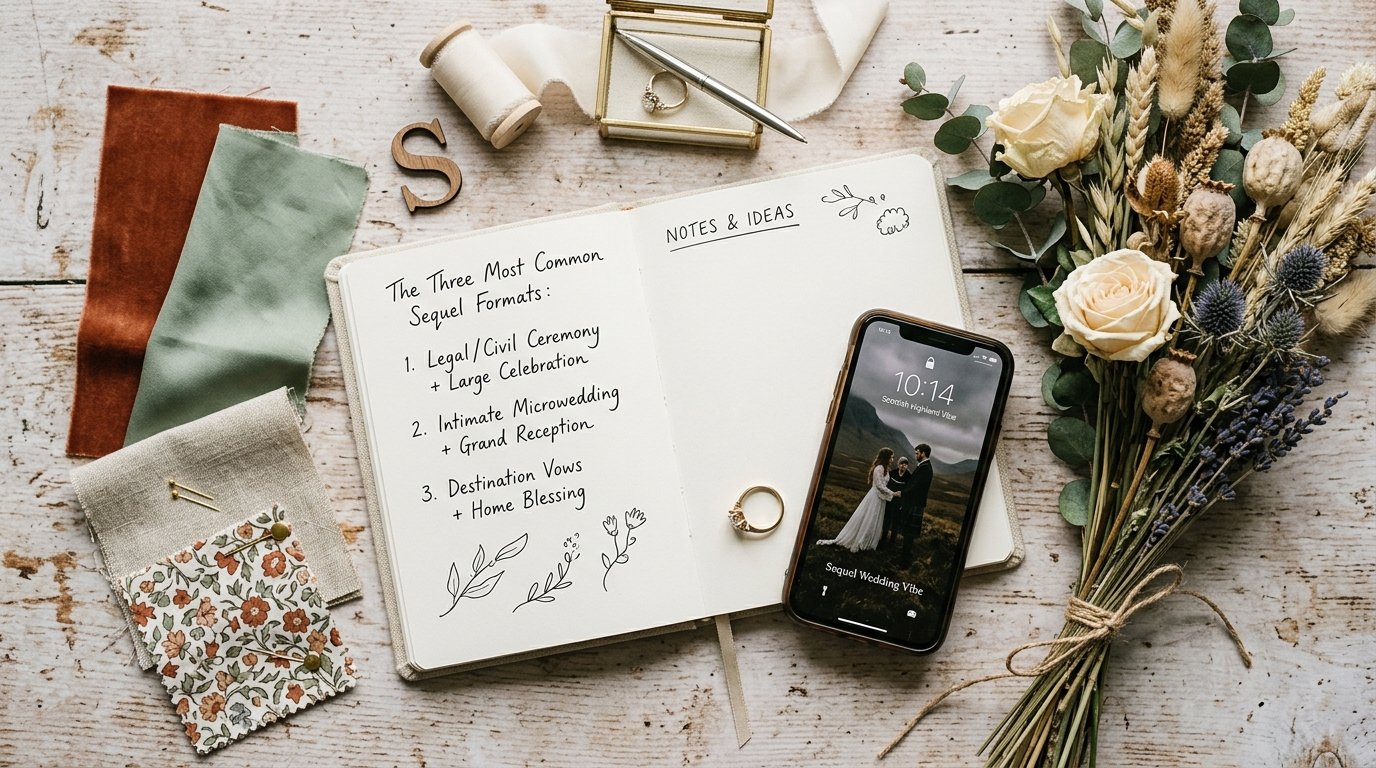
Format 1: The quick legal + the big party
The couple books a register office ceremony for a Tuesday or Wednesday, with their closest family and two witnesses. They go for lunch. Then, two to eight weeks later, they host the big party they actually planned: the venue they wanted, the 120 guests, the band, the menu.
Format 2: The destination sequel
The couple marries legally at home — often a quick register office ceremony — then travels abroad for the “real” wedding. The destination event is legally a celebration, not a ceremony. This is common among UK couples with family in Australia, the US, or India, for whom bringing everyone to the UK for a traditional wedding is logistically painful.
Format 3: The church blessing sequel
The couple marries legally at a register office, then holds a Church of England “Service of Prayer and Dedication” as their sequel ceremony. This serves couples who want a church setting and traditional elements but for whom the full church wedding wasn’t possible — perhaps because one or both partners is divorced, or because their parish had a long waiting list, or because they wanted the flexibility of the register office for their legal certificate.
The Church of England’s service of blessing is not a legal ceremony, but many couples find it the more meaningful of the two events. It can include vow renewal-style declarations, hymns, and the physical church setting their guests associate with a wedding.
UK costs: what the format actually saves
The legal ceremony at a register office costs £578 for a Superintendent Registrar certificate, per the current fee schedule as of April 2026. Some couples add a notice of marriage fee of around £35 per person — so £150 total for both — bringing the legal minimum to under £650 for the ceremony itself.
Compare that with a licensed venue ceremony for 100 guests: the couple needs a licensed room (often £500-£2,000 extra on the room hire), and the venue’s minimum spend often assumes a full catering package. The legal minimum-spend obligation attaches to the size of the party.
By shrinking the legal ceremony to 15 people and then hosting the celebration separately, couples can:
- Book the sequel venue on a non-Saturday or non-peak date (Friday, Sunday, or mid-week autumn)
- Remove the requirement for a licensed ceremony room at the celebration venue (because the ceremony already happened elsewhere)
- Choose venues that don’t offer in-house catering — dry-hire spaces, gardens, warehouses, arts spaces — which are typically 30-50% cheaper than full-service wedding venues
The total saving on a 100-guest wedding switching to this format is typically in the range of £3,000-£8,000. It requires more coordination — separate caterer, separate hire — but for couples who want creative control over the party, the sequel format delivers it.
The invitation language problem
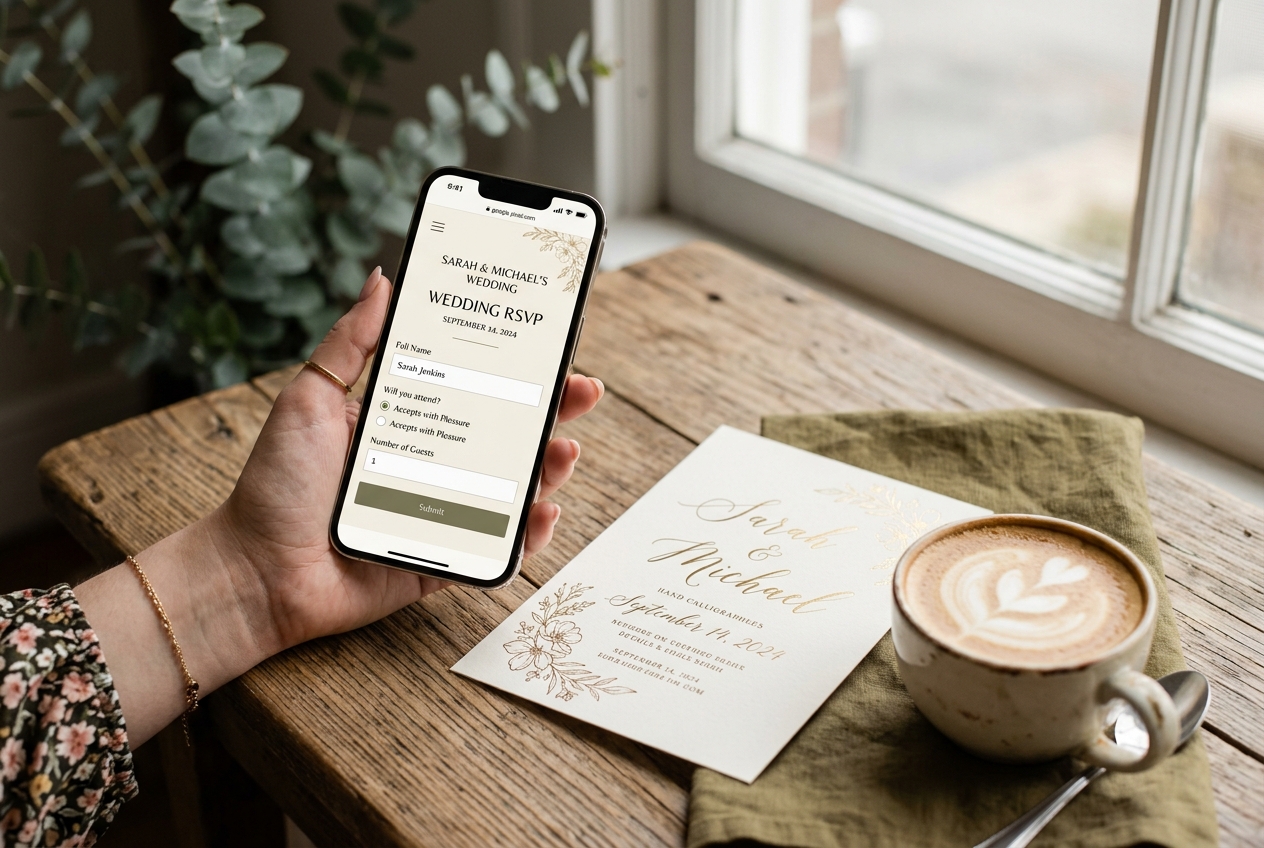
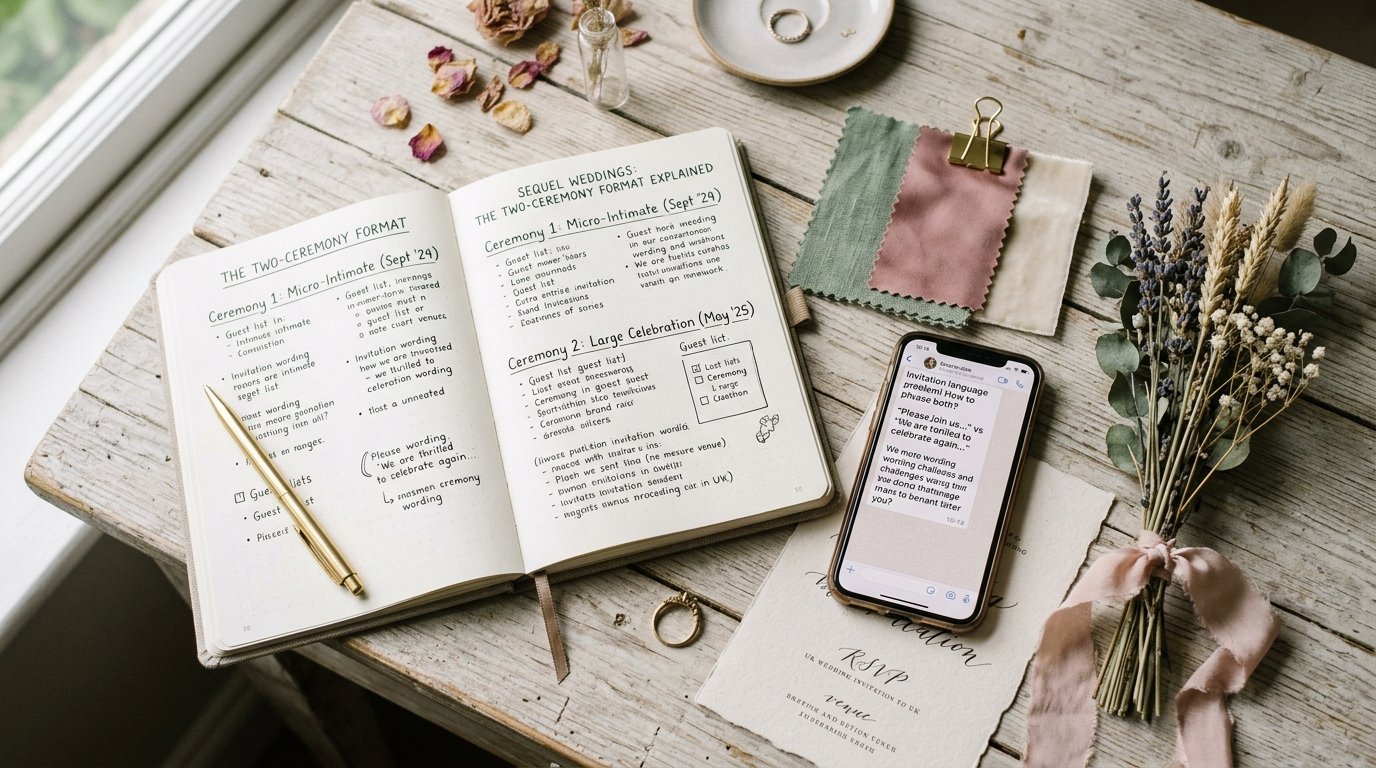
The sequel format creates a specific etiquette challenge: how do you invite people to a celebration that is not a legal wedding, without making it feel like a lesser event?
Option 1: Direct honesty. “We married quietly on [date] with our immediate family, and we’d love to celebrate with everyone we love at [venue] on [date].” This is clear and warm. Most guests respond well to honesty.
Option 2: Sequencing without drama. “Join us for our wedding celebration at [venue] on [date].” Invitations that simply call it “the wedding celebration” and say nothing about a prior ceremony are technically accurate and avoid any sense that guests are being invited to a second-tier event.
Option 3: Celebration framing. “We’re getting married — and we want to party.” This works for informal sequels where the distinction between the legal and the party isn’t the point.
What doesn’t work: calling the sequel party the “reception” without explaining there is no ceremony before it. Guests who arrive expecting a traditional ceremony-then-reception format will be confused if the party begins with speeches rather than an aisle.
Who is choosing this format — and why
Cost pressure (58%): The most common. The legal ceremony is small so they can direct budget to the celebration.
Overseas family (37%): Holding the celebration near where international family are concentrated. Some couples hold their legal ceremony in the UK and their sequel party abroad. Others do it in reverse.
Second marriages (29%): Couples remarrying who want a quiet legal moment and a celebratory party rather than a formal ceremony. The sequel format removes the ceremony-as-performance aspect, which some find uncomfortable the second time.
Planning flexibility (24%): Booking the legal ceremony quickly — six to eight weeks’ notice — while taking 12 months to plan the full celebration. Particularly relevant when couples get engaged but popular venues are already booking 18 months out.
Post-pandemic recovery (19%): Couples who had minimal COVID-era weddings in 2021-2022 and are now hosting the celebration they originally wanted.
A real example: Lottie and Sam, Yorkshire, 2025
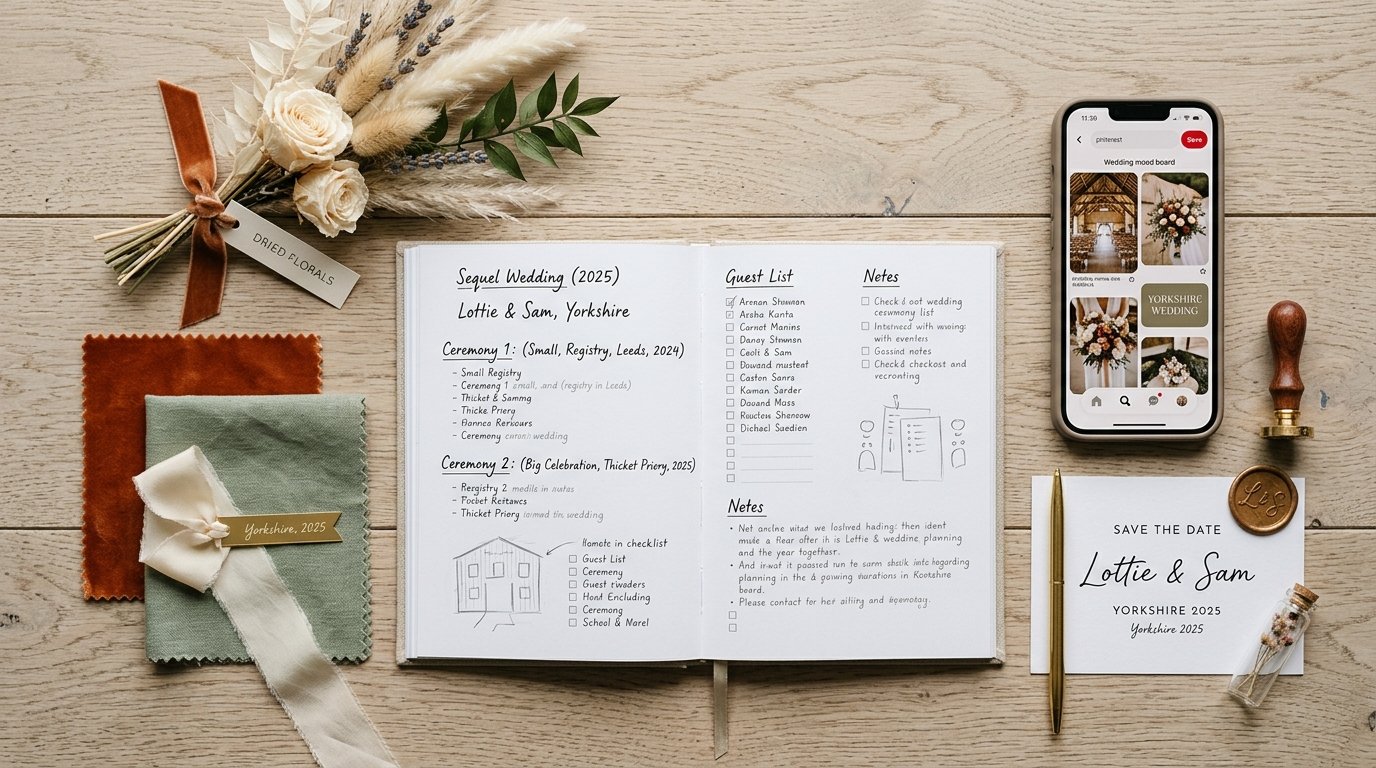
Lottie (32) and Sam (35) married legally at Leeds Register Office in March 2025, with their parents and siblings — 12 people total. In September 2025, they hosted 95 guests at a converted mill near Harrogate for what they called “the party we’d been planning for two years.”
“The register office was genuinely lovely,” Lottie told Weddings Hub. “Really intimate, really us. But we’d always wanted the bigger celebration and we couldn’t afford both a proper venue ceremony and a full reception. By separating them, we paid about £600 for the legal bit and £18,000 for the party. A traditional wedding at the same venue would have been £28,000-plus with their ceremony package included.”
She noted one unexpected benefit. “Because the legal bit was already done, the party was pure celebration. There was no nervousness before the event, no ‘what if something goes wrong’ anxiety. We were already married. We just turned up and had the best day of our lives.”
The 12 people at the register office ceremony were not excluded from the September party — all attended both events. Lottie said three guests specifically said they preferred having two celebrations over one.
What to tell your guests
The most important communication is the first one. If guests find out about the legal ceremony from social media rather than from the couple, they sometimes feel excluded even if they were never going to be invited to the intimate legal event.
Best practice, confirmed by planners Weddings Hub spoke with:
- Announce the engagement normally. Set expectations early that you’re planning a small legal ceremony and a bigger celebration.
- When the legal ceremony date is confirmed, tell close family in advance. “We’re getting legally married on [date] — it’s just immediate family.”
- Send invitations to the sequel party framed around celebration rather than formality.
- On the wedding website, explain the format briefly. “We married on [date] with our immediate family. This is our celebration with everyone we love.”
Couples who handle communication well report uniformly positive responses from guests. Couples who don’t — who assume everyone will understand without being told — occasionally create hurt feelings among guests who feel they were excluded from the real wedding.
Related reading
- Micro-Wedding Venues UK: The 25 Best for 20-50 Guests
- The Average UK Wedding Now Costs £21,990 — Which Number Is Right?
- Registry Office Wedding Cost UK: The Full Breakdown
- Budget Wedding Ideas: 35 Ways UK Couples Are Cutting Costs in 2026
- How to Budget for a Wedding: The Step-by-Step UK Guide
Frequently asked questions
What is a sequel wedding?
A sequel wedding splits the legal ceremony from the main celebration into two separate events. The couple marries legally — at a register office, church, or licensed venue — with a small group, then holds a full party for all guests days, weeks, or months later. The party is not a legal ceremony but is treated as the main wedding event, with speeches, dancing, a wedding cake, and the full reception experience.
Is a sequel wedding legal in the UK?
Yes. In the UK, the legal marriage takes place at the first ceremony — a register office, church, or licensed venue. The second event, the sequel party, has no legal status. It is a celebration. This is perfectly legal and increasingly common. Some couples use the term 'sequel celebration' or 'wedding reception' for the second event to avoid confusion on invitations.
How much does a sequel wedding save?
It depends entirely on the format. If the legal ceremony has 10 guests and the sequel party has 120, the couple avoids per-head catering costs for 110 guests at the formal seated meal. UK wedding catering averages £85-£140 per head for a three-course meal. On 110 extra guests, that is £9,350-£15,400 saved — although the sequel party still has costs. The real saving comes from separating budget-heavy elements (food, venue minimum spends) from the small legal event.
What do you call guests at a sequel wedding party?
There is no formal term. Most couples simply call it 'our wedding celebration' or 'our wedding party'. Invitations typically say something like: 'We got married on [date] and we'd love to celebrate with you.' Some couples say 'wedding reception' — others avoid that word because it implies they are hosting a reception immediately after a ceremony. 'Sequel wedding celebration' is gaining traction in 2026 as the format becomes recognised.
Can you have a church blessing for a sequel wedding in the UK?
Yes. If the legal ceremony was at a register office, many Church of England parishes will conduct a 'Service of Prayer and Dedication' as the sequel ceremony. This is a blessing, not a legal ceremony, but many couples find it more meaningful than the register office and use it as the main event their wider family attends. Ask your local vicar directly — policies vary by diocese and individual vicar.
How long after the legal ceremony should the sequel party be?
There is no rule. The gap ranges from the same weekend to 18 months later. Common choices: same week (allows the big party to still feel like 'the wedding' to most guests); 2-4 months (allows proper planning); 6-12 months (used when the couple wants a destination sequel party or needs time to save). The longer the gap, the more you need to manage guest expectations on invitations.
Are sequel weddings growing in the UK?
Yes, significantly. The growth is driven by three factors: rising venue costs pushing couples toward smaller legal ceremonies, the influence of US celebrity micro-ceremony-then-party formats, and post-COVID patterns where couples who had small pandemic weddings later hosted large celebrations.