Home / Articles / Wedding Trends
Tomato-Core Weddings: Heirloom Vegetable Centrepieces
Key Takeaways
- Pinterest UK searches for 'tomato wedding decor' increased 290% in the 12 months to April 2026
- Tomato-core uses heirloom tomatoes, aubergines, peppers, and courgettes as table decor
- The trend sits at the intersection of Meadowcore florals, Italian-kitchen aesthetics, and Italianate wedding venues
- Full tomato-core centrepiece costs £40-£120 per table — often cheaper than traditional florals
- Best venues: Italian-style spaces, kitchen-garden settings, outdoor banquets, farm and barn receptions
Where tomato-core comes from
The trend has three visible sources.
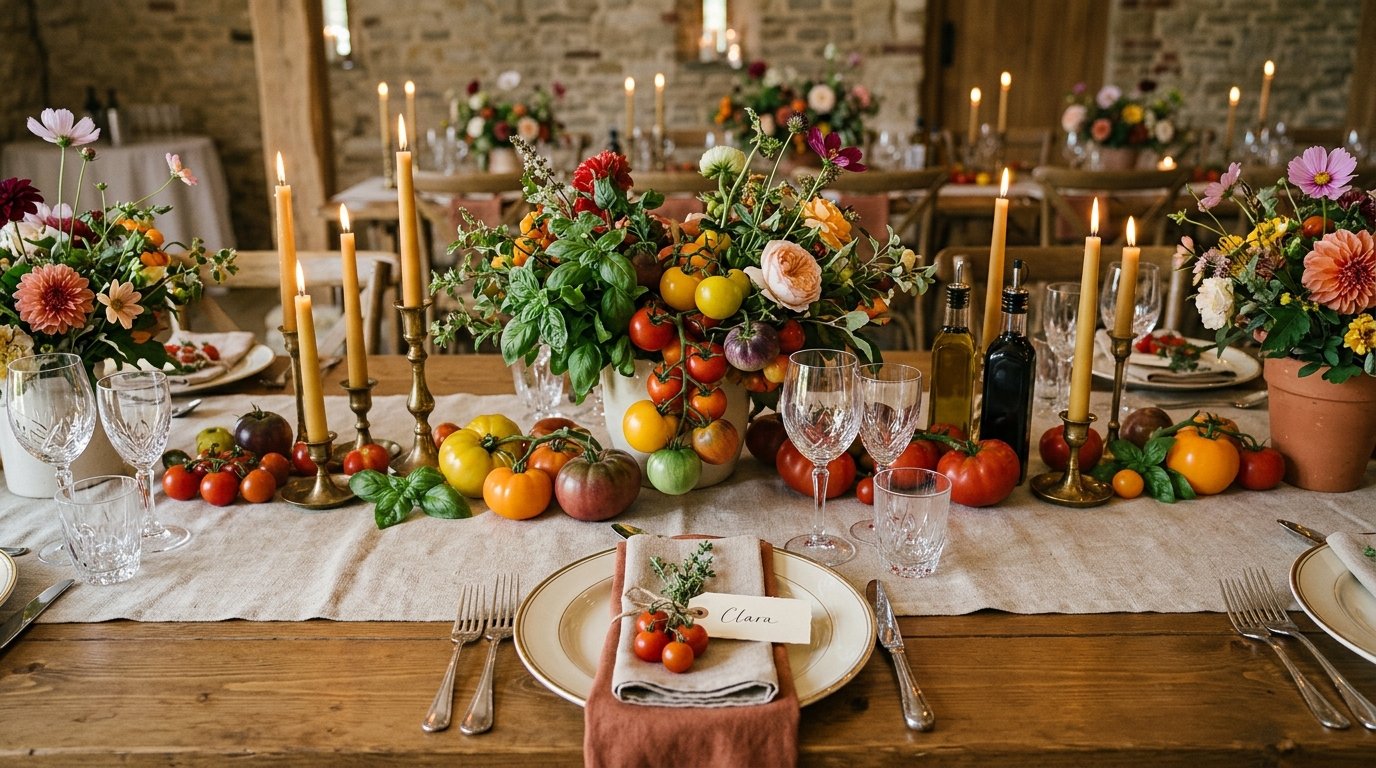
The first is Italian wedding photography. Long-table outdoor banquets at Italian agriturismo venues — the farm-estate weddings that have dominated UK aspirational wedding media since 2022 — consistently feature kitchen produce on the table alongside flowers. The visual language of an Italian summer table: a terracotta urn of wildflowers, a plate of heritage tomatoes glistening in the heat, a bottle of olive oil, bunches of fresh basil. UK couples who have absorbed this aesthetic through social media are now asking for it at home.
The second is the broader Meadowcore shift. As tight, imported-rose bouquets have given way to wild, seasonal, locally-sourced arrangements, the same logic has extended to table decor. If the bouquet can feature cow parsley and cornflowers rather than Dutch roses, why can’t the centrepiece feature Tigerella tomatoes and artichokes rather than hothouse lilies?
The third driver is sustainability. Heirloom vegetables are seasonal UK produce. Unlike cut flowers, they do not require refrigerated transport from the Netherlands. They are edible after the wedding. They generate no floral waste. For couples who said in Bridebook’s 2026 survey that sustainability was “important” or “very important” to their wedding planning (83%), tomato-core is a practical expression of that value rather than a symbolic gesture.
The core elements

Heritage tomatoes
The signature of the trend. Heritage tomatoes come in a range of colours, sizes, and textures that no cultivated commercial tomato can match.
The most visually effective varieties for centrepieces:
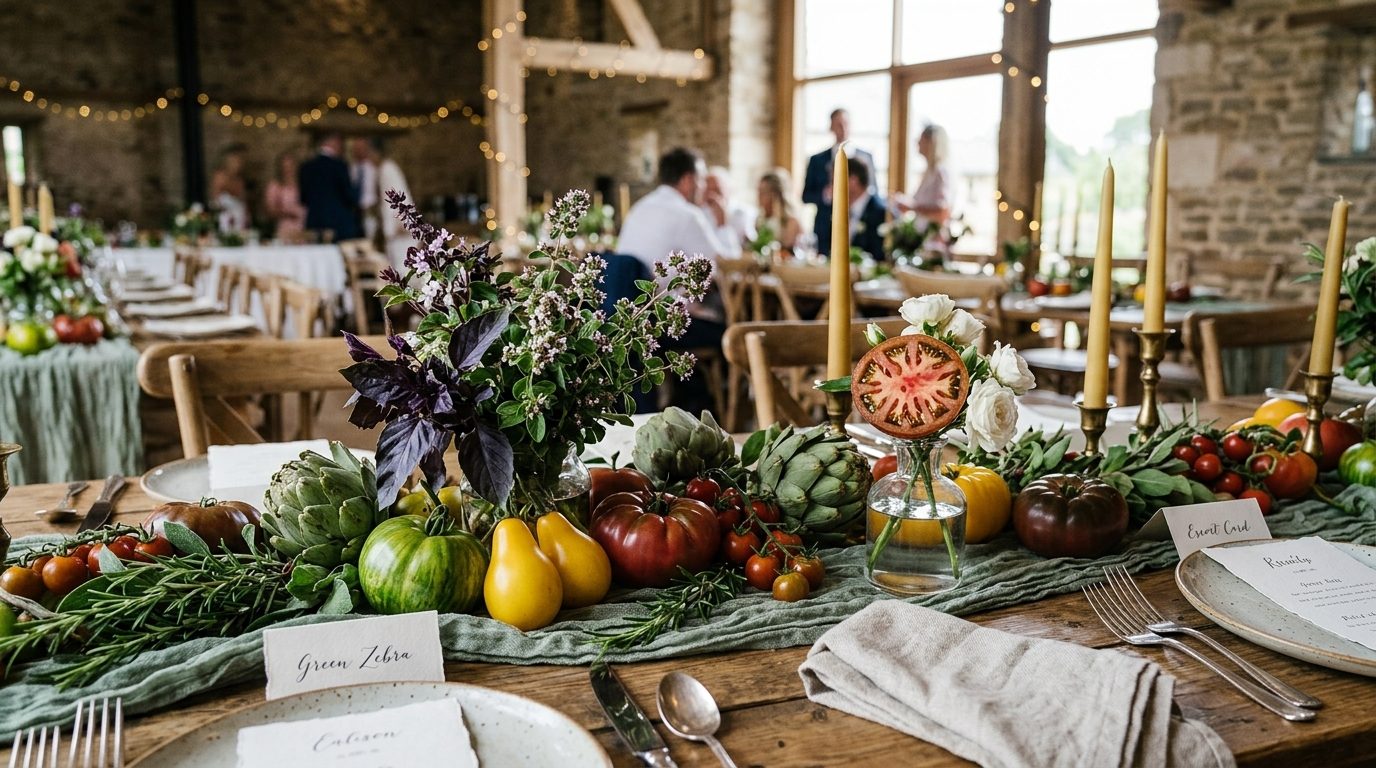
- Black Krim — dark, almost purple-black skin with a deep red interior. Creates a striking dark note.
- Tigerella — small, striped orange-red with yellow streaks. Abundant and eye-catching.
- Green Zebra — pale green with darker green stripes, ripening to yellow. Unexpected in a wedding context.
- Brandywine — large, irregular, deep pink-red. The classic heritage variety with visual drama.
- Yellow Pear — small, tear-drop shaped, bright yellow. Creates a light, playful counterpoint to darker varieties.
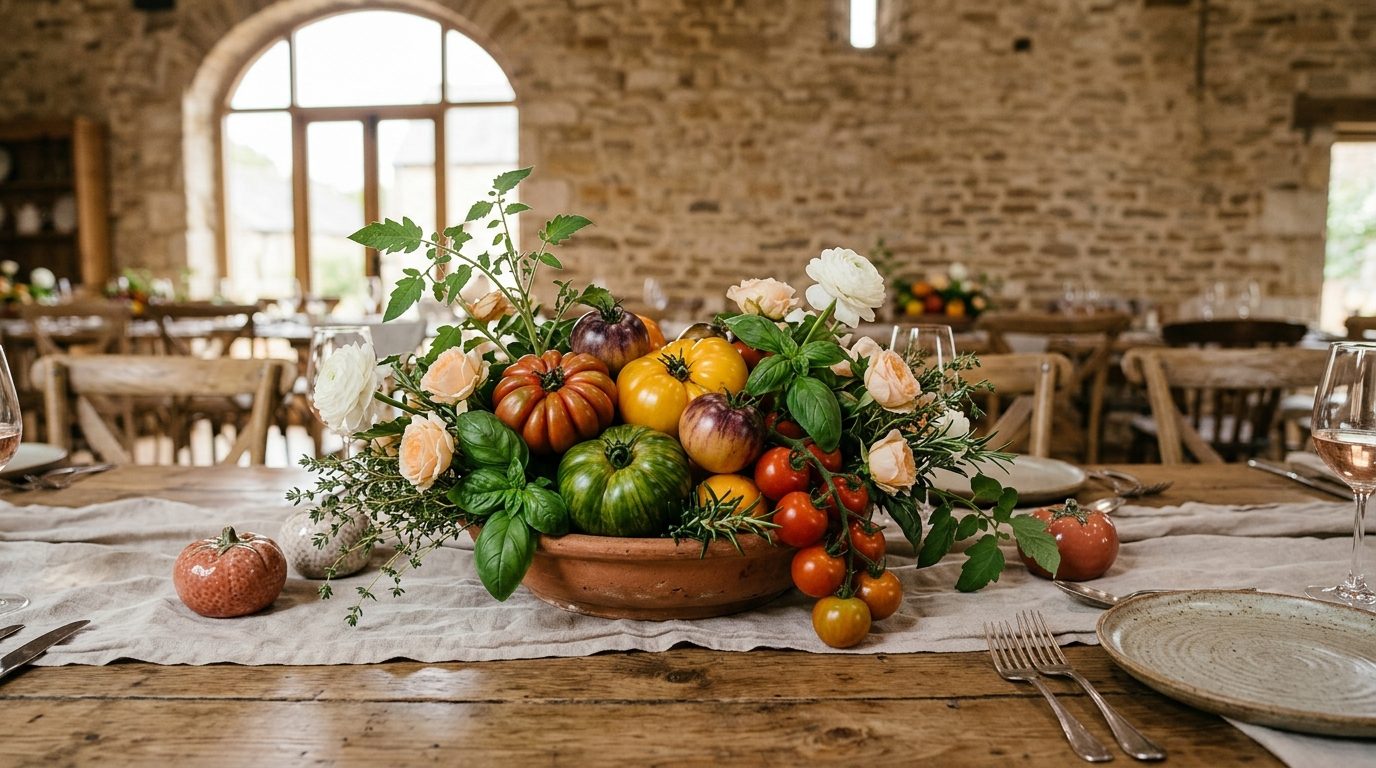
Mixed in a low terracotta bowl or piled loosely in a wooden crate, these varieties create a centrepiece with more colour and texture variety than most flower arrangements.
UK seasonal availability: July through October for greenhouse-grown heritage varieties; June-November for outdoor varieties in warm years. Out of season, specialist UK suppliers can provide greenhouse-grown heritage tomatoes year-round at a premium.
Artichokes
Globe artichokes — grey-green, architectural, and visually distinctive — are the structural element of tomato-core centrepieces. Three or four artichokes in a low arrangement provide height and drama. They are also edible (though not particularly appetising at room temperature for several hours). UK season: June-August.
Courgettes and courgette flowers
Courgettes in yellow and striped varieties, left on the stem, add length and texture. The courgette flower — bright yellow, structural, and visually unexpected in a wedding context — is the most photographed element in tomato-core centrepieces. UK season: June-September. Courgette flowers are extremely perishable and need same-day sourcing.
Fresh herbs
Bunches of basil, bundles of rosemary, and stems of oregano serve as both aromatic and visual elements. The scent of fresh basil on a reception table in the evening is part of the Italian-kitchen experience. Herbs are inexpensive, available year-round, and instantly recognisable.
Supplementary flowers
Tomato-core centrepieces are not exclusively vegetable — they typically include some flowers for colour and softness. The best partners:
- Sunflowers — the most natural companion to late-summer heirloom vegetables
- Calendula (pot marigolds) — bright orange, edible flowers
- Zinnias — available in deep reds, oranges, and yellows that suit the palette
- Dahlias in orange and terracotta — rich and abundant, overlapping naturally with the Paloma hues palette
See our meadowcore wedding florals guide for how to blend vegetable-forward arrangements with wildflower elements.
How to style a tomato-core table
The visual structure of a successful tomato-core centrepiece:
Height: One tall element — a bunch of sunflowers, a stem of artichoke in flower, or a few tall fennel fronds. Height prevents the arrangement from reading as flat.
Volume: The heritage tomatoes provide the massed colour. Pile them generously; sparseness defeats the aesthetic. A bowl containing 12-15 mixed heritage tomatoes reads correctly. Six tomatoes in a large bowl reads sad.
Texture variation: Mix small tomatoes (Tigerella, Yellow Pear) with large irregular heritage varieties (Brandywine). Add artichokes for smooth-grey texture. Courgettes for green length. Bunches of fresh basil for dark-green aromatic contrast.
Vessels: Terracotta bowls, wooden crates, rough-glazed ceramic platters, and woven baskets. No chrome or silver — too industrial and cold. No clear glass vases — the arrangement needs a solid base rather than a transparent one. No formal floral oasis foam — the vegetables are simply rested or propped.
Table linens: Natural linen or undyed cotton. Avoid white — it reads as formal and fights the earthy aesthetic. Dusty sage, warm cream, or natural jute table runners work well.
What it costs
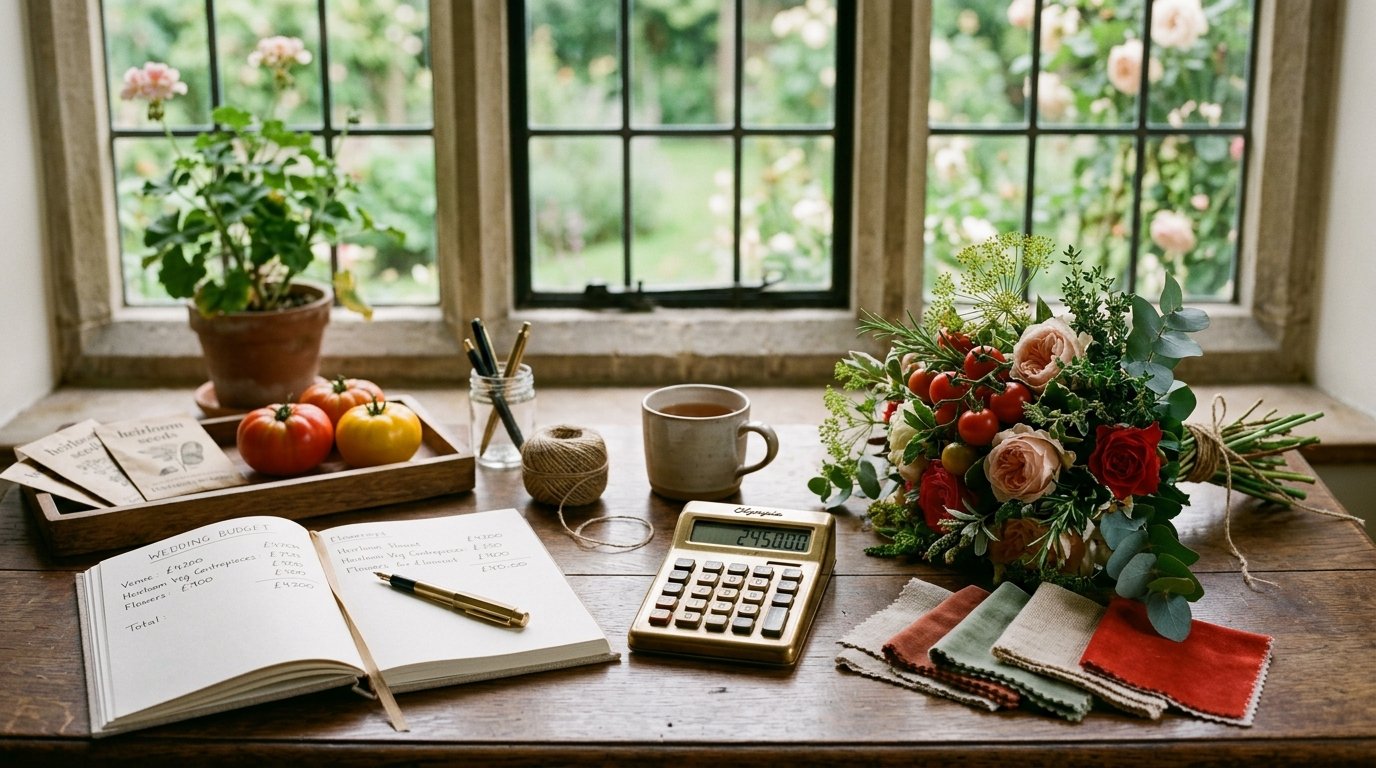
A full tomato-core centrepiece using heirloom tomatoes, an artichoke or two, courgettes, fresh herbs, and supplementary flowers costs approximately £40-£120 per table from a specialist UK supplier, depending on complexity and season.
By comparison, a traditional floral centrepiece of similar visual scale typically runs £80-£200 per table. Tomato-core is genuinely cheaper in most configurations because the cost of heritage vegetables per unit of visual impact is lower than the cost of imported cut flowers.
For couples willing to source directly from UK market garden growers, the costs fall further. A market-garden box of heritage tomatoes for a 10-table reception might cost £80-£120 total, with vessels and herbs adding another £60-£100. Total DIY cost: £180-£220 for 10 tables, versus £800-£2,000 for conventional florals.
See our wedding centrepiece ideas guide for a full cost comparison across different centrepiece styles.
Venues that suit tomato-core
The aesthetic requires the right physical context.
Italian-style venues and Tuscan-inspired spaces — several UK wedding venues have been designed or landscaped to evoke the Italian countryside. Babington House in Somerset, Villa Corallo in the Peak District, and the gardens at Aynhoe Park have been used for this aesthetic. Any venue with terracotta tiling, vine-covered stone walls, or olive trees in pots is a natural setting.
Kitchen garden estates — venues attached to working kitchen gardens, where the produce can be sourced directly from the estate’s own grounds, create a direct-to-table provenance story. Daylesford Organic, Soho Farmhouse, and various National Trust properties with kitchen gardens have hosted wedding receptions in this style.
Outdoor banquet spaces — long tables under canvas marquees or in open fields suit this aesthetic better than formal indoor rooms. The Italian trattoria reference is most legible when guests are eating outside.
Barn and farm receptions — the agricultural setting makes the vegetable centrepieces feel contextually appropriate rather than eccentric.
What works less well: Ballrooms, formal hotel dining rooms, and highly decorated classical interiors. The aesthetic is too informal for spaces that expect white-linen formality.
The sustainability angle
Tomato-core is genuinely the most sustainable centrepiece approach currently in mainstream UK wedding planning.
Conventional cut flowers in UK weddings are largely Dutch-imported, kept in cold storage, and transported at high energy cost. They are discarded after the reception. A large wedding using conventional florals for 20 tables generates substantial waste.
Tomato-core centrepieces, sourced from UK market gardens, have a fraction of the transport footprint. They are edible after the reception — many couples arrange for guests to take tomatoes home, or have kitchen staff use them in a post-reception meal or staff lunch. No waste.
For the 83% of 2026 UK couples for whom sustainability is a planning consideration, this is a meaningful choice rather than a styling whim.
Related articles
Frequently asked questions
What is tomato-core at a wedding?
Tomato-core is a wedding decor style that uses heirloom vegetables — particularly heritage tomatoes in multiple colours and varieties — as the centrepiece element alongside flowers. The aesthetic references Italian trattoria tables, kitchen gardens, and late-summer abundance.
What vegetables are used in tomato-core wedding centrepieces?
Heritage tomatoes are the signature — varieties like Black Krim, Tigerella, Green Zebra, Brandywine, and San Marzano in multiple colours. Supporting elements include aubergines, small peppers, courgettes with flowers, artichokes, fennel fronds, and bundles of fresh herbs.
How much does a tomato-core centrepiece cost?
A full tomato-core centrepiece using heirloom tomatoes, artichokes, fresh herbs, and supplementary flowers costs £40-£120 per table from a specialist supplier. This is often 30-50% less than a comparable traditional floral centrepiece of the same visual scale.
Where can I source heirloom tomatoes for UK wedding centrepieces?
Specialist UK vegetable growers, farmers' market suppliers, and kitchen garden estates. The Heritage Seed Library and Riverford's wholesale arm both stock heritage varieties. For larger orders, UK market garden networks can supply specific varieties on request with 4-6 weeks' notice.
What venues suit a tomato-core wedding?
Italian-style venues, converted farmhouses, kitchen garden estates, outdoor banquet spaces, and barn reception rooms with exposed wood or brick. The aesthetic requires a warm, informal setting — grand hotel ballrooms and formal chandeliered rooms work against it.
Can tomato-core centrepieces be eaten after the wedding?
Yes — and this is part of the appeal. Heirloom tomatoes at room temperature for a few hours are still edible; many couples plan for guests to take them home or have kitchen staff use them in post-reception meals. It is genuinely zero-waste in a way that flower petals are not.