11 UK Wedding Traditions That Are Outdated in 2026
Key Takeaways
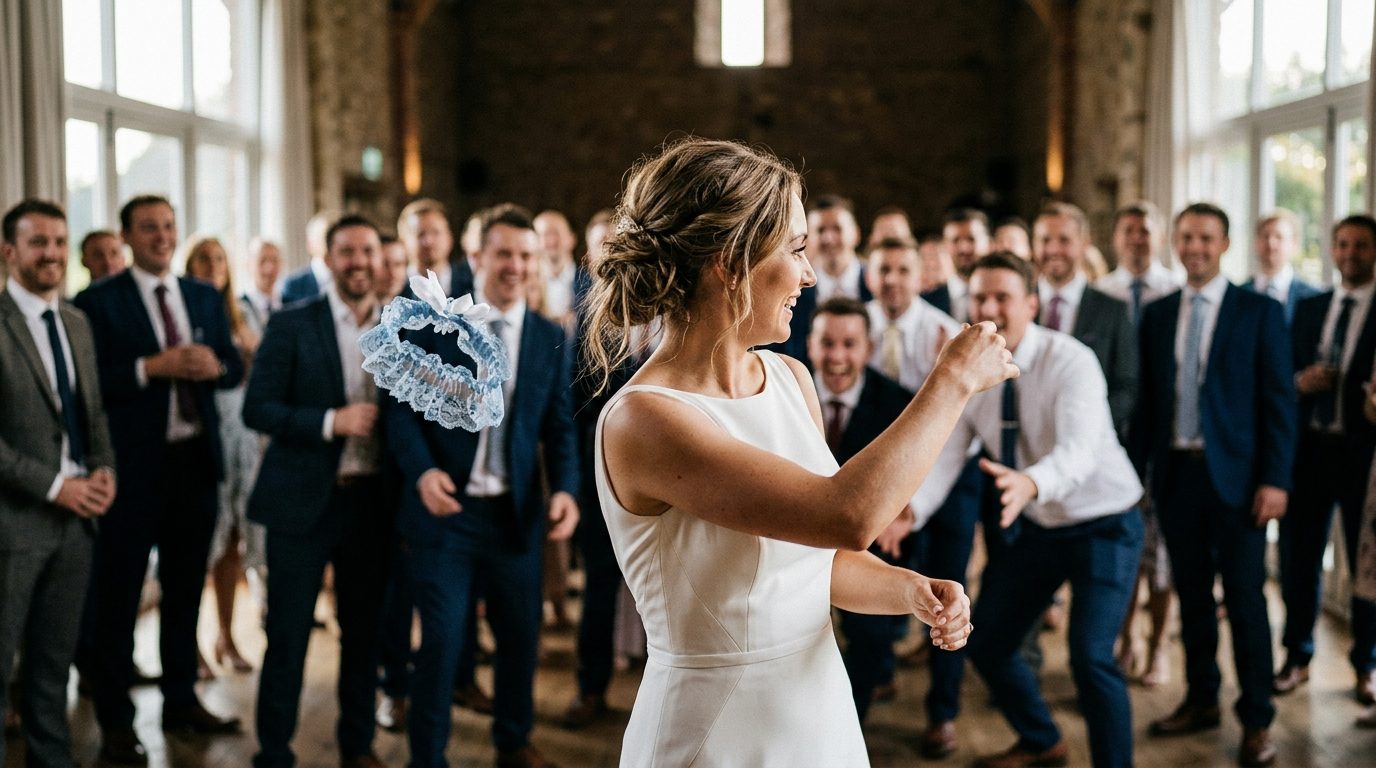
- The garter toss is the most commonly dropped tradition — removed by 71% of surveyed couples who mentioned it at all
- The bouquet toss is dropping fast too: 58% skipped it, citing discomfort for single guests and dated assumptions about marriage being the goal for all women
- The 'father gives away the bride' script is being rewritten by 44% of couples — some replacing it entirely, others updating the language
- Most dropped traditions are not controversial among guests — in 94% of cases, no guest complained about the omission
1. The garter toss
“We didn’t even have to decide not to do it,” one bride from Sheffield told us. “It simply never came up. Our photographer didn’t ask, our venue didn’t suggest it. It’s just gone.”
There is nothing to replace it with. It can simply be omitted. Virtually no guest will notice.
2. The bouquet toss
Dropped by 58% of couples. The tradition requires gathering all unmarried women at the reception, framing their status explicitly as a group, and having them scramble for a token that “predicts” which one will marry next.
For couples with guests who are single by choice, widowed, divorced, in long-term relationships without plans to marry, or simply uncomfortable with public attention, the moment creates awkwardness rather than joy.
Couples who want to do something at the end of the bouquet’s life often give it directly to a specific guest — a grandmother, a recently married friend, a sibling.
3. “Who gives this woman?”
The phrase positions the bride as something to be handed over, and the father (or mother and father) as parties whose consent matters to the transaction. In a ceremony that is supposed to be two adults choosing each other, the framing sits awkwardly.
Alternatives couples are using: the officiant addresses both families (“Who loves and supports this couple?”), both families respond together, or the question is removed and replaced with a moment where both sets of parents stand and are thanked.
4. Matching bridesmaid dresses
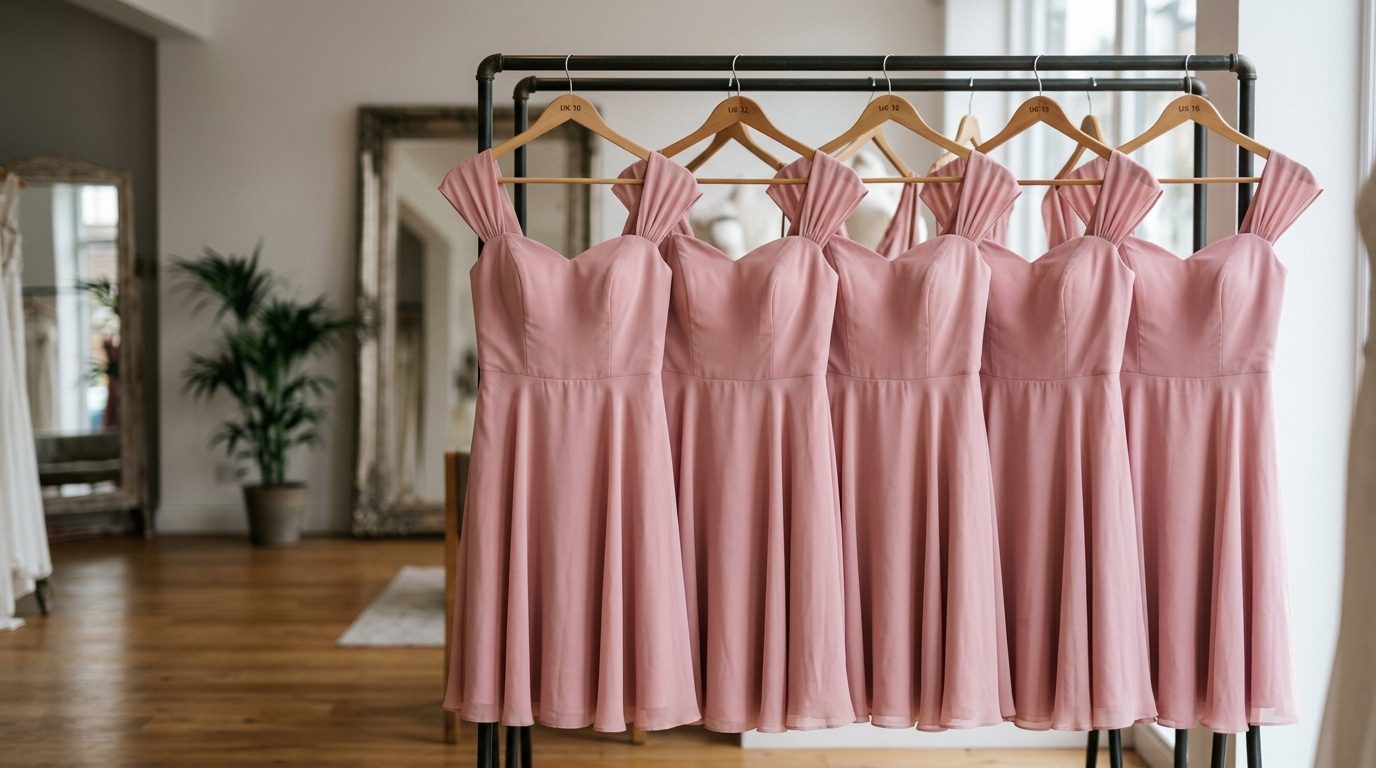
The practical driver is significant: bridesmaids have different body shapes, skin tones, budgets, and comfort levels. A single cut that flatters all of them is rarely achievable. The mix-and-match approach produces better visual results and generates less resentment.
If you still want visual coherence, a consistent colour — dusty rose, sage green, navy — with flexible silhouettes achieves it without the identical-dress problem.
5. The receiving line
A formal receiving line — where all guests file past the wedding party to greet each one individually immediately after the ceremony — is time-consuming (typically 30-90 seconds per guest), physically tiring for elderly guests who have been standing, and means the couple misses the beginning of their own drinks reception.
The receiving line originated in formal court protocol. For an informal barn wedding in Kent, it is out of place entirely.
6. The wedding cake as the only dessert
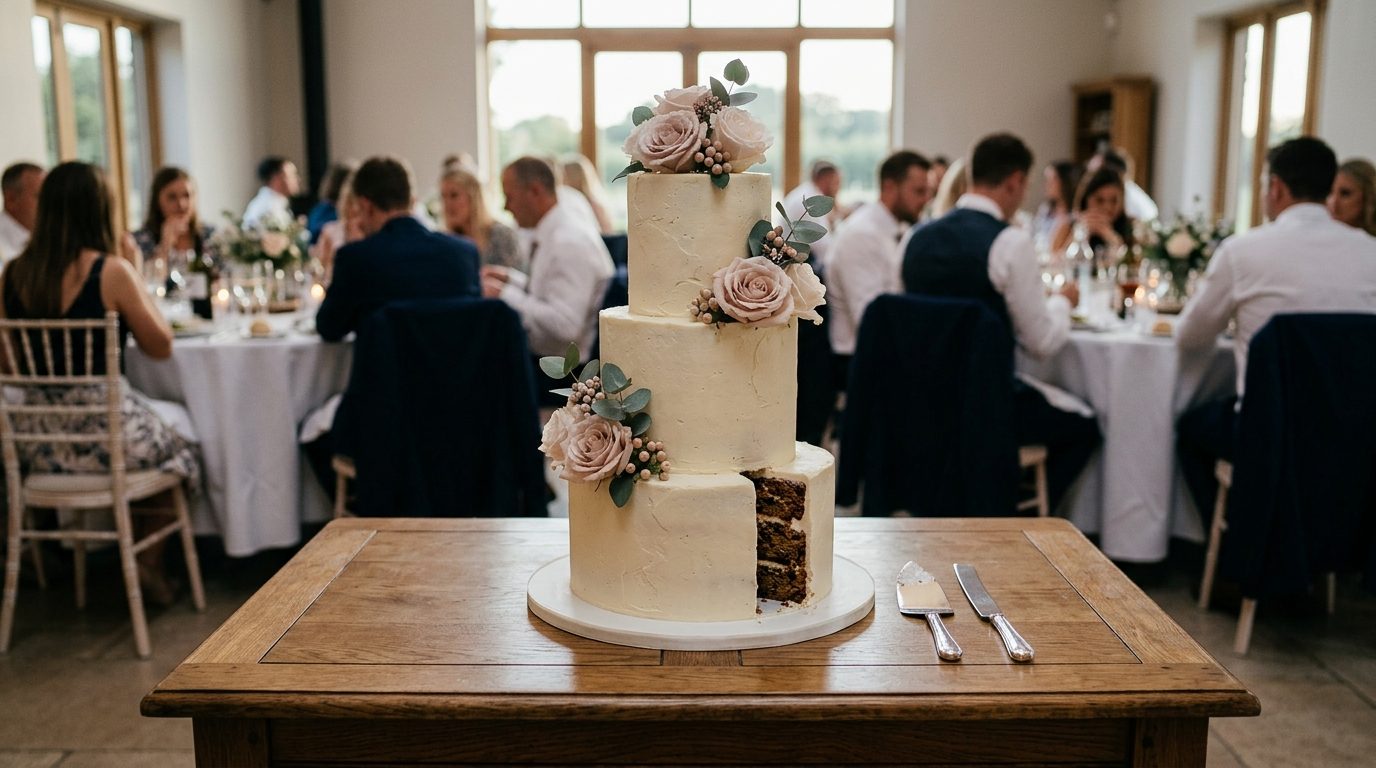
Alternatives: cheese towers (the most common substitution in the UK, with a real following among couples who do not like sweet desserts), individual mini-cakes at each place setting, doughnut walls, croque-en-bouche, dessert tables, or no dessert centrepiece at all beyond the pudding course.
For couples who do want a cake, the “cutting the cake” ceremony remains meaningful regardless of what the cake is — it does not have to be traditional fruit cake.
7. The first dance as a defined moment
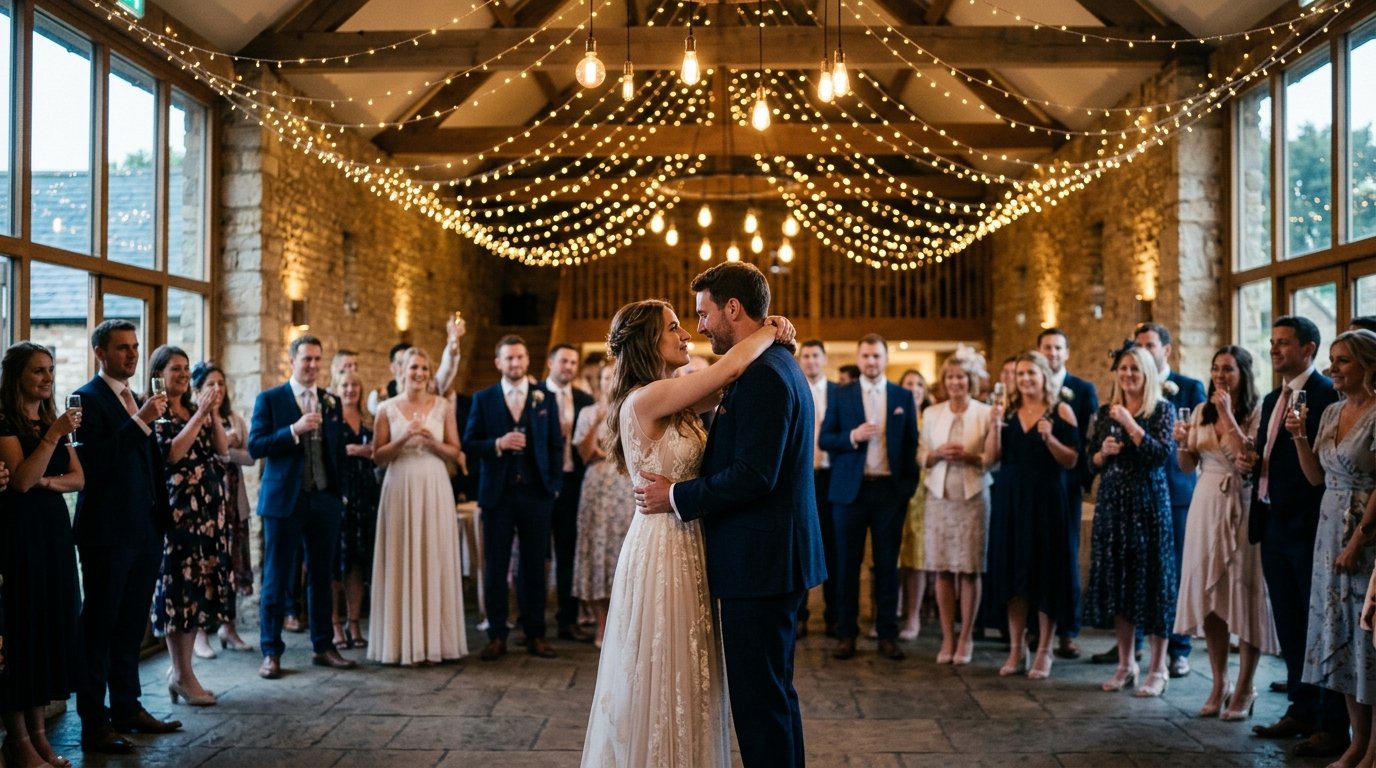
The tradition of clearing the dancefloor, dimming the lights, and having the couple dance alone while 80 people watch silently is stressful for couples who are not comfortable dancing and can feel performative for guests who have just eaten.
The tradition works beautifully for couples who love dancing. For those who don’t, removing it costs nothing.
8. The speeches before the meal
In traditional UK wedding format, speeches happen before the wedding breakfast. This means guests sit hungry through 20-40 minutes of speeches before eating. It also means the best man delivers a speech to a room where nobody has had a drink yet (or has had too many during the drinks reception).
About 34% of couples have moved speeches to between courses, after the main course, or to a point later in the evening. Most caterers prefer this format because it gives them better control over service. Most guests prefer it because they are not hungry. Most speakers prefer it because the room is warmer.
There is no rule requiring speeches before the meal. In many European countries, the tradition does not exist at all.
9. The head table as a separate tier
The raised top table — couple, parents, best man, bridesmaids, seated above the guests on a platform or stage — is an inheritance from medieval hall dining. It creates a visible hierarchy where the couple and their chosen few are literally elevated above everyone else.
10. Confetti (paper or plastic)
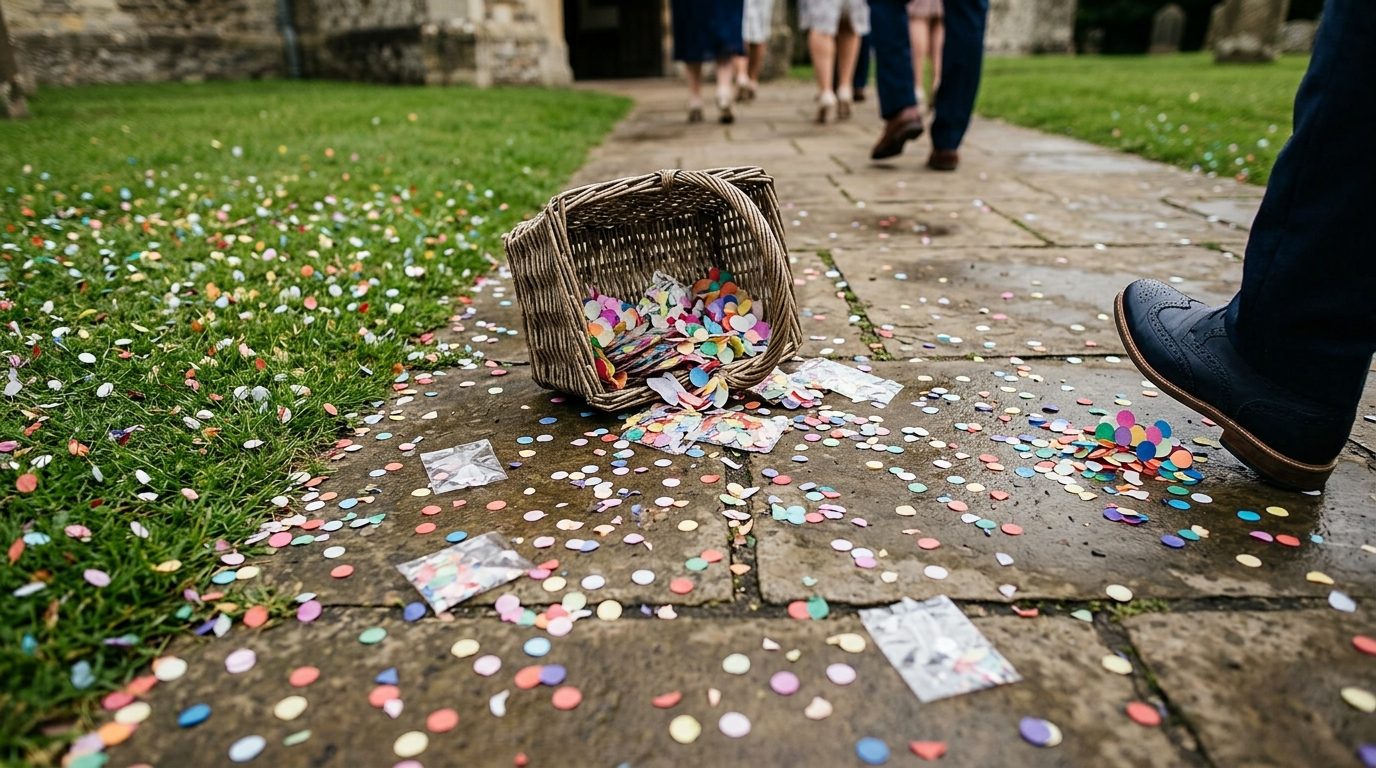
Paper and plastic confetti is banned at approximately 60% of UK wedding venues due to grounds maintenance and the environmental impact. Many venues specify biodegradable alternatives, and some ban any confetti entirely.
Couples are not abandoning the confetti exit as a moment — they are changing the material. Dried petal confetti (rose petals, lavender), seed paper, and fresh flower heads are the most common alternatives. These are typically more photogenic than paper confetti and decompose naturally.
For venues that allow no confetti at all, couples use bubbles, ribbon wands, sparklers (usually permitted in outdoor spaces), or a simple walking exit.
11. The “something old, something new, something borrowed, something blue” checklist
Couples who do observe it have moved away from treating it as an obligation and towards treating it as an optional ritual with personal meaning. The grandmother’s earrings, the sister’s ring, the blue thread sewn into the dress — these work when the items mean something. They are hollow when the couple is scrambling to tick a box.
What to tell guests who expect tradition
The simplest framing: “We decided to keep the parts that mean something to us and skip the parts that don’t.” Most guests accept this entirely. The minority who object are almost always expressing general anxiety about change rather than specific attachment to the garter toss.
For further reading on which wedding traditions are legally required (very few) versus simply expected, the legal requirements for UK weddings guide covers what the law actually mandates. For the etiquette of managing guest expectations, how to uninvite someone from your wedding covers the harder end. For couples making changes to the ceremony format itself, the wedding ceremony planning guide covers the options available. The wedding guest etiquette guide addresses what guests are and are not entitled to expect. For couples considering a humanist ceremony that sidesteps many of these traditions by design, see what happens at a humanist wedding.
Frequently asked questions
Do you have to follow traditional wedding customs in the UK?
No. UK civil and religious ceremonies have legal requirements around vows and declarations, but the surrounding traditions are entirely optional.
Is it rude to skip the bouquet toss?
Not in 2026. Most guests expect it to be optional, and many prefer weddings that don't single out unmarried women in a group moment.
Can a bride give herself away at a wedding?
Yes. Many brides now walk alone, walk with both parents, or walk in with their partner. The choice is entirely theirs.
Is the garter toss still done at UK weddings?
Rarely.
Do you have to have a cake at a wedding?
No. Couples are replacing wedding cake with cheese towers, doughnut walls, croque-em-bouche, or no dessert centrepiece at all.
Should bridesmaids all wear the same dress?
This is entirely a couple's choice. Matching dresses are now less common than mix-and-match or individually chosen styles from a coordinating palette.
Is the 'something borrowed, something blue' tradition still relevant?
It is used by about half of UK couples. There is no obligation to observe it, but many couples enjoy the ritual even if they adapt it.