Home / Articles / Food & Drink
Vegan Wedding Menu Ideas: Full Guide
Key Takeaways
- A fully vegan wedding menu costs the same or less than a traditional one — plant proteins are cheaper than meat
- The best vegan wedding menus don't try to imitate meat — they showcase vegetables, grains, and pulses at their best
- Always offer at least 2 mains so guests with allergies (nuts, soy, gluten) have a safe option
- Vegan wedding cakes are now indistinguishable from traditional ones — most guests won't notice
- Tell guests the menu is plant-based on the invitation so nobody is surprised on the day
A plant-based wedding menu is no longer a compromise. The best vegan caterers are producing food that makes the meat question irrelevant — guests remember it was delicious, not that it was vegan.
Whether you’re both vegan, one of you is, or you simply want a plant-based menu for ethical or environmental reasons, this guide covers every course with proven ideas that work for all guests.
Canapes
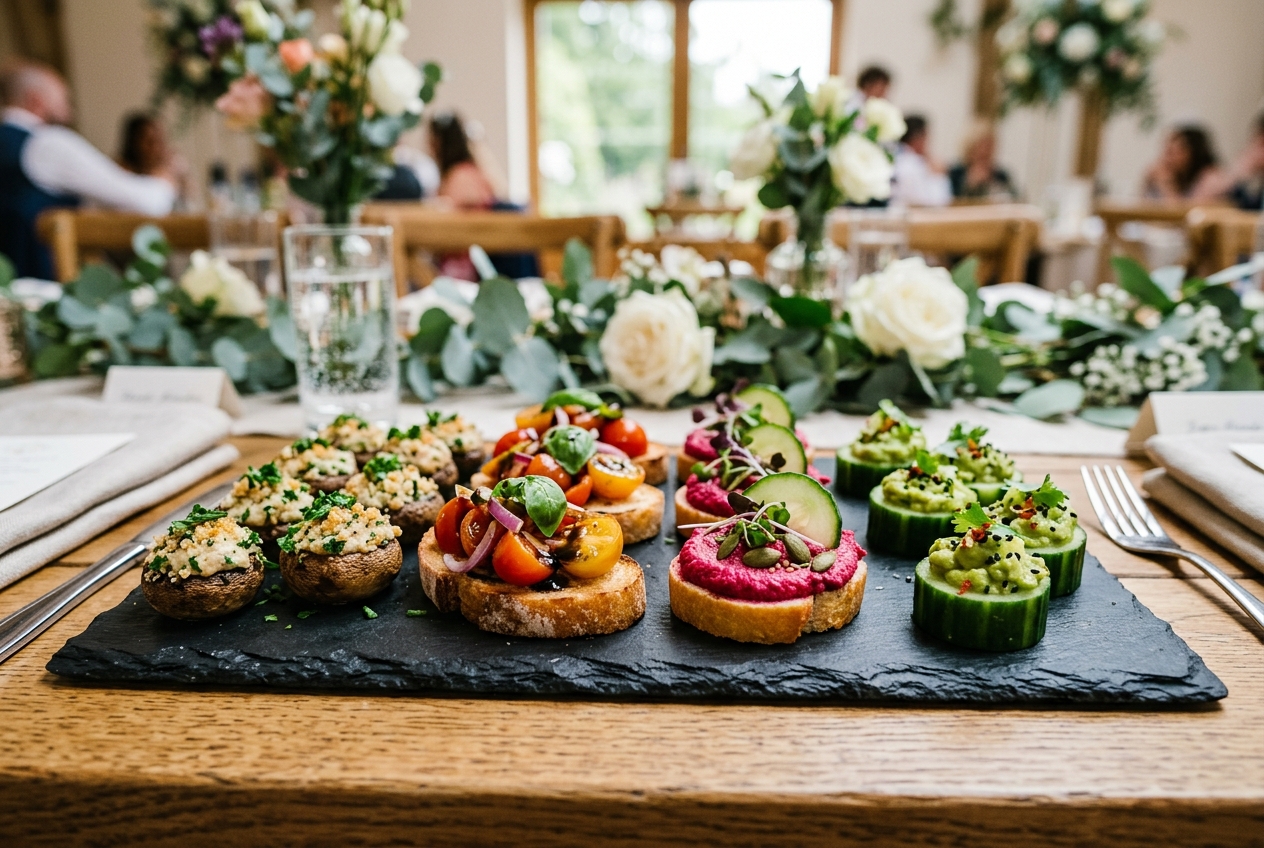
Canapes are where vegan menus shine. Small, punchy flavours work naturally with plant-based ingredients, and most guests don’t even register that there’s no meat.
Crowd-pleasers:
- Beetroot hummus on sourdough crostini with microgreens
- Smashed avocado and chilli on tortilla chips
- Stuffed baby peppers with cashew cream cheese
- Mushroom arancini with truffle mayo
- Sweetcorn fritters with sriracha and lime
- Mini falafel with tahini dip
- Bruschetta with roasted cherry tomatoes and basil oil
- Crispy tofu bites with sweet chilli
Plan 6-8 canapes per person for a one-hour drinks reception.
Starters
Light and seasonal:
- Roasted butternut squash soup with coconut cream and toasted seeds (GF)
- Heritage tomato and watermelon salad with basil oil and balsamic (GF)
- Charred broccoli with romesco sauce, toasted almonds, and pomegranate (GF)
- Pea and mint soup with sourdough croutons
Impressive:
- Beetroot carpaccio with horseradish cream (cashew-based), watercress, and walnut (GF)
- Wild mushroom crostini with truffle oil and rocket
- Roasted fig, walnut, and rocket salad with balsamic reduction (GF)
- Cauliflower and coconut soup with harissa oil (GF)
Main courses
This is where many vegan menus fail — by trying to imitate a traditional meat-and-two-veg plate. The best approach is to celebrate plant-based ingredients on their own terms.
Statement mains:
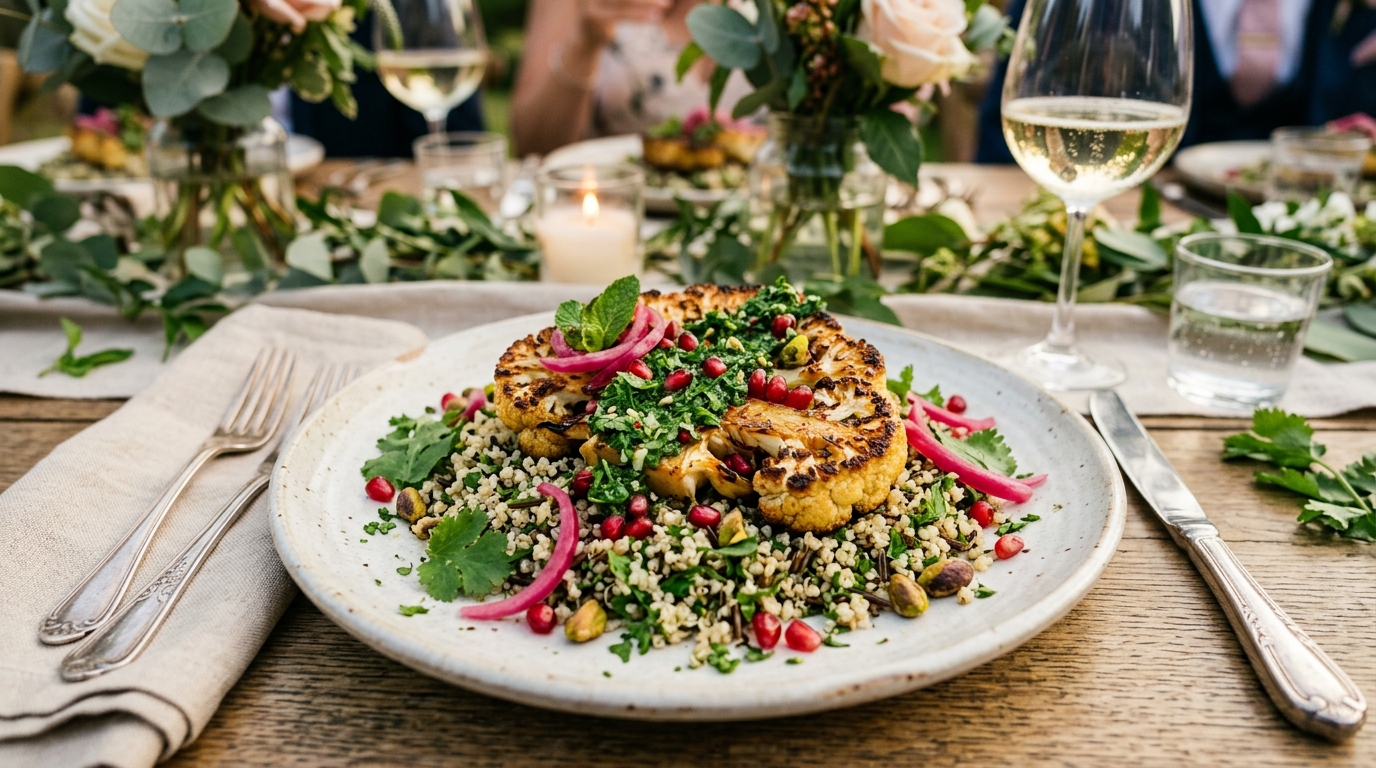
- Roasted cauliflower steak with chimichurri, pomegranate, and quinoa (GF)
- Wild mushroom and truffle risotto with crispy sage (GF)
- Aubergine and chickpea tagine with jewelled couscous and flatbread
- Stuffed butternut squash with wild rice, cranberries, and pecans (GF)
- Thai green curry with tofu, jasmine rice, and pickled vegetables (GF)
- Pumpkin and sage ravioli with burnt sage butter and toasted pine nuts
- Jackfruit rendang with coconut rice and sambal (GF)
- Harissa-roasted carrots with lentil dhal, naan, and raita (coconut-based)
Avoid:
- Limp vegetable lasagne (the default “vegetarian option” that nobody enjoys)
- Fake meat that tries too hard to replicate the real thing
- A plate that’s just sides without a centrepiece protein or vegetable
Always offer two mains so guests with nut, soy, or gluten allergies have a safe choice. Many vegan dishes rely on nuts or soy — make sure at least one option is free of both.
Desserts
Vegan desserts have improved dramatically. Most guests genuinely cannot tell the difference, especially with chocolate-based options.
Reliable choices:
- Dark chocolate fondant with coconut cream (naturally rich and dairy-free)
- Coconut panna cotta with mango and passion fruit coulis (GF)
- Sticky toffee pudding with date caramel sauce (easily veganised)
- Lemon and olive oil cake with berry compote
- Eton mess with aquafaba meringue and seasonal berries (GF)
- Chocolate and avocado mousse with salted caramel (GF)
- Apple and blackberry crumble with oat custard
Sharing desserts:
- Vegan brownie and blondie platters
- Fruit and sorbet selection (GF)
- Mini doughnut wall (many bakeries now offer vegan doughnuts)
- Churros with chocolate dipping sauce
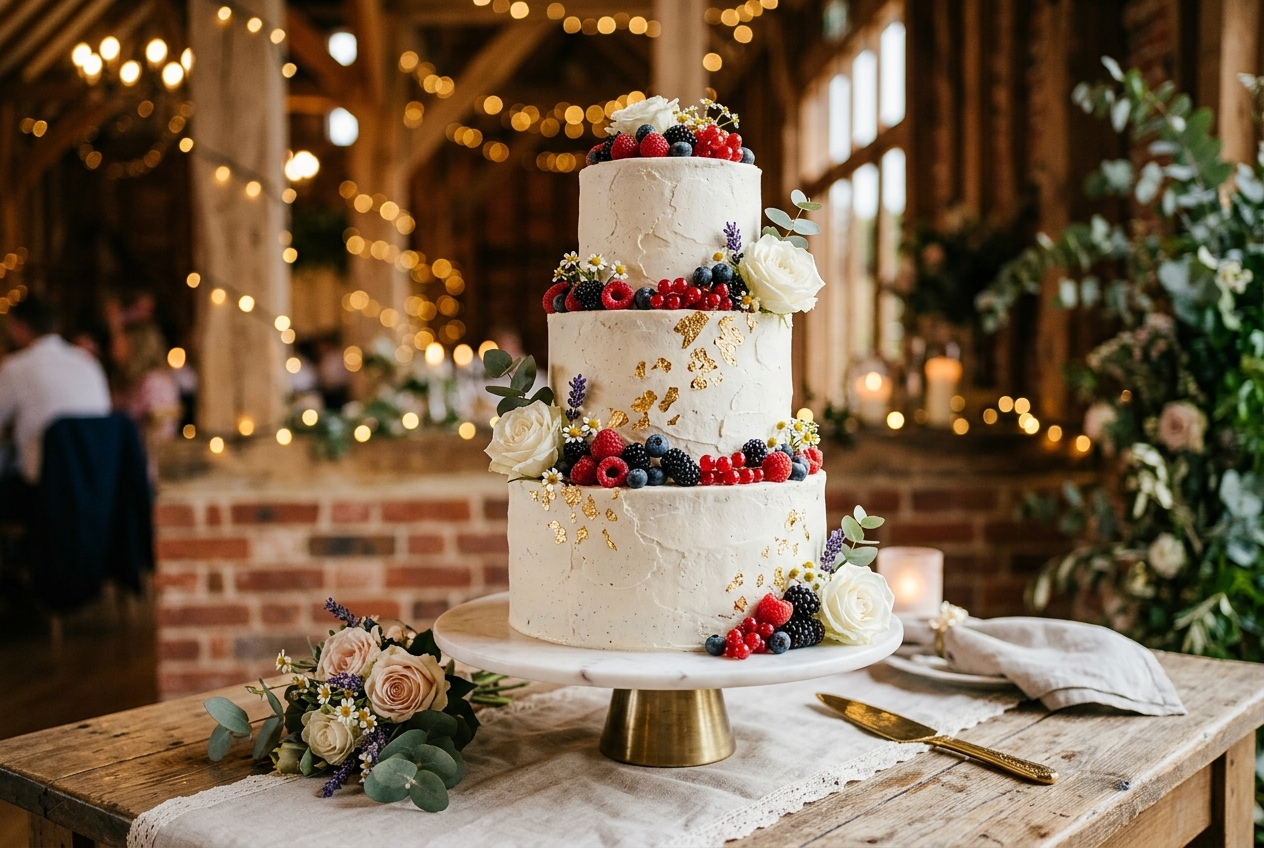
Vegan wedding cake
A skilled vegan baker can produce cakes that look and taste identical to traditional ones. The main substitutions:
| Traditional | Vegan Substitute |
|---|---|
| Eggs | Flax eggs, aquafaba, commercial egg replacer |
| Butter | Plant-based butter (Naturli, Flora Plant) |
| Milk | Oat milk, soy milk, coconut milk |
| Cream | Coconut cream, oat cream |
| Buttercream | Plant-based butter + icing sugar |
| Ganache | Dark chocolate + coconut cream |
Expect to pay: £300-700 for a 3-tier vegan wedding cake, compared to £250-600 for a traditional one. The premium is small and shrinking as vegan baking becomes mainstream.
Popular vegan cake flavours:
- Chocolate fudge (the easiest to veganise and the hardest to distinguish from traditional)
- Lemon drizzle with elderflower buttercream
- Carrot cake with coconut cream cheese frosting
- Red velvet with plant-based cream cheese
- Victoria sponge with jam and coconut cream
Evening food
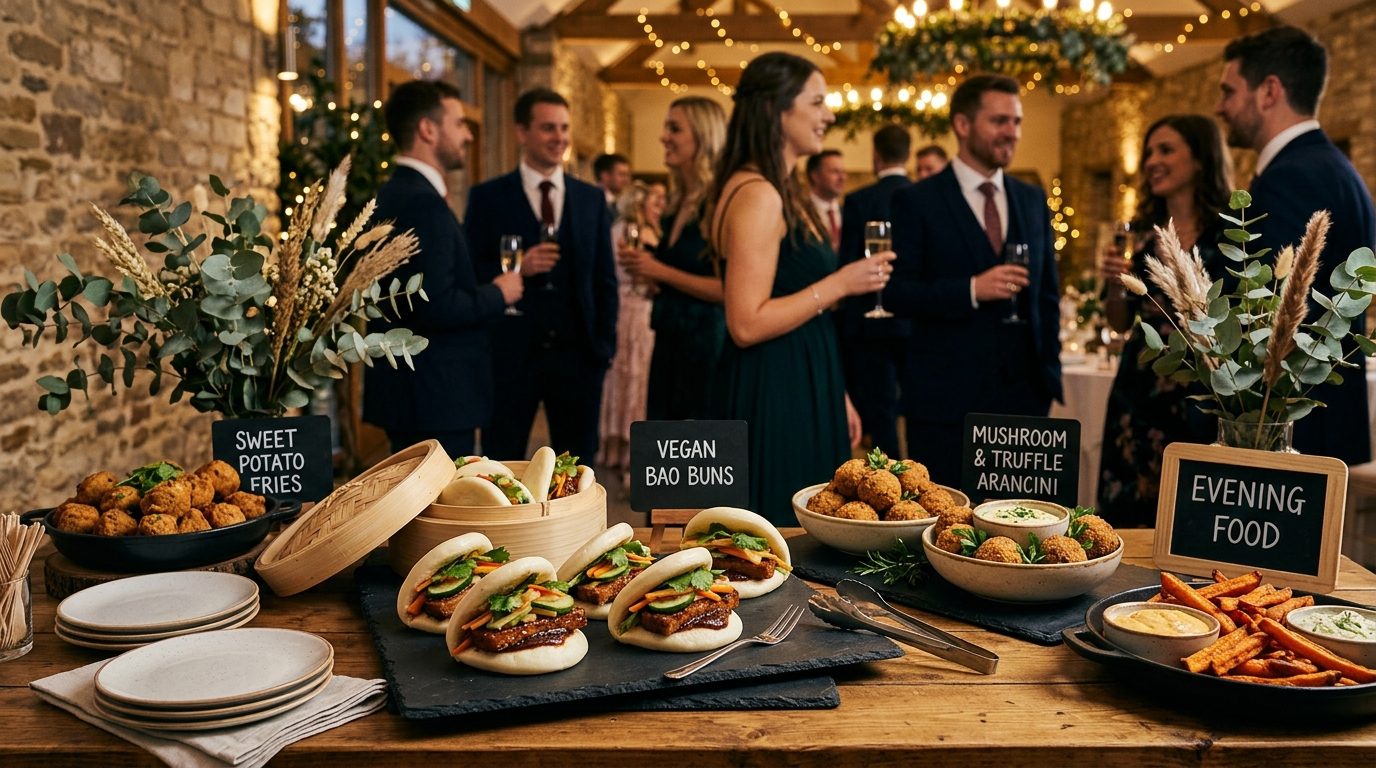
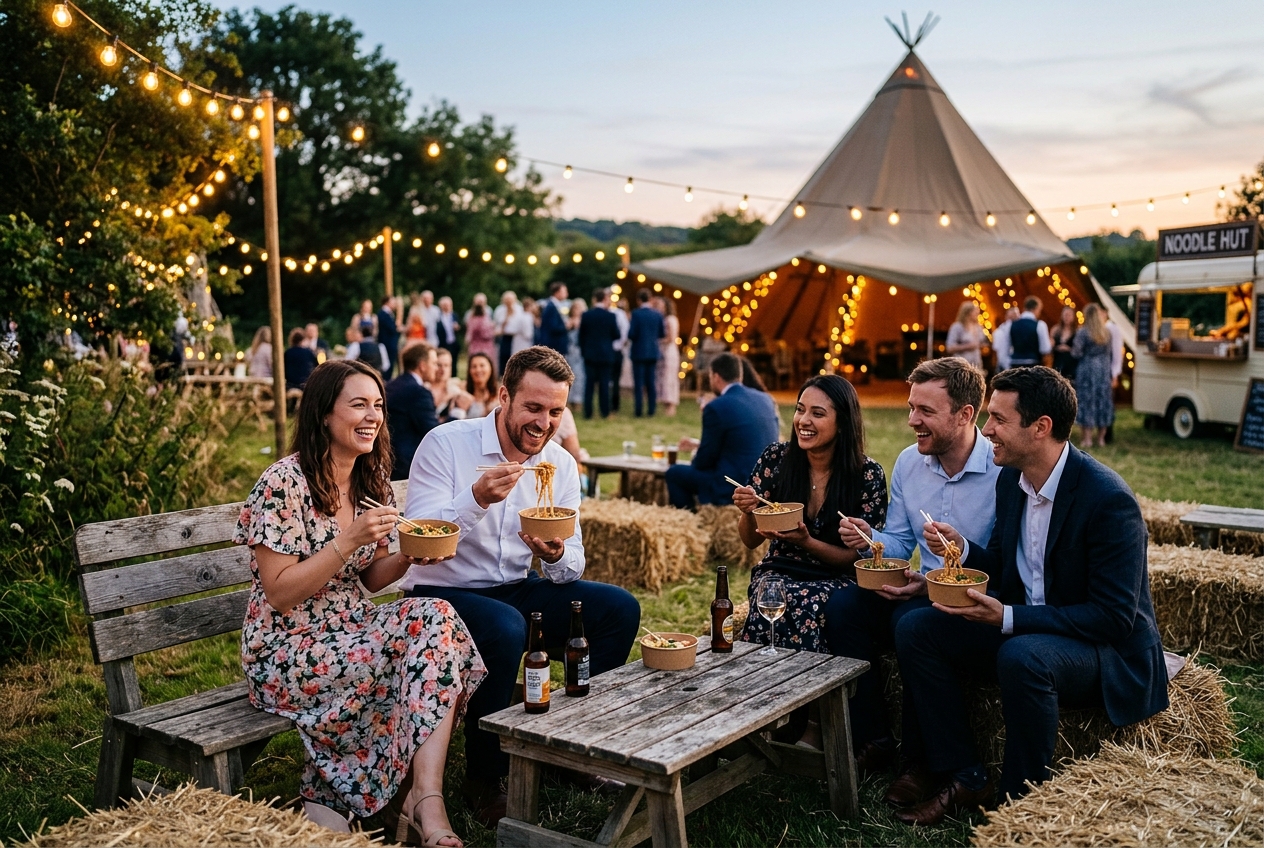
Late-night food should be simple, comforting, and easy to eat standing up. Many classic evening foods are naturally vegan or easily adapted:
- Chips with curry sauce (VG/GF)
- Margherita pizza slices (VG with vegan mozzarella)
- Falafel wraps with hummus and salad
- Loaded nachos with guacamole, salsa, and cashew sour cream (GF)
- Spring rolls with sweet chilli dip
- Jacket potatoes with beans and vegan cheese
- Doughnuts and churros
Sample three-course menu
Here’s a complete vegan menu that works for weddings of any size:
Canapes (drinks reception): Mushroom arancini / Beetroot hummus crostini / Avocado and chilli tortilla chips / Falafel with tahini
Starter: Roasted butternut squash soup with coconut cream and toasted pumpkin seeds (GF)
Main (choice of two):
- Roasted cauliflower steak with chimichurri, pomegranate, and herbed quinoa (GF, nut-free)
- Wild mushroom and truffle risotto with crispy sage and parmesan-style topping (GF, soy-free)
Dessert: Dark chocolate fondant with coconut cream and raspberry coulis (GF)
Evening: Margherita pizza slices / Loaded nachos / Churros with chocolate sauce
Cost: £45-75 per head for the full menu, depending on caterer and region.
Tips for making it work
Tell guests in advance. A simple note on the invitation or wedding website: “Our wedding menu is fully plant-based, crafted by [caterer name].” Frame it as a positive choice, not a restriction.
Don’t apologise. If the food is good, nobody cares that it’s vegan. Apologising draws attention to what’s absent rather than what’s present.
Book a caterer who specialises in vegan or plant-based food. A traditional caterer adding vegan options as an afterthought will produce afterthought food. A plant-based specialist will produce food that happens to be vegan.
Do a tasting. This is non-negotiable. Taste the actual dishes before committing.
For more on catering costs: wedding catering cost per head UK
Browse wedding caterers on Weddings Hub to find plant-based caterers in your area.
Frequently asked questions
Is a vegan wedding menu more expensive?
No. A vegan wedding menu typically costs the same or less than a traditional menu. Plant proteins (chickpeas, lentils, beans, tofu) are cheaper than meat and fish. Premium ingredients like truffle, artisan mushrooms, and exotic vegetables can increase costs, but the baseline is lower.
Should I tell guests the wedding menu is vegan?
Yes. Mention it on the invitation or wedding website so guests know what to expect. Most people are happy with vegan food when it's well-prepared, but being surprised can cause friction — especially with older relatives. Frame it positively: highlight the dishes, not the restriction.
What if some guests won't eat vegan food?
In practice, this is rare when the food is good. Most people eat plant-based meals regularly without thinking of them as vegan. If you're concerned, offer a varied menu with familiar dishes (pasta, risotto, curry) rather than exclusively unfamiliar items. You can also offer one non-vegan option alongside plant-based choices.
Can wedding cakes be vegan?
Yes. Vegan wedding cakes replace eggs with flax, aquafaba, or commercial egg replacers, and use plant-based butter and milk. A skilled baker produces results that are visually and taste-wise indistinguishable from traditional cakes. Expect to pay £50-100 more than a standard cake due to specialist ingredients and techniques.