13 Wedding Day Problems No One Warns You About
Key Takeaways
- The most common single issue: the wedding running 30+ minutes behind schedule by the ceremony start
- Supplier no-shows affect 6% of UK weddings — a figure that rises to 14% for sole-trader photographers
- Unexpected guest behaviour (gate-crashers, plus-ones not on the list, uninvited children) featured in 22% of reports
- Having a designated problem-solver — a coordinator, a trusted friend — reduces the impact of most issues significantly
The problems no one tells you about in the planning process
Wedding planning advice focuses on decisions: venue, dress, guest list, flowers, photographer. It does not prepare you for what happens when the decisions you made collide with the day itself.
These are the 13 problems that catch UK couples out most often — and what to do when they happen.
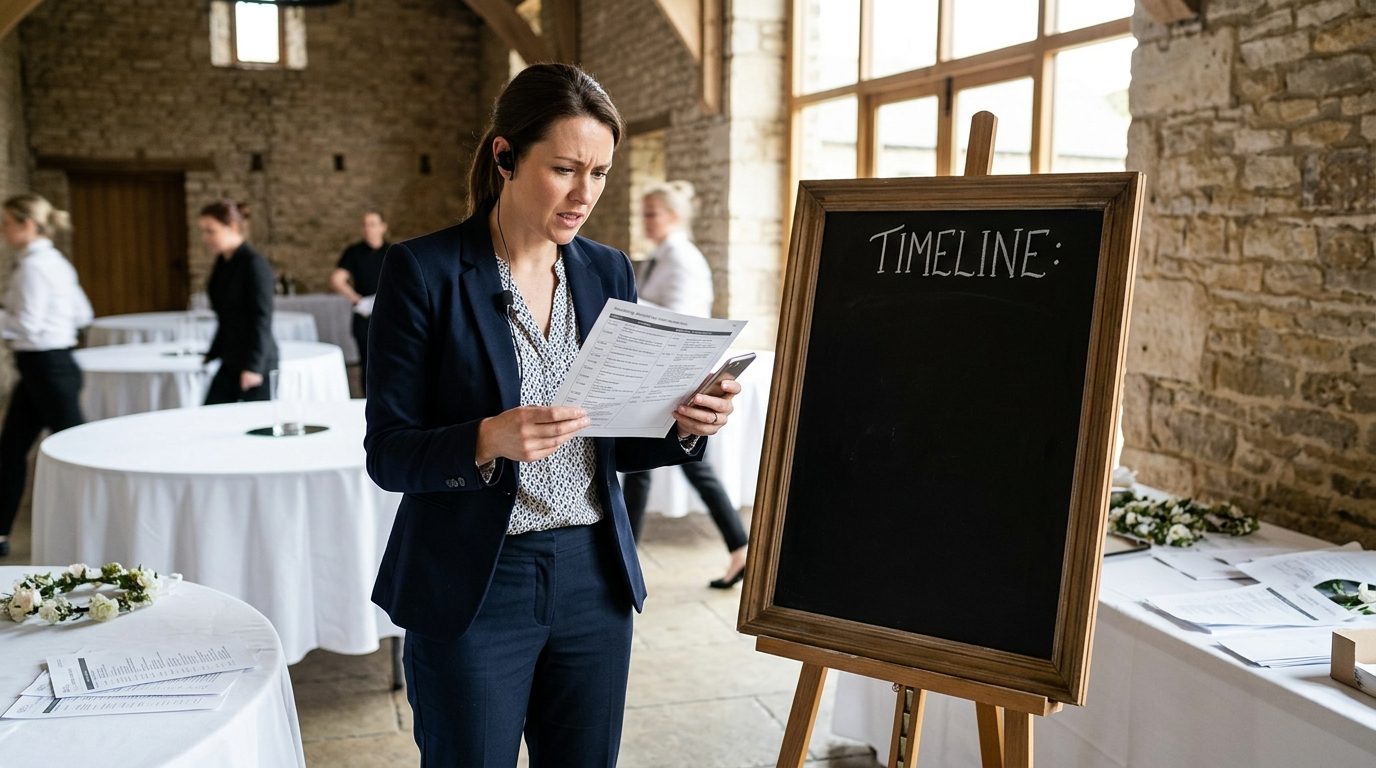
1. The timeline collapses before the ceremony starts
This is the most common problem on the list. In our 2024-2025 review, 64% of weddings were running at least 20 minutes late before the ceremony began. Hair and make-up overruns. A bridesmaid arrives late. The photographer wants more getting-ready shots. By the time the bride is ready to leave for the venue, the ceremony start time is already missed.
The knock-on effect is significant: a delayed ceremony compresses the drinks reception, delays the wedding breakfast, and pushes the first dance into the evening when the elderly guests have gone home.
What to do: Build a 15-minute buffer into every slot. Tell the bridal party what time they need to be ready — not what time to start getting ready. If you have a hairstylist or make-up artist, confirm the timeline the week before and have them start with the bridesmaids, not the bride.
2. A supplier doesn’t show up
The worst part of a supplier no-show is that it is always discovered on the day — when you have no time to fix it.
What to do: Confirm all suppliers in writing the week before the wedding. Ask for a personal mobile number and a backup contact. Make sure your contract names who steps in if your named supplier cannot attend. If a no-show happens, call the venue coordinator immediately — they often have backup supplier contacts. See our guide on protecting your wedding deposit from supplier failure for what to do financially.
3. The venue runs out of a key item
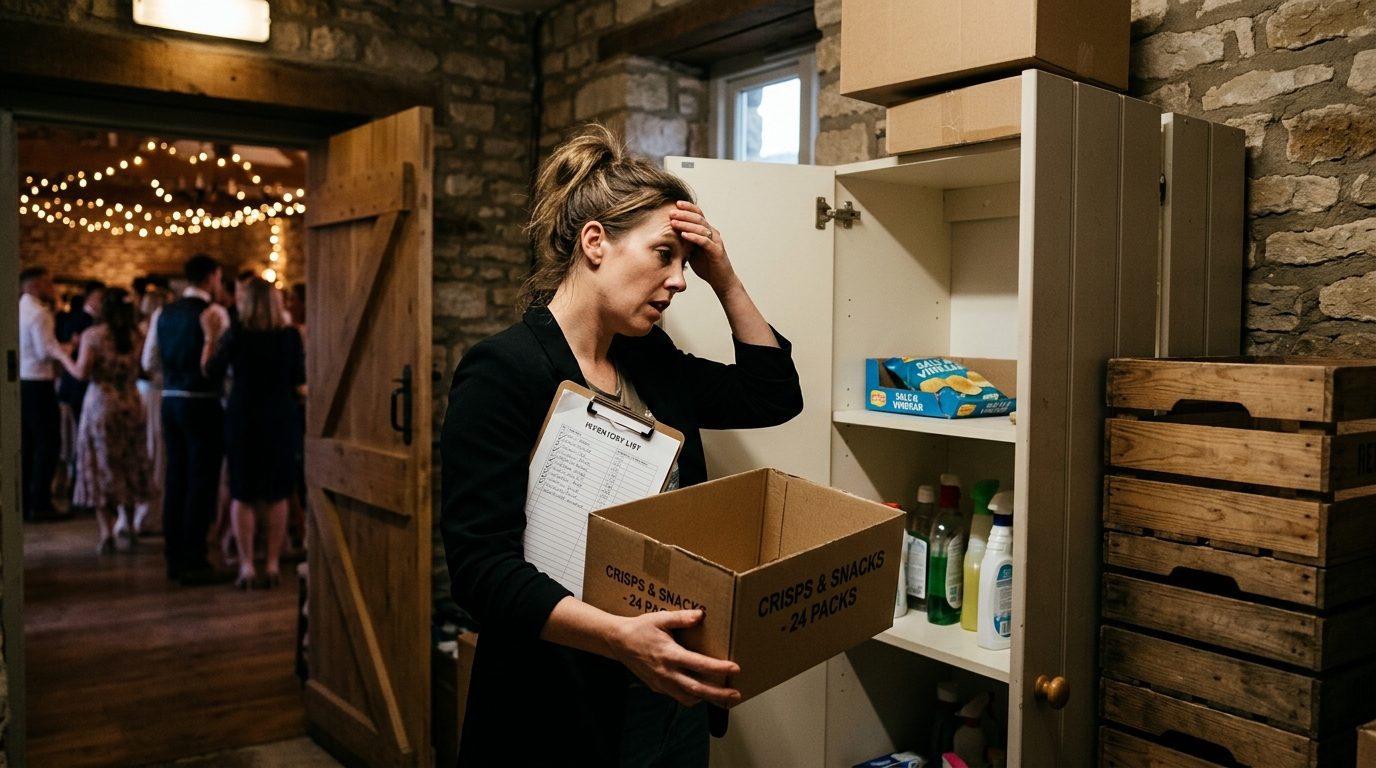
Running out of champagne for the toast. Running out of chairs in the ceremony room. The bar running dry at 10pm. These situations occur more often than venues admit, particularly at outdoor and barn weddings where logistics are harder to control.
What to do: Confirm quantities at your final venue meeting, not just at the booking stage. Ask the venue coordinator specifically: “What happens if we run short of [champagne/wine/table linen]?” A good venue has a contingency. A venue that cannot answer this question is a wedding venue red flag.
4. Gate-crashers and uninvited plus-ones
This is a bigger logistical problem than it sounds. A child-free wedding with three unexpected children changes catering numbers. A gate-crasher disrupts the seating plan at a fully-seated meal.
What to do: Brief someone — a groomsman, an usher, a trusted family member — to check names at the door. For child-free weddings, address it explicitly on your invitations and follow up with any guests you suspect might ignore the request. See our full piece on child-free weddings: how UK couples handle the conflict for scripts that work.
5. The seating plan fails on the day
A seating chart that looked sensible on paper fails for three reasons: guests who RSVPed yes don’t show up, guests who RSVPed no do, and couples who have separated since the invitation was sent are now at the same table.
What to do: Finalise your seating plan no more than two weeks before the wedding, not six months earlier. Keep a printed copy and a digital copy accessible on the day. Designate someone — usually the venue coordinator or wedding planner — who has authority to shuffle seats if needed.
6. The best man’s speech goes wrong
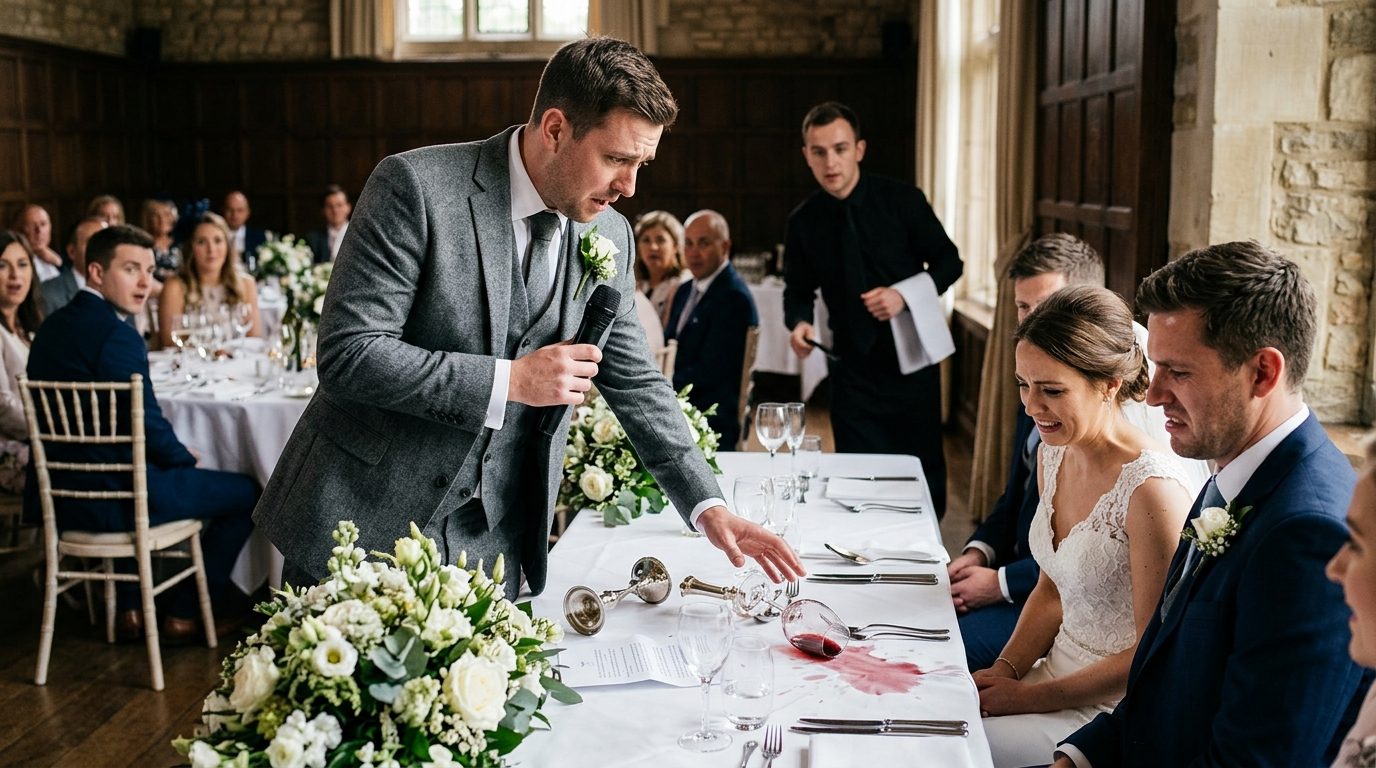
The best man and father of the bride speeches are the most common sources of problems.
What to do: Ask to review speeches in advance — at least the broad content, if not the exact text. Most best men who are going to say something inappropriate do so because they think it is funny and have not had anyone push back. Read our guide on 7 things never to say in a best man speech before you hand over the microphone.
7. The wedding cake is damaged in transit
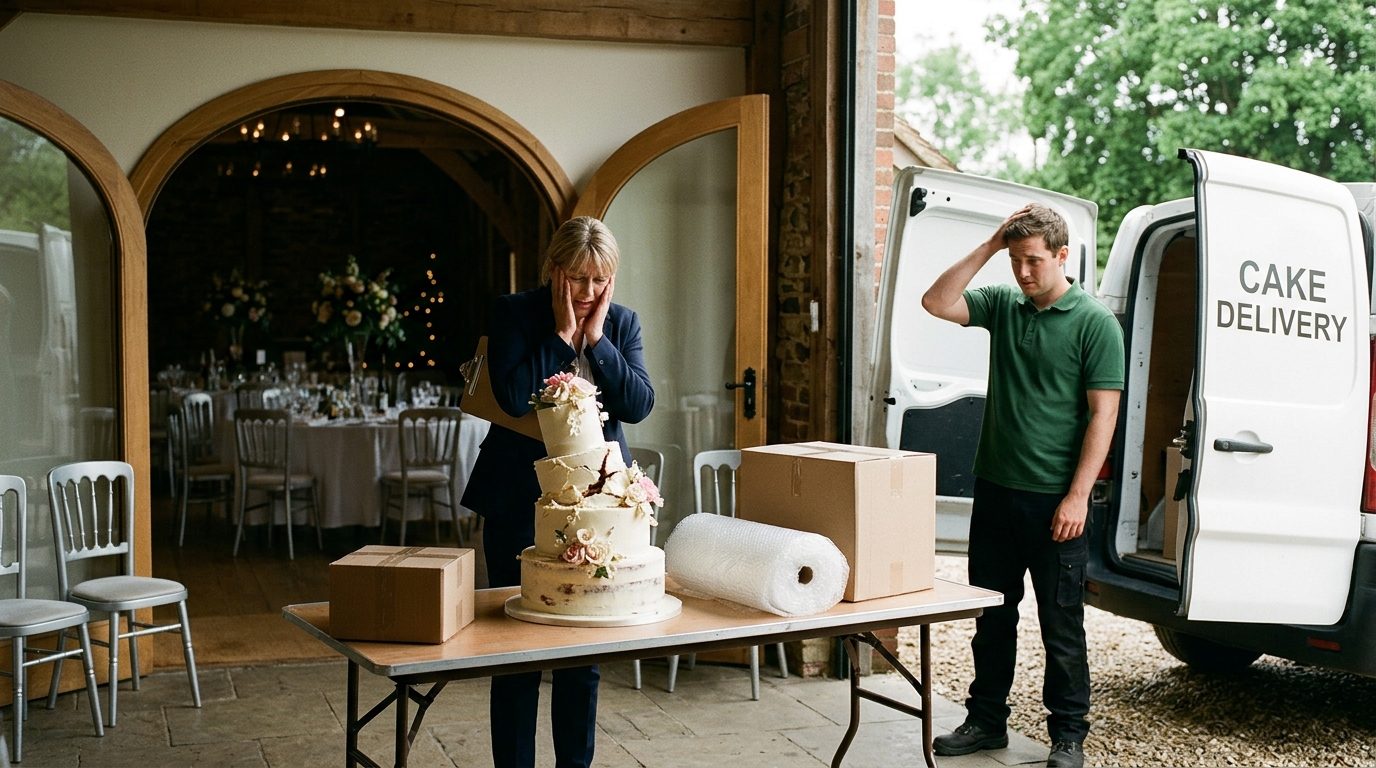
Tiered wedding cakes are fragile. Delivery in warm weather, over uneven surfaces, or by a supplier who underestimates the journey time is a genuine risk.
What to do: Ask your cake supplier whether they assemble tiers on site or deliver pre-assembled. On-site assembly is safer for anything taller than two tiers. Ask what their policy is if the cake is damaged in transit. Get it in writing.
8. The photographer runs out of time
Wedding photographers estimate shot lists in advance, but the day rarely runs to plan. If you are running late (see problem 1), the photographer absorbs the lost time — usually from your couple portrait session.
What to do: Discuss your must-have shots with the photographer at least three weeks before the wedding. Identify which shots are non-negotiable. If the timeline compresses, you want the photographer to know which images to protect.
9. The weather turns and there’s no shelter plan
Outdoor ceremonies and drinks receptions are exposed to UK weather. A June wedding can produce 22°C sunshine or horizontal rain. Many venues with outdoor ceremony spaces have no genuine wet-weather alternative — just a promise that “we have umbrellas.”
What to do: Ask your venue to walk you through the wet-weather plan specifically. Where does the ceremony move? How quickly can it move? Is the alternative space set up and ready, or does it need to be prepared in the moment? See our piece on what to do if it rains on your June wedding for a full contingency guide.
10. A family member has a medical episode
What to do: Know where the nearest hospital is. Make sure at least two people at the wedding know the location of a first aid kit. If you have elderly or vulnerable guests, seat them nearest to exits and make sure someone is assigned to keep an eye on them.
11. The DJ or band plays the wrong music
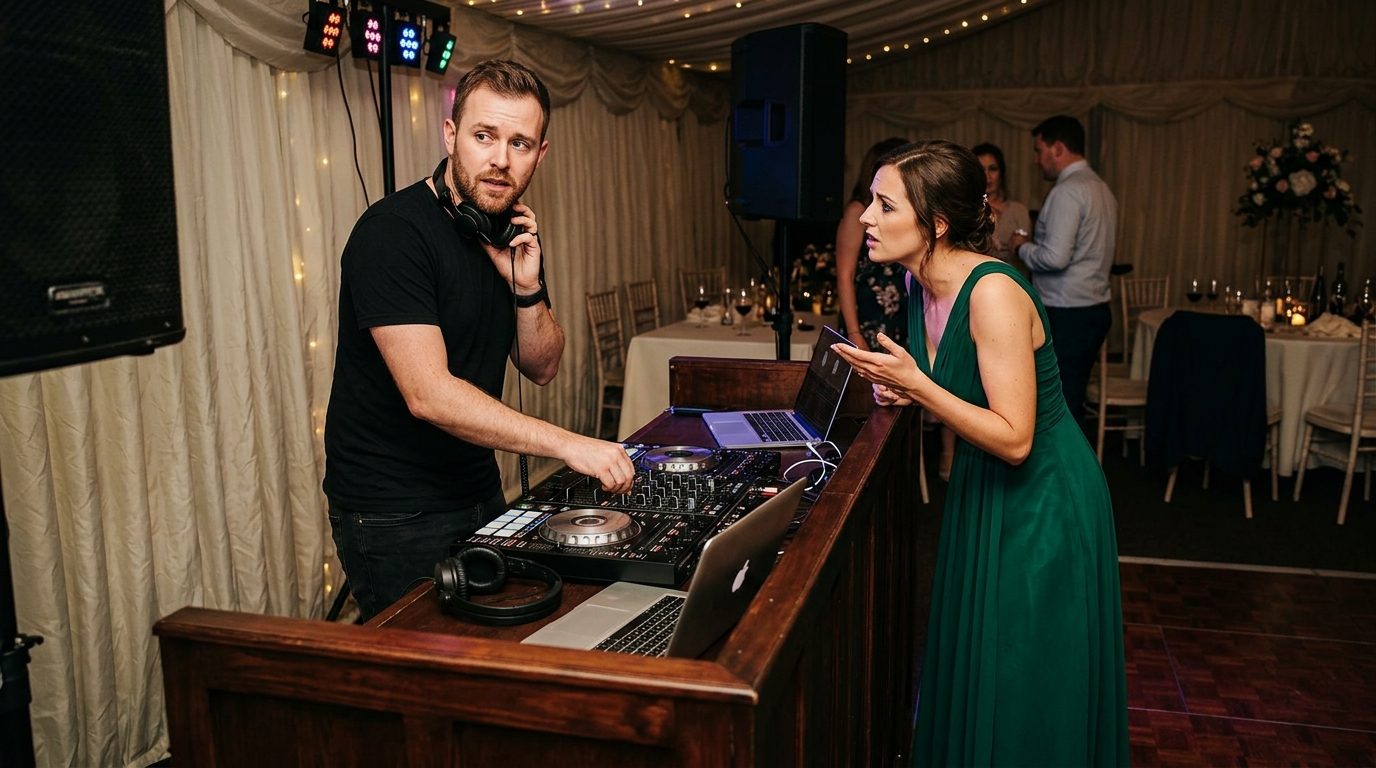
Providing a playlist or setlist does not guarantee the music is what you wanted. Miscommunication between couples and entertainment suppliers is common — particularly around the first dance song, which is the one moment where getting it wrong is impossible to ignore.
What to do: Confirm the first dance song, the walk-in song, and any must-not-play tracks in writing. If you are using a DJ, send the audio files directly rather than relying on a title and artist — covers and alternate versions are common sources of confusion.
12. Your shoes or outfit fail
Shoes that fit perfectly at the fitting cause blisters by the ceremony. A suit button pops during the first dance. A dress hem tears on the reception room steps. These are small problems with significant impacts on how the couple feels for the rest of the day.
What to do: Break in your shoes in the weeks before the wedding. Bring a sewing kit and safety pins — your venue coordinator will thank you for the suggestion. Have a flat pair of shoes for the evening if you are wearing heels.
13. The day goes faster than you expected
What to do: Build in three deliberate private moments: a few minutes after the ceremony, a quiet pause during the drinks reception, and five minutes alone before the first dance. Tell your photographer you want these documented. They are the moments you will want most in the photographs.
Why a day coordinator changes everything
Almost every problem on this list is significantly easier to handle when you have a designated person whose job is to absorb it. A day coordinator — distinct from a full wedding planner — typically costs between £400 and £800 for a UK wedding. They take over supplier liaison, timeline management, and guest queries from the morning of the wedding.
If you cannot budget for a day coordinator, appoint a trusted friend or family member to the role. Brief them on the timeline, the supplier contacts, and the seating plan. Tell them explicitly that their job is to solve problems without telling you about them unless they are serious.
The wedding supplier going bust guide covers the financial side if a key supplier fails. For general planning protection, wedding insurance typically costs £120-£400 and covers supplier failure, venue closure, and medical emergencies.
Frequently asked questions
What is the most common wedding day problem in the UK?
Timeline delays are the most common issue.
What should I do if a wedding supplier doesn't show up?
Contact the supplier immediately, then contact your wedding planner or coordinator. If you have wedding insurance, notify the insurer the same day. Prioritise finding a same-day replacement using your venue's recommended supplier list.
How do I deal with a difficult guest on my wedding day?
Designate a trusted person — a groomsman, a family member, a coordinator — who has permission to handle problems. Do not try to manage difficult guests yourself on the day. Brief that person in advance.
What happens if the wedding cake is delivered wrong or damaged?
Ask your caterer or cake supplier whether they can fix it on site. Many decorating issues can be repaired with fresh flowers or edible decorations. Document the damage with photos before accepting delivery.
Can I get money back if a wedding supplier fails on the day?
Yes, if the failure is documented and you have a contract. Small claims court handles disputes under £10,000. Wedding insurance covering supplier failure is the faster route to compensation.
How do I prevent the wedding running late?
Build a 15-minute buffer into every slot in your wedding timeline. Tell your photographer and officiant what the firm start time is. Brief the bridal party the night before so they know what time to be ready — not what time to start getting ready.
Should I hire a wedding coordinator just for the day?
On-the-day coordination is one of the best value services in UK weddings. A day coordinator typically costs £400-£800 and takes over management of your timeline, suppliers, and guests from the morning of the wedding.