Home / Articles / Costs & Budget
Wedding Dress Cost UK: 2026 Price Guide
Key Takeaways
- The average UK wedding dress costs £1,000-2,000, but you can spend from £100 to £10,000+
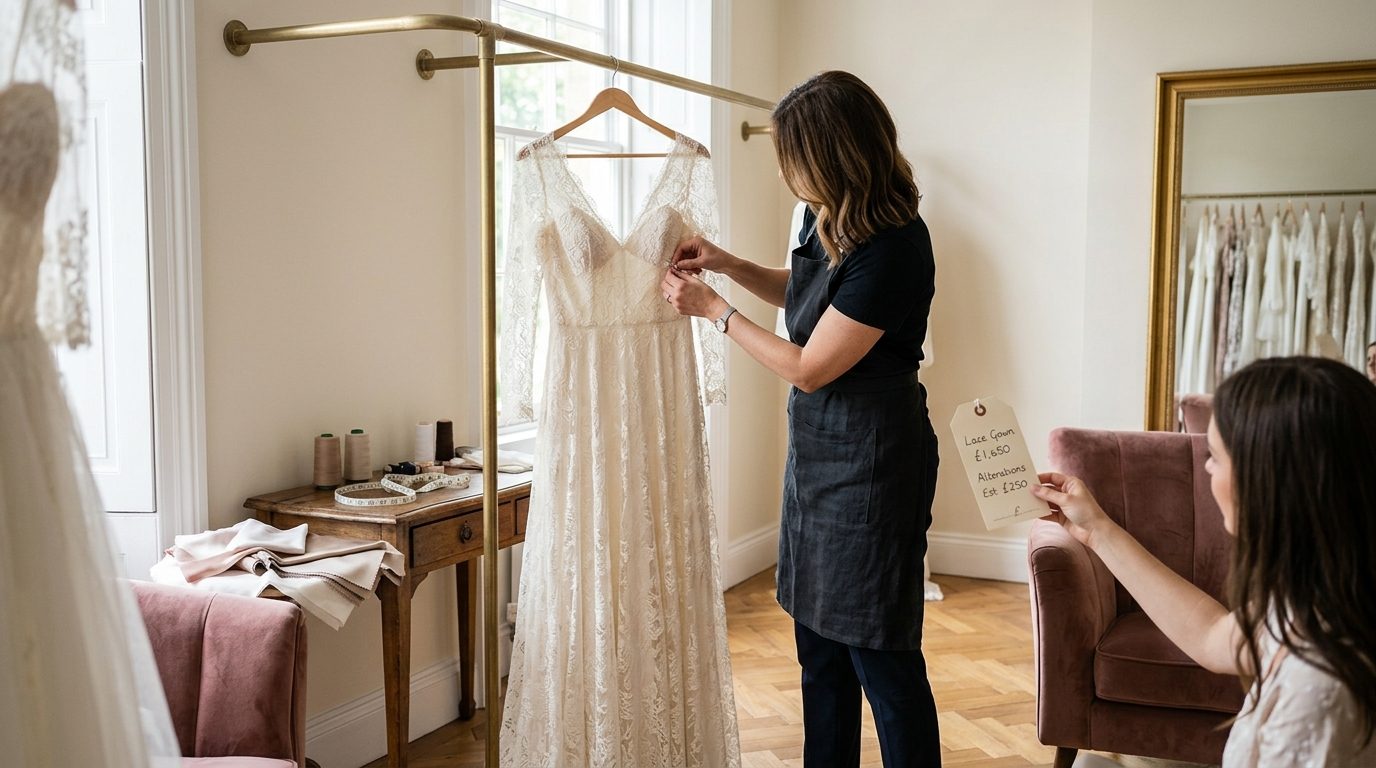
- Alterations add £150-500 on top of the dress price — almost every dress needs them
- Accessories (veil, shoes, jewellery, underwear) add another £200-600 to the total
- High street and sample sales are the best ways to get a quality dress under £500
- Order your dress 9-12 months before the wedding to allow time for delivery and fittings
The wedding dress is one of the most emotionally charged purchases you’ll make. It’s also one where the price range is enormous — you can spend £100 or £10,000 and look stunning either way.
This guide covers what dresses actually cost in the UK in 2026, where the money goes, and how to get the best value at every budget level.
Average wedding dress costs
| Category | Price Range | What You Get |
|---|---|---|
| Budget | £100-500 | High street, online, sample sales, pre-owned |
| Mid-range | £500-1,500 | Bridal boutique designers, good fabrics, some customisation |
| Designer | £1,500-3,000 | Well-known bridal designers, premium fabrics, detailed beadwork |
| Luxury | £3,000-5,000 | Top-tier designers, exclusive boutiques, hand-finished details |
| Couture | £5,000-10,000+ | Bespoke, made-to-measure, one-of-a-kind |
The average UK bride spends £1,000-2,000 on her dress. This doesn’t include alterations, accessories, or the veil.
The true total cost
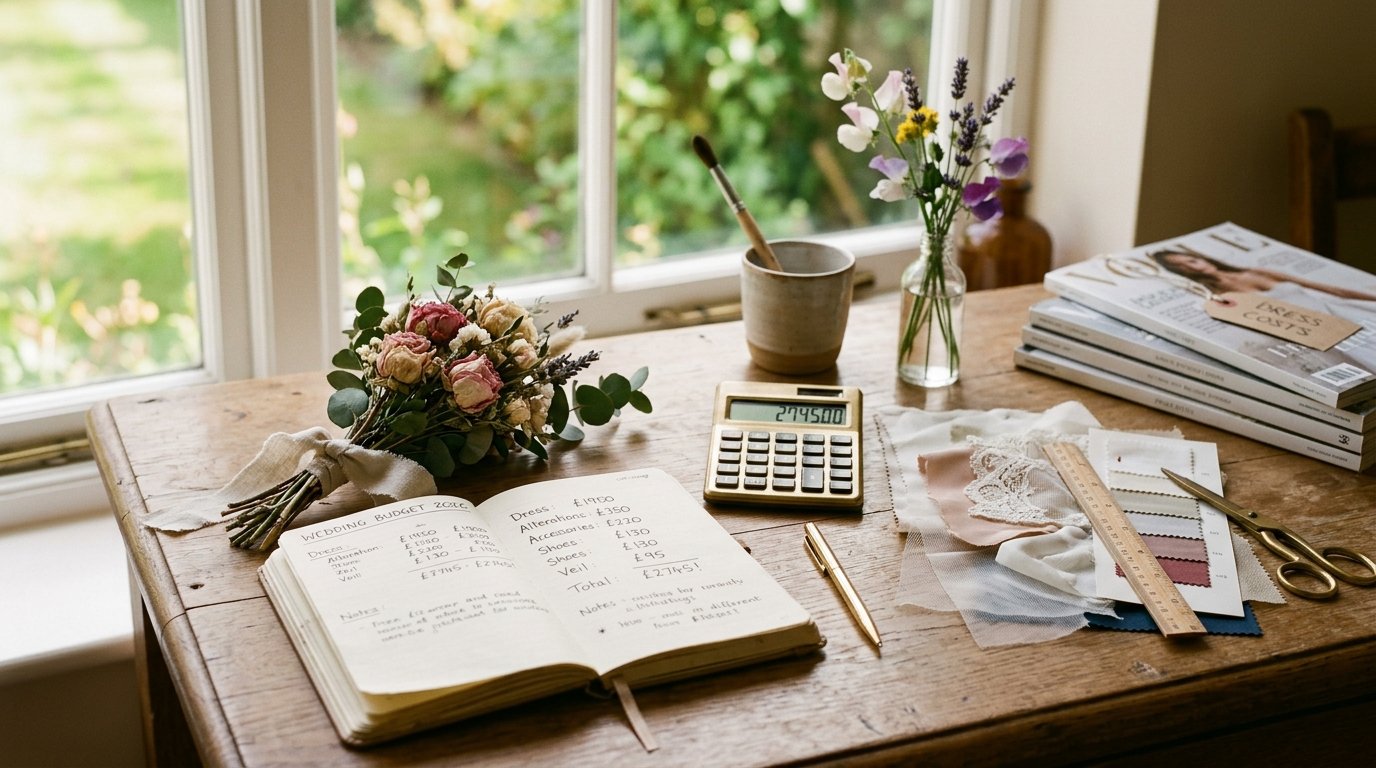
The dress itself is only part of what you’ll spend on bridal attire. Here’s the full picture:
| Item | Average Cost |
|---|---|
| Wedding dress | £1,000-2,000 |
| Alterations | £150-500 |
| Veil | £50-300 |
| Shoes | £50-200 |
| Jewellery | £30-200 |
| Headpiece / hair accessory | £20-150 |
| Bridal underwear / shapewear | £30-100 |
| Dress preservation / cleaning | £100-250 |
| Total | £1,430-3,700 |
Most brides budget for the dress and forget the extras. Plan for the full total from the start.
What affects the price
Fabric
Silk, mikado, and crepe cost more than polyester and satin blends. Lace overlays — especially French Chantilly lace — add significant cost. A silk dress in a simple silhouette can cost more than a heavily beaded polyester gown.
Construction
Boning, built-in corsetry, and structured bodices require skilled construction. Simpler slip dresses are cheaper to make. More layers and a longer train mean more fabric and more sewing time.
Embellishment
Hand-sewn beading, embroidery, and applique are the biggest price multipliers. Machine-applied embellishments are cheaper but less refined. A heavily beaded bodice can add £500-2,000 to the dress price.
Brand
Well-known designers (Pronovias, Justin Alexander, Maggie Sottero, Suzanne Neville) command a premium for the name. Less well-known designers often use the same quality fabrics and construction at lower prices.
Where you buy
Bridal boutiques add 50-100% markup over the wholesale price. High street retailers (ASOS, Monsoon, Coast, & Other Stories) sell direct at lower margins. Online retailers offer the lowest prices but you can’t try before you buy.
Where to buy at every budget
Under £500
- High street: ASOS, Monsoon, Coast, & Other Stories, H&M Conscious
- Pre-owned: Still White, Sell My Wedding Dress, eBay, Facebook Marketplace
- Sample sales: Bridal boutiques sell sample dresses at 40-70% off throughout the year
- Online retailers: Chi Chi London, TFNC, Little Mistress
£500-1,500
- Bridal boutiques: Most stock designers in this range
- Online bridal: Etsy bridal shops (check reviews carefully), Grace Loves Lace
- Department stores: Selfridges, John Lewis
£1,500-3,000
- Designer boutiques: Pronovias, Justin Alexander, Stella York, Maggie Sottero
- Independent British designers: Many UK-based designers work in this range and offer a more personal service
£3,000+
- Luxury boutiques: Suzanne Neville, Jenny Packham, Vera Wang, Oscar de la Renta
- Bespoke designers: Made-to-measure from your own design or adapted from an existing style
Alteration costs in detail
Almost every wedding dress needs alterations. Even off-the-rack dresses rarely fit perfectly. Here’s what to budget:
| Alteration | Cost |
|---|---|
| Hem (simple) | £80-150 |
| Hem (layered/lace) | £120-250 |
| Take in bodice | £100-200 |
| Let out bodice | £100-250 |
| Adjust straps | £40-80 |
| Add cups or boning | £50-120 |
| Bustle creation | £60-150 |
| Add sleeves | £150-400 |
| Change neckline | £150-350 |
Book your seamstress early. Bridal seamstresses get fully booked 3-4 months before peak wedding season. Most dresses need 2-3 fittings over 6-8 weeks.
If your bridal boutique offers in-house alterations, compare their prices with an independent seamstress. Boutique alterations are sometimes 20-30% more expensive.
How to save money
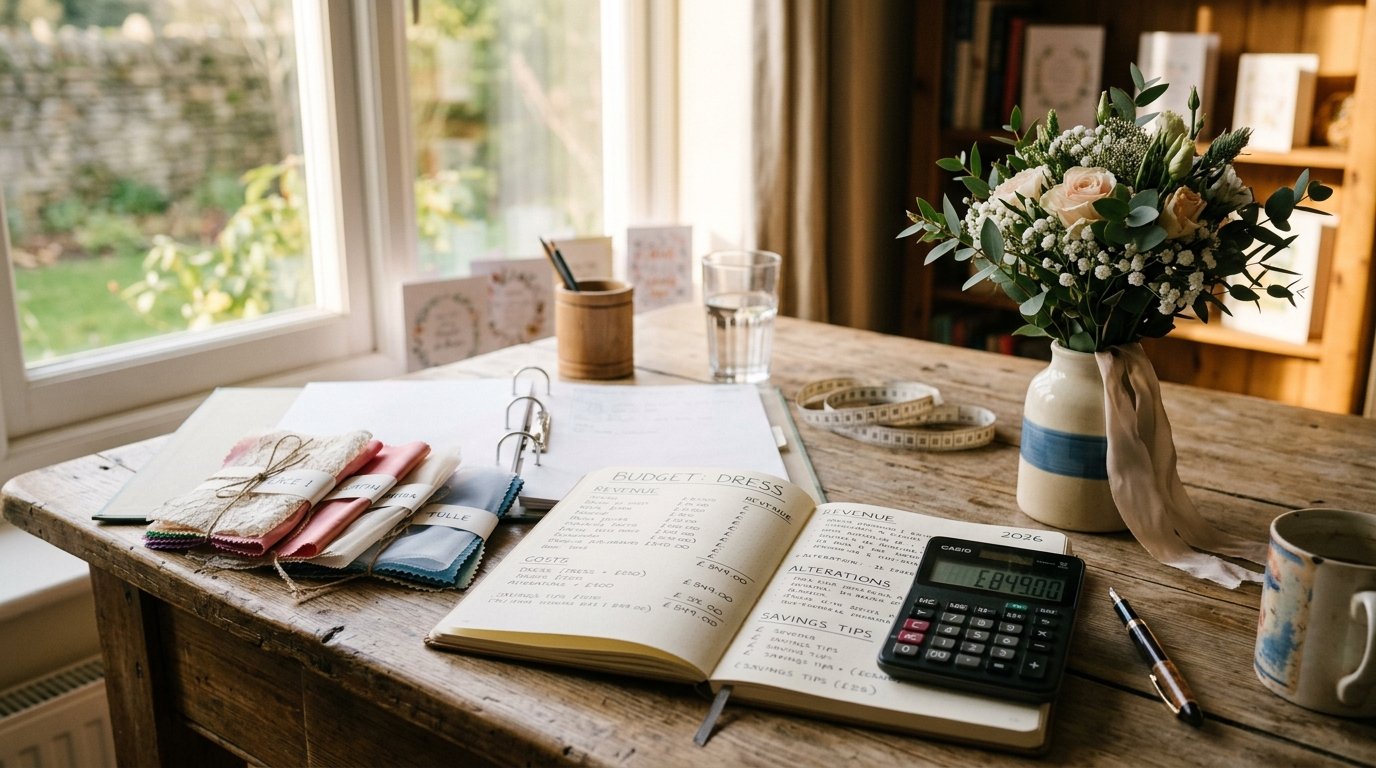
Set a firm budget before you start shopping. Trying on dresses above your budget makes everything in your range look disappointing. Be honest with the boutique about your maximum spend.
Try high street first. ASOS and Monsoon dresses in the £150-400 range photograph beautifully. Nobody at the wedding knows or cares about the label.
Buy pre-owned. A dress worn once for 8 hours is essentially new. Pre-owned designer dresses sell for 40-70% off. Budget for professional dry cleaning (£80-150).
Shop sample sales. Bridal boutiques hold sample sales to clear last season’s stock. Dresses are tried on in-store but never worn to a wedding. Discounts of 50-70% are common.
Choose a simpler silhouette. A clean, minimalist dress in good fabric looks more expensive than a heavily decorated dress in cheap fabric. Simple construction costs less.
Skip the veil. Or buy a veil from Etsy or Amazon rather than the bridal boutique. Boutique veils are marked up significantly — a simple tulle veil that costs £250 in a boutique can be found for £30-50 online.
Don’t buy the first dress you try. Bridal consultants are trained to create emotional urgency (“this is the one!”). Sleep on it. The dress will still be there tomorrow.
Timeline for buying your dress
| When | What to Do |
|---|---|
| 12 months before | Start browsing online, save inspiration images |
| 10-12 months before | Book boutique appointments, try on styles |
| 9-10 months before | Order the dress (4-6 month delivery) |
| 4 months before | First fitting with seamstress |
| 2-3 months before | Second fitting |
| 2-4 weeks before | Final fitting, take the dress home |
| 1 week before | Hang the dress, steam out any creases |
If your wedding is less than 6 months away, shop off-the-rack from high street stores, pre-owned, or sample sales. Made-to-order dresses from designers won’t arrive in time.
Browse wedding dress suppliers on Weddings Hub to find bridal boutiques in your area.
Keep planning
Frequently asked questions
How much does a wedding dress cost in the UK?
The average wedding dress in the UK costs £1,000-2,000. Budget dresses start from £100-500 (high street, pre-owned, sample sales). Mid-range designer dresses cost £1,000-3,000. Luxury and couture gowns cost £3,000-10,000+. These prices do not include alterations, which add £150-500.
How much do wedding dress alterations cost?
Wedding dress alterations in the UK cost £150-500. Basic hemming costs £80-150. Taking in or letting out the bodice costs £100-250. Adding sleeves, changing necklines, or bustle creation cost £150-400. Complex structural alterations can reach £500+. Book your seamstress 3-4 months before the wedding.
When should I buy my wedding dress?
Start shopping 12 months before the wedding. Order the dress 9-10 months before to allow for the 4-6 month delivery time from most designers. First fittings start 3-4 months before the wedding, with the final fitting 2-4 weeks before. Last-minute brides can buy off-the-rack from high street stores or sample sales.
Is it worth buying a second-hand wedding dress?
Yes. Pre-owned dresses on sites like Still White, Sell My Wedding Dress, and eBay sell for 40-70% off the original price. Many have been worn once and are in excellent condition. Budget £100-300 for professional dry cleaning and any alterations needed.