The 12 Wedding Etiquette Rules UK Guests Get Wrong
Key Takeaways
- Late RSVPs are the most common offence: 47% of couples said at least 3 guests replied after the deadline
- Bringing uninvited plus-ones or children affects 22% of UK weddings — the most disruptive single offence
- Taking photos during the ceremony when asked not to was reported by 34% of couples who held unplugged ceremonies
- Gift-related offences (bringing nothing, giving cash in an envelope not on the gift list, contributing to a fund without confirming amount) are widely misunderstood
Rule 1: Reply to the invitation by the deadline — or at all
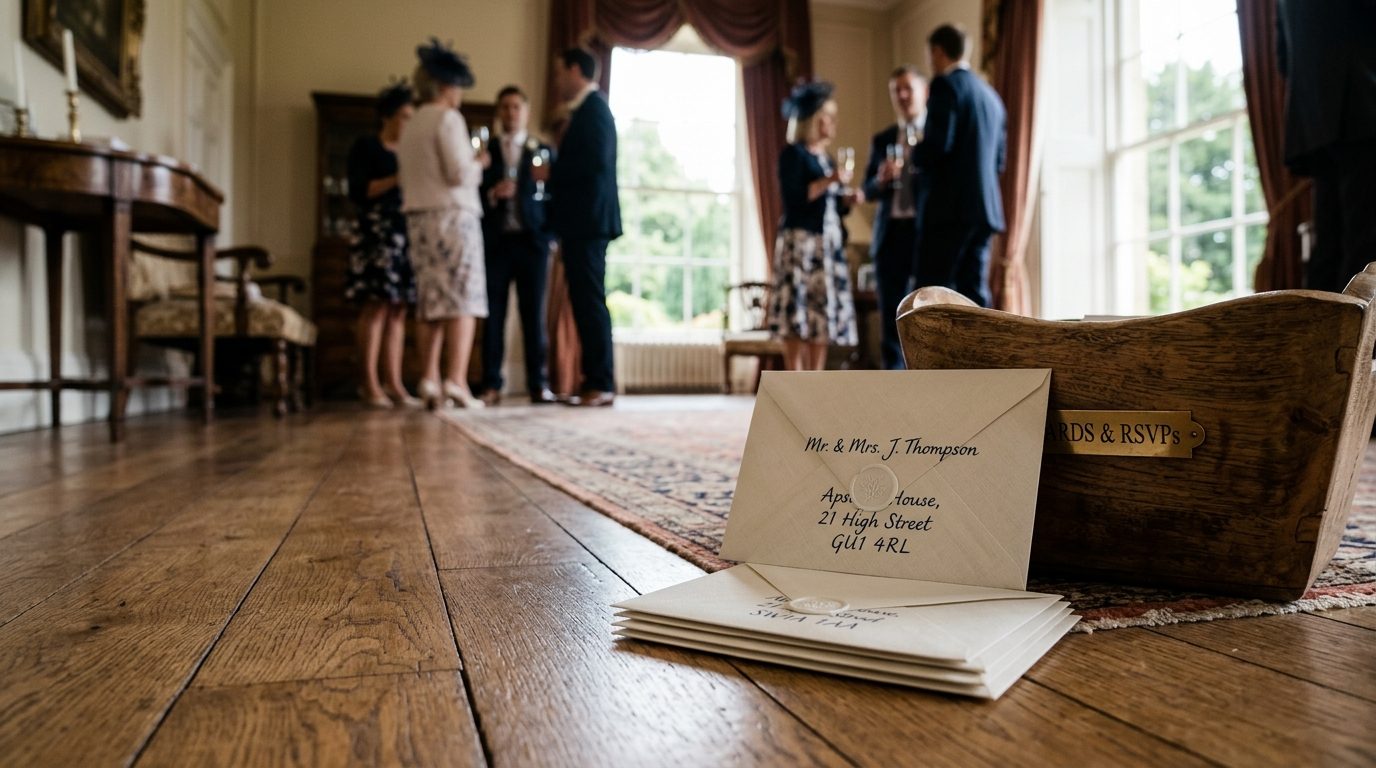
The RSVP deadline is not aspirational. Catering numbers, seating plans, and place cards are all fixed around it. A guest who replies late, or not at all, forces the couple to chase them — during the most stressful weeks of the planning process.
If you cannot decide whether to attend, contact the couple directly and tell them. A “maybe” is more useful than silence. If you reply yes and then cannot attend, let the couple know as early as possible.
Rule 2: Do not bring an uninvited plus-one
Plus-ones are extended by name or by the specific phrase “and guest.” They are not assumed. If your invitation names only you, you have not been given a plus-one.
Arriving with an uninvited partner — or a friend, a sibling, or anyone not named on the invitation — disrupts the seating plan, the catering count, and the couple’s carefully calculated budget. At £272 average spend per head in 2026, an unexpected guest at a fully-seated reception is not a trivial addition.
If you want to bring someone, ask the couple in advance. Do not assume, and do not simply arrive with them.
Rule 3: Child-free means child-free
If the invitation does not include your children’s names, the wedding is adult-only or your children were intentionally not invited. If the couple has specifically stated “child-free” on the invitation or their wedding website, there is no interpretation to make.
The correct response to a child-free invitation you cannot attend without your children is to decline graciously and send a gift. It is not to ask for an exception, to argue that your children “are different,” or to arrive with them anyway.
The child-free wedding debate is real and emotionally significant for some families. But on the day itself, the couple’s decision is not subject to negotiation.
Rule 4: Do not wear white, ivory, cream or anything close to it
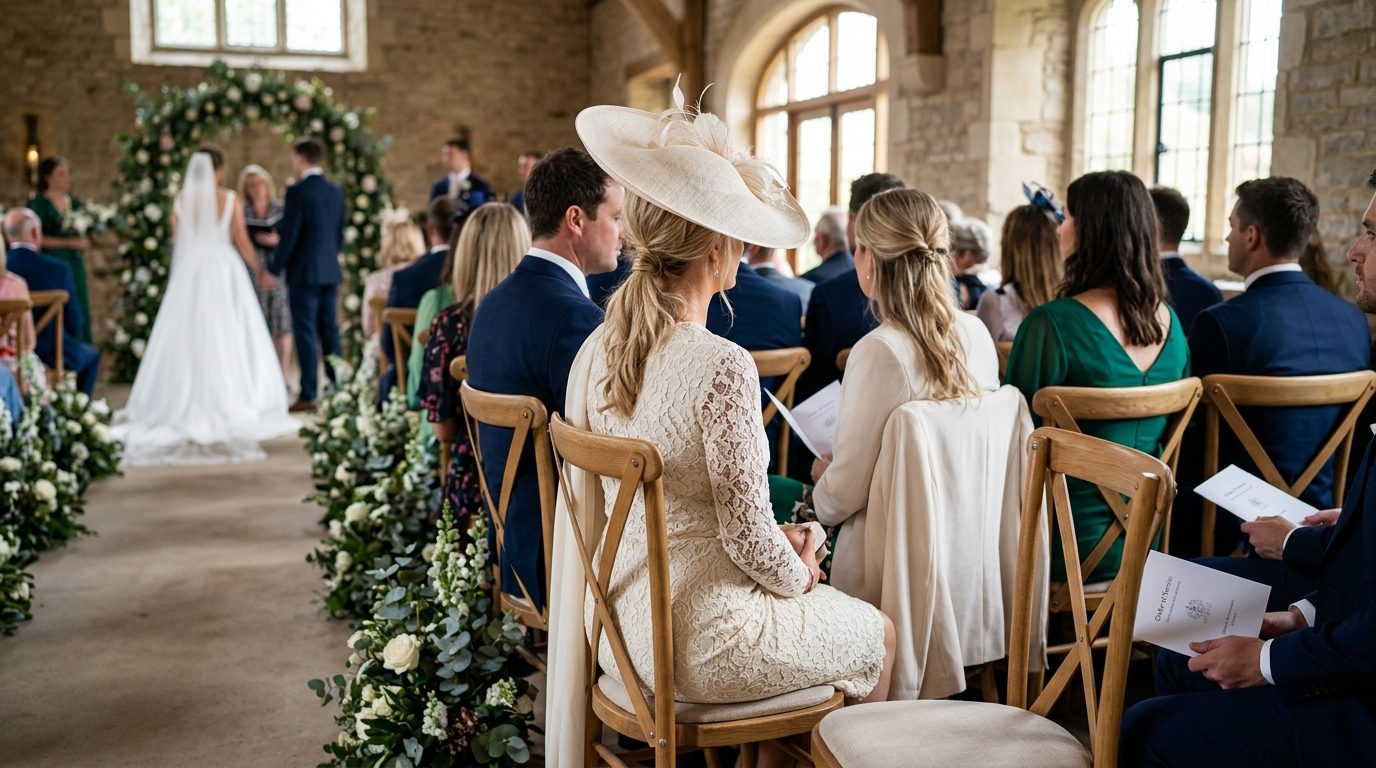
The rule against wearing white as a wedding guest exists because white is conventionally reserved for the bride. A guest wearing white — or a shade so pale it could be confused with white — risks appearing to compete with the bride for visual attention.
What surprises guests is how many shades qualify. Cream, ivory, champagne, ecru, off-white, pale blush, and some shades of gold all fall close enough to the line to cause comment.
Rule 5: Do not take photos during the ceremony when asked not to
The problem with a guest photographing the ceremony is not just the distraction. It is that the guest is often visible in the couple’s professional photographs — holding up a phone, leaning into the aisle, blocking sight lines — in the images the couple will keep for the rest of their lives.
Respect an unplugged request. The professional photographer will capture everything. Your iPhone photograph will not.
Rule 6: Do not post ceremony or couple photos before the couple does
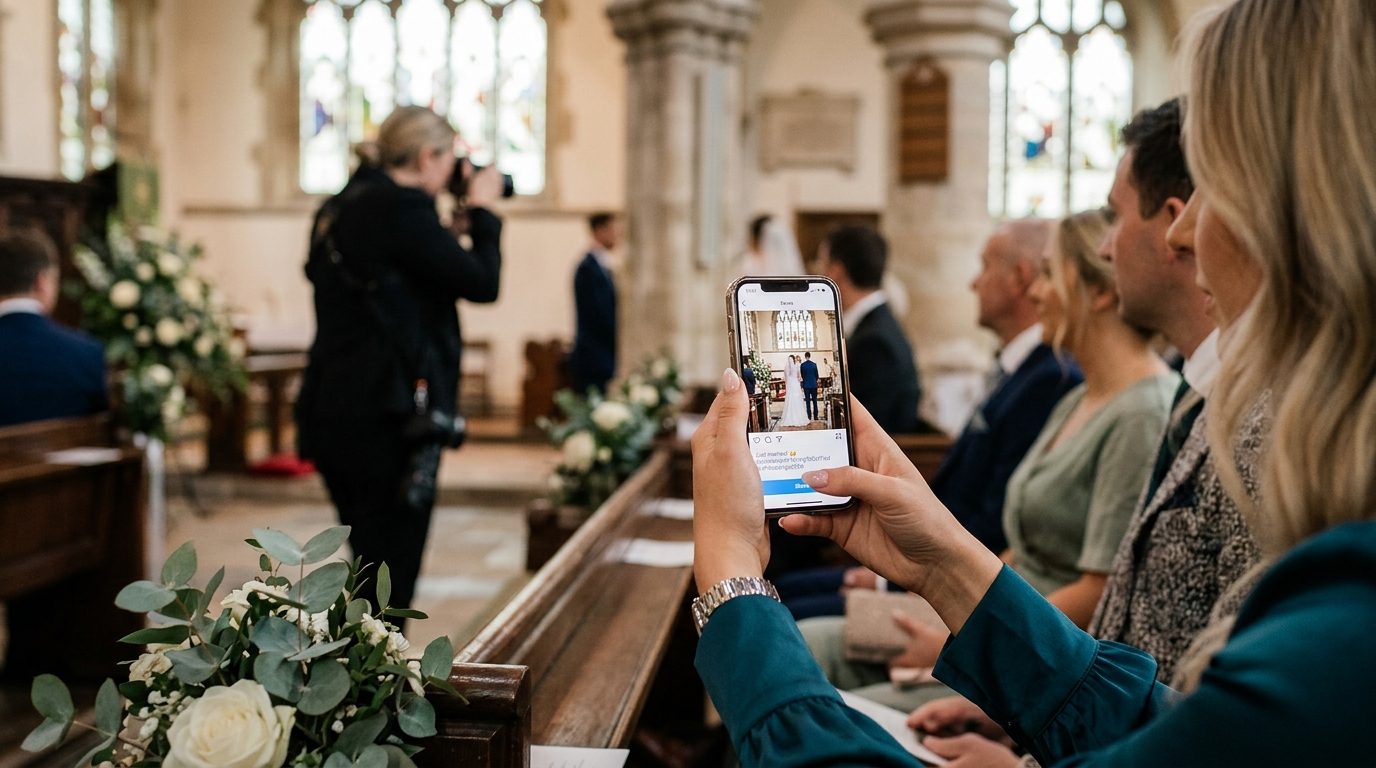
Many couples now ask guests to wait before posting wedding photographs on social media. This is often stated on the wedding website or included in the ceremony programme. Even when it is not stated explicitly, the convention is increasingly to wait until the couple has posted their own images.
The reason is practical: couples often want to share their wedding photographs through their own channels first, and with images from their professional photographer rather than guest snapshots.
A photo of the reception room, the flowers, or the venue is usually fine immediately. A photograph of the couple, the ceremony, or the first dance should wait until the couple has posted their own.
Rule 7: Do not give a gift that ignores the couple’s requests
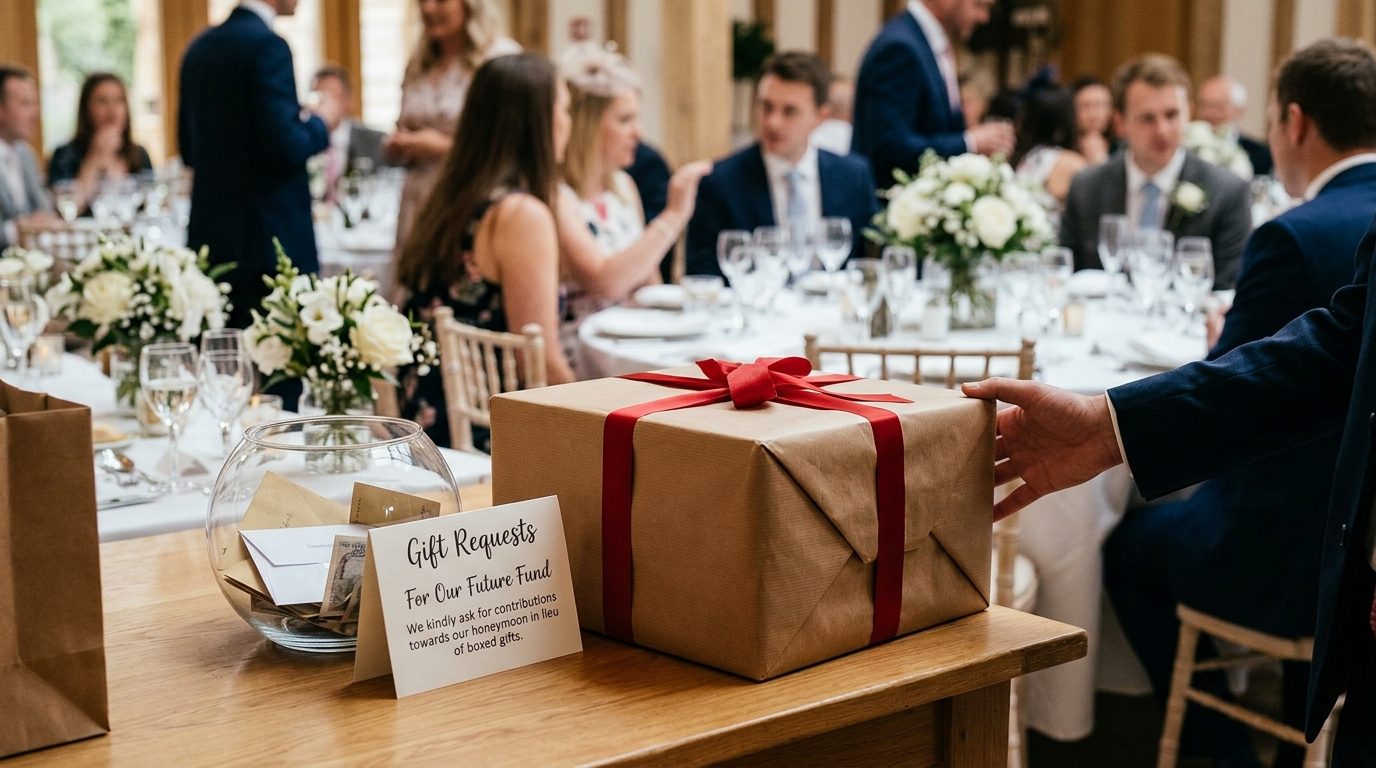
The wedding list exists to make gift-giving easy for guests and to ensure the couple receives things they actually want. A guest who ignores the list and buys something else — because they found something they preferred — is doing the gift-giving for themselves rather than for the couple.
Similarly, a cash fund or honeymoon fund on the wedding website is a specific request. Contributing via a separate cash envelope handed on the day is not the same as using the fund. It creates tracking problems and may bypass the couple’s preferred system entirely.
If you want to give something personal in addition to a list item, do. The list item should come first.
Rule 8: Do not spend less than your seat costs without a good reason
This rule is rarely stated and widely misunderstood. A UK wedding seat at a fully-catered reception costs the couple, on average, between £150 and £272 per guest. A gift of £25, from a guest who is close to the couple and attending a full day wedding, will be noticed.
If you genuinely cannot afford a gift, a heartfelt handwritten card is always appropriate. Never attend a wedding with neither a gift nor a card.
Rule 9: Do not make a scene if you are not seated where you expected
The seating plan represents months of careful decisions about family dynamics, relationships, and logistics. Arriving at a reception and immediately complaining about your table placement — to the couple, to the venue staff, or to other guests — is one of the more selfish things a guest can do on a wedding day.
If you have a genuine, serious concern about your placement (for example, you have been placed with someone you have a documented conflict with), raise it with the couple privately before the wedding day, not during it.
Rule 10: Do not give a speech unless asked
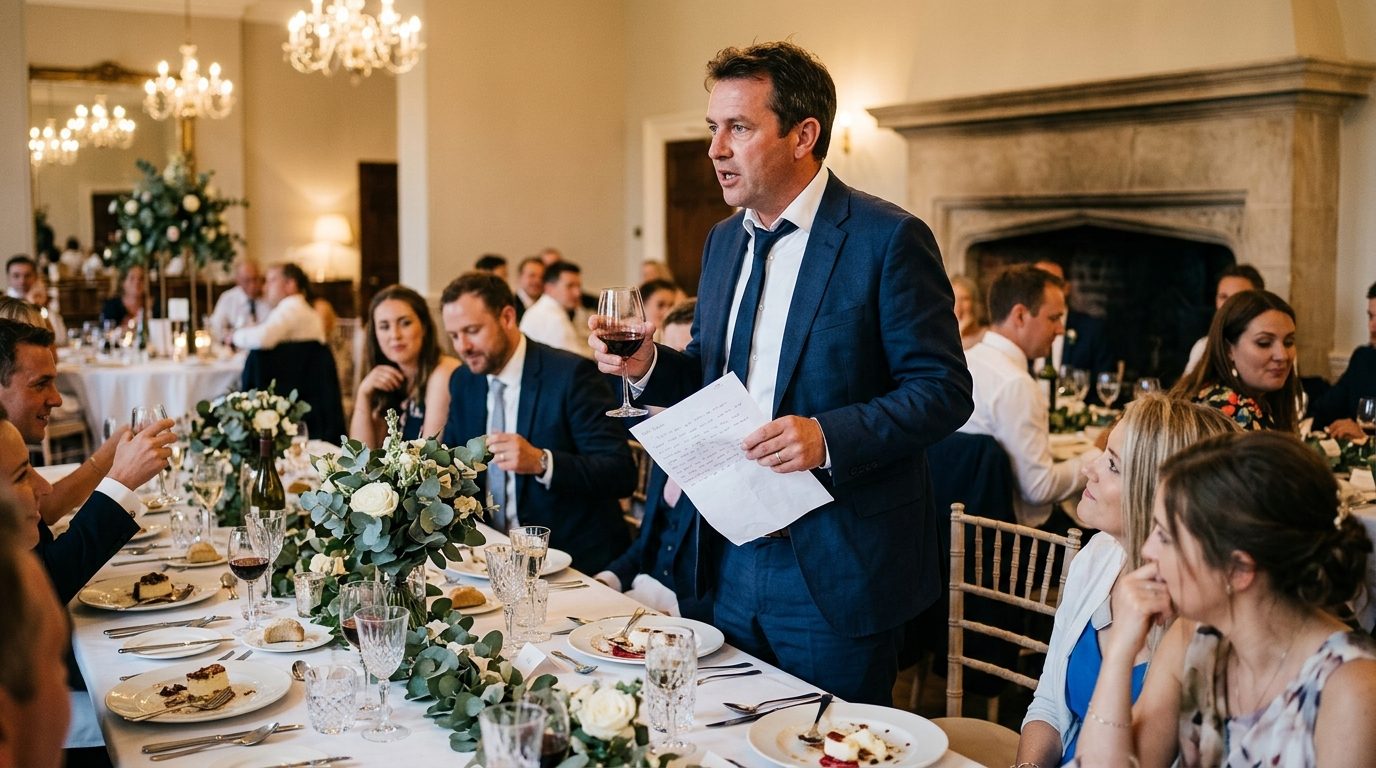
Unsolicited speeches — particularly from parents who feel they should have been included, or friends who decide to add to the programme — are one of the most common wedding day problems. The couple has planned and approved a specific set of speeches. Adding to them without permission changes the programme, extends the meal, and removes the couple’s control over one of the most significant moments of the day.
If you want to say something to the couple, say it in a card, in a private toast at your table, or in a conversation later in the evening. Standing up and tapping a glass without being invited is not a welcome surprise.
Rule 11: Do not leave without telling the couple
Slipping out of a wedding reception without speaking to the couple is widely considered poor form, particularly if you are a full-day guest or if you are close to the couple. They will notice you are gone. They will wonder if something happened. They may feel they did not get to say goodbye properly.
Leaving a wedding is not complicated: find the couple, thank them genuinely, tell them you had a wonderful time, and wish them well. This takes three minutes and matters considerably.
Rule 12: Do not get significantly more drunk than the couple
Wedding receptions involve alcohol and celebration. A degree of merriment is expected and welcome. A guest who becomes visibly drunk before the first dance, who requires escorting from the venue, or who becomes the story the couple and their guests tell about the day has crossed a line.
Know your limits. A wedding is not the same occasion as a works party. The photographs and the memories belong to the couple.
What couples actually care about most
- Bringing uninvited plus-ones or children (cited by 74% as the most upsetting single failure)
- Taking photographs during the ceremony after being asked not to
- Not replying to the RSVP at all
The bottom of the list — things couples noticed but generally forgave — were minor dress code misinterpretations and early departures by guests who gave advance notice.
Most guests mean well. The failures on this list come from not knowing the current expectations, not from deliberate rudeness. Sharing this article with your wedding guest list before the big day is a perfectly reasonable thing to do.
Frequently asked questions
What is the most common wedding etiquette mistake UK guests make?
Missing the RSVP deadline is the most frequently reported offence. 47% of UK couples say at least three guests replied late, creating catering and seating chaos in the final weeks.
Is it rude to wear black to a UK wedding?
No. Black is widely acceptable as a wedding guest colour in the UK in 2026. The old rule against black has largely faded. The exceptions are funerary black — full head-to-toe unbroken black — and venues with a specific dress code requesting colour.
Can I bring my children if the invitation says child-free?
No. Child-free means child-free. If you cannot attend without your children, the correct response is to decline the invitation and send a card and gift.
How much should I spend on a UK wedding gift in 2026?
For close friends or family, £100-£150 is typical. Spending significantly less than your place costs at the wedding reception is widely considered poor form.
Is it rude to leave a wedding reception early?
It depends when and how. Leaving before the wedding breakfast ends is considered rude by most couples. Leaving between the meal and the evening dancing — especially if you are an evening guest — is fine. Always say goodbye to the couple directly.
Can I post wedding photos on social media before the couple does?
Not on the day. Many couples now ask guests to hold off posting until they have shared their own images. If the couple has not stated a preference, post only photos that do not include the bride or the ceremony.
What should I do if I cannot afford a wedding gift?
A handwritten card and a sincere note is always acceptable. Never attend a wedding with neither a gift nor a card. If you are close to the couple, be honest with them in advance.