Home / Articles / Food & Drink
Wedding Menu Ideas: Starters, Mains & Desserts
Key Takeaways
- Most caterers offer 2-3 choices per course — give guests a pre-order option on the RSVP to reduce waste
- Seasonal menus are cheaper and taste better — ask your caterer what's best for your month
- Always include at least one vegan, one gluten-free, and one dairy-free option per course
- A tasting session before booking is essential — menu descriptions can mislead
- Evening food doesn't need to match the wedding breakfast — casual comfort food works best late at night
Choosing the wedding menu is one of the most enjoyable parts of planning — and one of the most stressful. You’re feeding 80-150 people with different tastes, dietary needs, and expectations. You need something that photographs well, serves efficiently, and tastes better than average.
This guide covers proven menu ideas for every course, with seasonal options and practical tips from UK caterers.
Starters
The starter sets the tone. Keep it light — guests have been drinking for an hour during the reception and the main event is still to come.
Popular wedding starters
Soup (£3-6 per head) The most popular and cost-effective starter. Serves quickly, accommodates most diets, and keeps the kitchen moving.
- Butternut squash and sage (autumn/winter)
- Tomato and basil (summer)
- Pea and mint (spring)
- Leek and potato (year-round)
Salads (£5-10 per head) Light, colourful, and easy to make vegetarian or vegan.
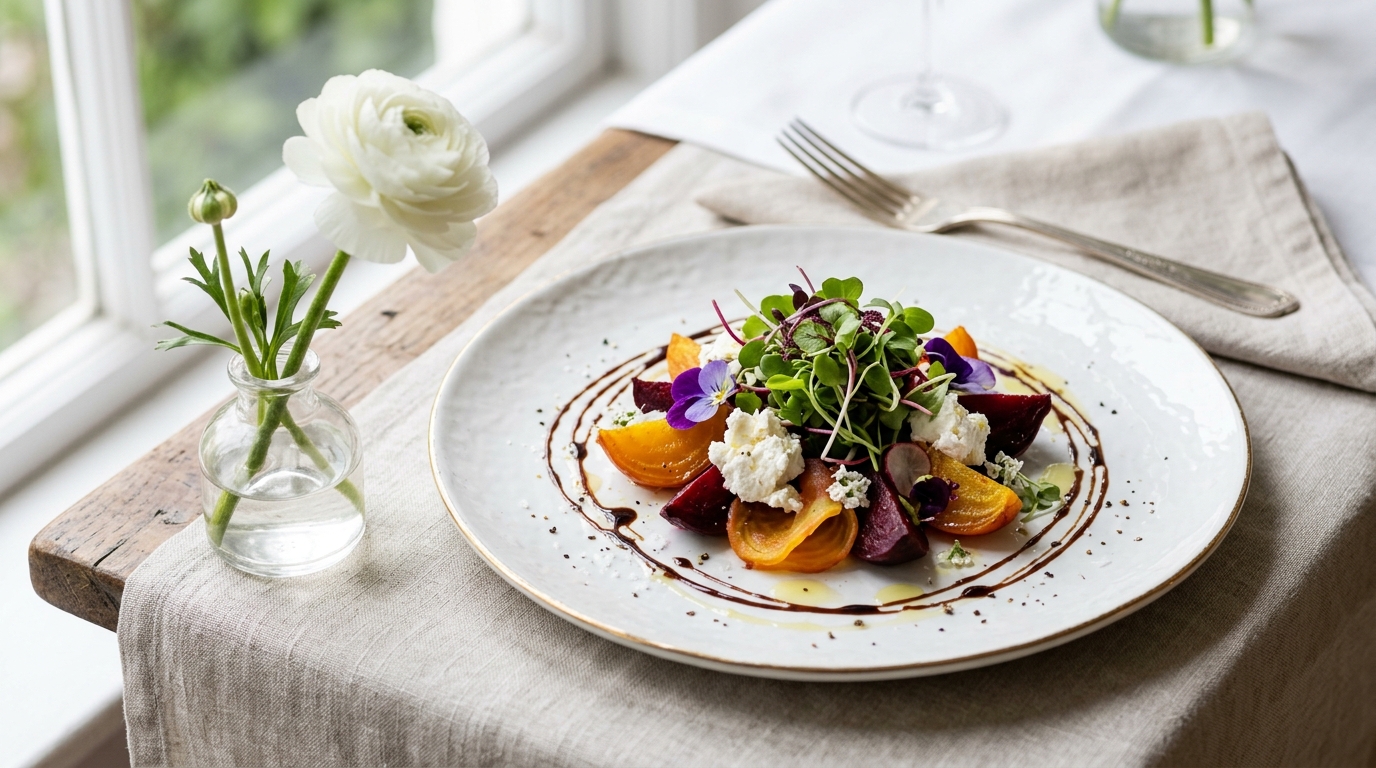
- Goat cheese, beetroot, and walnut with honey dressing
- Burrata with heritage tomatoes and basil oil
- Smoked duck with orange, watercress, and pomegranate
- Charred peach, prosciutto, and rocket with balsamic glaze (summer)
Seafood (£8-15 per head) Classic and impressive. Best for formal weddings.
- Smoked salmon with lemon, capers, and sourdough
- Prawn cocktail (retro but always popular)
- Crab and avocado tian
- Seared scallops with pea puree and pancetta
Sharing starters (£6-12 per head) Placed on the table for guests to share — more informal and social.
- Antipasti boards (cured meats, olives, artichokes, bread)
- Mezze platters (hummus, falafel, flatbread, tabbouleh)
- Bread and dip boards (focaccia, sourdough, flavoured butters)
Dietary alternatives for starters
Always offer a vegan and gluten-free alternative:
- Vegan: Roasted red pepper and tomato soup, avocado and mango salsa, charred courgette with romesco
- Gluten-free: Most soups and salads are naturally GF — check dressings and bread for hidden gluten
Main courses
The main course is what guests remember. Choose something that looks impressive on the plate but doesn’t stress the kitchen with complex last-minute preparation.
Popular wedding mains
Chicken (£12-20 per head) The most universally liked protein. Easy to cook at scale without quality loss.
- Chicken supreme with dauphinoise potatoes, green beans, and tarragon cream
- Corn-fed chicken breast with wild mushroom risotto
- Roast chicken thigh with chorizo, peppers, and saffron rice
Beef (£18-30 per head) More expensive but makes a statement. Best for winter and autumn weddings.
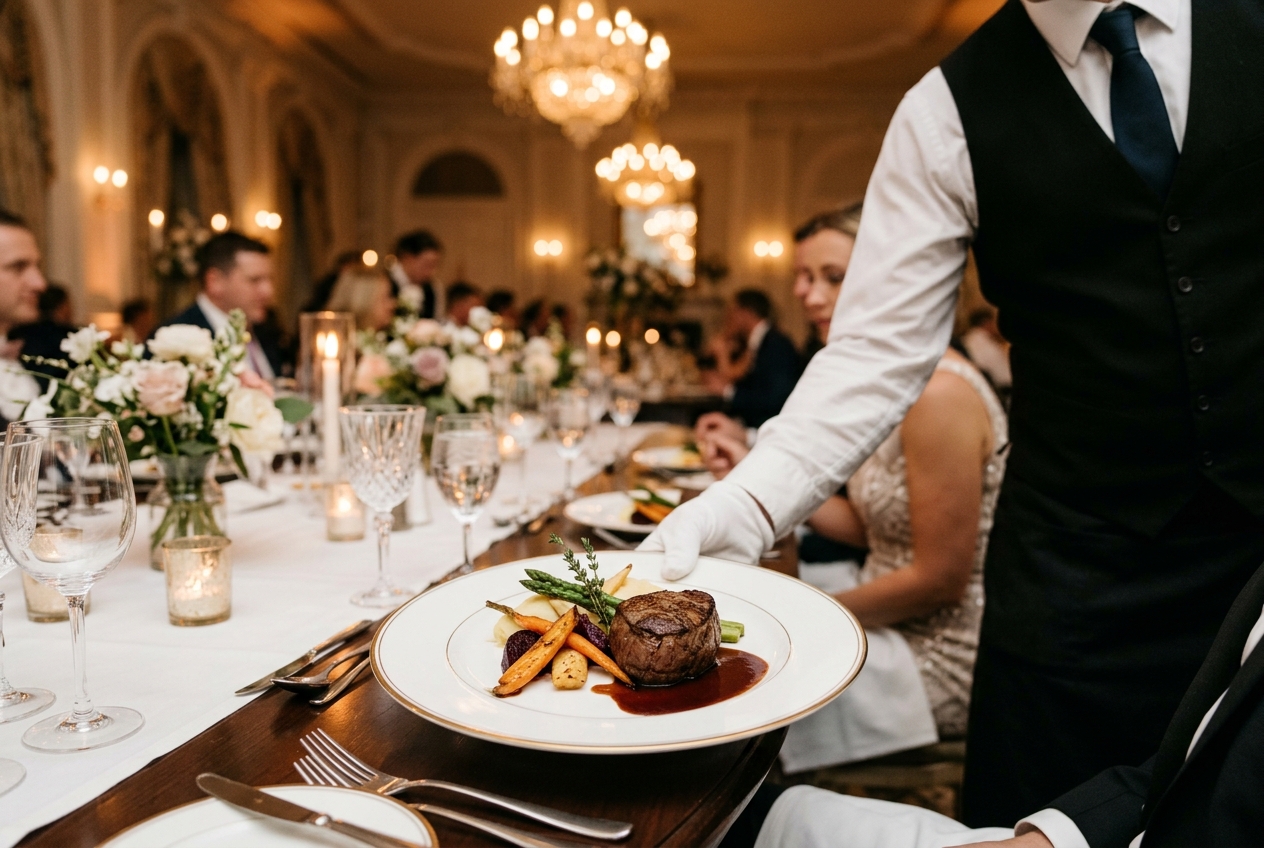
- Beef fillet with red wine jus, truffle mash, and roasted carrots
- Slow-braised beef cheek with horseradish cream and colcannon
- Sirloin steak with peppercorn sauce and triple-cooked chips
Fish (£15-25 per head) Light, elegant, and works beautifully in spring and summer.
- Pan-seared salmon with crushed new potatoes and dill cream
- Sea bass with samphire, capers, and brown butter
- Cod loin with chorizo and butter bean cassoulet
Lamb (£18-28 per head) Seasonal and impressive. Best in spring.
- Rack of lamb with dauphinoise, green beans, and rosemary jus
- Slow-cooked lamb shank with root vegetable mash
Vegetarian / vegan mains (£10-18 per head) No longer an afterthought — these should be as good as the meat options.
- Wild mushroom and truffle risotto (V/VG adaptable)
- Roasted cauliflower steak with chimichurri and quinoa (VG)
- Butternut squash and sage ravioli with burnt butter (V)
- Aubergine parmigiana with rocket salad (V/VG adaptable)
Building a menu guests can pre-order
Offer 2-3 options per course on the RSVP card:
Example:
- Starter: Butternut squash soup (VG/GF) / Smoked salmon with capers
- Main: Chicken supreme / Beef fillet (+£5) / Wild mushroom risotto (VG)
- Dessert: Chocolate fondant / Lemon posset / Seasonal fruit salad (VG/GF)
Include dietary symbols so guests with allergies can identify safe options quickly.
Desserts
The dessert is the last course before speeches and the evening party. Make it count — but keep it manageable. Complex plated desserts slow service.
Popular wedding desserts
Chocolate (£4-8 per head) The safest crowd-pleaser.
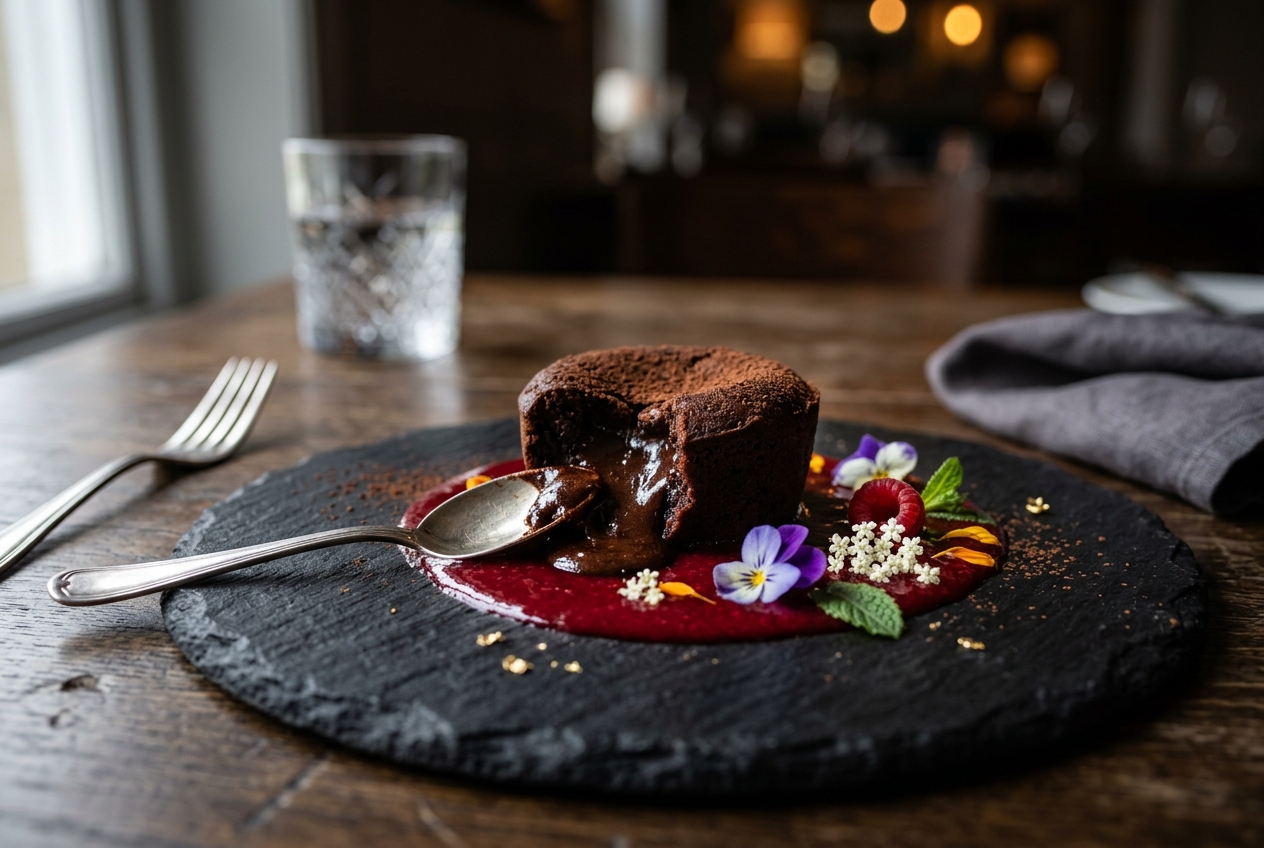
- Chocolate fondant with vanilla ice cream
- Chocolate and salted caramel tart
- Triple chocolate brownie with clotted cream
Fruit-based (£3-7 per head) Lighter, works well in summer.
- Lemon posset with shortbread
- Eton mess with strawberries and meringue
- Panna cotta with seasonal fruit compote
British classics (£3-6 per head) Comfort food that goes down well.
- Sticky toffee pudding with butterscotch sauce
- Apple crumble with custard
- Bread and butter pudding
Sharing desserts (£5-12 per head) Placed on the table for a social finish.
- Dessert sharing platters (brownies, tarts, truffles)
- Mini dessert selection (3-4 bite-size pieces per person)
- Cheese board as dessert (with grapes, chutney, crackers)
Use your wedding cake as dessert
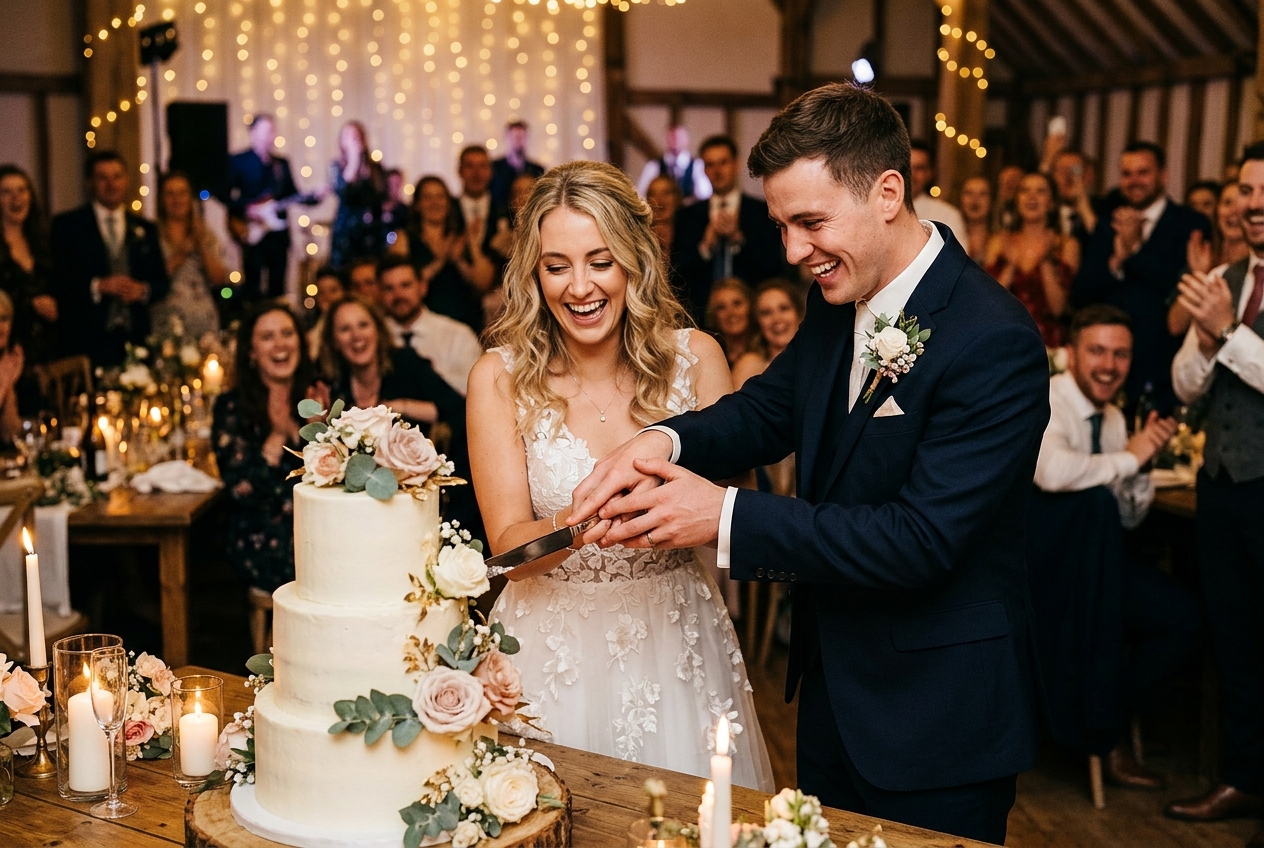
Cutting the wedding cake and serving it with cream or fruit as the dessert course eliminates one plated course. This saves £3-8 per head and gives the cake a practical purpose beyond photographs.
Seasonal menu guide
| Season | Starter | Main | Dessert |
|---|---|---|---|
| Spring | Pea and mint soup, asparagus | Lamb, salmon | Rhubarb crumble, lemon posset |
| Summer | Burrata and tomato, gazpacho | Sea bass, chicken | Eton mess, panna cotta |
| Autumn | Butternut squash soup, mushroom | Beef, game | Apple crumble, sticky toffee |
| Winter | Leek and potato soup, smoked salmon | Beef, venison | Chocolate fondant, treacle tart |
Seasonal menus cost less, taste better, and reduce the caterer’s reliance on imported ingredients.
Evening food ideas
Evening food is served around 9-10pm for guests who’ve been drinking and dancing. It should be simple, comforting, and easy to eat standing up.
Budget options (£5-10 per head):
- Bacon and sausage rolls in brioche buns
- Pizza slices
- Chip cones with curry sauce
- Toasted sandwiches
- Nacho station
Mid-range options (£10-15 per head):
- Fish and chip cones
- Pulled pork sliders
- Mac and cheese pots
- Falafel wraps
- Mini pies
Premium options (£15-25 per head):
- Full evening buffet (mini versions of the wedding breakfast)
- Street food trucks
- Cheese board with port
Plan for 70-80% of your day guests to eat evening food. Some guests leave, others aren’t hungry.
Next steps
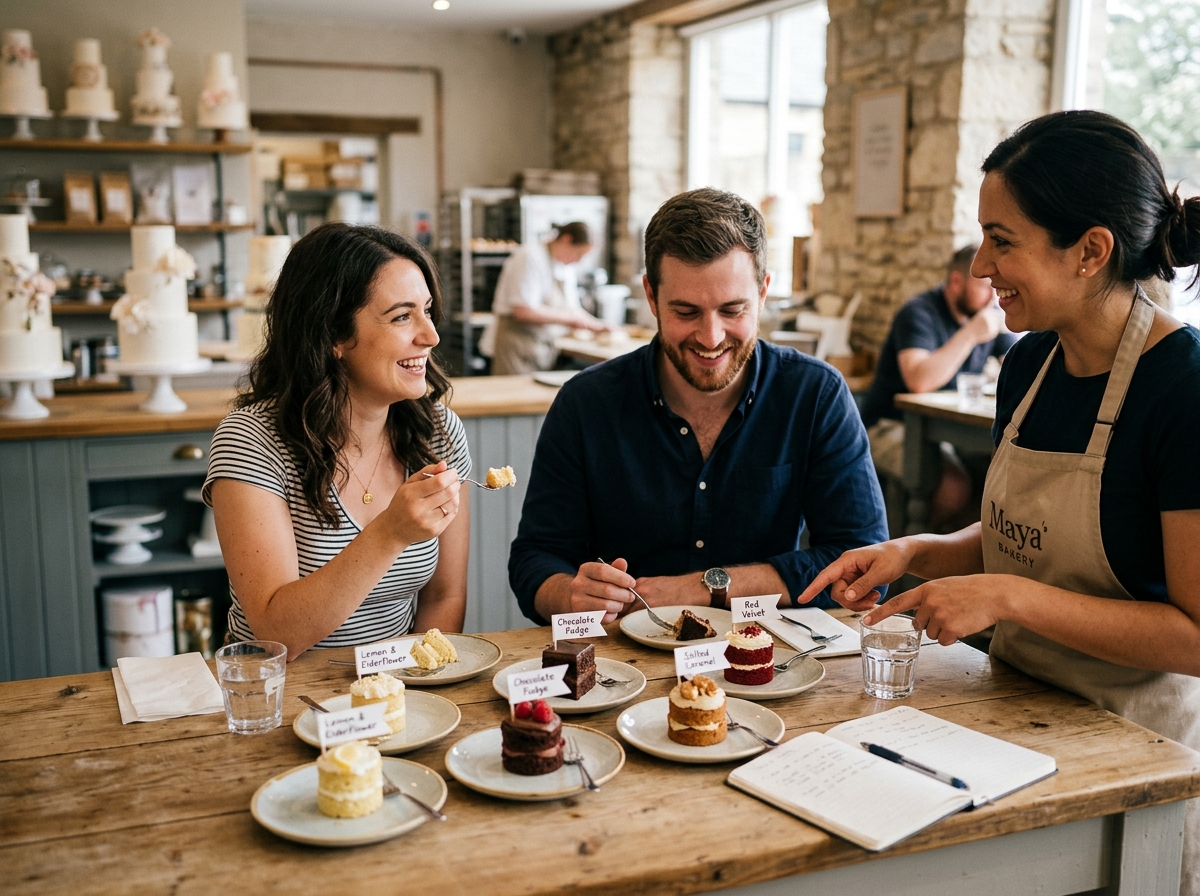
Book a tasting with your top 2-3 caterers. Bring your dietary requirements list and ask them to cook the exact dishes you’re considering — not a special tasting menu that doesn’t represent the real thing.
For more on costs: wedding catering cost per head UK
For comparing formats: sit-down vs buffet vs street food
Browse wedding caterers on Weddings Hub to find caterers in your area.
Frequently asked questions
How many courses should a wedding meal have?
Three courses (starter, main, dessert) is standard for UK weddings. Some couples add canapes before the meal and a cheese course after dessert, making it five courses. Two courses (main plus dessert) is increasingly popular for budget-conscious couples and works well for afternoon or early-evening weddings.
Should guests choose their wedding meal in advance?
Pre-ordering via the RSVP is recommended for sit-down meals. It gives the caterer exact numbers for each dish, reduces food waste, and ensures every guest gets their preferred option. Most caterers ask for final choices 2-4 weeks before the wedding.
What is the most popular wedding starter in the UK?
Soup is the most popular wedding starter in the UK — particularly butternut squash, tomato and basil, and leek and potato. It's cost-effective, easy to serve to large groups, and keeps well. Smoked salmon, goat cheese salad, and prawn cocktail are the most popular non-soup starters.
What is the most popular wedding main course?
Chicken supreme (breast with a cream or wine sauce) is the most popular wedding main in the UK, followed by beef fillet or sirloin, and salmon. Chicken is popular because it's universally liked, pairs with many sauces, and is the most affordable protein for caterers to serve at scale.