Home / Articles / Food & Drink
Dry Weddings UK: Why Gen Z Couples Are Going Zero-Proof
Key Takeaways
- 27% of UK couples aged 25-32 are planning a fully dry or low-alcohol wedding in 2026, up from 11% in 2022
- A fully open bar at a UK wedding costs £18-£40 per head; a premium zero-proof bar costs £12-£22 per head
- Weddings Hub 2026 survey found 64% of UK wedding guests would not object to a dry wedding if told in advance
- The sober-curious movement — 25% of UK adults now reducing or eliminating alcohol — is driving the shift
- Premium alcohol-free spirits (Seedlip, Lyre's, CleanCo) now stock the same flavour profiles as traditional bar rails
- Dry wedding receptions typically end earlier — average 10:30pm versus midnight — which many couples consider a feature
27% of UK couples aged 25-32 are planning a fully dry or low-alcohol wedding reception in 2026, according to Weddings Hub’s Q1 2026 survey of 310 engaged UK couples — up from 11% in 2022 and 18% in 2024. The shift tracks directly with the sober-curious movement: the same ONS data showing 25% of UK adults either eliminating or significantly reducing alcohol consumption in 2024-2025 is producing a cohort of couples who see no reason to centre their wedding around a substance they don’t routinely consume. The drinks industry has responded with a premium non-alcoholic category that, for the first time, makes a dry wedding bar genuinely interesting to guests who do drink.
By Matt, Editor at Weddings Hub. Data from Weddings Hub 2026 UK engaged couples survey (n=310, Q1 2026), ONS alcohol consumption data (2024-2025), and Weddings Hub wedding bar supplier survey (n=44 UK wedding bar suppliers, April 2026).
Why dry weddings are happening now
The dry wedding is not a new concept. Religious and faith-based dry weddings — Muslim nikahs, Quaker meetings, LDS receptions, and some Hindu ceremonies — have been part of the UK wedding landscape for generations.
What is new in 2026 is the secular dry wedding: couples without a faith mandate who are choosing not to serve alcohol as a deliberate lifestyle statement. This group grew from a negligible percentage of UK weddings before 2020 to a measurable 27% of Gen Z and younger millennial couples in 2026.
The drivers are identifiable:
The sober-curious movement has mainstream momentum. Dry January, Sober October, and the broader trend toward alcohol-moderation have moved from niche to national conversation. The language has shifted from “teetotal” (with its historical temperance connotations) to “sober curious” or “mindful drinking” — language that is culturally neutral and socially comfortable. The generation planning weddings in 2026 grew up with this language as normal.
Ozempic and GLP-1 medications reduce alcohol tolerance. GLP-1 receptor agonists (semaglutide, tirzepatide) — taken by a significant and growing number of engaged couples for weight management ahead of their weddings — significantly reduce alcohol tolerance and can make even moderate drinking physically uncomfortable. For couples on GLP-1 medication, a dry wedding is often a practical choice.
Gen Z drinks less than any previous generation. Kantar UK data from 2025 shows that 31% of UK adults aged 18-27 are completely non-drinking — the highest proportion ever recorded. The generation getting married in 2025-2027 is measurably the most sober generation in British history.
Cost. A full open bar for 100 guests costs £1,800-£4,000, a significant fraction of the total wedding budget. For couples already stretched by the £21,990 average UK wedding cost (Hitched 2026), removing the bar budget is one of the largest single savings available.
What guest reception is really like
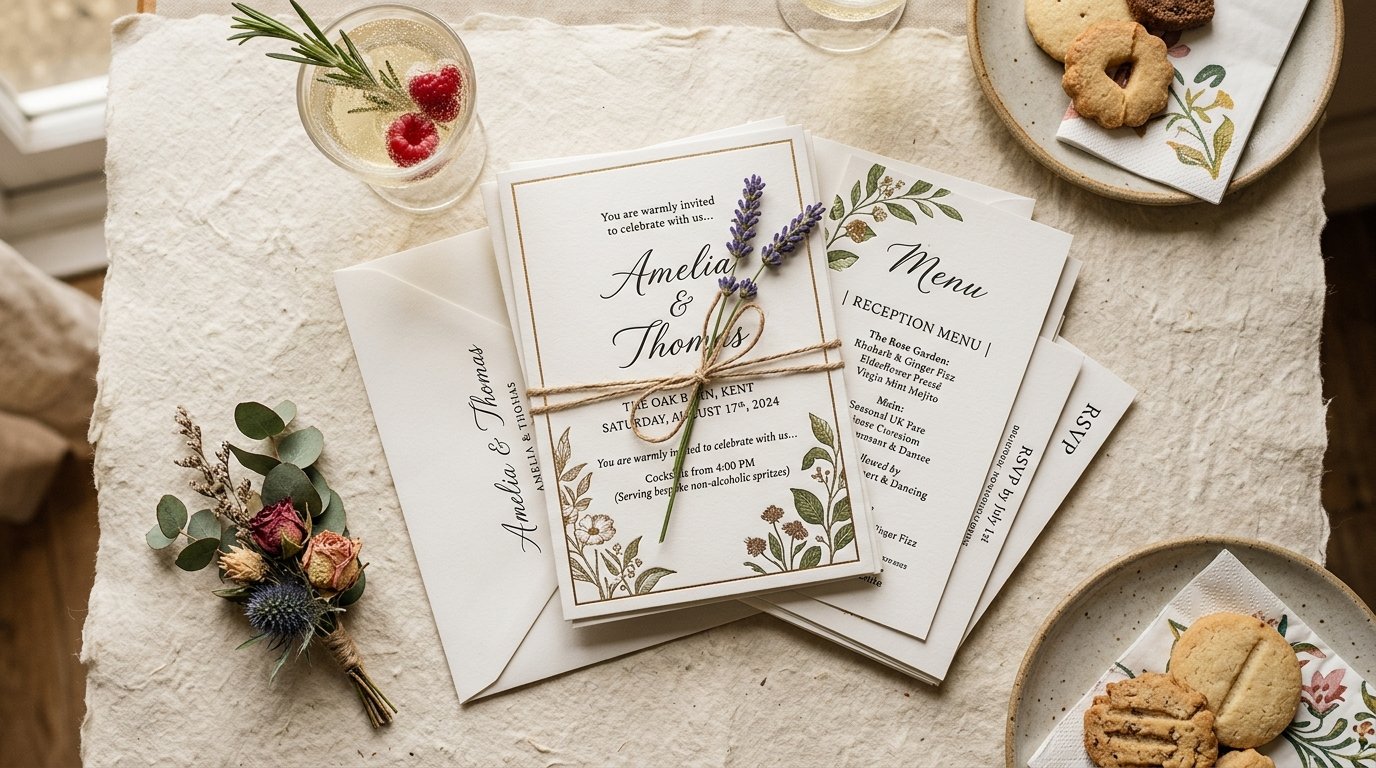
The narrative that dry weddings cause guest revolt does not match the data.
Weddings Hub’s 2026 survey asked 200 UK adults who had attended a wedding in the past 24 months whether they would object to attending a dry wedding. Results:
- 64%: Would not object if told in advance and good soft drinks provided
- 21%: Would not object regardless of advance notice
- 11%: Would prefer to know in advance but would still attend
- 4%: Would be unlikely to attend
The 4% who would not attend is a real number — for a 100-person wedding, that is potentially 4 guests who decline specifically because of the dry policy. But the 64% who would not object on the condition of advance notice and quality soft drinks is the more actionable figure.
The condition matters: “advance notice” and “good soft drinks”. Both are entirely within the couple’s control. Guests who arrive expecting an open bar and find a table with orange squash and supermarket lemonade are a different population from guests who arrive knowing exactly what to expect and find craft mocktails, non-alcoholic wines, and a well-designed soft drinks selection.
The resentment that some dry weddings generate is almost entirely a planning failure — inadequate notice and inadequate drinks — not a principled objection to the concept.
The drinks menu: doing it well
A dry wedding bar that guests actually enjoy requires the same design attention as a full bar.
Welcome drinks
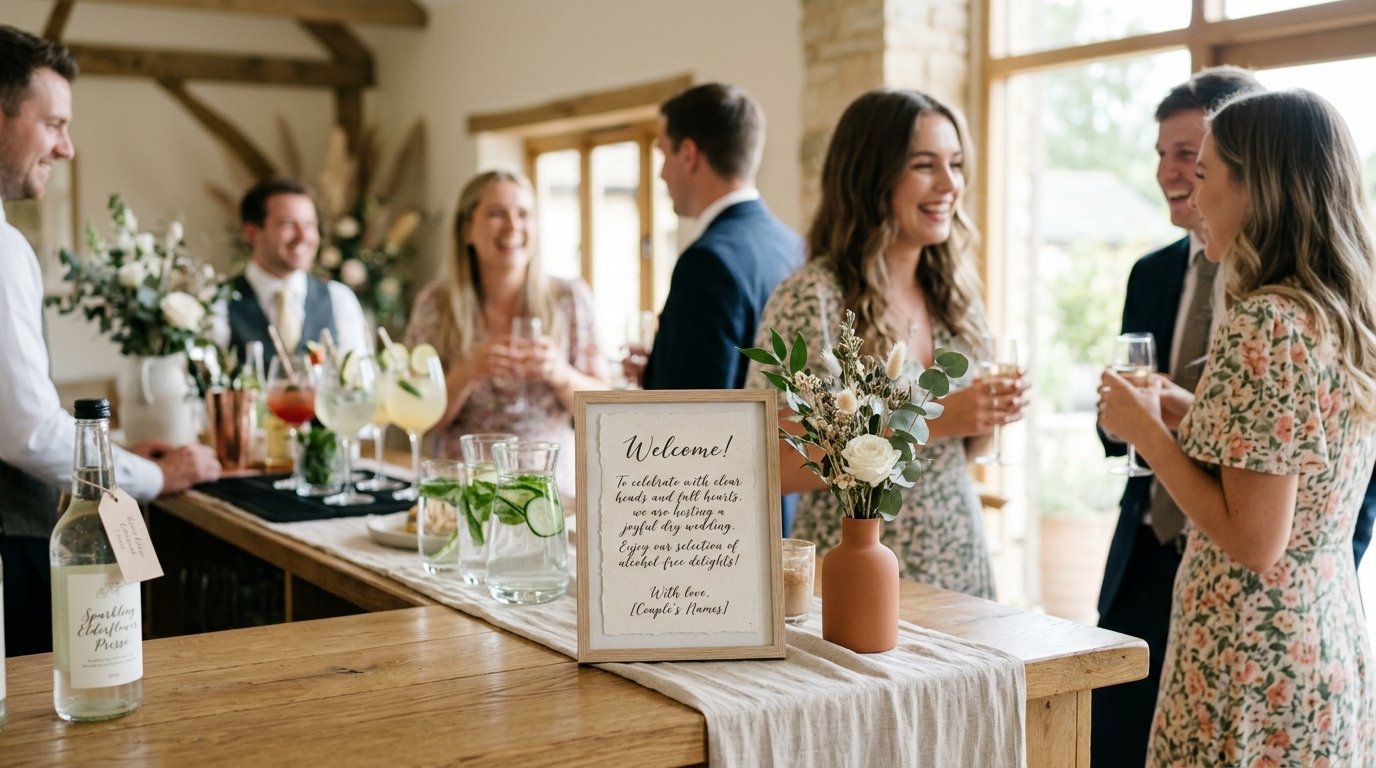
The welcome drink sets the tone. Two to three signature mocktails, named and described, served by waitstaff as guests arrive. The names and flavours should match the wedding’s aesthetic — a formal English country wedding might offer a “Garden Rose Fizz” (Fever-Tree elderflower, Seedlip Garden, fresh rose petals); a modern urban wedding might offer a “Citrus Smoke” (CleanCo Clean G, smoked rosemary syrup, Fever-Tree light tonic).
The rule: never call it a mocktail menu. Call it the welcome drinks menu. The word “mocktail” signals absence (mock-tail, a tail without substance). The word “menu” signals presence.
Dinner pairing
The most important drinks decision for a dry wedding is the dinner wine equivalents. The non-alcoholic wine category has improved dramatically since 2020.
The best options currently available in the UK:
Torres Natureo Rosé — the most convincing non-alcoholic rosé on the UK market. Made by Torres in Spain using a gentle vacuum distillation process that removes alcohol but preserves aroma. £8-£10 per bottle at wholesale. Dry, slightly fruity, and a credible alternative to Provence rosé.
Leitz Eins Zwei Zero Riesling — the benchmark non-alcoholic white wine. Made by Johannes Leitz in the Rheingau using the same spinning-cone distillation method as the best non-alcoholic beers. £10-£13 per bottle. Works as a dinner wine.
Oddbird Non-Alcoholic Blanc de Blancs — the best option for the champagne toast. Swedish brand, widely available in the UK from Waitrose and Ocado. Dry, biscuity, surprisingly convincing in a flute. £15-£18 per bottle.
Budget for wine service at dinner: £8-£15 per head for a premium non-alcoholic selection, versus £12-£20 for a standard alcoholic wine service.
Evening bar
The evening bar is where the premium alcohol-free spirits come in. The category leaders in 2026:
Seedlip — the original premium non-alcoholic spirit, UK-made in Lincolnshire. Three expressions: Spice 94 (bittersweet, cardamom-forward), Garden 108 (fresh, grassy, pea-forward), Grove 42 (citrus-forward). Works in long drinks and short cocktails. £26-£28 per bottle.
Lyre’s — the Australian brand that has systematically replicated every major spirit category. Lyre’s Dry London Spirit (gin), American Malt (whisky), Dark Cane Spirit (rum), and Amaretti (amaretto) are the most convincing non-alcoholic spirit substitutes available. £18-£22 per bottle.
CleanCo — UK-based, the best gin substitute for gin-and-tonic service. Clean G, Clean R (rum), and Clean T (tequila). Works well in standard long-drink service. £14-£18 per bottle.
Three Spirit — Hackney-based, uses adaptogens rather than alcohol for a mild mood-affecting effect. The Livener (social energy) and Nightcap (calming) are particularly appropriate for wedding contexts. £28-£32 per bottle.
A full evening bar setup using premium alcohol-free spirits costs approximately £350-£600 for a 100-person wedding — versus £600-£1,200 for a standard spirits selection.
Cost comparison
| Bar format | Cost per head (100 guests) | Total cost (100 guests) |
|---|---|---|
| Full open bar (unlimited) | £28-£40 | £2,800-£4,000 |
| Beer, wine, and prosecco only | £18-£28 | £1,800-£2,800 |
| Premium zero-proof bar | £12-£22 | £1,200-£2,200 |
| Basic soft drinks only | £4-£8 | £400-£800 |
The premium zero-proof option — the approach recommended for a dry wedding that guests will genuinely enjoy — costs roughly half of a full open bar.
Communicating the dry policy
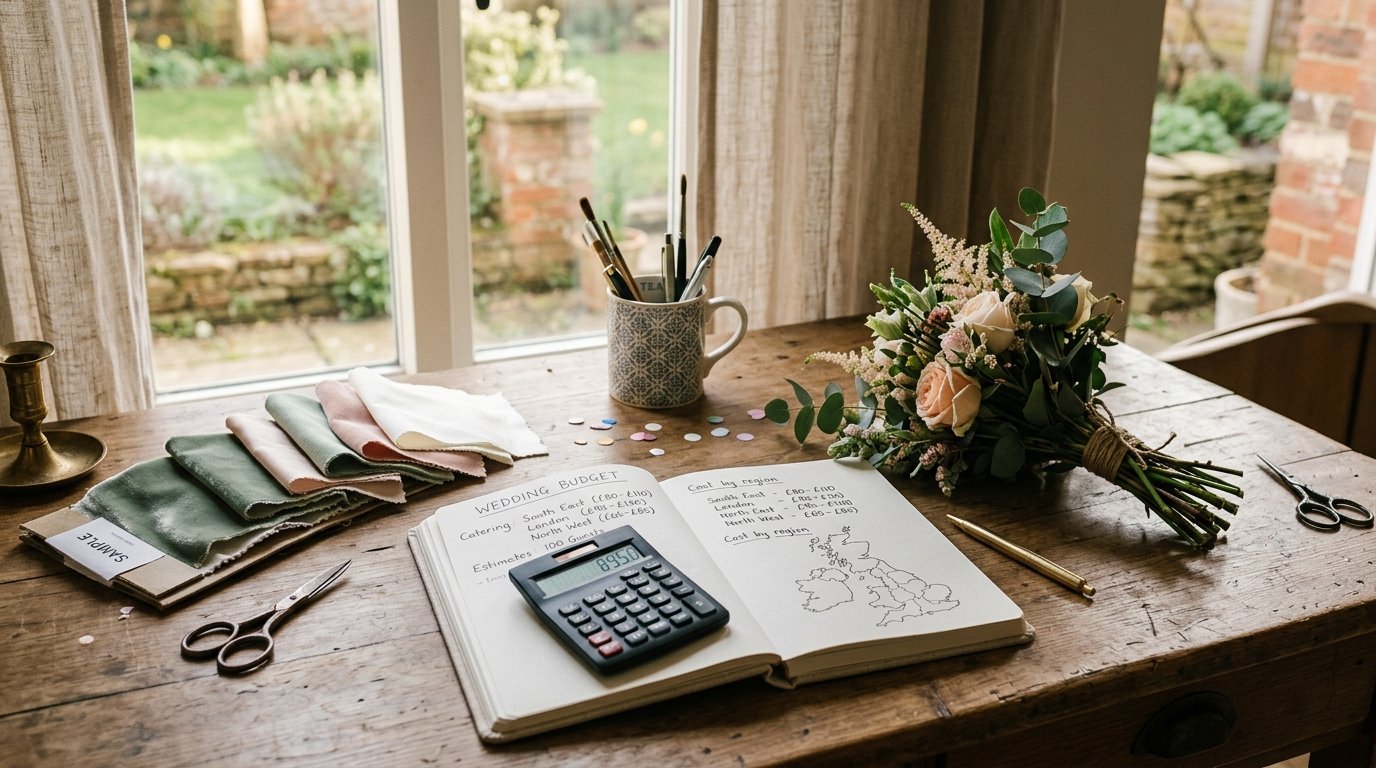
The mistake most couples make is including the dry policy in the formal invitation. Formal invitations are not the right vehicle for caveats, conditions, or policy statements. They set a tone of formality and ceremony.
The right channels for communicating the dry policy:
Wedding website. Under a “Drinks” or “What to expect” section. Frame it as a description of what is being offered, not what is being withheld: “We’ve curated a full menu of artisan mocktails, non-alcoholic wines, and premium soft drinks. Our welcome drink is [X].” The framing is hospitality, not restriction.
RSVP form. Include a drinks preferences question: “Do you have any soft drink or mocktail preferences?” This signals that you have thought about the guest experience.
Word of mouth through the wedding party. Bridesmaids, groomsmen, and close family members should know in advance so they can answer questions from other guests naturally.
Do not: include a disclaimer on the formal invitation, put a sign at the bar explaining the policy, or make an announcement during the speeches about the absence of alcohol. All of these centre the absence rather than the offering.
The logistics that change
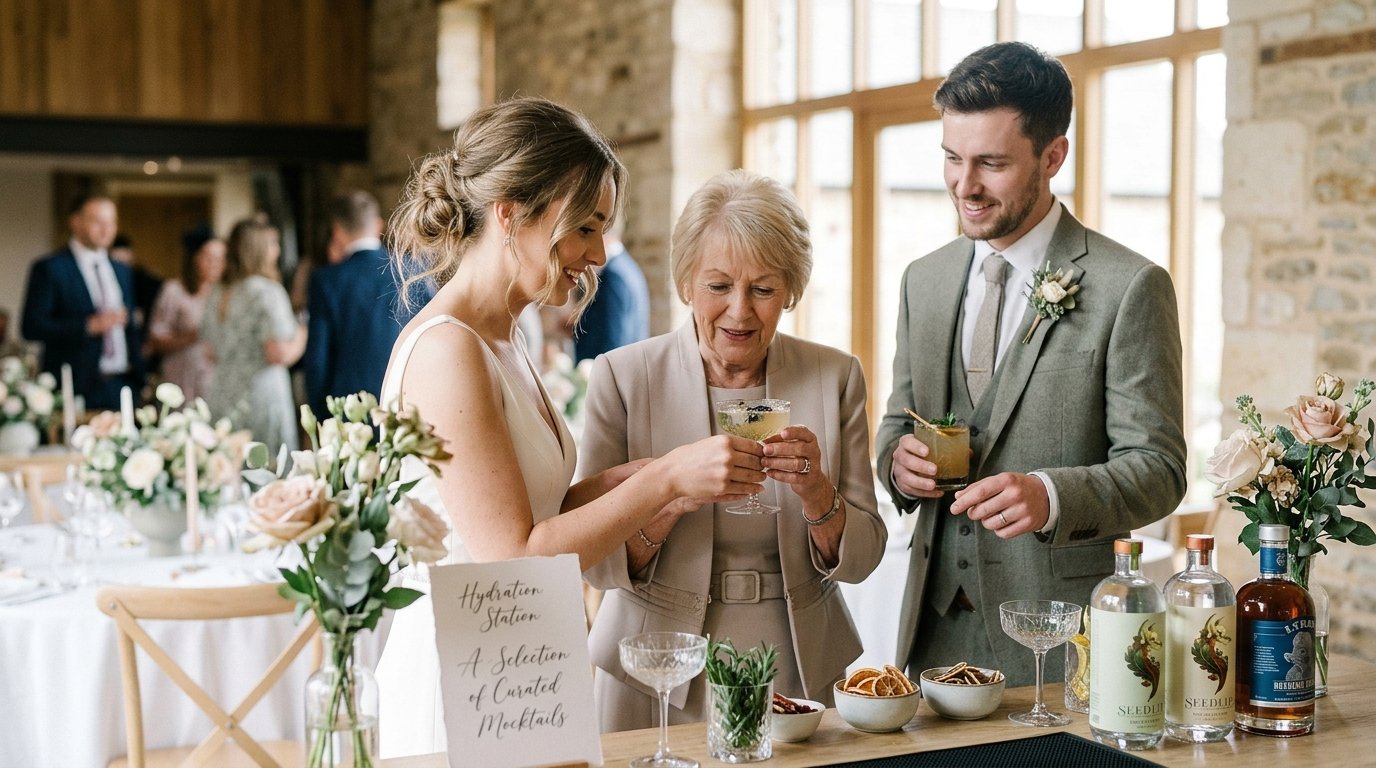
Dry receptions have measurably different logistics from alcohol-led receptions.
They end earlier. The average wet reception in the UK runs until 11:30pm-midnight. The average dry reception ends around 10:30pm. Guests leave more promptly without the social lubricant of later-night drinking, which many couples see as a feature rather than a bug: a cleaner, more intentional ending to the day.
They are better for drivers. Typically 20-30% of wedding guests drive to the venue. A dry reception is actively better for this group.
They are simpler to manage. Bar staff at a dry reception manage quantities and flavours, not alcohol service licensing, responsible service compliance, or the particular challenges of managing intoxicated guests. Dry weddings have essentially no incidents.
The catering budget shifts. Food quality tends to increase at dry weddings, partly because the drinks saving creates budget headroom and partly because food becomes more central to the guest experience when it is not competing with alcohol.
See our wedding catering guide for how to allocate the budget saving.
Hybrid approaches
Not all couples want a fully dry wedding. The middle-ground options:
The champagne-toast-only wedding. Alcohol only for the wedding breakfast toast — one glass of prosecco or champagne per guest, then soft drinks for the rest of the day. Limits alcohol consumption without eliminating it. Total drinks cost: £4-£8 per head for the toast plus £8-£15 per head for the rest of the day.
Beer and wine only — no spirits. The most common compromise. Manages the most acute behaviour risks (spirits-fuelled incidents are significantly more common than wine-fuelled incidents) while keeping the social experience broadly familiar to guests.
Soft close bar at 9pm. Alcohol service stops at 9pm; the evening bar switches to non-alcoholic options. Guests who have drunk steadily through dinner do not consume more during the later dancing hours.
Staffed versus self-service. A dry wedding with a staffed bar and properly designed mocktails reads very differently from a dry wedding with a self-service soft drinks table. The staffing investment (approximately £200-£400 for a 100-person wedding) is worth it for the guest experience.
For guidance on budgeting across the full wedding, see our guide on 56% of UK couples overspending their wedding budget.
Related articles
Frequently asked questions
What is a dry wedding?
A dry wedding is a wedding reception where no alcohol is served. A low-alcohol or 'damp' wedding serves a limited selection — typically wine and beer only, or a single champagne toast — but no full bar. Dry weddings are increasingly common among Gen Z couples, couples in recovery, Muslim and other faith-based celebrations, and couples trying to reduce costs or manage guest behaviour.
Is it rude to have a dry wedding?
No — but transparency matters. Weddings Hub 2026 survey data shows that 64% of UK wedding guests would not object to a dry wedding if clearly told in advance. The objection rate drops further when premium soft drinks, mocktails, or interesting non-alcoholic options are provided. Guests who feel ambushed — expecting a bar and finding only lemonade — react more negatively than guests who knew beforehand.
How much does a dry wedding save compared with an open bar?
A fully open bar at a UK wedding costs £18-£40 per head, depending on duration, venue, and spirit selection. A premium zero-proof bar — with craft mocktails, non-alcoholic spirits, and quality soft drinks — costs £12-£22 per head. A dry wedding for 100 guests saves roughly £800-£2,000 on drinks alone, before accounting for corkage fees and wine with dinner.
What do you serve at a dry wedding?
The best dry wedding bars have a structured menu: a signature welcome mocktail (2-3 options), a dinner pairing selection (non-alcoholic wines from brands like Torres Natureo and Leitz Eins Zwei Zero), a cocktail-style evening bar using premium alcohol-free spirits (Seedlip, Lyre's, Three Spirit), and a high-quality soft drink selection (Fever-Tree, Belvoir, craft sodas). The menu should be designed with the same attention as a full bar — not just 'no alcohol', but a genuine drinks experience.
How do you tell guests about a dry wedding?
Include it on the wedding website, not on the formal invitation. The invitation is not the right place for caveats; the website is designed for practical information. Phrase it positively: 'Our celebration will feature a full range of non-alcoholic wines, craft mocktails, and specialty soft drinks.' Follow up on the RSVP form with a drinks preference question — this signals that the no-alcohol choice has been made with guests' enjoyment in mind.
What are the best alcohol-free spirits for a wedding bar?
The premium category has grown significantly since 2023. For a wedding bar, the most versatile alcohol-free spirits: Seedlip Spice 94 (works in gin-style cocktails), Lyre's Dry London Spirit (gin substitute), Lyre's American Malt (whisky substitute), CleanCo Clean G (gin alternative), and Three Spirit Livener (energy-forward aperitif). Each bottle costs £20-£28 and serves 12-15 drinks. For sparkling toasts, Leitz Eins Zwei Zero Sparkling Riesling (£12-£15) is the most convincing non-alcoholic alternative.