Lace Wedding Dresses 2026: UK Guide
Lace wedding dresses in 2026 range from light Chantilly sleeves to bold guipure motifs, corded lace and embroidered tulle. The fabric name alone does not establish quality: buyers should inspect motif joins, lining colour, seam finish, stretch, skin feel and alteration options. Vintage lace needs additional condition checks, while modern gowns should come with clear care and storage instructions.
Key Takeaways
- Chantilly is typically light and delicate, while guipure uses denser connected motifs
- Embroidered tulle may look like lace but is constructed differently
- Lining colour can change the visibility and mood of the pattern
- Alterations are easier when motif placement and seam allowances are planned well
- Test lace against skin and under venue lighting before ordering
Lace wedding dresses in 2026 range from light Chantilly sleeves to bold guipure motifs, corded lace and embroidered tulle. The fabric name alone does not establish quality: buyers should inspect motif joins, lining colour, seam finish, stretch, skin feel and alteration options. Vintage lace needs additional condition checks, while modern gowns should come with clear care and storage instructions.
The main lace families
Chantilly
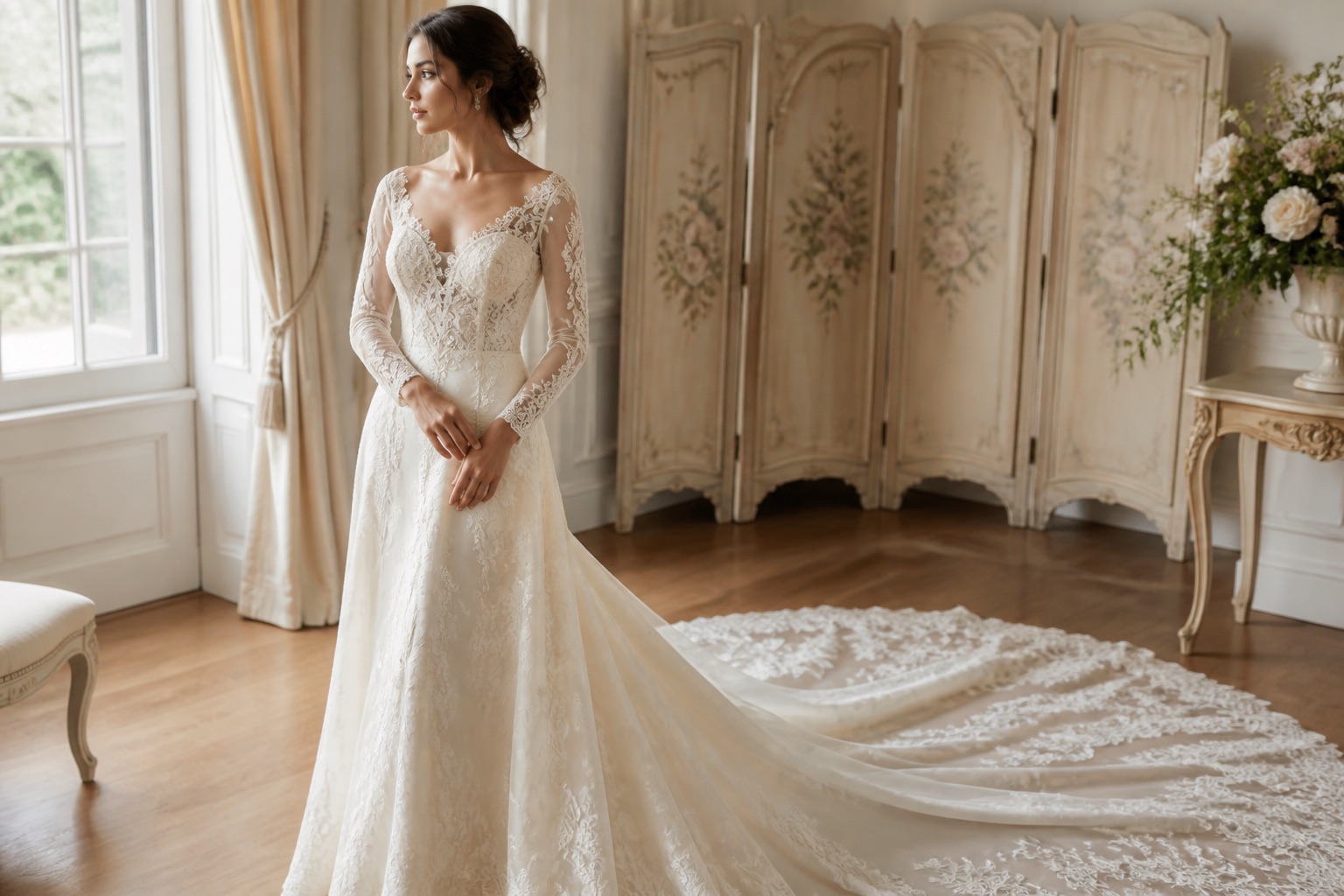
Chantilly is light, fine and commonly floral, with details outlined against a net ground. It suits sleeves, overlays and veils where movement matters.
Its delicacy also means joins, snags and repairs need care. Inspect cuffs, underarms and fastening points closely.
Guipure
Guipure joins motifs with bars or plaits rather than placing them on a continuous net. The result is bolder, denser and more graphic.
It can create a strong bodice or border, though weight and edge feel vary. A large motif may need careful positioning around seams.
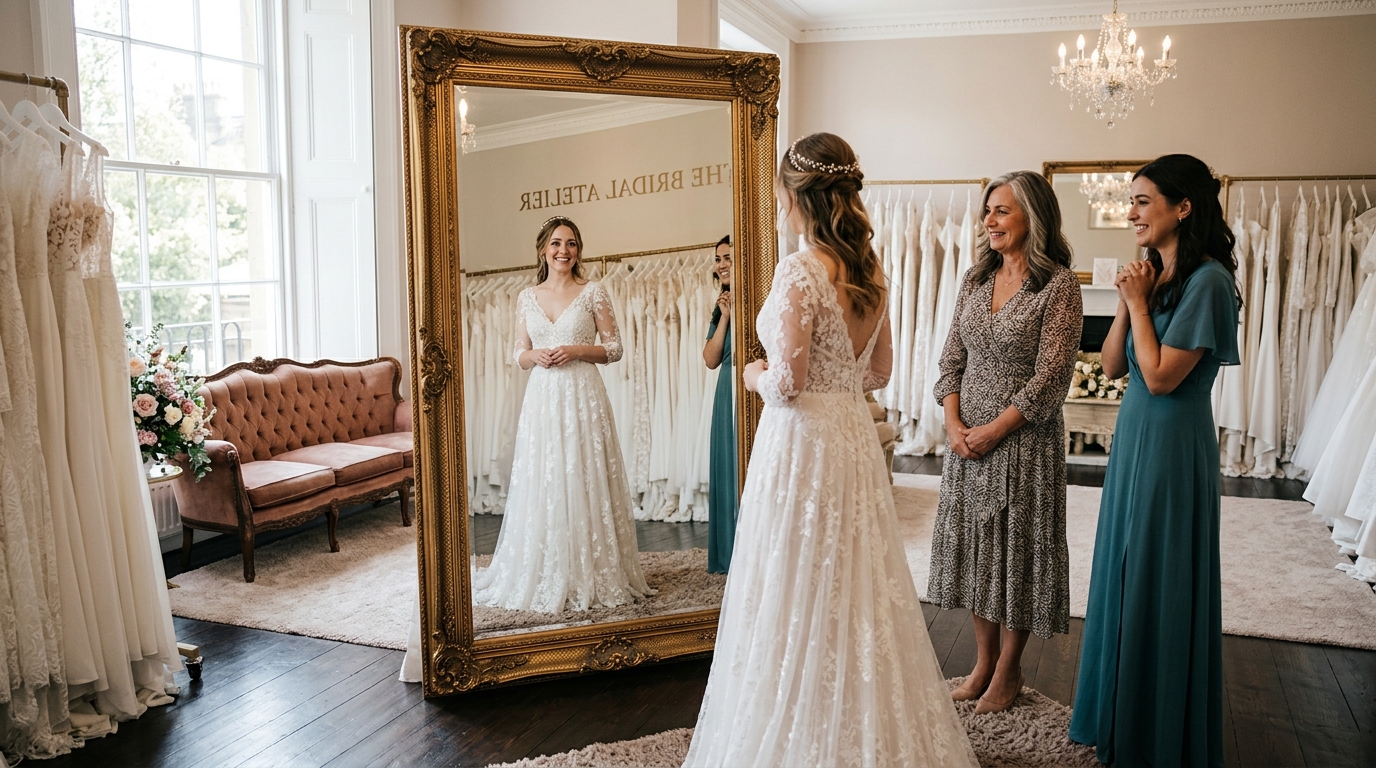
Ask the fitter to name the fabric construction and show where motifs have been joined.
Corded lace
Cord follows parts of the motif to create a raised outline. It photographs clearly and can add structure without the full density of guipure.
Embroidered tulle
Thread, beads or appliqué can be worked onto a tulle ground. Retailers may describe the visual result as lace, but the construction and alteration method differ.
Vintage lace
Age does not automatically prove quality. Look for discolouration, brittleness, repairs, odour and weak points. Confirm whether the entire gown is old or whether antique pieces were applied to a newer base.
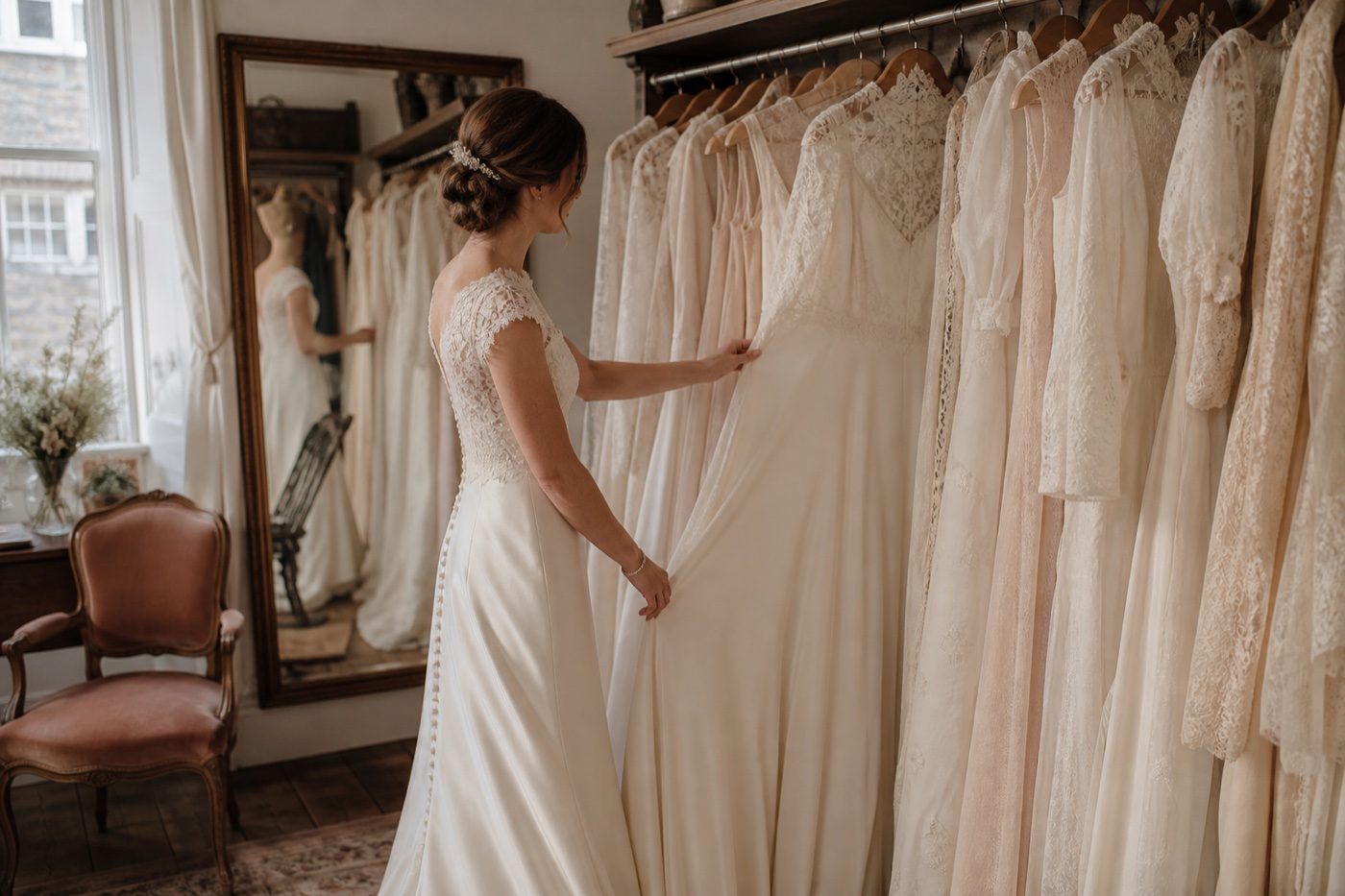
Vintage and second-hand gowns need condition and cleaning checks before alteration.
What lining colour changes
Ivory lining creates a quieter, more continuous surface. Nude, blush or mocha lining increases contrast and makes the motif more visible. White lining can make cool lace look crisper.
View samples in daylight and warm indoor light. A lining described as “nude” is not one standard shade, so compare it against your skin rather than a product name.
Comfort checks for sleeves and necklines
Rub a sample gently against the inner arm and neckline. Beading, cord and cut edges can irritate over several hours even if they feel acceptable for five minutes.
Raise both arms, hug someone and sit. Ask how the underarm is finished and whether a soft facing can be added without changing the appearance.
Movement tests reveal scratching, pulling and seam tension before the day.
Altering a lace dress
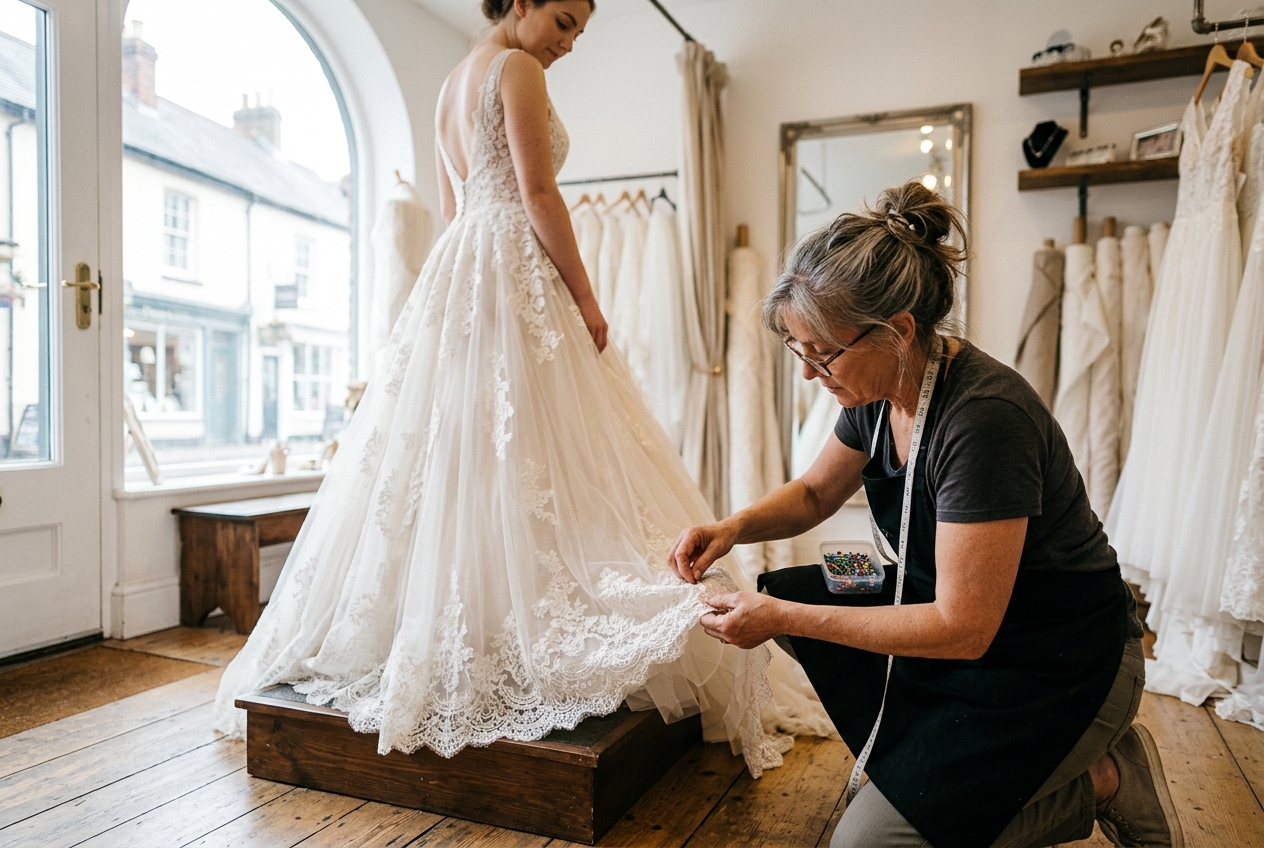
Side seams may cut through motifs, while sheer backs and illusion necklines leave fewer places to hide changes. Skilled specialists can lift and reapply appliqué, but that adds labour.
Before ordering, ask:
- where the gown can be taken in or let out;
- whether motifs cross the alteration seams;
- how sleeve length can change;
- whether the hem has a shaped border;
- how the bustle will attach;
- what happens if replacement lace is unavailable.
Find UK bridal boutiques and clarify whether alterations are included, in-house or referred to a separate business.
Cost and quality
Price reflects fibre, manufacturing method, quantity, hand application, designer and garment construction. A simple machine-made lace gown can fit beautifully; an expensive lace can still be poorly matched at a seam.
Turn the dress inside out where the boutique permits. Look at seam finishing, motif joins, boning channels, lining and fastening support.

Visible handwork is only one part of value; internal construction and fit matter too.
Cleaning and storage
Ask for the fibre content and care label. Do not assume every lace can be wet-cleaned or steamed in the same way.
After the wedding, use a cleaner experienced with bridal garments and identify stains before handing over the dress. Long-term storage should be breathable, dry and protected from light, with folds checked periodically.
Sources and related guides
- British Vogue’s current wedding coverage, checked 27 August 2026 for the continuing lace and gothic bridal trend
- Vintage wedding dresses in the UK
- Wedding dress shopping guide
- Wedding dress cleaning and preservation
Frequently asked questions
Which lace is best for a wedding dress?
The best choice depends on the desired weight, pattern, structure and comfort rather than one universal quality ranking.
What is Chantilly lace?
It is a fine, lightweight lace known for delicate floral patterns outlined on a net ground.
What is guipure lace?
It uses motifs connected by bars or plaits rather than a continuous net ground, creating a bolder and denser effect.
Can a lace wedding dress be altered?
Yes, but motif matching, appliqué and sheer panels can add time and cost. Ask a bridal specialist before ordering.
How should a lace wedding dress be stored?
Follow the maker's instructions, use breathable materials and avoid long-term pressure, damp, heat and direct sunlight.