Wedding Day Timeline: A Relaxed UK Plan
A good wedding timeline protects breathing room rather than controlling every minute. Fix the ceremony, meal and supplier arrival times first. Then add travel, photographs and comfortable buffers. The examples below suit common UK schedules, but your registrar, venue and suppliers should confirm the final version.
Key Takeaways
- Treat these schedules as starting points, not rules.
- Confirm arrival requirements directly with your registrar or place of worship.
- Add travel time and a calm buffer before every fixed moment.
- Let the photographer estimate group and couple portrait timings.
- Send one final schedule to the venue and every supplier.
A wedding timeline should make the day feel lighter. If it reads like an airport operations manual, start deleting things.
Fix the moments that cannot move. Build the rest around them with enough space to breathe.
Start with the fixed points
Ask your registrar, place of worship and venue to confirm:
- the ceremony start time
- when each partner must arrive
- any private registrar meetings
- guest arrival and seating times
- venue access for suppliers
- meal service time
- music finish and building-clear time
GOV.UK confirms that a civil ceremony needs at least two witnesses. Religious content cannot form part of that civil ceremony.
Everything else is a planning choice.
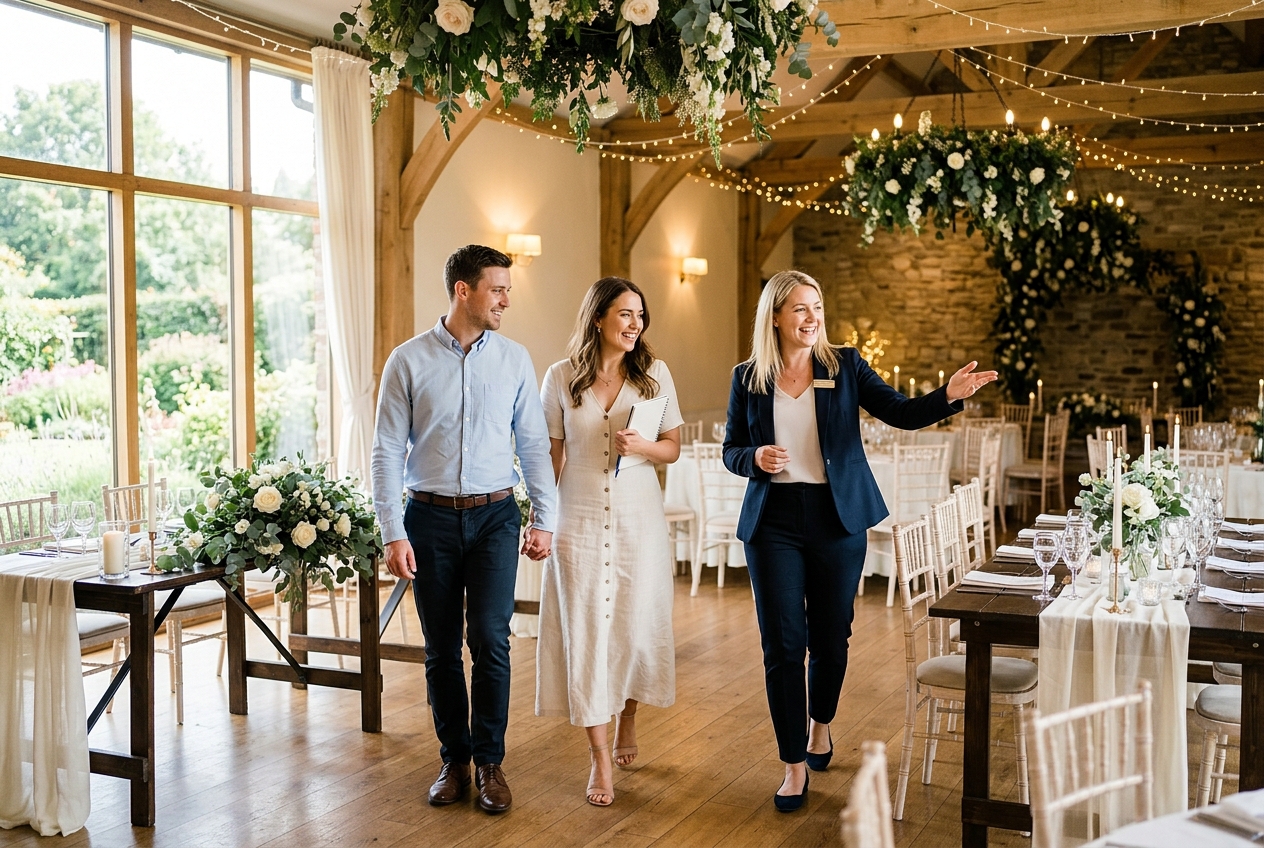
A relaxed timeline for a 1pm ceremony
This example keeps a traditional afternoon ceremony and an evening party. Adjust every travel time for your real locations.
| Time | Plan |
|---|---|
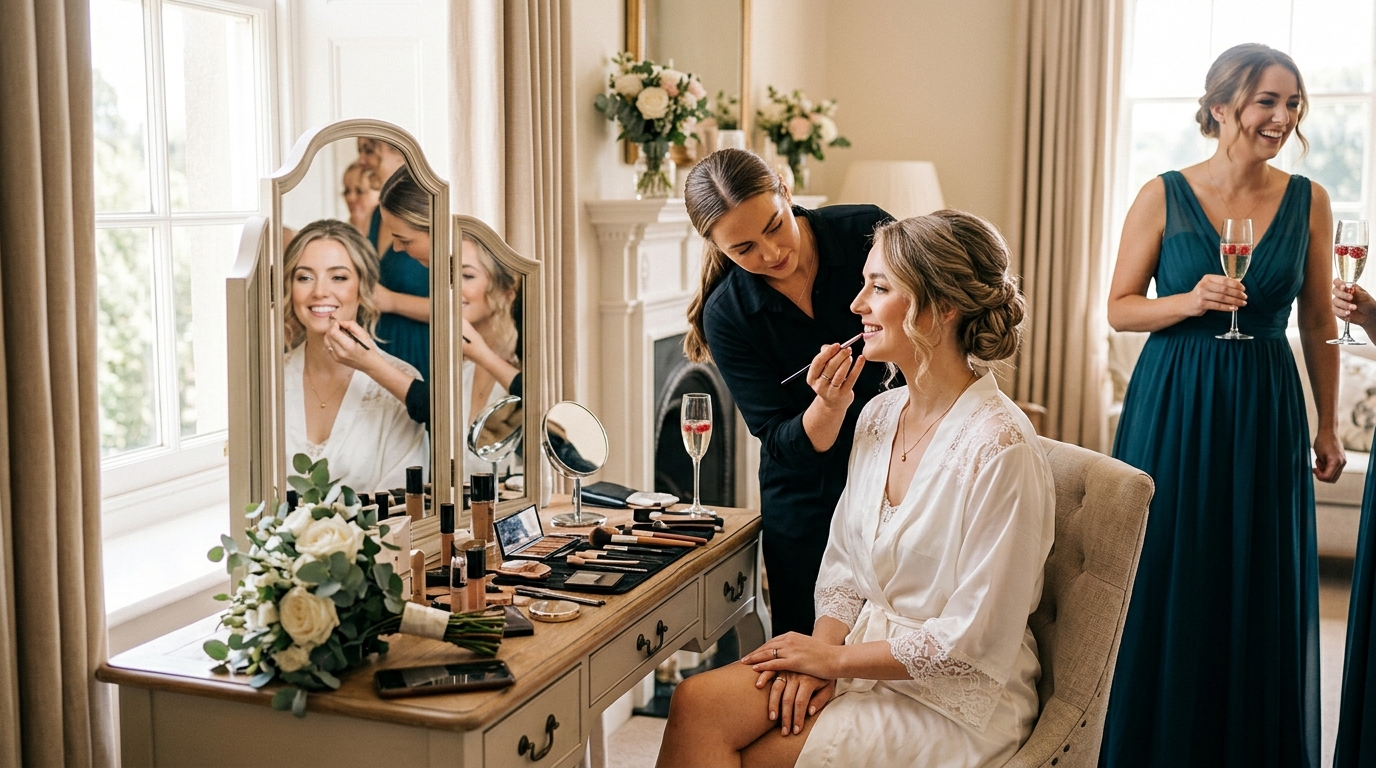
| 8:30am | Breakfast and first hair or make-up appointment |
| 10:00am | Photographer arrives for preparations |
| 11:15am | First partner dresses and gathers essentials |
| 11:45am | Other partner arrives at the venue |
| 12:15pm | Guests begin arriving |
| 12:30pm | Required registrar meetings and final checks |
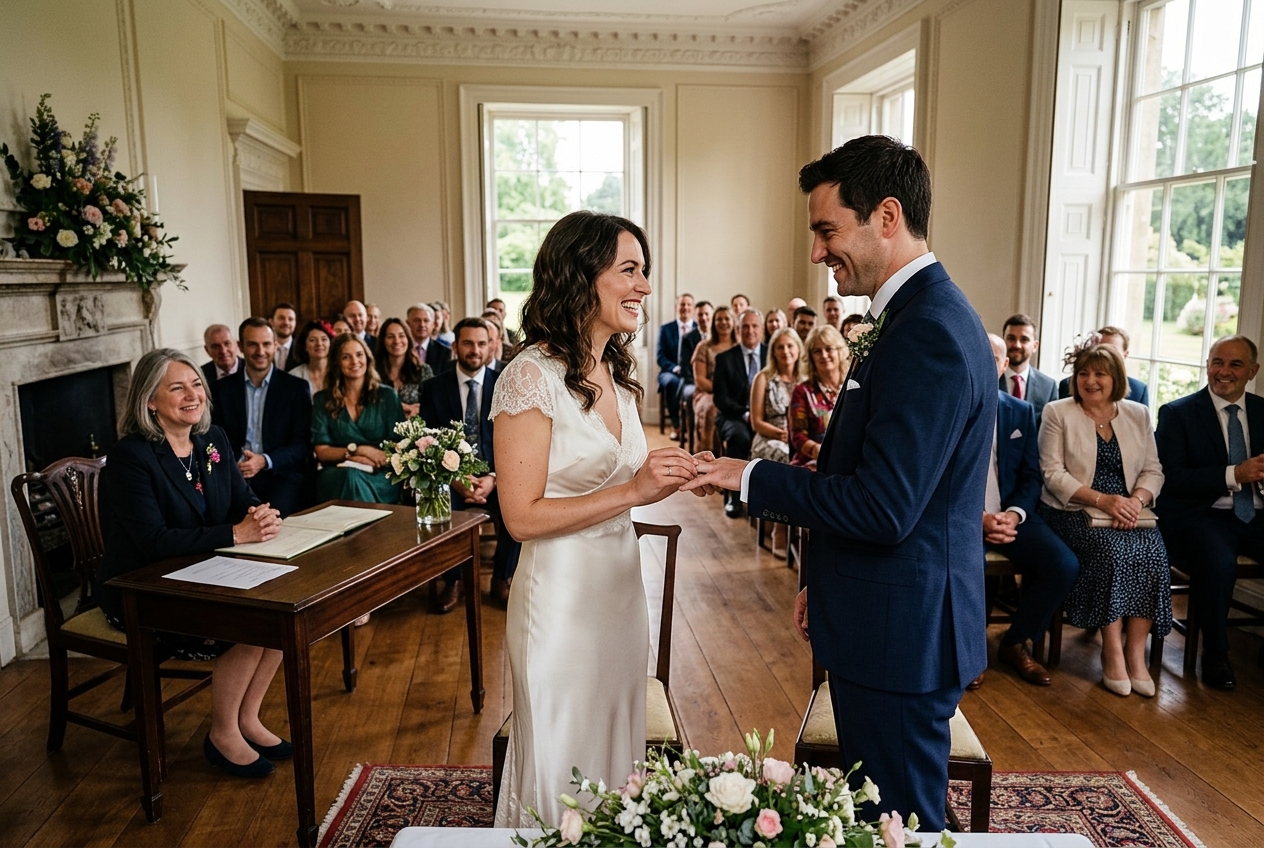
| 1:00pm | Ceremony |
| 1:40pm | Confetti and greetings |
| 2:00pm | Drinks, group photographs and couple portraits |
| 3:15pm | Guests sit for the meal |
| 3:30pm | Wedding breakfast |
| 5:30pm | Speeches, coffee or a quiet break |
| 6:30pm | Room change and evening guests arrive |
| 7:30pm | Cake cutting and first dance |
| 8:00pm | Dancing |
| 9:00pm | Evening food |
| 11:30pm | Last dance |
This is generous, not compulsory. A smaller wedding may need far less time between the ceremony and meal.
An 11am ceremony version
An early ceremony gives you a long celebration. It also creates an early start for hair, make-up and suppliers.
| Time | Plan |
|---|---|
| 7:00am | Breakfast and preparations begin |
| 9:00am | Photographer arrives |
| 10:00am | First guests arrive |
| 11:00am | Ceremony |
| 11:45am | Drinks and photographs |
| 1:15pm | Wedding breakfast |
| 3:15pm | Speeches |
| 4:00pm | Free time, games or a walk |
| 6:30pm | Evening guests arrive |
| 7:15pm | First dance |
| 8:30pm | Evening food |
| 11:30pm | Last dance |
Plan food between breakfast and the main meal. Nobody becomes more charming after six hungry hours.
A 3pm ceremony version
This suits couples who want a gentle morning and a celebration that moves quickly into dinner.
| Time | Plan |
|---|---|
| 10:00am | Preparations begin |
| 12:30pm | Photographer arrives |
| 2:15pm | Guests arrive |
| 3:00pm | Ceremony |
| 3:40pm | Drinks and photographs |
| 5:15pm | Wedding breakfast |
| 7:15pm | Speeches |
| 8:00pm | Evening guests and first dance |
| 9:00pm | Evening food |
| 11:45pm | Last dance |
Check winter daylight with your photographer. Couple portraits may need to happen soon after the ceremony.
Build in useful buffers
A buffer is not empty time. It is what absorbs a slow lift, traffic, missing buttonhole or long goodbye.
Add extra space around:
- hair and make-up finishing
- getting dressed
- travel between locations
- registrar or clergy meetings
- moving guests into dinner
- room changes
- speeches involving several people
Do not add thirty minutes everywhere by habit. Ask the person responsible how long their part normally needs.
Give photographs their own plan
Send the photographer a short group list before the day. Ask one confident guest to gather the right people.
Keep the list focused on the photographs you will treasure. Ten tiny variations can quietly eat the drinks reception.
Talk about daylight, walking distances and wet-weather locations. These details matter more than a generic forty-minute rule.
Make the handovers obvious
The best schedule says who owns each transition.
| Moment | Person leading it |
|---|---|
| Guests take their seats | Venue coordinator or ushers |
| Couple needed for portraits | Photographer |
| Guests called for dinner | Venue team or master of ceremonies |
| Speeches begin | Chosen host |
| First dance starts | DJ, band or coordinator |
| Taxis and final departures | Venue contact |
Nobody needs a clipboard all day. One named person for each handover is enough.
Send one final version
Create a one-page version with only confirmed times and contact names. Avoid sending several almost-identical drafts.
Share it with the venue, photographer, videographer, caterer, florist, transport and entertainment team.
Our printable wedding day timeline gives you a clean starting sheet.
What to do when the day runs late
Protect the things that matter and shorten the gaps between them.
Do not rush the legal ceremony, meal service or important photographs. Move a cake cut, trim a speech break or open dancing later.
Guests rarely know the original schedule. A calm room feels on time.
Sources
We opened these pages when checking the guide. Prices and rules can change, so follow the link before booking.
- GOV.UK: plan your marriage ceremony — Official requirements for civil ceremonies, witnesses and the schedule. Checked 3 September 2026
- Church of England: the marriage service — The published structure of a Church of England marriage service. Checked 3 September 2026
- Peterborough City Council: your ceremony day — Practical register-office guidance about arrival and meeting the registrar. Checked 3 September 2026
Keep planning
Frequently asked questions
What time should a UK wedding start?
There is no universal start time. Choose it around venue access, registrar availability, daylight, travel and the meal you want.
How long does a wedding day last?
Many celebrations fill most of a day. Your venue licence, ceremony time and evening finish determine the useful schedule.
When should wedding speeches happen?
Choose the moment that suits your speakers. Before dinner reduces nerves, while after dinner creates a traditional pause before the party.
How long should wedding photographs take?
Your photographer should advise. Give them the group list, venue distances and available light, then protect the agreed window.