UK Summer Wedding Guide: May to September Compared
Key Takeaways
- June is the most popular UK wedding month (23% of all summer weddings) and carries a 12-18% venue premium over May and September
- May offers the best combination of lower rainfall (historically the second-driest summer month in most UK regions), lower prices, and available Saturday dates
- August is the highest-risk month for outdoor UK weddings: highest average temperature (good) but also highest rainfall probability in Scotland and Northern Ireland specifically
- Peak Saturday surcharges at top UK venues run £3,000-£8,000 above equivalent weekday or off-peak rates — the difference between June and September at the same venue can fund an entire honeymoon
Month-by-month overview
Before the detail, the headline comparison:
| Month | % of UK summer weddings | Venue pricing vs average | Avg rainfall (England) | Sat availability | Best flower |
|---|---|---|---|---|---|
| May | 16% | -8% to -12% | 52mm | Good | Peonies, sweet peas |
| June | 23% | +12% to +18% | 57mm | Limited | Garden roses |
| July | 24% | +10% to +15% | 63mm | Very limited | Dahlias (early), sunflowers |
| August | 21% | +5% to +10% | 70mm | Moderate | Dahlias (peak), zinnias |
| September | 16% | -5% to -10% | 59mm | Good | Dahlias, asters, late roses |
July is actually the most popular month (24%), edging June by one percentage point — but June’s reputation as “the” wedding month means it commands the highest pricing. September is underrated. August, outside of highland Scotland, is broadly comparable to June for weather but cheaper and more available.
May: the underrated choice
May consistently performs better than its reputation. Met Office 30-year averages show May averages 52mm of rainfall across England — less than June, July, or August. Day length runs from 14.5 hours at the start to 16 hours by the end. Temperatures average 16-19°C in southern England at the warmest part of the day — comfortable for formal dress.
Why couples avoid May: Bank Holiday weekends (early May and late May) are extremely popular, creating a perception that May is busier than it is. Outside of Bank Holiday weekends, May Saturdays are genuinely well-available. The Bank Holiday premium can run £500-£2,000 extra — so targeting a non-Bank-Holiday May Saturday gives you the weather benefits without the premium.
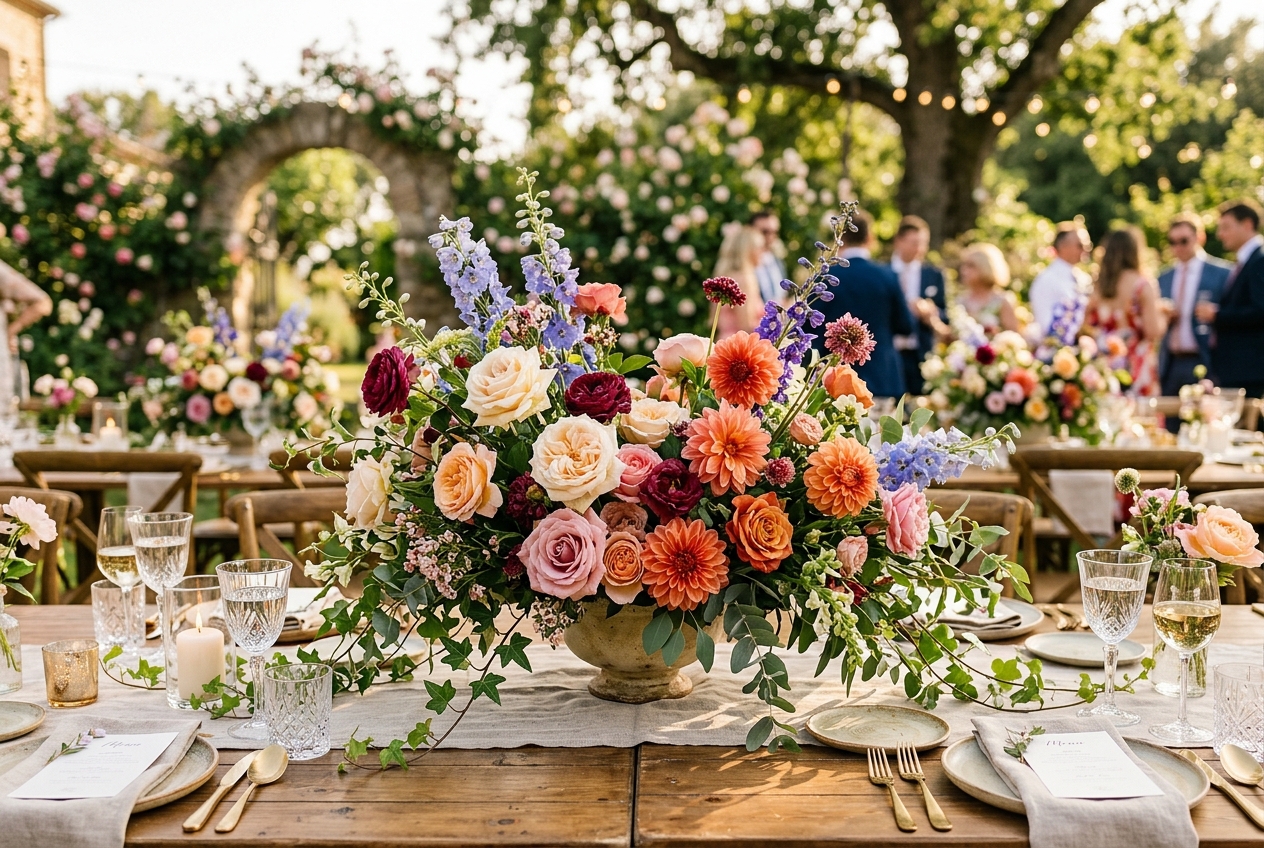
Flowers in May: Peonies are at their absolute peak in late May through early June. UK-grown peonies from English farms cost 40-60% less than imported varieties used out of season. Sweet peas begin in mid-May. Ranunculus and alliums are finishing their season. It is the best month for garden-style, lush florals.
June: peak season for a reason
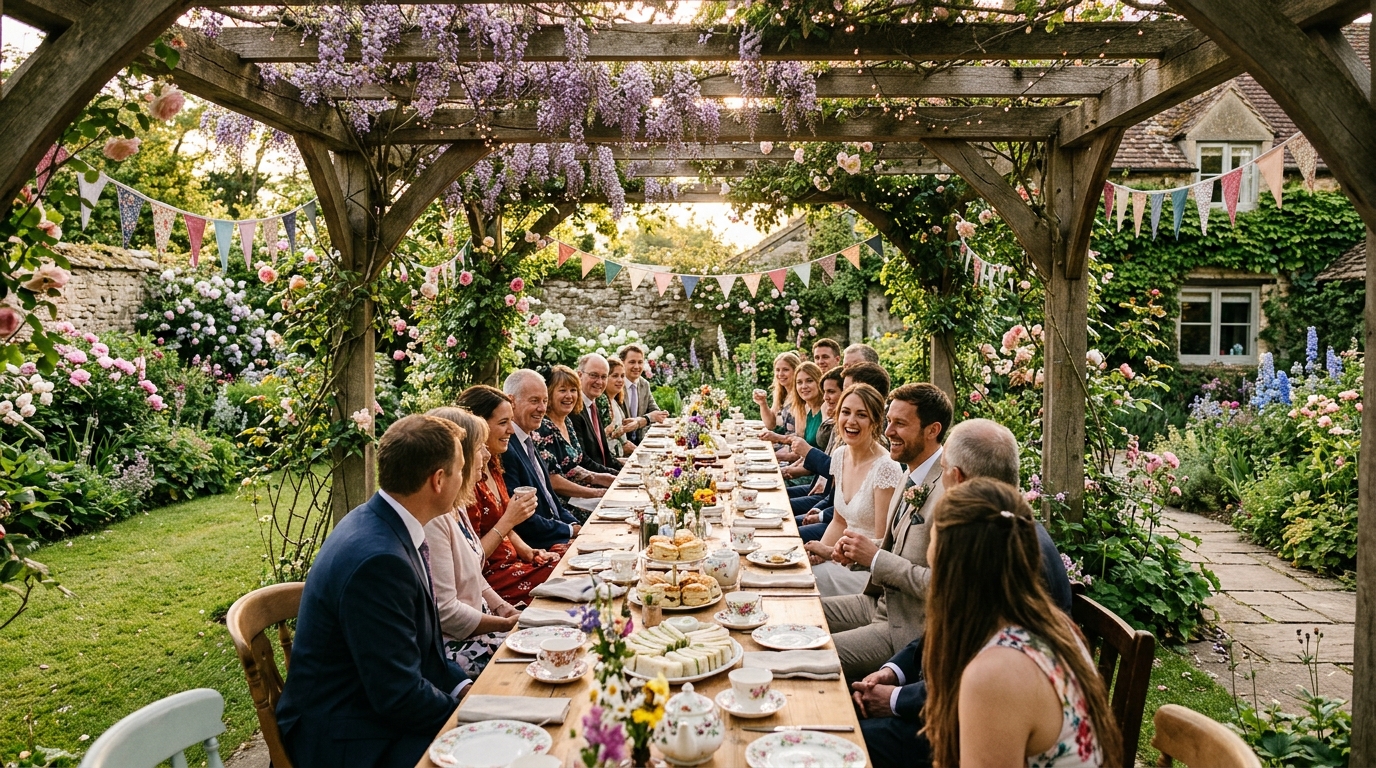
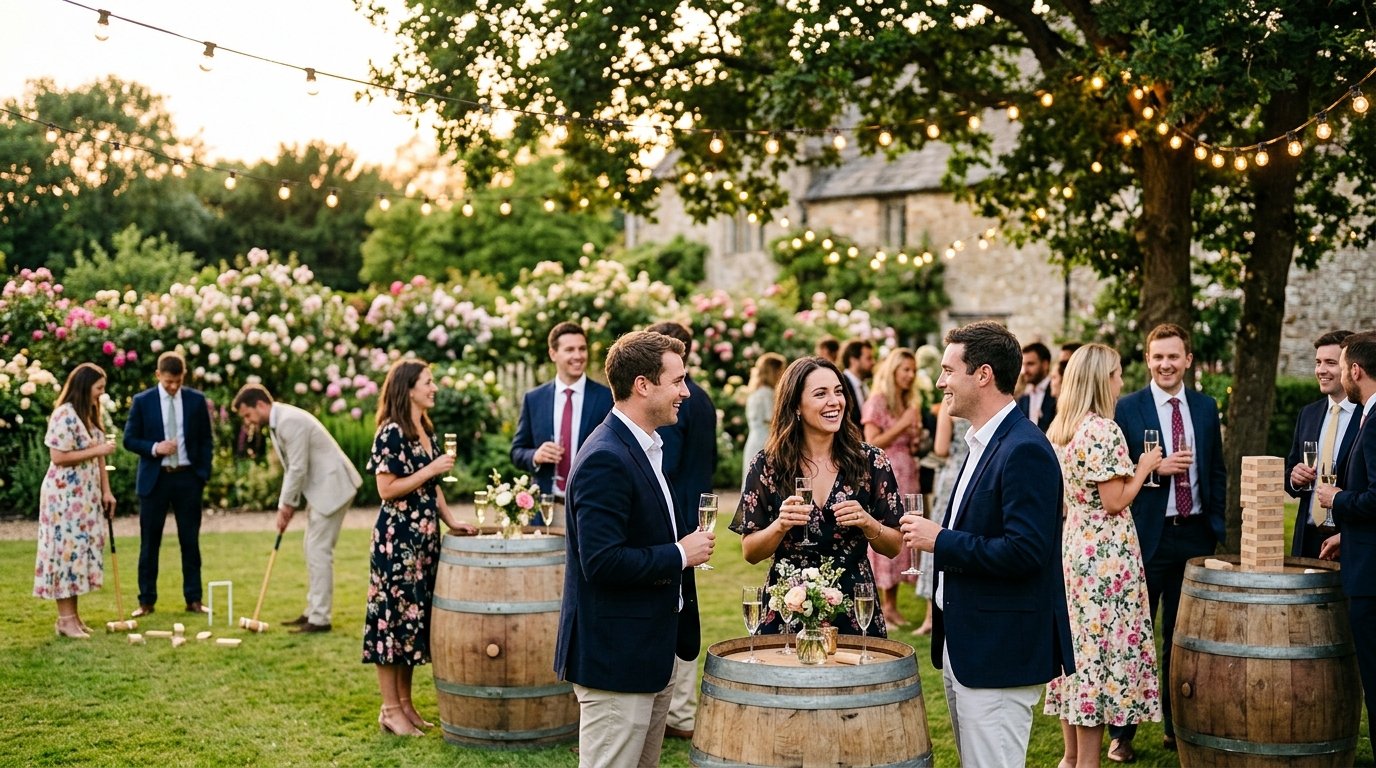 June’s dominance is partly cultural (the traditional English summer wedding month) and partly meteorological. Daylight is at maximum — the summer solstice falls on 20-21 June, giving 16+ hours of daylight. Temperatures average 19-22°C in the south-east. Rainfall is slightly higher than May but the long dry spells of a typical English June make it the most reliably photogenic month.
Flowers in June: Garden roses are at absolute peak — the best time to use UK-grown roses and hedge your florist budget. Lavender begins in mid-June. Foxgloves and delphiniums are available in abundance. Sweet peas continue from May. Peonies begin their decline after the first two weeks.
July: the most popular month, with caveats
Weather: July averages 63mm of rainfall across England — more than May or June but concentrated in shorter, sharper showers rather than persistent grey rain. The probability of at least some rain on your wedding day is around 39% nationally. In Scotland and Northern Ireland, this rises to 52-58%.
Heat considerations. Since 2022’s record temperatures, heat management has become a genuine planning factor for UK summer weddings. July temperatures in southern England regularly reach 25-29°C on peak days. For outdoor ceremonies without shade, this is comfortable to warm. For guests in formal dress sitting in a south-facing orangery or a Victorian church with inadequate ventilation, it can become very uncomfortable. Check your venue’s ventilation and shading provision specifically.
Flowers in July: Early dahlias begin in mid-to-late July. Sunflowers are at their peak. Lisianthus (an elegant, peony-like flower) thrives in July heat. Garden roses continue, though quality begins declining at the very end of the month. Cosmos and amaranth are strong supporting flowers.
August: worth a closer look
August’s reputation as the “risky” UK summer wedding month is partly deserved — particularly in Scotland, Northern Ireland, and the north of England, where August can bring sustained wet weather. In southern England and Wales, August is generally good with higher temperatures.
August strengths:
- Lower pricing than June and July at comparable venues (typically 8-10% below July peak)
- Dahlia season at absolute peak — the most affordable UK-grown premium flower of the summer
- Warm temperatures that photograph well with the right planning for shade
August risks:
- Highest rainfall month nationally (70mm average for England)
- Family holiday conflicts — August school holidays mean some guests may be abroad
- Heat management more important than any other month
- Venue entertainment restrictions (noise limits from local authorities) apply more strictly near residential areas in summer
September: the smart money month
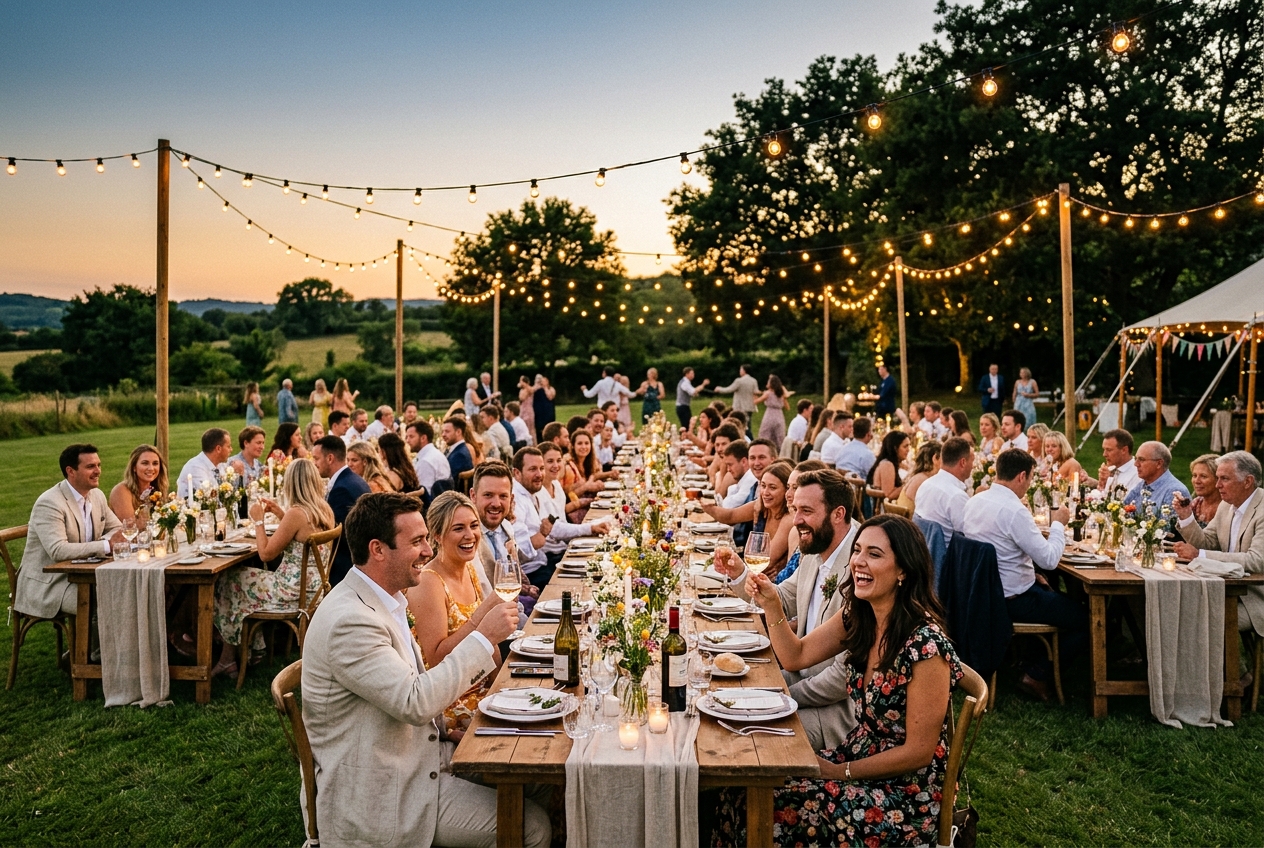
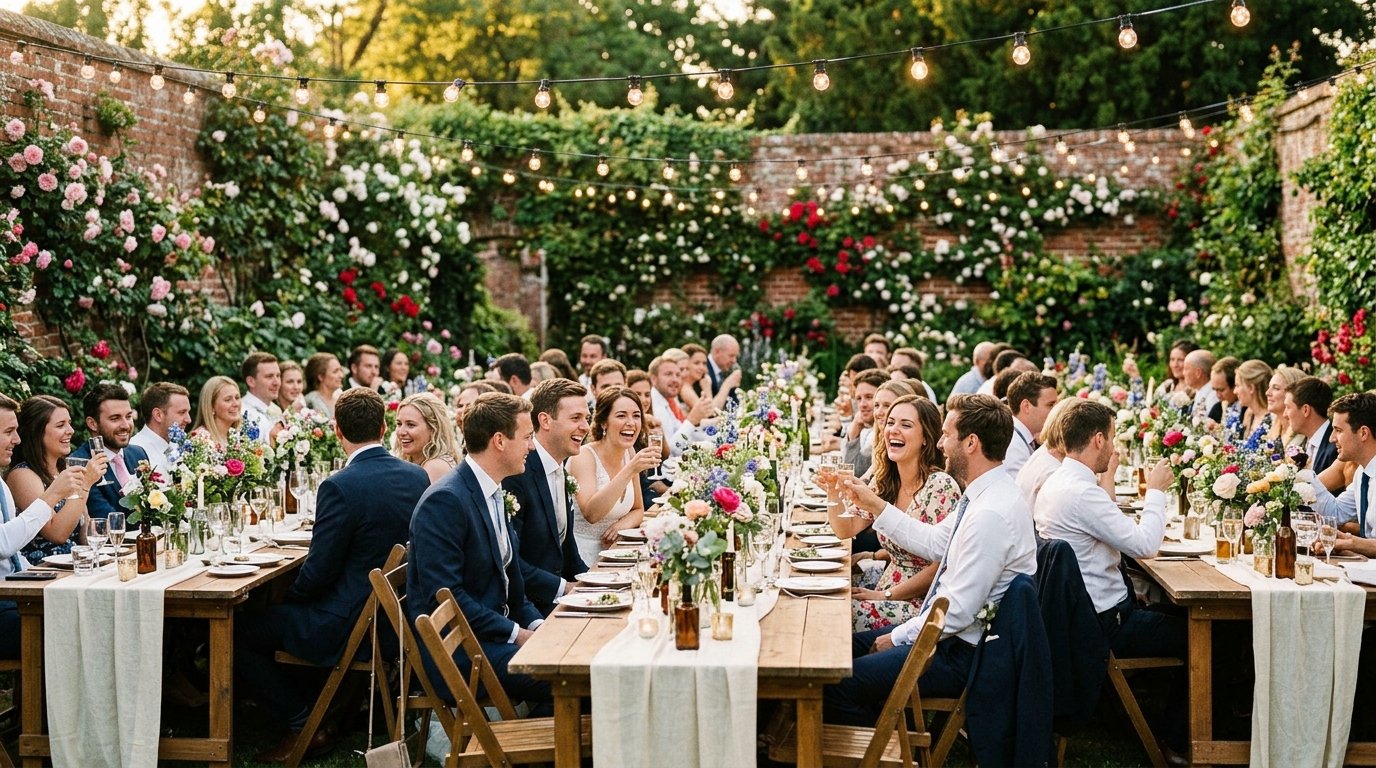 Golden-hour photography. September’s sun position produces the longest golden-hour window of any summer month — approximately 90 minutes before sunset versus 45-60 minutes in June and July. The light is warmer (lower colour temperature), which flatters skin tones and produces the distinctive amber glow that populates wedding photography Instagram accounts. If photography is a priority, September is hard to beat.
Flower season. September is dahlia peak, late rose season, and the beginning of seasonal foliage change. Asters, anemones, ornamental grasses, and amaranth are all in abundance. The palette naturally shifts toward deeper pinks, oranges, and purples — which produce distinctive photographs against the longer evening light.
The risk: early autumn weather. September in the UK can produce glorious extended summer or the first autumn storms. Met Office data shows September as comparable to June for rainfall probability (35% vs 36%) but with higher day-to-day variability. A September heat wave (common in recent years) produces exceptional conditions. A September front from the Atlantic produces a properly wet day with little warning.
Regional breakdown: where your location changes the calculation
The national averages above mask significant regional variation. The right month for a Yorkshire moors wedding is not the same as the right month for a Kent garden.
| Region | Best month | Second choice | Avoid (relative) |
|---|---|---|---|
| South-east England | May-June | September | August (heat) |
| South-west England | June | May | — (good all summer) |
| Midlands | June | May | August |
| Yorkshire/Humber | June | July | August-September (wind) |
| North-west England | June | July | August |
| Scotland (central/lowlands) | June | July | August |
| Scottish Highlands | July | June | August (highest rainfall) |
| Northern Ireland | June | July | August |
| Wales | June-July | May | August |
The Welsh and Northern Ireland data is particularly noteworthy: August in these regions carries a 20-25% higher rainfall probability than the English south-east. For couples planning outdoor elements — outdoor ceremonies, terraced receptions, garden parties — this regional variation matters more than the national average.
First-hand example: May vs June side-by-side
Two couples in our 2025 data booked the same venue in the Cotswolds for consecutive weeks — one in late May, one in early June. Their experience illustrates the trade-offs clearly.
Clare and Tom (late May Saturday): Venue cost £6,800. Peony centrepieces at full seasonal pricing — florist quoted £3,200 for the full package, which would have been £4,400 in June. Day was 18°C, overcast but dry. “The light was soft and diffused all day — our photographer said it was easier to work with than harsh sun. We saved about £2,400 overall versus the equivalent June date.”
Priya and Marcus (early June Saturday): Venue cost £7,900. Rose centrepieces at peak season. Day was 21°C, sunny with long golden hour. “The photographs in the evening light were extraordinary. We paid more, but the June light at 8pm is genuinely different to anything you get in May.”
Related articles
- Marquee Weddings UK: 2026 Costs and Top Suppliers
- What to Do If It Rains on Your June Wedding
- 2027 Saturday Wedding Dates Are Already Booking Out
- The Average UK Wedding Now Costs £21,990: Which Number Is Right?
- Weekday Weddings UK: The Real Cost Saving on Tuesday-Thursday Bookings
- Best UK Wedding Venues 2026: Our Independent Top 100
Frequently asked questions
What is the best month to get married in the UK?
May and June offer the best balance of weather probability, daylight hours, and seasonal flower availability across most of England. June carries a 12-18% venue price premium over May. September is increasingly popular — better golden-hour photography conditions, lower prices, and good weather probability in southern England. The 'best' month is highly regional: Scotland and Northern Ireland see higher August rainfall; the south-east is most reliable in May-June.
Is it cheaper to get married in May or September than June?
Yes. A venue charging £8,500 for a peak June Saturday typically charges £7,200-£7,500 for the same day in May or September. The same logic applies to photographers, florists, and caterers — though the price differential is smaller for non-venue suppliers (typically 5-10%).
What is the average rainfall for each UK summer wedding month?
Using Met Office 30-year averages for England: May averages 52mm of rainfall across the month, June 57mm, July 63mm, August 70mm, September 59mm. The daily rainfall probability (any rain on your wedding day) runs roughly: May 32%, June 36%, July 39%, August 41%, September 35%. These are national averages — local variation is significant. Scotland and Northern Ireland see substantially higher figures across all months.
Can you have an outdoor wedding ceremony in the UK in May?
Yes, with the right contingency planning. Since the 2022 outdoor ceremony law change, licensed marquees and temporary structures can host legal marriage ceremonies. For outdoor elements specifically — ceremonies in gardens, on terraces, or under canopies — there is no guaranteed shelter unless a licensed structure is in place. May temperatures average 12-17°C in southern England, which is comfortable but requires a backup plan for rain, which is likely on roughly one in three May days.
What flowers are in season for UK summer weddings?
May: peonies (peak season), sweet peas, alliums, ranunculus, garden roses beginning. June: peonies ending, roses at peak, sweet peas, lavender beginning, foxgloves, delphiniums. July: dahlias beginning, sunflowers, lisianthus, cosmos, roses. August: dahlias at peak, sunflowers, zinnias, amaranth, gladioli. September: dahlias, late roses, asters, anemones, amaranth, ornamental grasses. Peak seasonal flowers are significantly cheaper than imported equivalents — June roses and September dahlias represent the best value in their respective months.
Are there more Saturdays available in May or September?
May has 4-5 Saturdays depending on the year; September has 4-5. However, May Bank Holiday weekends (early May and late May) are extremely popular — venues often charge a premium for these. September, despite having fewer cultural 'peak weekends', sees slightly better availability because fewer couples historically target it.
Should I worry about heat at a UK summer wedding?
August 2022 saw UK temperatures exceed 40°C — an event previously considered impossible. Heat management is now a real consideration for summer UK weddings. For ceremonies inside historic churches or Victorian buildings with limited ventilation, high July-August temperatures can make guests uncomfortable. Outside, shade and hydration become essential. September's average high of 18-20°C in southern England is generally comfortable for formal dress without active cooling measures.