Home / Articles / Food & Drink
Wedding Cake Trends 2026 UK: Sculptural, Edible Art
Key Takeaways
- The traditional white fondant tiered cake has fallen to 18% of UK wedding cake orders — down from 41% in 2022
- Sculptural cakes (with architectural shapes, 3D flowers, draped fondant) are now requested at 29% of UK weddings
- Edible art finishes — oil-paint effects, watercolour washes, marbled buttercream — now appear in 44% of cake orders
- Average UK wedding cake cost in 2026: £580 for a three-tier. Single-tier display cakes start from £280
- Mocha and cardamom flavours have entered the top 10 UK wedding cake flavours for the first time in 2026
The sculptural cake: architecture meets dessert
The sculptural cake is the defining UK wedding cake trend of 2026. The term covers several distinct aesthetics, but they share a common principle: the cake’s shape is as important as its decoration.
Draped fondant
The draped fondant technique creates the illusion of fabric falling over the tiers. The effect is achieved by pulling sheets of fondant over the cake and sculpting folds and drapes. At its most refined, the result looks like a cake dressed in silk.
Draped fondant cakes pair naturally with the “warm ivory” palette trend in UK bridal dresses and table decor. The fondant takes dye well, so brides are commissioning draped cakes in blush, dusty rose, and champagne rather than white.
Cost range: £650-£1,200 for three tiers. The technique requires 4-6 hours of additional labour compared to a smooth fondant finish.
Wafer paper ruffles and floral installations
Wafer paper — thin sheets of edible rice paper — has become the dominant texture in 2026 wedding cakes. Bakers fold, curl, and layer wafer paper into flowers, ruffles, and frilled edges that achieve the visual of elaborate sugar work at a lower labour cost.
A full wafer paper floral installation on a two-tier cake can cost £380-£550 — roughly 40% less than the equivalent in hand-formed sugar flowers. The trade-off: wafer paper is more fragile in humid conditions and should not be transported in warm vehicles.
Geometric and modular tiers
The geometric trend applies architectural shapes to cake tiers: hexagons, octagons, and angled cuts instead of round or square. The effect is contemporary and design-forward. Works particularly well at industrial wedding venues (converted factories, warehouses, railway arches) where the architectural aesthetic matches the space.
A geometric cake typically costs the same as a standard round-tier at the same size — the complexity is in the design brief, not the baking.
Structural cakes: the pillar and separation format
A small percentage of couples in 2026 are reviving the pillar separation format — tiers on pillars, with flowers or decor in the spaces between — but modernised. Rather than the plastic pillars of the 1980s, UK bakers are using clear acrylic or natural-wood pillars with fresh greenery installations.
The edible art cake: painting as decoration
Oil-paint effect
The oil-paint technique uses food colouring applied with a palette knife or brush in thick, textured strokes that mimic the look of oil painting. Common motifs: abstract brushstrokes in the wedding colour palette, botanical illustrations, and loose landscape scenes.
The technique works on both buttercream and fondant surfaces. On buttercream, the colours blend and feather slightly. On fondant, they sit crisper. Both are correct — the choice depends on the aesthetic the couple wants.
Cost addition: +£80-£200 over the base cake cost, depending on complexity.
Watercolour washes
The watercolour wash is the lower-cost edible art option. Diluted food colouring is applied to white fondant in soft, bleeding layers that create a gentle watercolour effect. Works best in pastel palettes (blush, sage, dusty blue) and suits outdoor garden and barn settings.
Cost addition: +£40-£80 over the base cake cost.
Gold and silver leaf
Edible gold and silver leaf has been a UK wedding cake staple since 2019 but in 2026 it is being used more selectively — as an accent on sculptural elements rather than covering entire tiers. A gold-leaf drape on a white fondant tier, or silver leaf on the edges of a geometric cake, has replaced the all-over gold finish.
Cost addition: +£30-£60 per tier for leaf application.
Printed photography transfer
Food-safe edible photo printing allows couples to transfer photographs, monograms, or illustrated elements directly to fondant. Used sparingly — typically on one tier — it gives a personalised detail without dominating the whole design.
The single-tier display cake
 The single-tier display cake, paired with a sheet cake for cutting, has grown by 34% in UK wedding orders year-on-year. The logic: a highly decorated single-tier cake is the visual centrepiece; the sheet cake (typically plain buttercream, kept in the kitchen) provides all the actual portions.
The advantages are:
- Lower display cost: a decorated single-tier is 30-40% cheaper than a decorated three-tier
- Design flexibility: a single tier allows more elaborate sculptural or edible art finishes that would be impractical on a tall tower
- Dietary variety: the hidden sheet cake can be made in multiple flavours for different dietary requirements, while the display cake maintains a consistent aesthetic
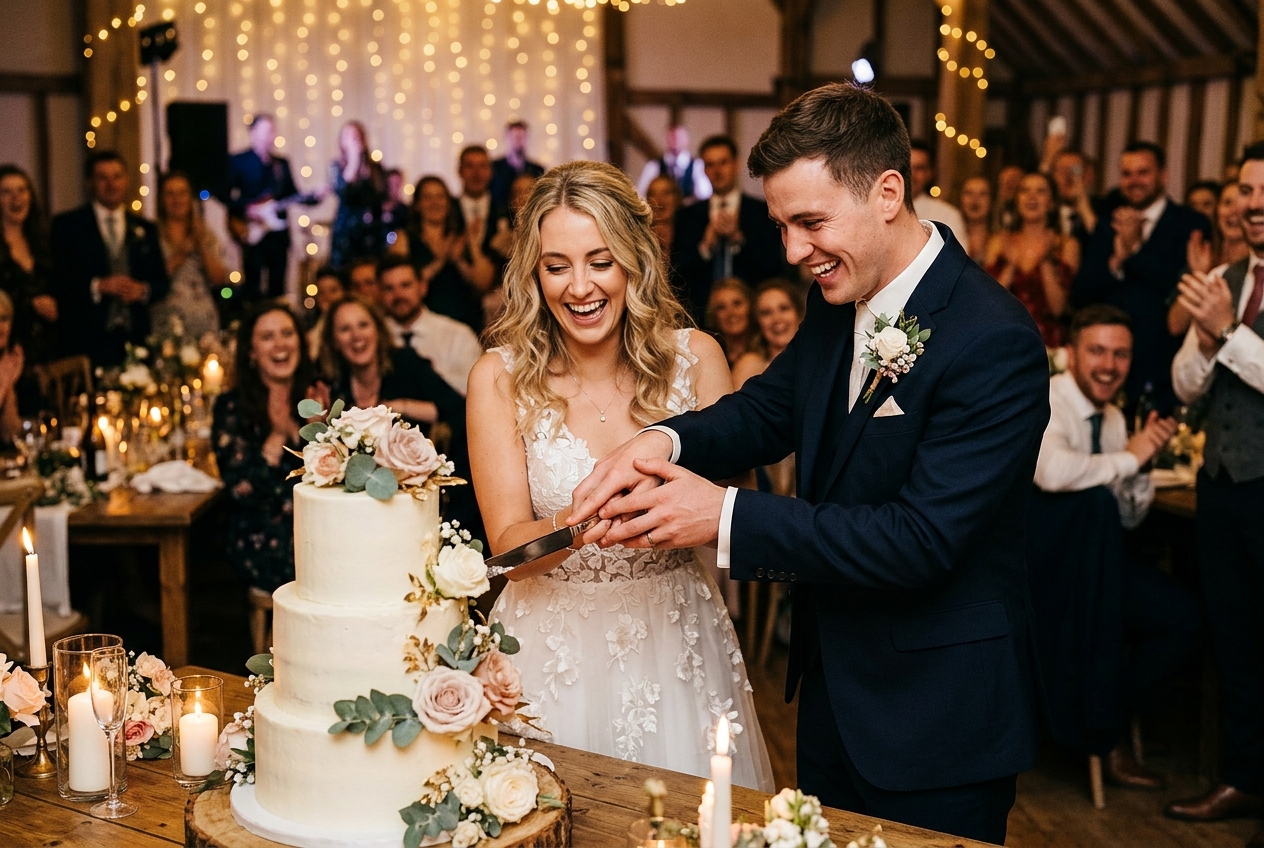
The disadvantage is the loss of the tiered-cake cutting moment. Couples who want the traditional cake-cutting photo need to make sure the display tier is large enough to cut ceremonially.
Display cake starting price: £280 for a single-tier with a standard edible art finish. Sheet cakes for 80-100 guests: £160-£250.
Flavour trends: what’s replacing Victoria sponge
Victoria sponge remains the most-ordered wedding cake flavour at UK bakers — at around 36% of orders, down from 40% in previous years. But the flavour landscape is shifting.
The top 10 UK wedding cake flavours for 2026
- Victoria sponge (36%): The perennial. Works for all ages and dietary backgrounds.
- Lemon drizzle (21%): The clean, sharp alternative. Pairs particularly well with buttercream.
- Chocolate ganache (14%): The indulgent option. Rich dark chocolate with ganache filling.
- Salted caramel (9%): Has grown steadily since 2021.
- Red velvet (7%): Consistent performer, particularly popular in autumn weddings.
- Pistachio and rose (4%): New for 2026. The Middle Eastern flavour profile has crossed from patisserie into wedding cakes.
- Cardamom and orange (3%): A specific trend from the UK patisserie scene, driven by the rise of Scandinavian-influenced baking.
- Mocha (2%): Coffee-adjacent flavours entering weddings via the hospitality trend for specialty coffee at receptions.
- Miso caramel (2%): The umami-sweet trend from Japanese influence on UK baking.
- Carrot cake (2%): Consistently popular but rarely grows beyond its established audience.
“Cardamom and mocha are the most distinctive orders we’re seeing for the first time this year,” said one WeddingsHub-listed London-based baker with 11 years’ experience. “Couples are treating the cake flavour like a menu choice rather than a default.”
What’s not trending in 2026
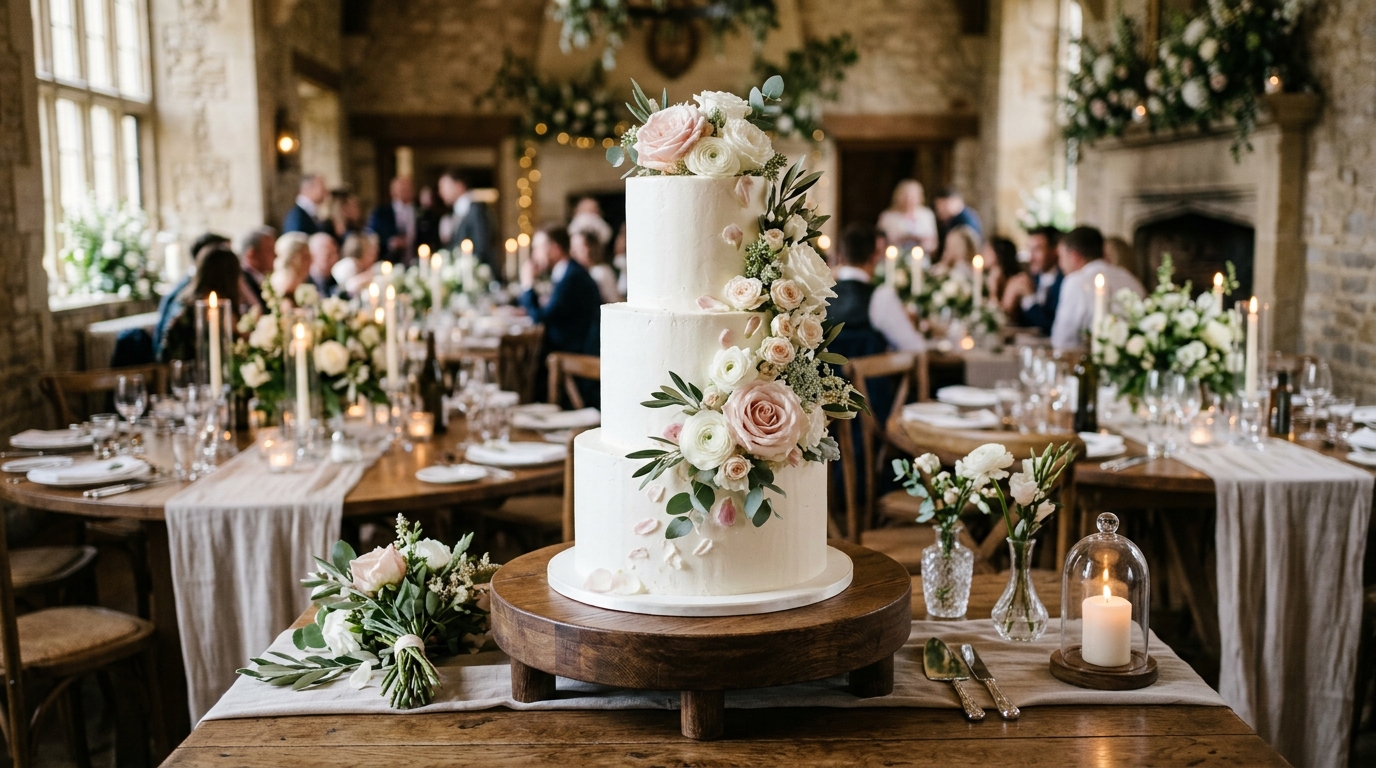
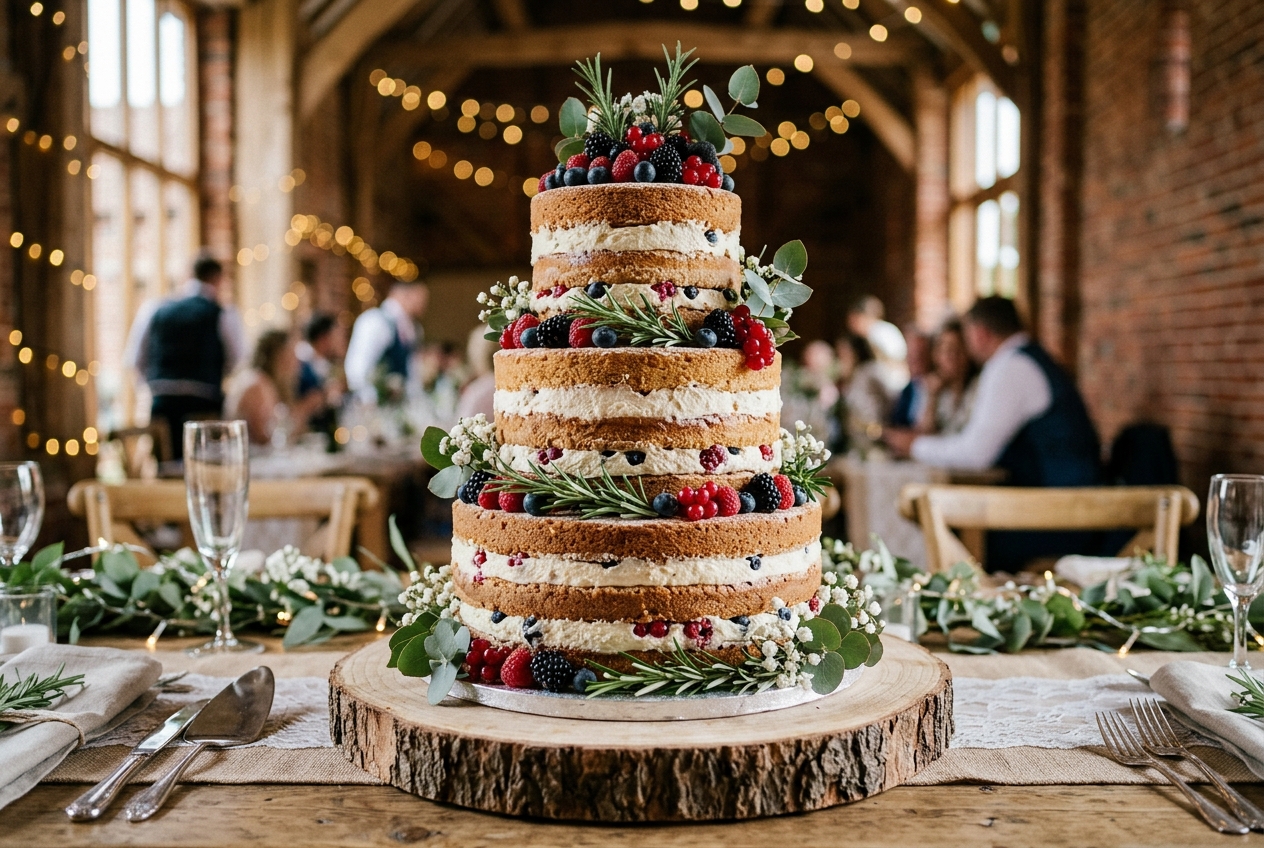 The all-white fondant tier cake: still ordered, but by 18% of couples rather than 41%.
Giant five and six tier cakes: the maximum tier count is moving down rather than up. Three tiers remains the median; two-tier or single-tier with sheet cakes is the growing format.
Gum-paste flower decorations: the extremely lifelike gum-paste flowers of 2018-2022 are declining in favour of wafer paper alternatives and real fresh flowers placed on the day.
Metallic-everything: the all-gold or all-silver tier has been replaced by selective leaf application as an accent.
How to book a wedding cake baker in 2026
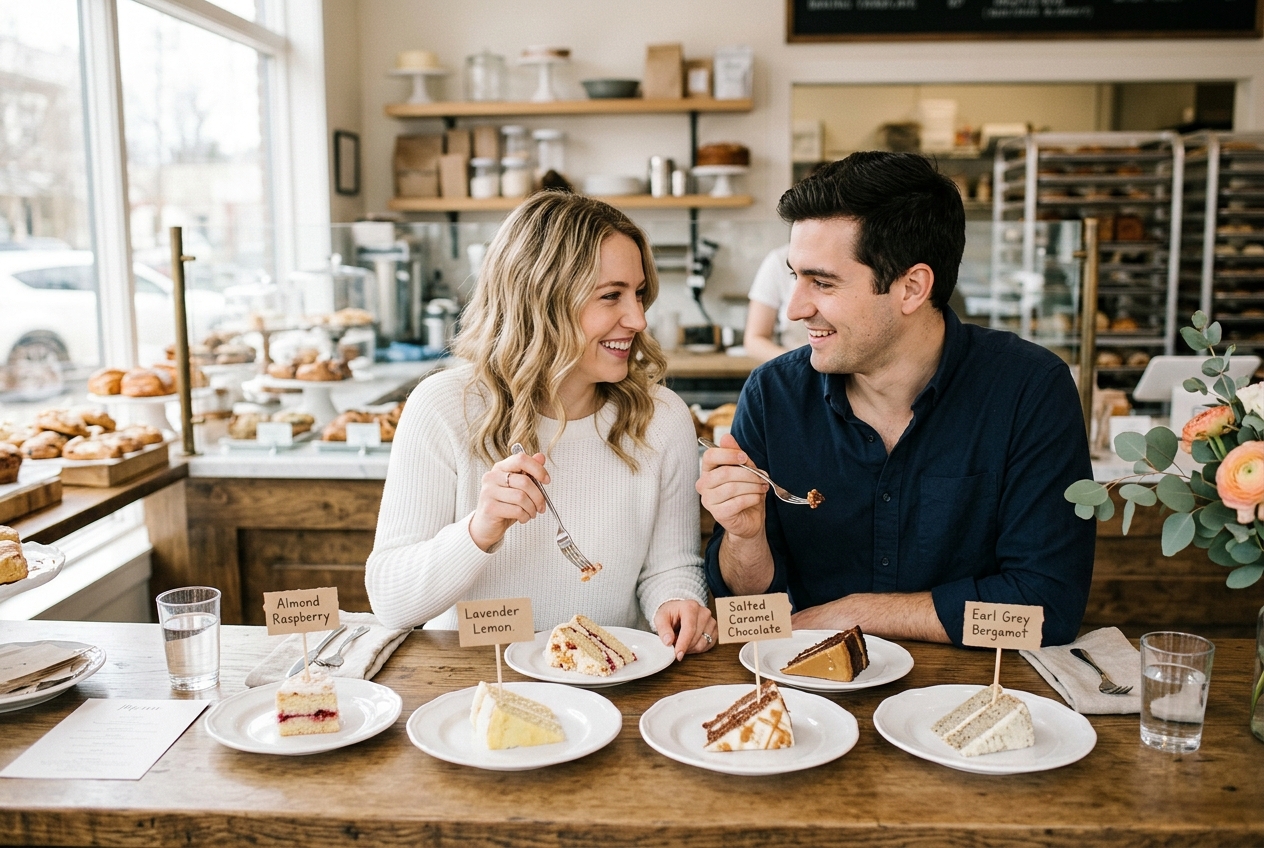
Book 9-12 months before the wedding for any specialist baker at the £500+ level. The tasting appointment is typically 6-8 months before the date. The final design brief is confirmed 4-6 weeks out.
Ask your baker the following:
- What is your portfolio for the specific finish I want? Request to see actual delivered cakes, not design mockups.
- What is included in your delivery and setup fee? Many specialist bakers charge separately for delivery, installation, and fresh flower placement.
- How is the cake transported? Sculptural cakes require climate-controlled vehicles and specific setup windows. Confirm this before booking.
- What happens in a dietary requirement scenario? Can one tier be gluten-free or vegan while others are not?
For broader wedding food and drink planning, see wedding cake prices UK, caviar carts and oyster shuckers at UK weddings, and tasting-menu wedding receptions.
Frequently asked questions
What are the biggest wedding cake trends in the UK for 2026?
The biggest UK wedding cake trends for 2026 are sculptural architectural cakes with draped fondant or wafer paper ruffles, edible art finishes (oil-paint effects, marbled buttercream, watercolour washes), and single-tier display cakes paired with a sheet cake for cutting. The traditional white fondant tiered cake has fallen to 18% of orders.
How much does a wedding cake cost in the UK in 2026?
A three-tier wedding cake from a specialist UK baker costs an average of £580 in 2026. Simple buttercream designs start from £350. Sculptural cakes with hand-painted details or architectural elements cost £700-£1,400. Single-tier display cakes start from £280. Supermarket wedding cakes start from £100 but offer no custom design.
What is a sculptural wedding cake?
A sculptural wedding cake uses architectural shaping — draped fondant, 3D sugar flowers, wafer-paper ruffles, or geometric tiers — to create a cake that looks more like a sculpture than traditional stacked rounds. Sculptural cakes are typically more expensive than standard tiered cakes because of the additional technique required.
What are the most fashionable wedding cake flavours in 2026?
The top wedding cake flavours in 2026 are: Victoria sponge (still number one), lemon drizzle, chocolate ganache, salted caramel, red velvet, and — new for 2026 — cardamom and pistachio, mocha, and miso caramel. The mocha and cardamom entries mark the first time coffee-adjacent and spiced flavours have broken the UK top 10.
What is an edible art wedding cake?
An edible art cake uses painting, printing, or sculpting techniques on the cake surface to create an artwork. Common finishes include oil-paint-style brush strokes in acrylics-like food colour, watercolour washes on buttercream, hand-painted florals, and gold or copper leaf. The effect is a cake that looks like a canvas rather than a confection.
Should you have one big cake or multiple smaller cakes?
Multiple smaller cakes (a dessert table format) are increasingly popular for weddings over 120 guests. The advantages are dietary flexibility and visual variety. The disadvantage is that the 'cake cutting' moment loses its focal point. Many couples compromise with one display cake for the ceremonial cut and a dessert table for portion service.
How far in advance should you book a wedding cake baker in 2026?
Book 9-12 months in advance for specialist bakers, particularly those with waiting lists for sculptural or edible art finishes. Popular bakers at the £700+ level often book out a full year ahead for peak dates. Budget bakers and supermarket options have shorter lead times but fewer custom options.