Wedding Dress Code Guide: What Each Means
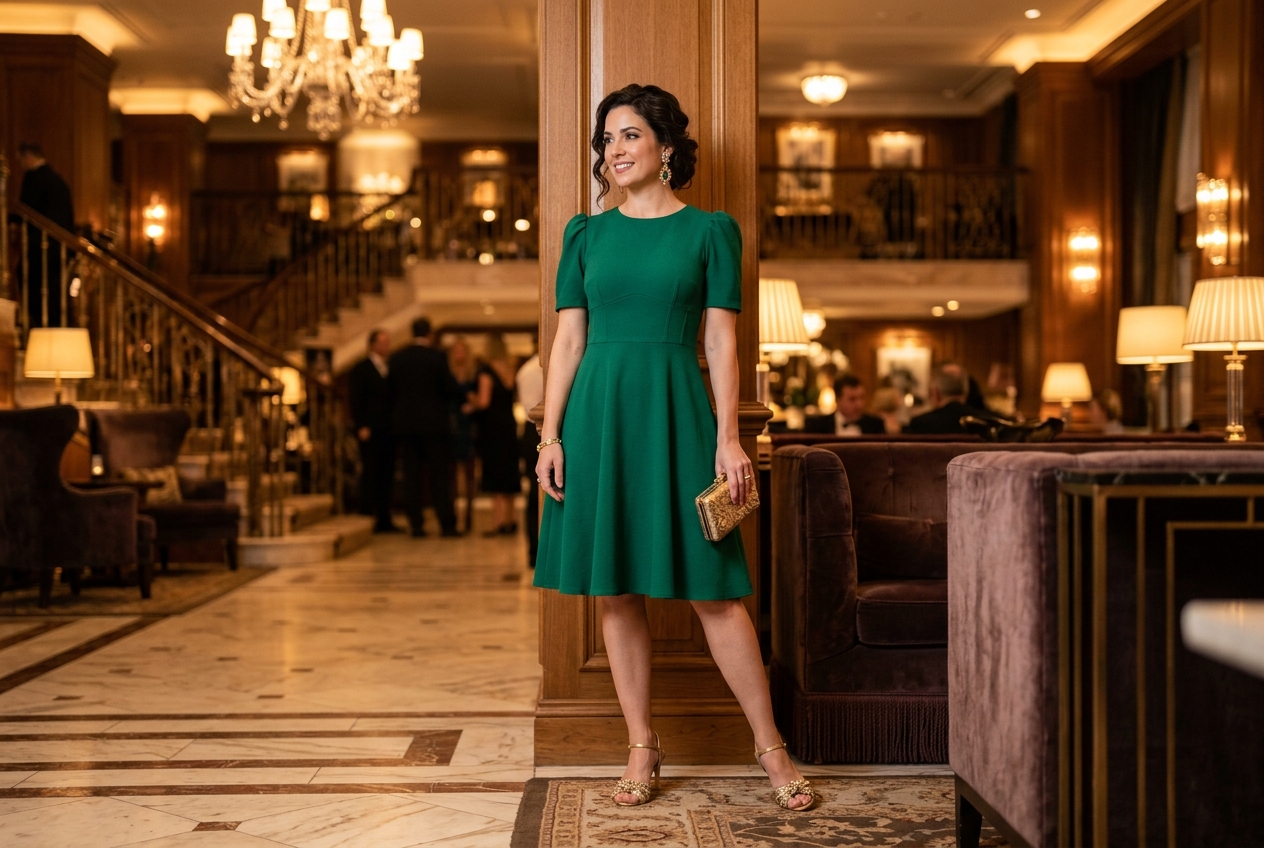
Key Takeaways
- If the invitation doesn't specify a dress code, 'smart' (suit and tie / dress or dressy separates) is the safe default
- Black tie means a dinner jacket for men and a floor-length gown for women — no exceptions
- Smart casual is the most confusing code: think 'better than the pub, less than a job interview'
- When in doubt, slightly overdressed beats underdressed at a wedding every time
- Never wear white, cream, or ivory to a wedding — at any formality level
You’ve been invited to a wedding and the dress code says “lounge suit” or “smart casual” or “festive attire” — and you have absolutely no idea what any of these mean. You’re not alone.
This guide decodes every wedding dress code, from the most formal to the most relaxed, with specific outfit examples for men and women.
The dress codes ranked by formality
| Level | Dress Code | Men | Women |
|---|---|---|---|
| Most formal | White tie | Tailcoat, white waistcoat, bow tie | Floor-length ball gown |
| Very formal | Black tie | Dinner jacket (tuxedo), bow tie | Floor-length or cocktail gown |
| Formal | Morning dress | Morning suit (tailcoat + striped trousers) | Formal dress + hat/fascinator |
| Standard | Lounge suit | Matching suit + tie | Formal dress / dressy jumpsuit |
| Relaxed formal | Cocktail | Suit (tie optional) | Knee-length or midi cocktail dress |
| Smart | Smart casual | Blazer + chinos, no tie required | Nice dress / smart separates |
| Casual | Casual / relaxed | Smart trousers or chinos, open collar | Sundress / smart casual outfit |
Black tie
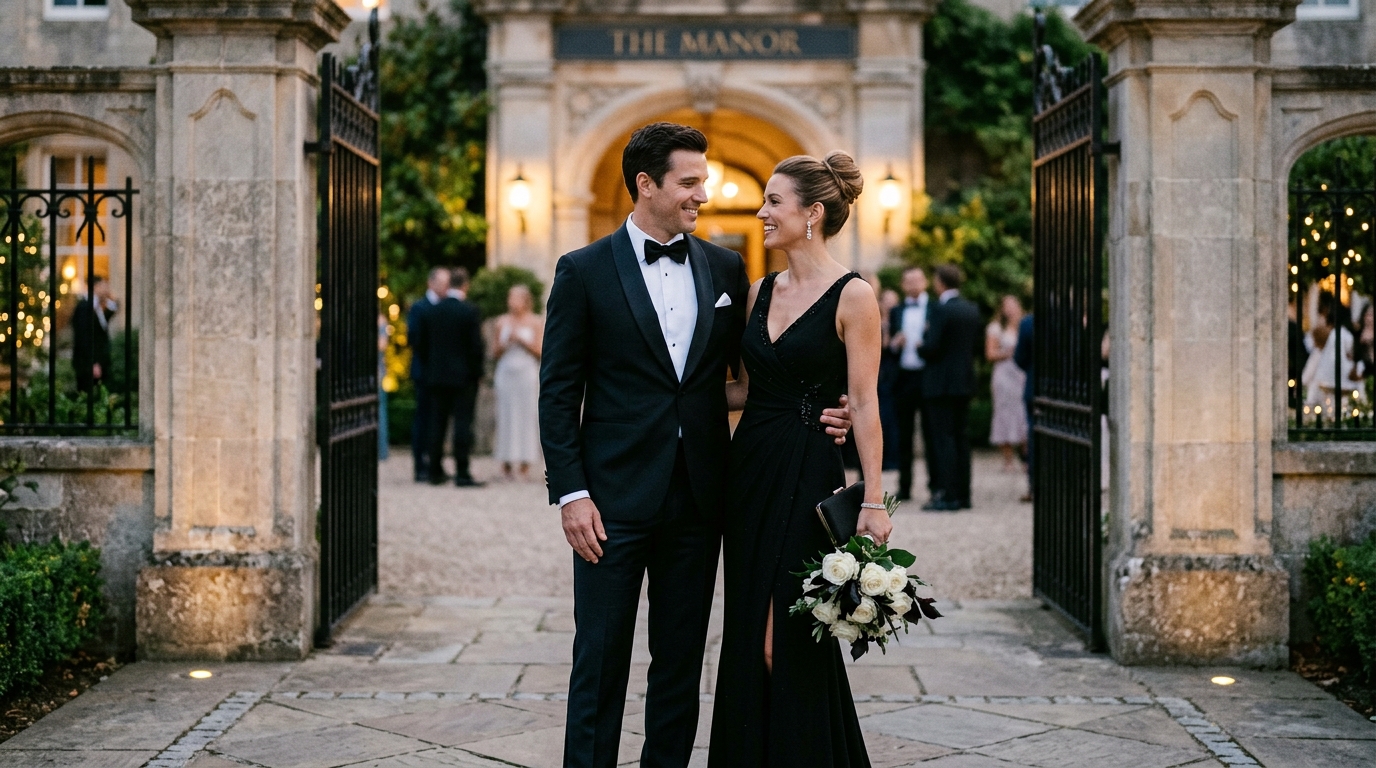
The second most formal dress code. Usually for evening weddings at grand venues.
Men:
- Dinner jacket (black or midnight blue)
- Matching trousers with a satin side-stripe
- White dress shirt with a wing collar or turndown collar
- Black bow tie (self-tie preferred, clip-on acceptable)
- Black patent leather shoes
- Optional: cummerbund or waistcoat
Women:
- Floor-length evening gown (the standard choice)
- Cocktail-length dress (acceptable but less traditional)
- Formal jumpsuit (increasingly accepted)
- Heels, clutch bag, statement jewellery
Black tie optional means a dinner jacket is welcomed but a dark lounge suit is acceptable.
Morning dress
Traditional daytime formal wear. Common at church weddings and traditional country house weddings.
Men:
- Morning coat (tailcoat) in black or grey
- Waistcoat (grey, buff, or colour-coordinated)
- Striped trousers
- White or pastel shirt
- Cravat or formal tie
- Patent or polished leather shoes
Women:
- Formal dress (knee-length or longer)
- Hat or fascinator (expected at church weddings)
- Heels and a matching bag
- A jacket or wrap for the ceremony
Note: If the invitation says “morning dress,” men are expected to wear a morning suit — not just any suit. Hire one if you don’t own one (£80-150 from Moss Bros or Slaters).
Lounge suit
The most common wedding dress code in the UK. It means a proper matching suit.
Men:
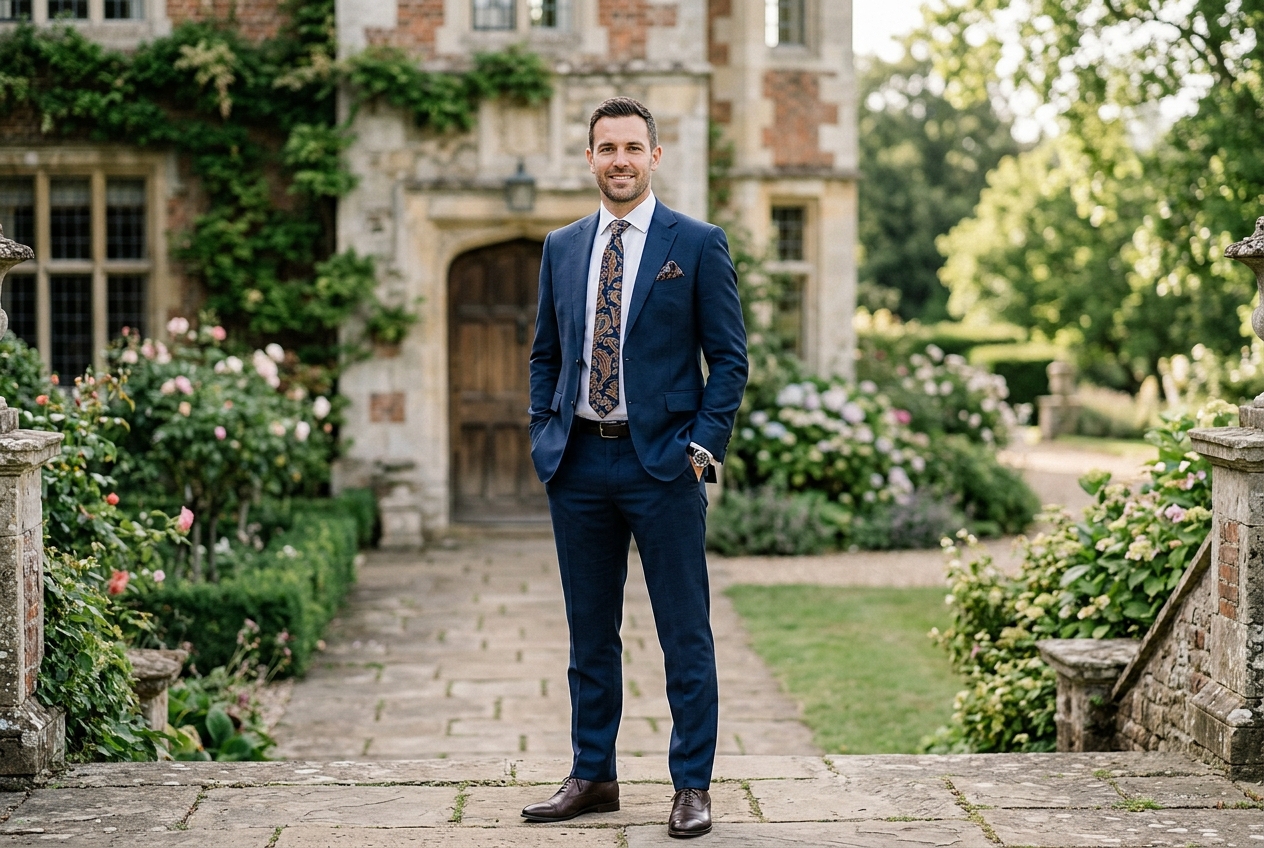
- Two-piece or three-piece suit (navy, charcoal, or grey)
- Dress shirt (white or light blue)
- Tie (colour to suit the wedding palette or your preference)
- Pocket square (optional but adds polish)
- Polished leather shoes (Oxford or Derby)
Women:
- Knee-length or midi dress
- Formal jumpsuit or tailored trouser suit
- Dressy separates (blouse + skirt)
- Heels or smart flats, clutch bag
“Lounge suit” does NOT mean: casual, jeans, chinos, or anything without a collar.
Cocktail
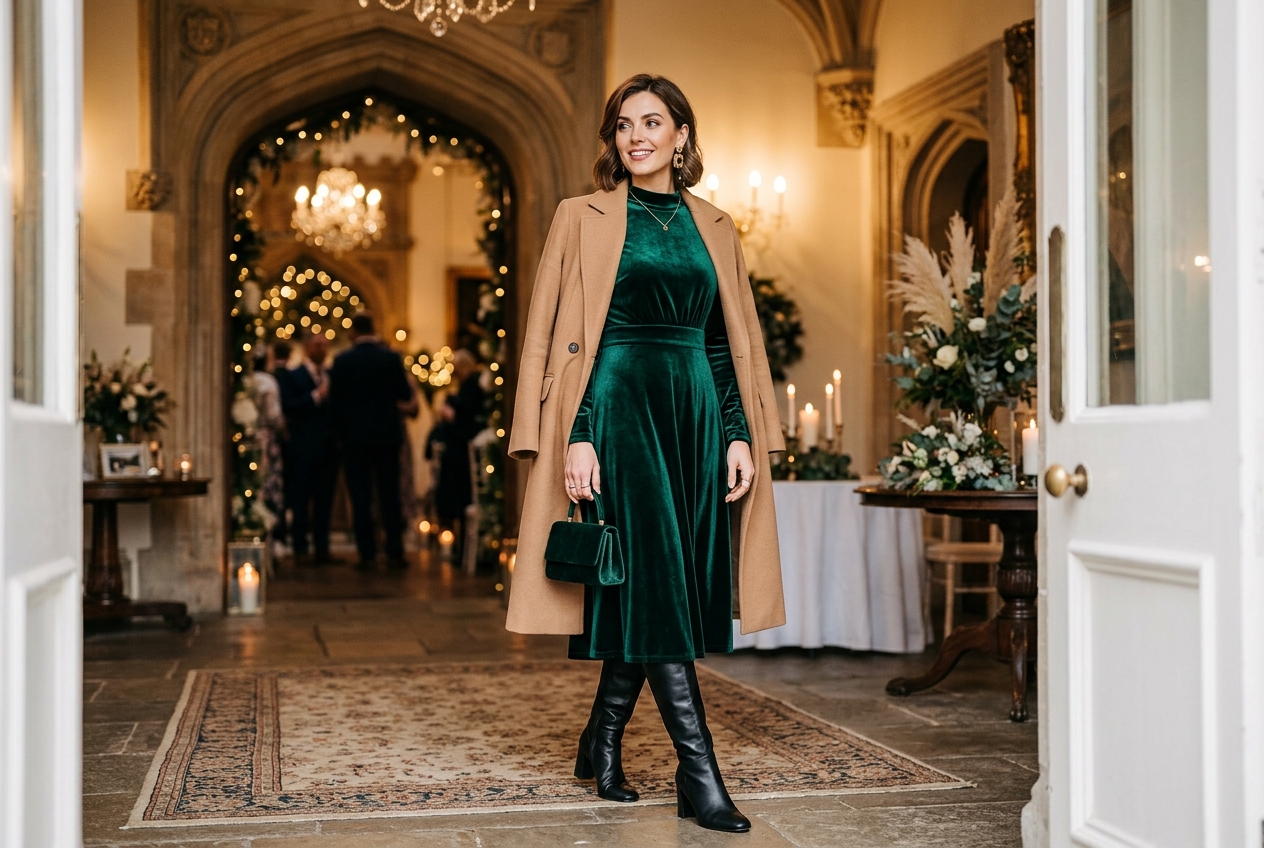
More relaxed than lounge suit but still dressy. Common for evening receptions and city weddings.
Men:
- Suit (tie optional — open collar is fine)
- Smart blazer with tailored trousers
- Dress shirt or smart cotton shirt
- Leather shoes (brogues, loafers, or Oxfords)
Women:
- Knee-length or midi cocktail dress
- Dressy jumpsuit or playsuit
- Statement separates
- Heels and a clutch — this is the dress code where accessories matter
Smart casual
The most confusing dress code. The key: err on the smart side.
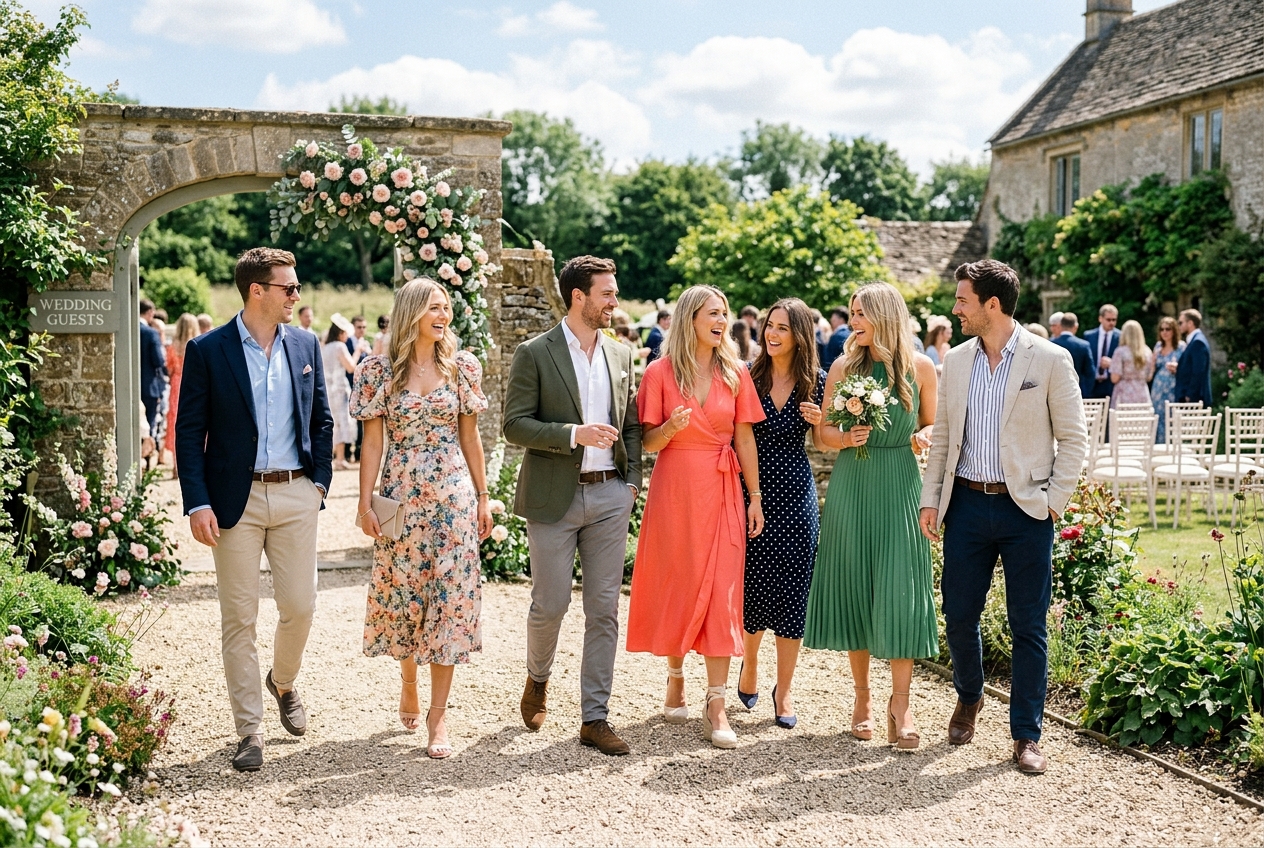
Men:
- Chinos or smart trousers (not jeans)
- Blazer or smart jacket
- Collared shirt (tie optional — usually no tie)
- Smart shoes (loafers, brogues, clean desert boots) — NOT trainers
Women:
- Midi dress, maxi dress, or sundress (for summer)
- Dressy separates (nice top + skirt or tailored trousers)
- Flat sandals or low heels are fine
- Less jewellery, more relaxed accessories
Smart casual does NOT mean: jeans, trainers, flip-flops, shorts, or anything you’d wear to a barbecue.
Casual / relaxed
Rare for weddings, but increasingly common for beach, garden, or destination celebrations.
Men: Smart trousers or chinos, open-collar shirt, loafers or clean white trainers. A blazer is optional but appreciated.
Women: A sundress, maxi dress, or dressy separates. Flat sandals are fine. Keep it festive — this is still a wedding.
Even “casual” doesn’t mean: jeans, vest tops, flip-flops, or football shirts. Make an effort.
What to avoid at any dress code
- White, cream, or ivory. Reserved for the person getting married.
- Anything that outshines the couple. A sequined ball gown at a casual garden wedding draws attention away from where it belongs.
- Jeans. Unless the invitation explicitly says “jeans welcome.”
- Logos and slogans. Save the brand t-shirt for the weekend.
- Very short or very revealing outfits. If you’d wear it to a nightclub, don’t wear it to a ceremony with the couple’s grandparents in the front row.
When the invitation doesn’t say
If there’s no dress code on the invitation:
- Look at the venue. A church or stately home suggests morning dress or lounge suit. A barn or garden suggests smart casual. A hotel suggests lounge suit or cocktail.
- Ask the couple. They won’t mind. “What’s the dress code?” is a perfectly normal question.
- Default to smart. A suit and tie / a nice dress is never wrong at a UK wedding.
Further reading
- Father of the Groom Outfit Guide — outfit guide for the wedding party
- Wedding Guest Outfit Ideas — outfit guides for guests and the wedding party
- Plus One Etiquette — guest rules including dress code
Frequently asked questions
What does lounge suit mean on a wedding invitation?
Lounge suit means a standard matching suit — not a morning suit or dinner jacket. For men: a two-piece or three-piece suit with a shirt and tie. For women: a formal dress, dressy jumpsuit, or tailored separates. Lounge suit is the most common dress code at UK weddings.
What does smart casual mean for a wedding?
For men: chinos or smart trousers with a blazer, a collared shirt (tie optional), and smart shoes (not trainers). For women: a midi or knee-length dress, dressy jumpsuit, or a skirt and nice top. Smart casual means 'make an effort but don't overdress.' Think relaxed wedding, not a pub.
Can you wear black to a wedding?
Yes. Black is perfectly acceptable at UK weddings, especially in the evening or for formal dress codes. The only colour to avoid is white, cream, or ivory — that's reserved for the person getting married. A black cocktail dress or black suit is always appropriate.
What should you not wear to a wedding?
White, cream, or ivory (reserved for the bride). Jeans or trainers (unless specifically told casual). Anything too revealing (save it for a nightclub, not a ceremony). A morning suit when everyone else is in lounge suits (or vice versa). Anything that draws more attention than the couple.