Home / Articles / Costs & Budget
UK Wedding Florist Costs 2026: What to Budget
Key Takeaways
- Average UK wedding flower spend in 2026: £1,200-£2,500 for a 100-guest wedding — up from £950-£1,800 in 2023 due to stem cost inflation
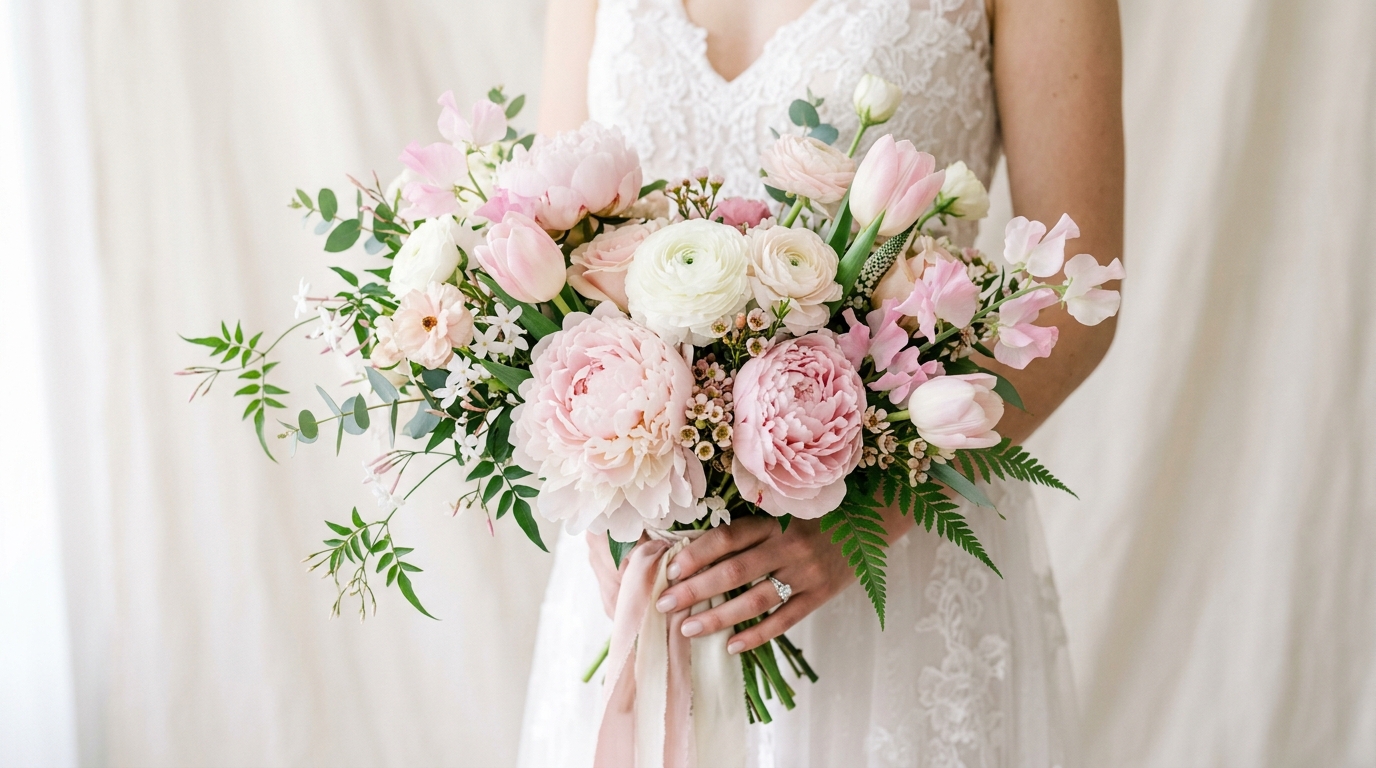
- The bridal bouquet is the most photographed element: UK couples spend an average of £180-£350 on the bridal bouquet alone
- Ceremony flowers are typically 40% of the total flower budget; reception flowers are 45%; personal flowers (bouquets, buttonholes, corsages) are 15%
- Seasonal and foliage-led arrangements cost 25-35% less than exotic or tropical flower designs at equivalent visual impact
- Hiring a florist who offers a hire-back or resell arrangement for your arch or centrepiece vessels can reduce total costs by 15-20%
UK wedding flower costs by category
Personal flowers
Personal flowers are worn or carried by the wedding party.
| Item | Price range UK 2026 |
|---|---|
| Bridal bouquet (full, mixed) | £150-£400 |
| Bridal bouquet (compact, structured) | £180-£350 |
| Cascade bouquet (long, trailing) | £250-£500 |
| Bridesmaid posy (smaller) | £50-£100 each |
| Flower girl posy or petals | £25-£45 |
| Buttonhole (standard) | £12-£25 each |
| Buttonhole (luxury orchid or exotic) | £25-£50 each |
| Mother’s corsage | £30-£55 each |
For a wedding party of 4 bridesmaids, 5 groomsmen with buttonholes, and 2 mother corsages, personal flowers typically total £500-£900.
Ceremony flowers
| Item | Price range UK 2026 |
|---|---|
| Ceremony arch (foliage and flowers) | £300-£800 |
| Altar/registrar table arrangement | £80-£180 |
| Pew ends (per pew, ribbon and posy) | £20-£40 each |
| Aisle flower petals (simple) | £50-£120 |
| Window arrangements (church) | £40-£80 each |
| Floral hoop or wreath backdrop | £200-£450 |
A ceremony with arch, two altar arrangements, and 6 pew ends costs approximately £600-£1,200.
Reception flowers
| Item | Price range UK 2026 |
|---|---|
| Low table centrepiece (garden flowers) | £80-£150 |
| Low table centrepiece (luxury flowers) | £120-£220 |
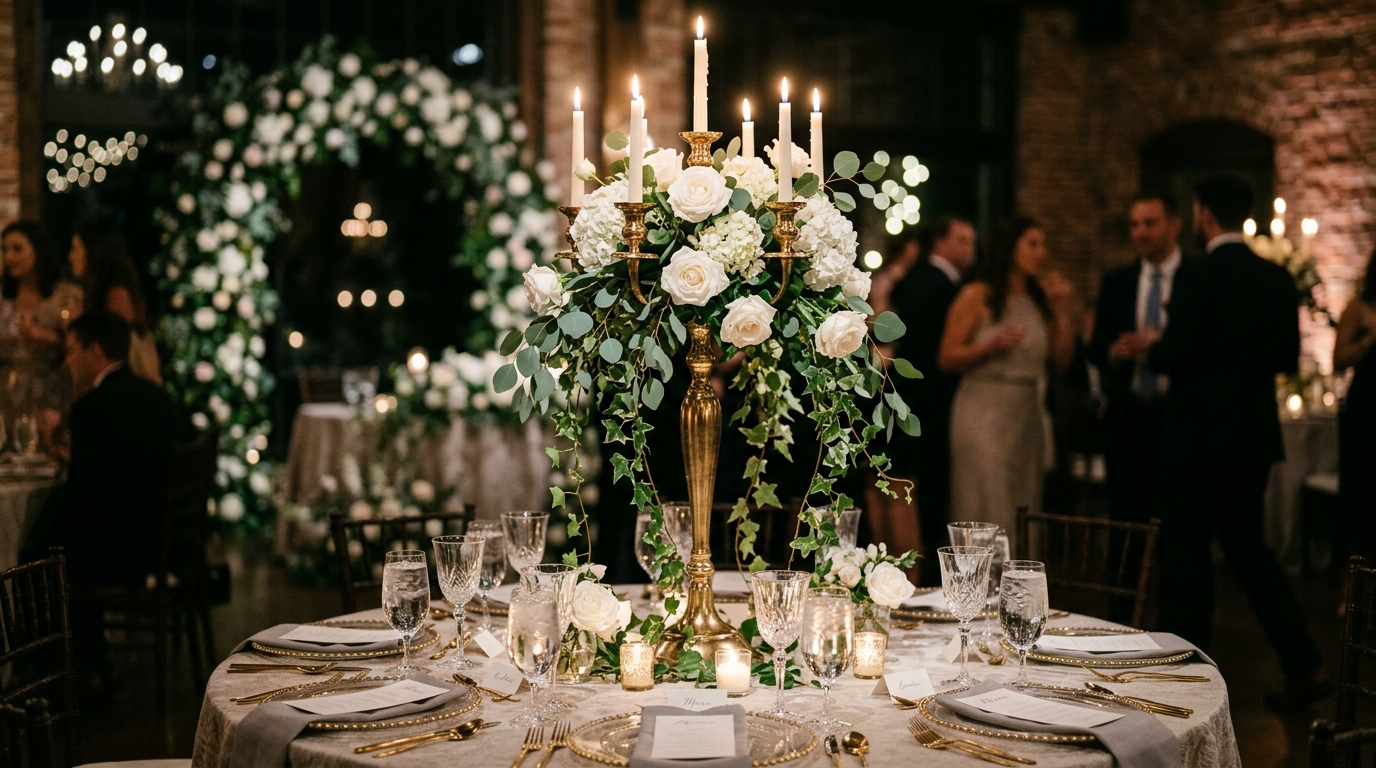
| High centrepiece (candelabra-style) | £150-£350 |
| Bud vase cluster centrepiece | £60-£100 |
| Mantelpiece arrangement | £80-£200 |
| Cake flowers (simple garland) | £50-£120 |
| Top table arrangement | £150-£350 |
| Flower wall (2m x 2m) | £600-£2,000 |
| Suspended ceiling arrangement | £400-£1,200 |
For a reception with 10 tables using mid-range centrepieces (£120 each), a top table arrangement (£200), a cake garland (£80), and one mantelpiece arrangement (£150), reception flowers total approximately £1,630.
What drives wedding flower costs
Flower type and origin
The biggest variable in wedding flower costs is the choice of flower. UK-grown seasonal flowers are significantly cheaper than imported tropical or exotic species.
In-season UK flowers for summer 2026 weddings (lower cost):
- Sweet peas, peonies, roses, cornflowers, lavender (June-July peak)
- Dahlias, zinnias, sunflowers, cosmos (August-September)
- Foliage: eucalyptus, ferns, ivy, sweet peas
Higher-cost choices:
- Orchids: £3-£8 per stem wholesale (vs £0.50-£1.50 for seasonal foliage)
- Lily of the Valley: seasonal but premium — £5-£15 per stem depending on availability
- Ranunculus, lisianthus: mid-range cost but often needed in large volumes
Asking your florist “what is in season on my date that suits my palette?” is the single most effective cost-saving question you can ask.
Labour and setup time
Flower costs include materials and significant labour. Setting up an elaborate ceremony with multiple arches, pew ends, and hanging installations at a venue that requires 4+ hours of florist time adds £400-£800 to the total cost before a single stem is purchased.
Simple designs with fewer installation points cost less in labour even when the same flower quality is used. A large foliage-led arch (primarily greenery with accent flowers) takes similar setup time to a heavily flowered arch — but uses fewer expensive stems.
Florist experience and market position
A florist in the early years of their wedding career (1-3 years in) often produces work of comparable quality at a significantly lower price. The risk is less portfolio history to evaluate.
Where the savings are
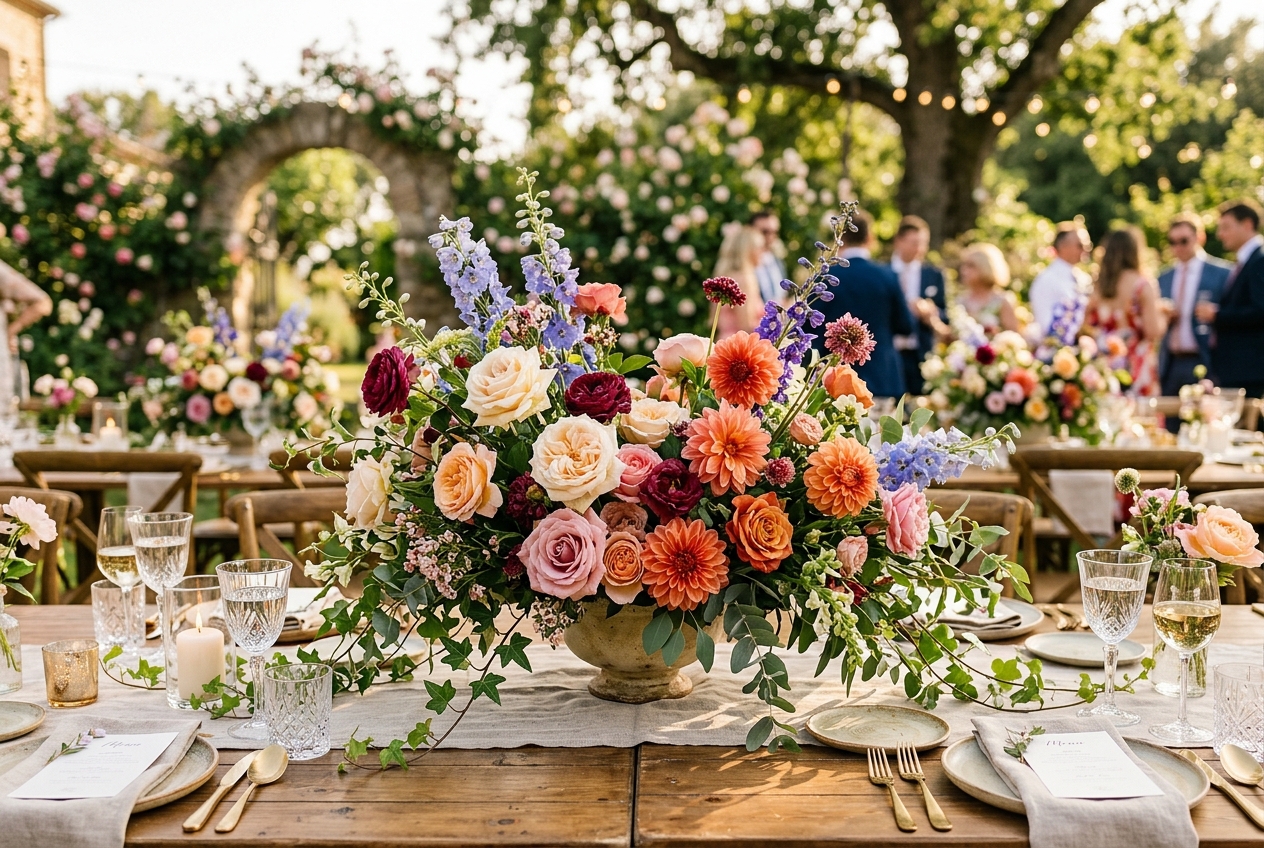
Seasonal and local flowers
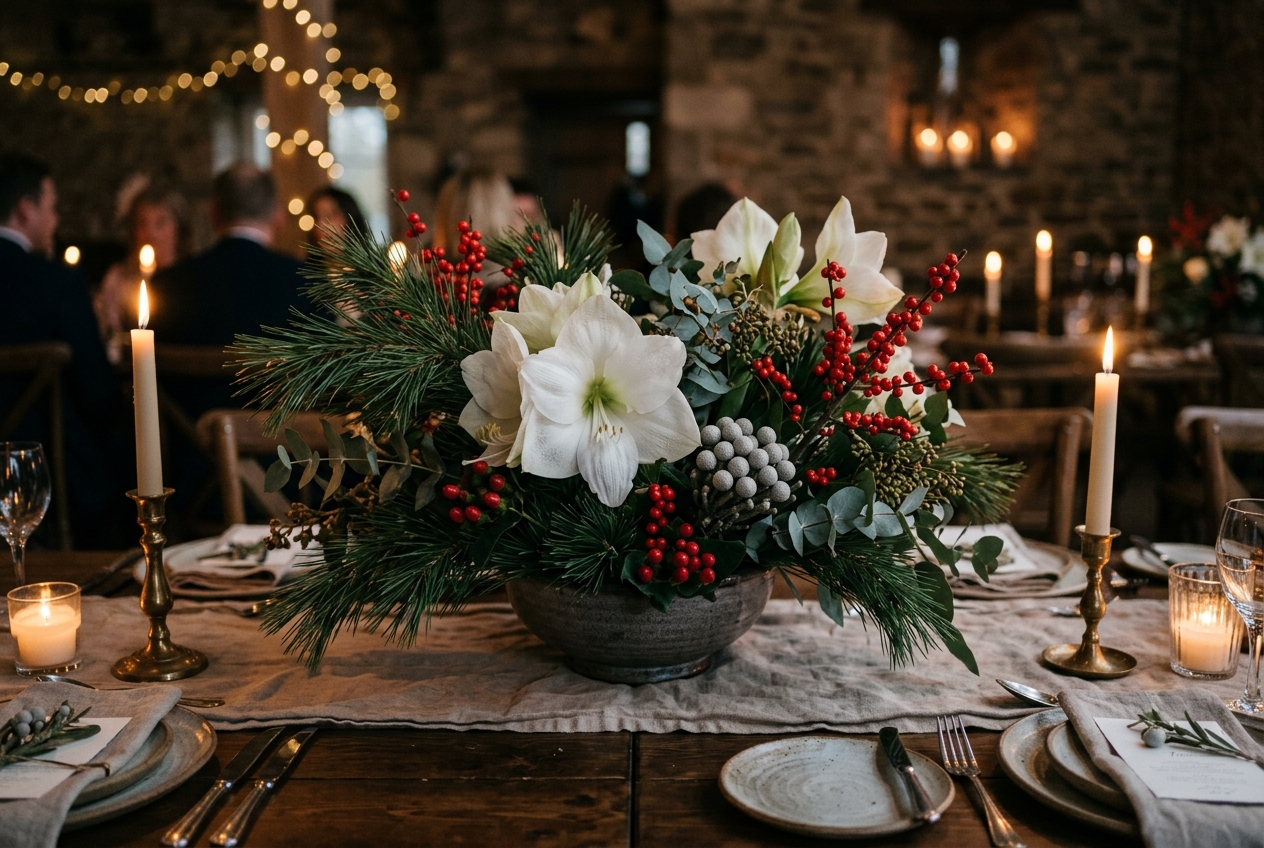
Commit to using only in-season, UK-grown flowers. This single decision can reduce material costs by 25-35% at equivalent visual impact. Provide a colour palette but not a specific flower list — let the florist use what is available and beautiful at the time of your wedding.
The meadowcore floral trend specifically uses wild, informal, asymmetric arrangements of seasonal flowers and foliage. This is both on-trend and cost-effective — the aesthetic uses high-volume, lower-cost stems in an intentionally imperfect, natural arrangement.
Hire vessels and dried flowers
Hiring decorative vessels (vases, urns, candleholders) rather than purchasing them eliminates a significant cost. Most florists have a hire inventory or can refer you to a hire company. After the wedding, the hire items are collected — you do not need to source transport for 20 large vases.
Dried flower elements mixed with fresh flowers reduce costs and extend the life of arrangements into the reception period without wilting. Dried pampas, ruscus, lagurus oats, and dried citrus are affordable and add texture to designs.
DIY elements for simpler items
Buttonholes and simple bud vase arrangements can be prepared by a helpful family member with a florist’s guidance. Many florists offer a “preparation session” where they teach a family member to assemble buttonholes from pre-prepared stems. This saves £100-£200 in labour costs for a typical wedding party size.
Complex items (the bridal bouquet, the ceremony arch) should always remain with the professional florist.
How to brief a UK wedding florist
Your florist needs specific information to produce an accurate quote. Bring to your first meeting:
- Colour palette: A specific reference image or physical fabric sample. “Blush and sage” is a starting point; showing the actual fabrics of the bridesmaid dresses and the tablecloth narrows it further.
- Style direction: 3-5 reference images. Pinterest boards are useful. Be honest about whether the reference images are budget-appropriate or aspirational.
- Guest numbers and table count: The florist calculates centrepiece quantities from table count, not guest count.
- Venue details: Does the venue have its own decor restrictions? Some venues prohibit flower petal aisles or prohibit attaching anything to pews. Confirm before briefing.
- Your budget: State your actual maximum. Florists who know the budget can optimise within it. Florists working without a stated budget will submit a quote that is then painful to reduce.
Related articles
Frequently asked questions
How much should I budget for wedding flowers in the UK?
Budget at least £1,200-£2,500 for wedding flowers at a 100-guest wedding in 2026. The total depends on: the number of centrepiece tables, whether you want a ceremony arch, the style (foliage-led is cheaper than exotic flowers), and your florist's experience level. London florists typically charge 20-30% more than regional equivalents.
How much does a bridal bouquet cost in the UK?
A bridal bouquet in the UK in 2026 costs £150-£400 depending on size, flower type, and florist. A cascade bouquet using garden roses and foliage costs £180-£280. A compact, structured bouquet using peonies or orchids costs £250-£400. High-end London florist bridal bouquets can reach £500-£800.
What is the most expensive part of wedding flowers?
For most UK couples, reception centrepieces are the largest single flower cost. A full table centrepiece with mixed flowers and foliage costs £80-£200 per table. For a wedding with 12 tables, centrepieces alone represent £960-£2,400. A ceremony arch adds another £300-£800.
How do I save money on wedding flowers?
The main ways to reduce wedding flower costs: choose in-season flowers (ask your florist what is in season on your date), use foliage-led designs with fewer stems, hire rather than buy decorative vessels, share the cost of a ceremony arch with another couple if the venue allows it, and use potted plants rather than cut flowers for some centrepieces.
When should I book a UK wedding florist?
Book your wedding florist 10-14 months in advance for summer Saturday weddings. Popular florists in sought-after regions (Cotswolds, Surrey, Edinburgh, coastal venues) are often booked 12-18 months ahead. A florist's availability directly affects the choice you have — late booking means fewer options.
What information does a wedding florist need from me?
A florist needs: your wedding date and venue, your colour palette and style references (Pinterest board is very helpful), the number of tables for centrepieces, whether you want a ceremony arch or floral installation, the personal flower needs (bridal bouquet, bridesmaid posies, buttonholes, mother corsages), and your total budget.
Do wedding florists do full installations and backdrops?
Yes, many do. Floral installations — living flower walls, suspended arrangements above the tablescape, large-scale arches — have become significantly more popular in the UK since 2020. These are typically priced separately from the standard flower package. A full flower wall (2m x 2m) costs £600-£2,000 depending on flower density and type. A suspended ceiling arrangement costs £400-£1,200.