Wedding Shoes Guide UK: Comfort & Style
Key Takeaways
- Comfort matters more than style on a wedding day — you're standing for 10+ hours
- Many brides have two pairs: formal heels for the ceremony and photos, comfortable flats or trainers for the evening
- Break in new shoes for at least 2-3 weeks before the wedding
- Block heels are more stable than stilettos on grass, gravel, and uneven floors
- Budget £40-300 for bridal shoes; £30-150 for guest shoes
Your wedding shoes spend 10+ hours on your feet. They’re in the photos. They’re standing during the ceremony. They’re walking down the aisle. They’re dancing at the reception. The right shoes — whether for the bride or guest — combine comfort, style, and practicality.
This guide covers options for brides, the two-shoe approach, and what wedding guests should consider.
Bridal shoes
Heels
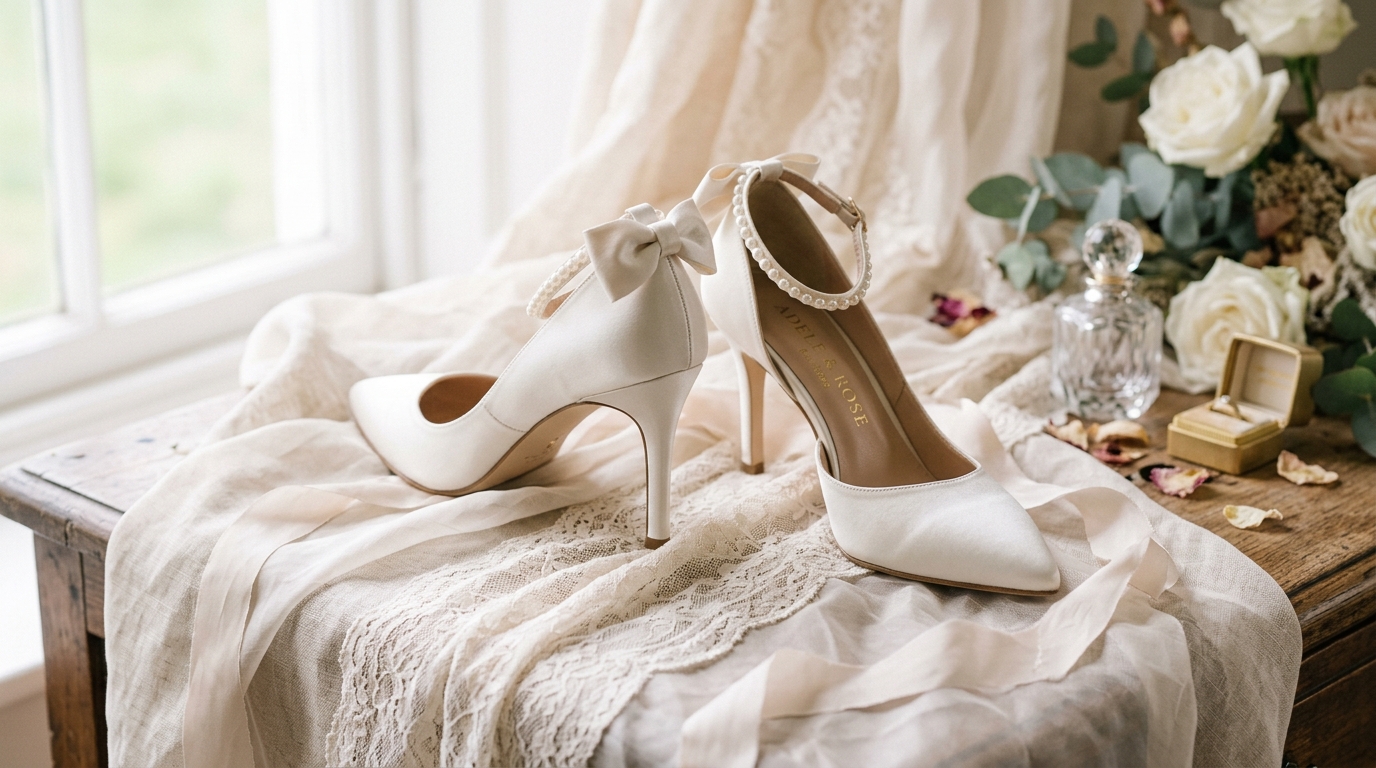
The classic bridal choice. Court shoes, peep-toes, or strappy sandals in ivory, white, or champagne.
Best for: Formal ceremonies, photos, dinner. Cost: £60-400 (Reiss, LK Bennett, Rainbow Club, Emmy London)
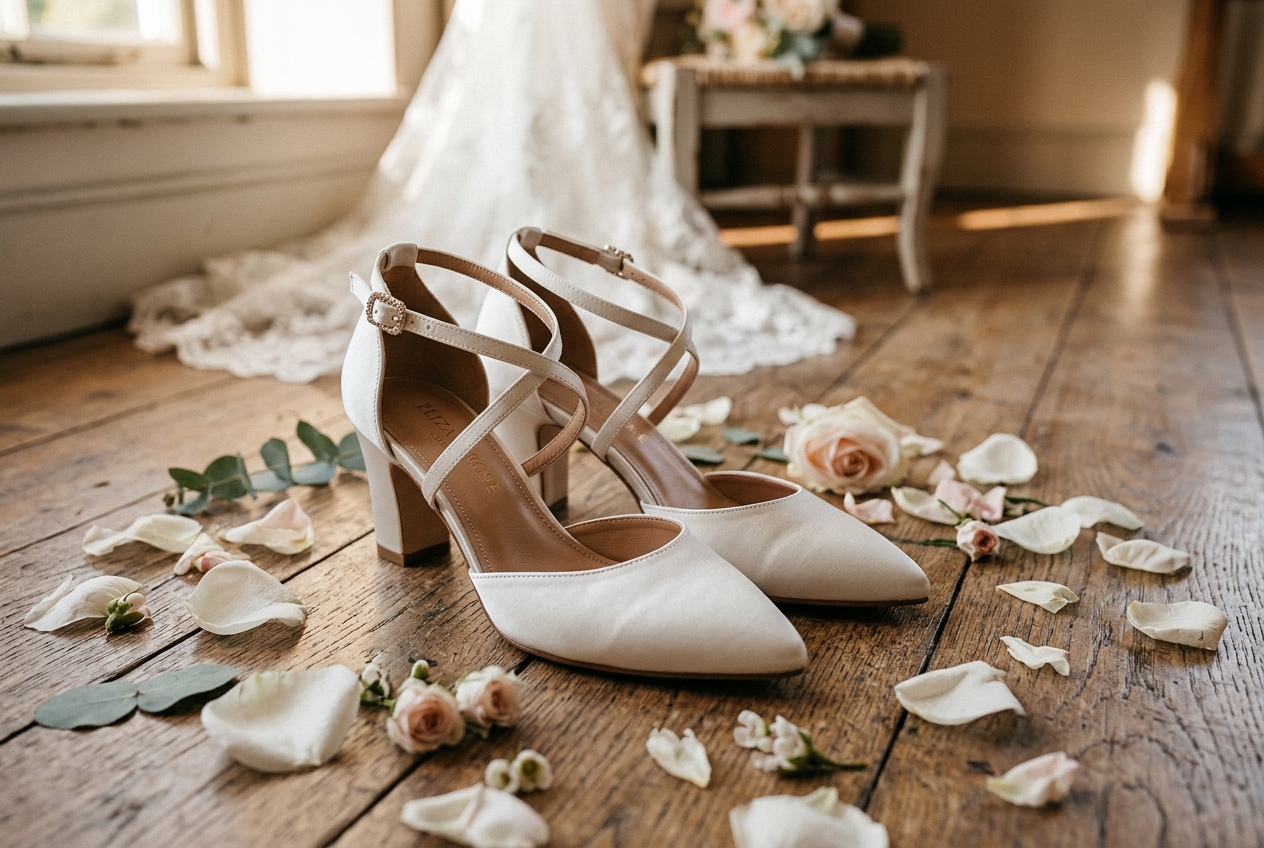
Heel height tips:
- 3-4cm (kitten heel): Comfortable, stable, elegant
- 5-7cm (mid heel): The sweet spot for most brides
- 8-10cm (high heel): Statement, photogenic, less comfortable
- Block heels are always more stable than stilettos
Flats
A growing trend, especially for outdoor and informal weddings.
Best for: Tall brides, outdoor weddings, comfort-conscious brides, second weddings. Cost: £40-200 (M&S, ASOS, Rainbow Club, Bella Belle)
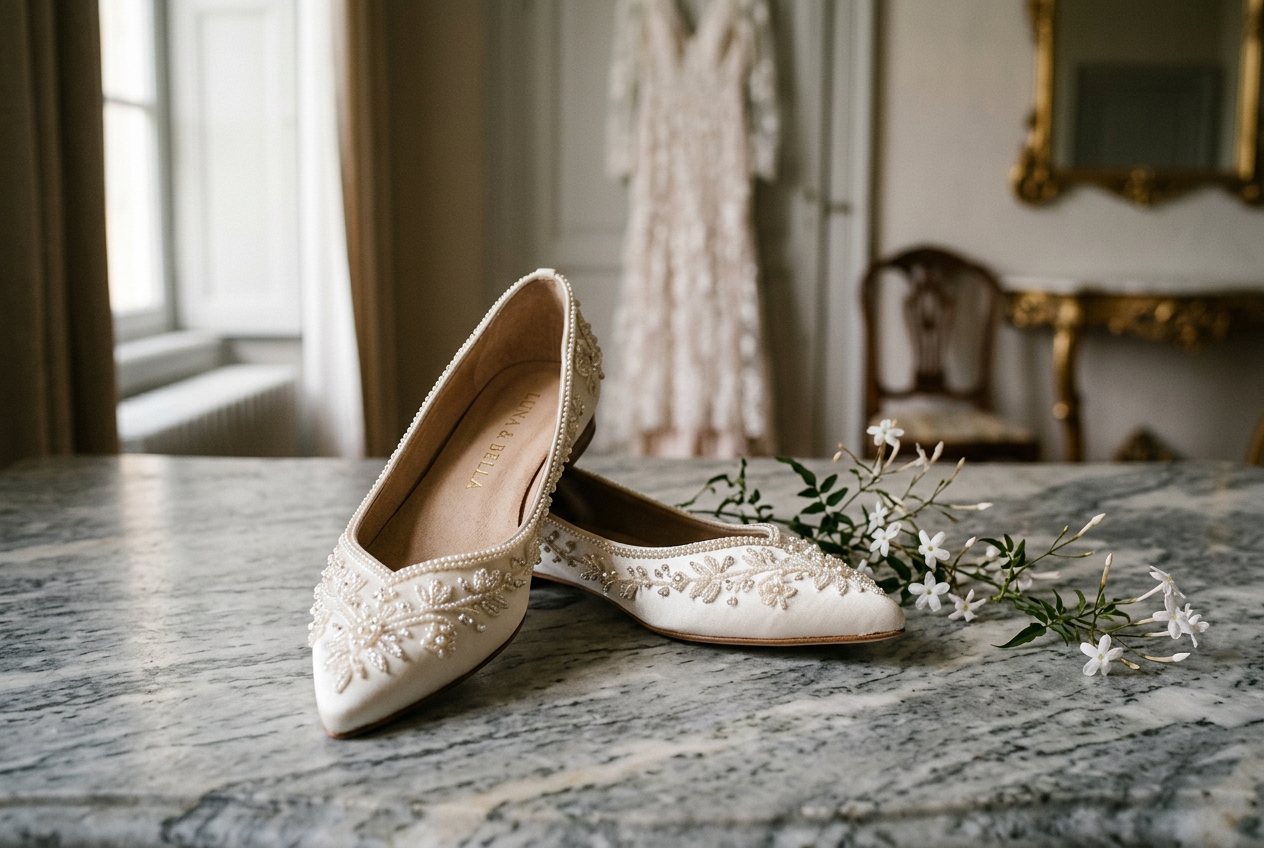
Popular flat styles:
- Ballet flats with embellishment
- Lace pumps
- Embroidered slip-ons
- Pointed-toe ballet flats
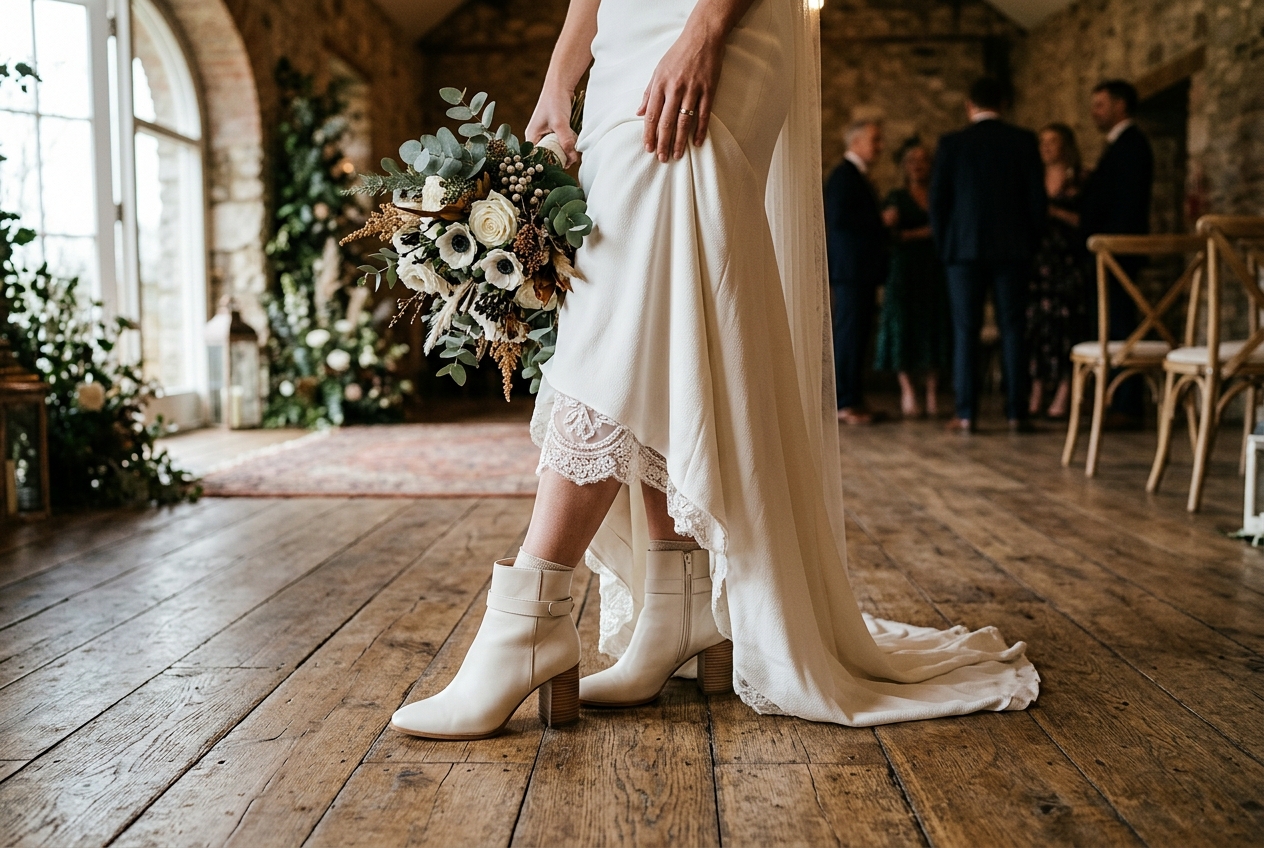
Boots
For winter weddings, outdoor ceremonies, and modern brides.
Best for: Winter weddings, rustic/barn weddings, autumn celebrations. Cost: £80-350
Trainers (the modern choice)
Wedding trainers are increasingly popular for evening receptions. Many brides wear formal shoes for the ceremony and trainers for dancing.
Best brands: Veja, Common Projects, Gucci Ace, Adidas Stan Smith, Converse Chuck Taylors (white), Nike Air Force 1.
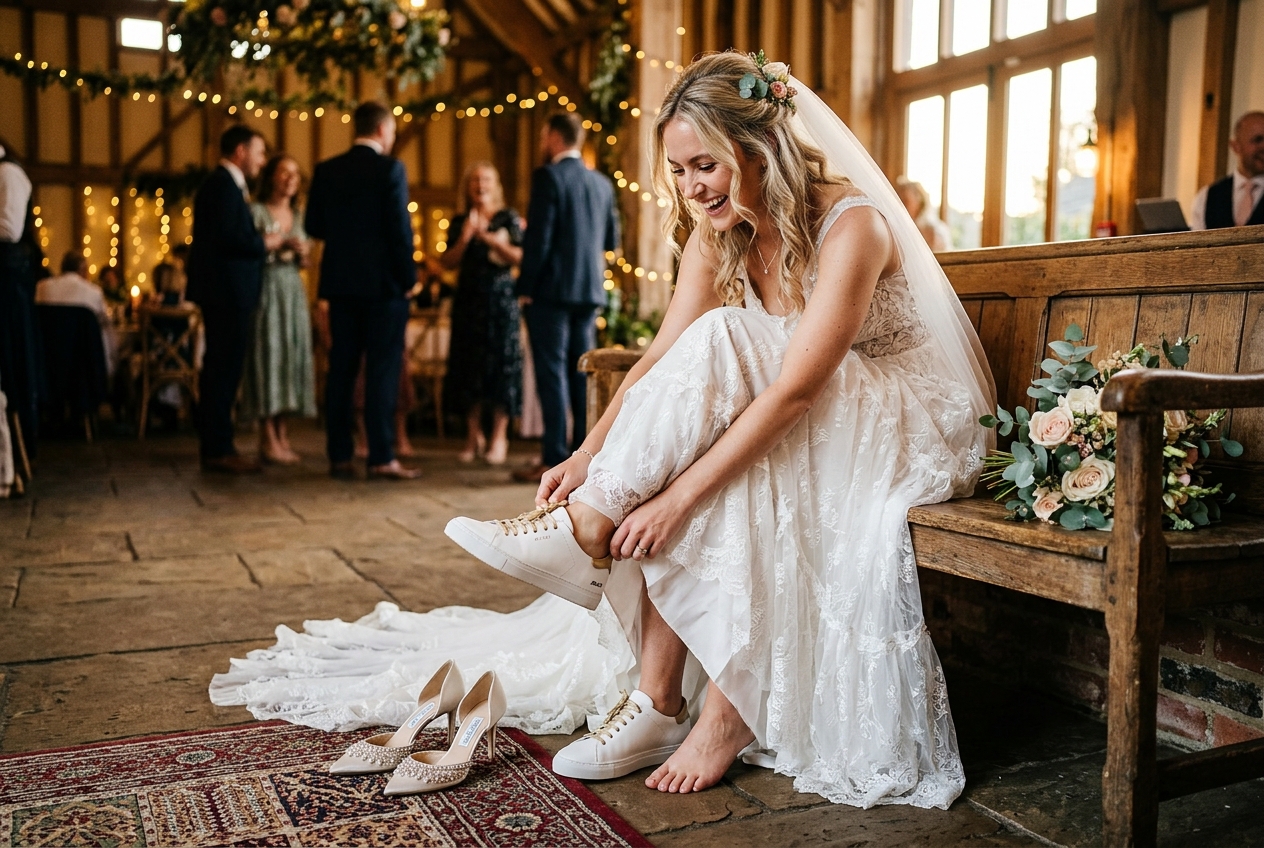
The two-shoe approach
Many UK brides now wear two pairs:
Pair 1: Ceremony and photos — formal heels, court shoes, or elegant flats. Comfortable enough for 4-6 hours of standing and walking.
Pair 2: Evening reception — flat sandals, ballet flats, trainers, or wedge sandals. Comfortable enough for dancing.
The change-over typically happens after the speeches, before the first dance. Have your second pair ready in your room or with the bridesmaids.
Budget guidance
| Type | Price Range | Examples |
|---|---|---|
| Budget bridal | £40-100 | M&S, ASOS, Dorothy Perkins |
| Mid-range bridal | £100-200 | LK Bennett, Rainbow Club, Reiss |
| Premium bridal | £200-400 | Emmy London, Bella Belle, Carvela |
| Designer | £400-1,000+ | Jimmy Choo, Manolo Blahnik, Aquazzura |
Where to buy in the UK
| Retailer | Best For |
|---|---|
| Rainbow Club | UK bridal shoe specialists, dyeable shoes |
| Emmy London | Beautiful designer bridal shoes |
| LK Bennett | Court shoes, occasion wear |
| Reiss | Modern, polished |
| Bella Belle | Vintage and bohemian bridal |
| Marks & Spencer | Reliable, affordable |
| ASOS | Budget, huge variety |
| John Lewis | Department store variety |
| Carvela | Mid-range with style |
Wedding guest shoes
For women
Heels: Court shoes, kitten heels, or block heels. Avoid stilettos for outdoor weddings (they sink into grass).
Flats: Ballet flats, smart loafers, dressy sandals. Avoid: trainers, flip-flops, gym shoes.
Wedges: A great middle ground — height with stability.
For men
Oxfords: The most formal. Black or dark brown leather.
Derbies: Slightly less formal than Oxfords. Versatile.
Loafers: For smart casual weddings only.
Avoid: Trainers, brown shoes with black suits, anything scuffed.
Comfort tips
Before the wedding
- Buy 6-8 weeks ahead — gives time to break them in
- Wear them around the house for 30 minutes a day, then 60, then 90
- Walk on different surfaces — carpet, then tile, then outdoors
- Use a leather softener for tight spots
- Try on at the end of the day — feet swell, so test them then
On the wedding day
- Bring blister plasters in advance
- Apply foot powder before putting them on
- Use gel pads at pressure points
- Take them off when you’re seated for long periods
- Have a backup pair in your getting-ready bag
Common shoe disasters and solutions
| Problem | Solution |
|---|---|
| Shoes too tight | Stretch with a hairdryer + thick socks; use a shoe stretcher |
| Heels sinking in grass | Buy heel protectors (Solemates); wear block heels instead |
| Slippery soles | Sandpaper the sole or use shoe grip pads |
| Blisters forming | Plasters at the start, before they form |
| Shoes pinching | Loosen with a leather softener; bring backup flats |
Further reading
- Wedding Dress Styles Guide — coordinating your dress and shoes
- Wedding Guest Outfit Ideas — full outfit guide
- What to Wear to a Wedding — quick guest guide
- Wedding Day Timeline — planning the shoe change
Frequently asked questions
What shoes should a bride wear?
Most brides wear formal heels for the ceremony and photos, then change into something comfortable (flats, trainers, sandals) for the evening reception. Block heels are more stable than stilettos. Court shoes, satin or lace pumps, and embellished flats are all popular bridal choices. Comfort should drive the decision — you'll be standing for 10+ hours.
Are wedding day trainers OK?
Yes — wedding trainers are increasingly popular, especially for the evening reception. White trainers, embellished trainers, or branded ones (Gucci, Veja) all work. Most brides wear formal heels for the ceremony, photos, and dinner, then change into trainers for dancing. Comfort beats tradition every time.
How do I break in new wedding shoes?
Wear them around the house for 30-60 minutes a day for 2-3 weeks before the wedding. Wear them on carpet first, then harder surfaces. Use leather softener for tight spots. Add gel pads to pressure points. Never wear new shoes for the first time on the wedding day — blisters and pain are inevitable.
Can wedding guests wear flats?
Yes. Flat shoes are perfectly acceptable for wedding guests, especially smart ballet flats, loafers, and dressy sandals. Avoid: trainers, flip-flops, and any shoes you'd wear to the gym. The key is choosing flats that LOOK formal — embellished, leather, in elegant colours.