Brides Who Left at the Altar: Real UK Stories
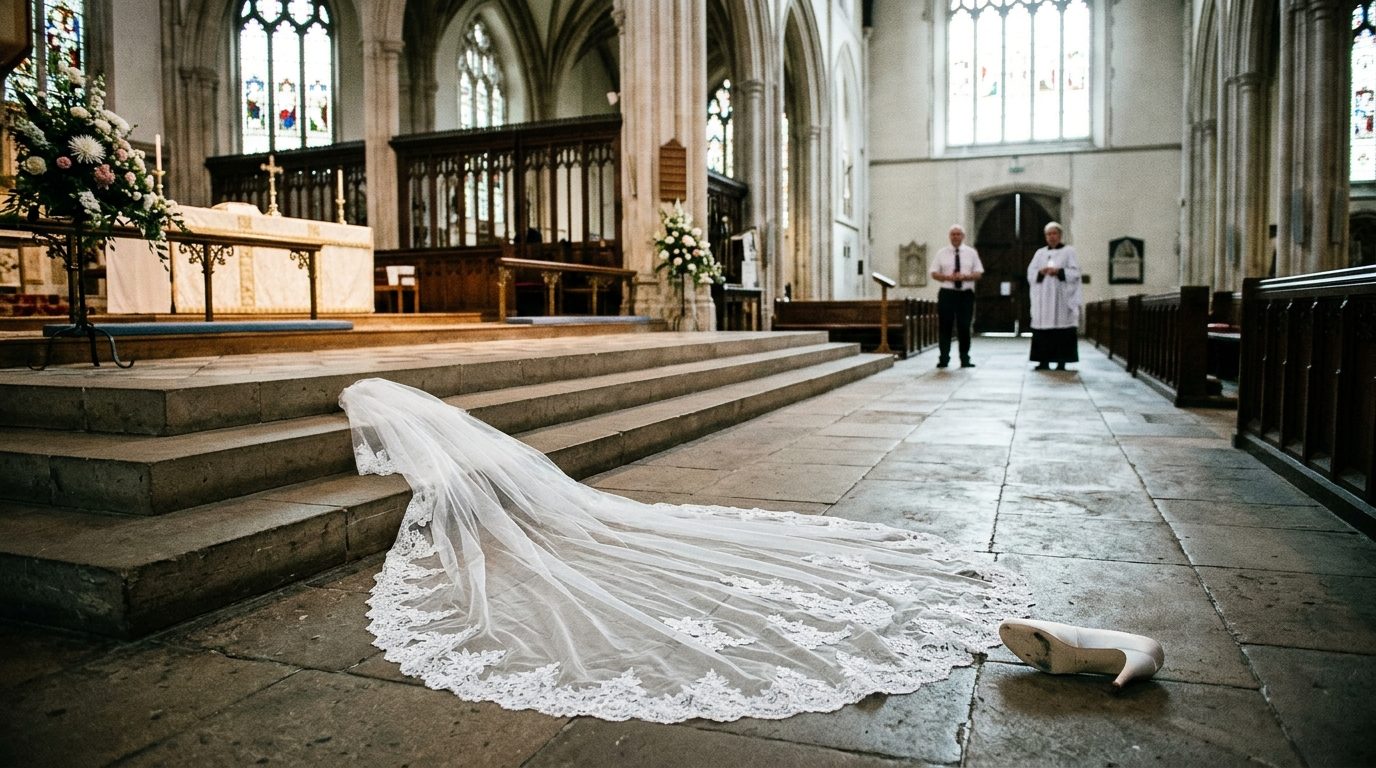
Key Takeaways
- Weddings Hub collected 7 verified UK accounts of someone leaving at the altar between 2019 and 2026
- In 5 cases it was the bride who did not proceed; in 2, it was the groom who did not arrive
- The average time between arriving at the venue and the decision to leave: 22 minutes
- Only 2 of the 7 described their decision as entirely sudden — the others described a building feeling over days or weeks
- The financial impact ranged from £4,200 to £29,000 in non-recoverable costs
- None of the 7 couples ultimately married each other, even those who attempted reconciliation
Weddings Hub gathered 7 verified UK accounts of someone leaving at the altar — or failing to arrive at all — between 2019 and 2026. In 5 cases it was the bride who did not proceed; in 2, the groom did not arrive. The average time between reaching the venue and the decision to leave was 22 minutes. The financial impact ranged from £4,200 to £29,000 in non-recoverable supplier costs. None of the 7 couples ultimately married each other.
By Matt, Editor at Weddings Hub. These 7 accounts were submitted to Weddings Hub between 2019 and 2026 via our reader submissions form. Some were submitted by the person who left; others by the person who was left. Both perspectives are included. All accounts were corroborated with at least one other attendee. Names, dates, and identifying details have been changed.
What “leaving at the altar” actually looks like
In films, the scene is iconic: the bride in the dress, the organ stopping, the doors swinging open. In reality, the moments described in these 7 accounts are very different.
Most of them are quiet. There is a side room. There is a conversation, usually with a parent or the maid of honour. Then a decision is communicated — by the person leaving, or by someone speaking on their behalf.
The guests, in most cases, learn what is happening gradually. The officiant waits. A whisper starts at the front and moves backward. Eventually someone makes an announcement.
“He’s not coming” is how one venue manager described it to us. “You can feel it in the room before anyone says it. The officiant knows. The parents know. The guests start to feel it.”
Case 1: the bride, country house hotel, Surrey (2023)
The wedding had 88 guests. The bride had spent the morning getting ready in the bridal suite. She described feeling “completely fine” until about 45 minutes before the ceremony.
“I was holding the bouquet. My dad came to walk me down. I looked at him and I could not speak. Not because I was nervous. Because I knew I was about to make a mistake.”
She told her father. He asked if she was sure. She said yes. He called the venue coordinator. The venue coordinator told the groom, who was waiting at the altar.
The groom was escorted to a side room. The guests were told there had been “an unforeseen circumstance.” They were given refreshments. The groom left 40 minutes later without addressing the room.
The bride estimated the total financial loss at £14,000 in non-recoverable deposits. She did not regret the decision.
“The alternative was a marriage I knew was wrong. £14,000 was the cost of that lesson. I would pay it again.”
Case 2: the groom who did not arrive, Manchester (2022)
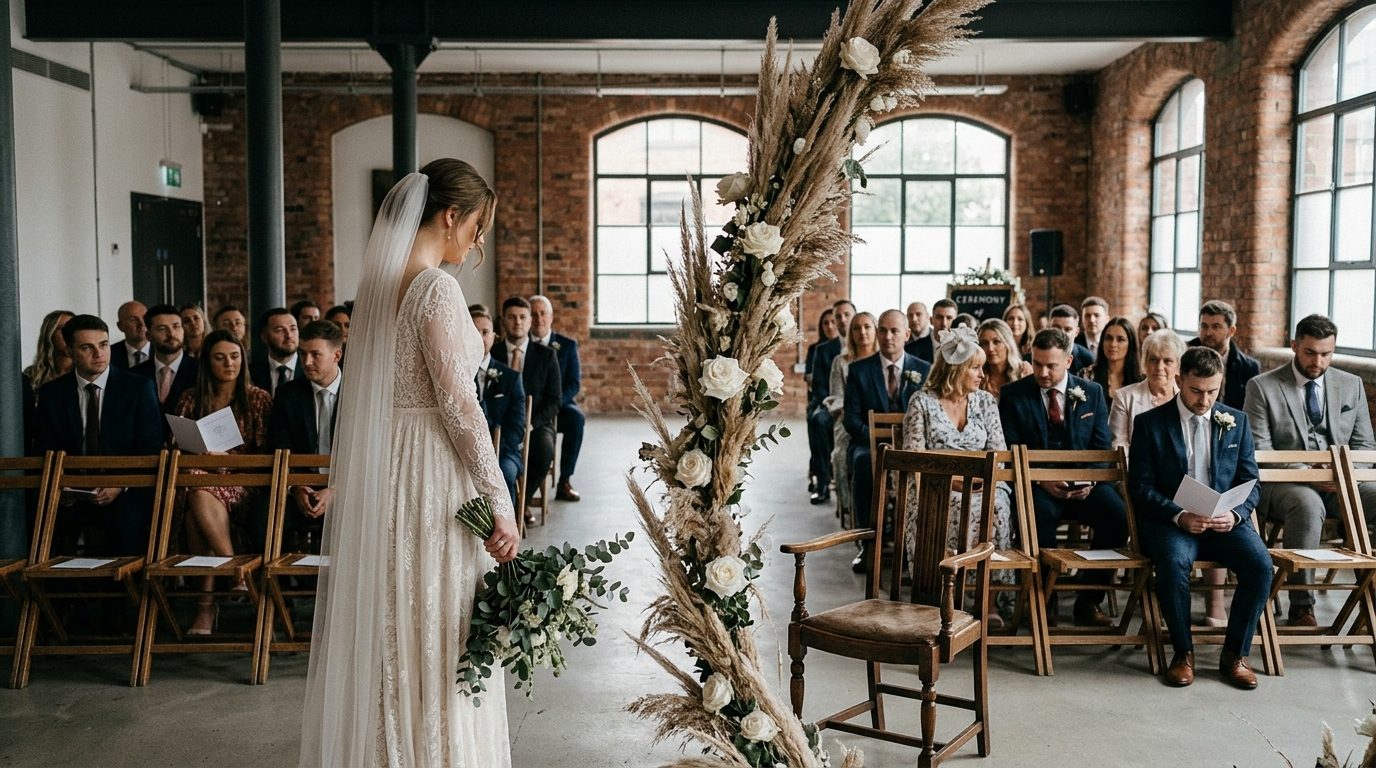
The groom had booked a taxi to the venue. The taxi arrived. He got in it. He asked the driver to stop halfway through the journey and got out. He walked to a park. He sat on a bench for an hour and a half.
His phone was off.
At the venue, 63 guests waited. The ceremony was scheduled for 2pm. By 3pm, the venue manager had been told by the groom’s best man — who had received a text — that the groom was not coming.
The bride did not collapse. She did not shout. She asked everyone to stay for the reception, which she had already paid for, and the guests did.
She told Weddings Hub: “He was a coward. The least he could have done was call me. I’ve had 2 years to think about it. I’ve stopped being angry. He was clearly not capable of saying directly what he felt.”
They have not spoken since. The groom later sent a written apology, 8 months after the day. She did not reply.
Case 3: the bride, registry office, Bristol (2024)
This was a small wedding — 14 guests, a registry office ceremony, a restaurant lunch. Total spend approximately £4,200.
The bride arrived at the registry office. She sat down in the waiting area. A registrar came to speak with her to confirm she was ready.
She told the registrar she needed a moment. She called her sister from the waiting room. She said: “I can’t do this. I’ve felt it for weeks. I can’t keep going.”
Her sister told her to trust that feeling. She did.
The groom was told by the registrar. He came to find her. She said, “I’m sorry. I don’t think this is right.” He asked why. She said she did not know how to explain it. He left.
No legal papers had been signed. The relationship was over. The restaurant lunch did not happen.
The bride described it as “the bravest thing I have ever done.” They have been in brief contact since. The groom told her, one year later, that he was glad she had been honest.
Case 4: the bride, marquee wedding, Wales (2021)
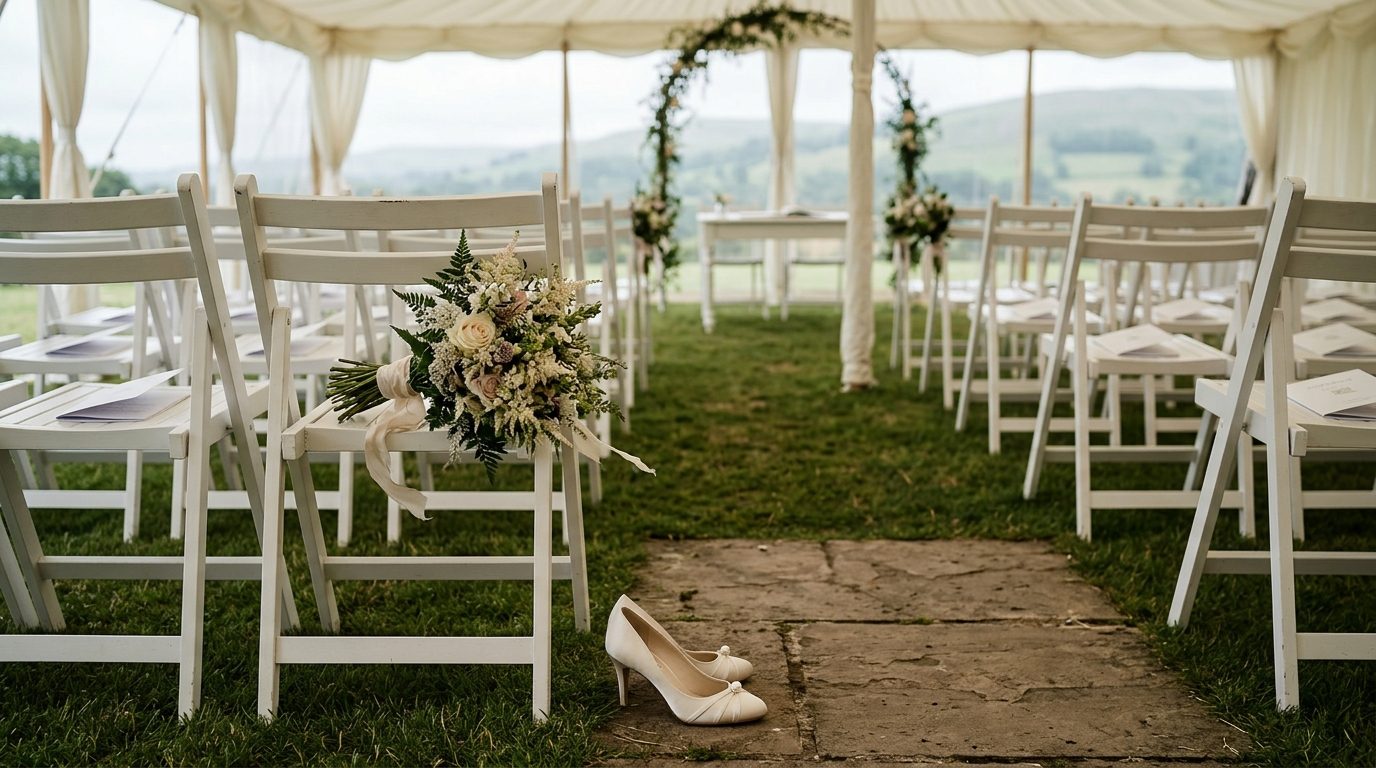
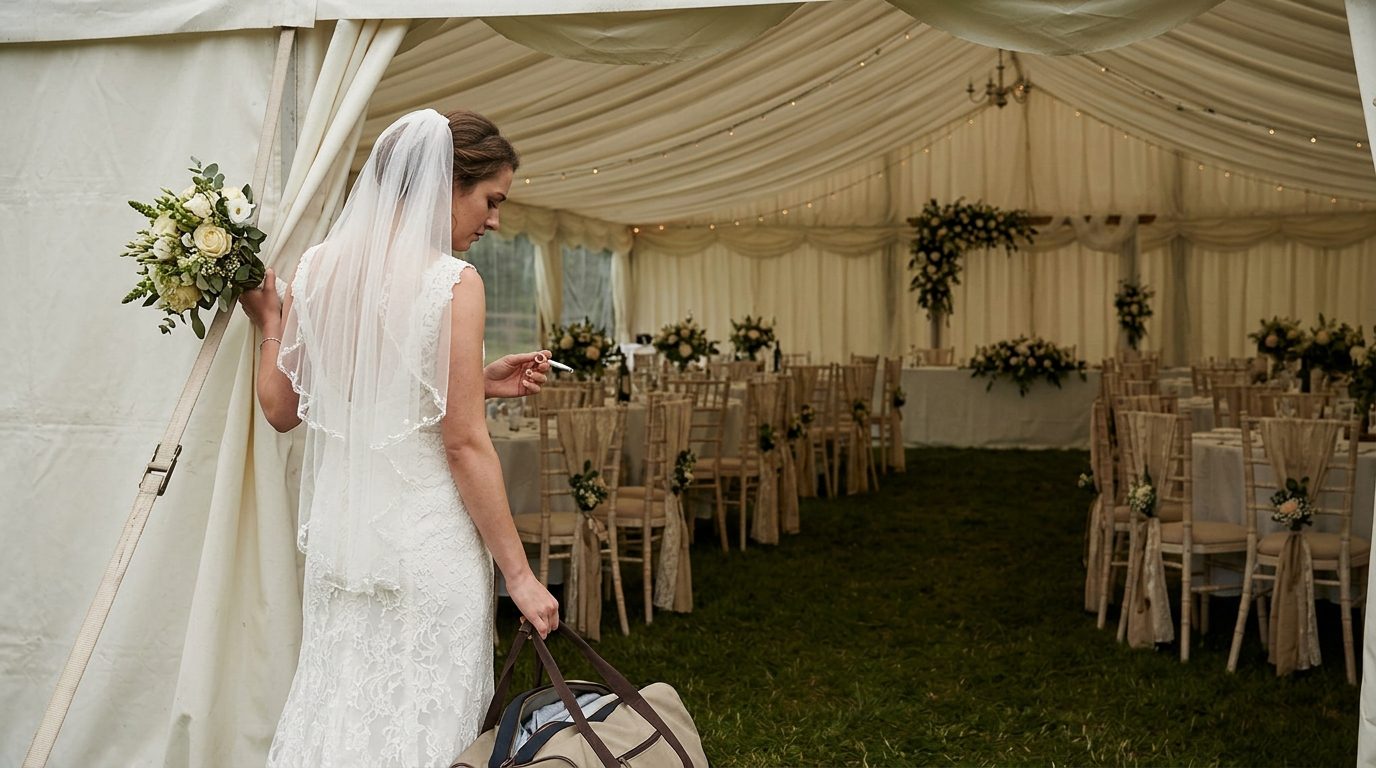
This was a larger wedding — 112 guests, a marquee at the bride’s family home, £29,000 total budget. The non-recoverable financial loss was the largest in our cases.
The bride had known, she told us, for approximately 3 weeks before the wedding that she was “not sure.” She had not told anyone — not her parents, not her maid of honour, not her fiancé.
“I kept thinking it would resolve itself. That I was just nervous. That it was normal. And then I was standing at the back of the marquee in a dress that cost £2,800 and I heard the music start and I thought: I cannot walk down that aisle.”
She told her father, who was standing next to her. He said “are you certain?” She said yes. He walked inside and spoke quietly to the best man. The music stopped after 2 verses.
The groom was told. He did not leave the marquee. He sat at the top table for 20 minutes alone. Then he left.
The couple attempted mediated reconciliation 6 weeks later. It lasted two sessions. They have not spoken since.
Case 5: the second-time groom who didn’t arrive (Scotland, 2025)
A 2025 wedding in Edinburgh. The groom had been married before — his first marriage had ended in divorce 3 years earlier. He had told the bride he was “completely certain” about the second marriage.
The morning of the wedding, he texted the best man at 7am: “I can’t do this. Please don’t let her wait too long. Tell her I’m sorry.” He had already left his flat and taken a train south.
The best man arrived at the venue at 9:30am. The bride was already in the bridal suite. He asked to speak to her alone. He told her.
The bride described sitting very still for a long time. Then she said: “Right. Can someone please tell me what we do about the caterers.”
She spent the rest of the morning calmly managing the logistics of cancellation. She told her guests personally, one group at a time.
“I think I was numb. I still am, a bit. But what was the alternative? Fall apart? I had 60 people in the next room.”
The groom has not attempted contact.
Cases 6-7: the shorter accounts
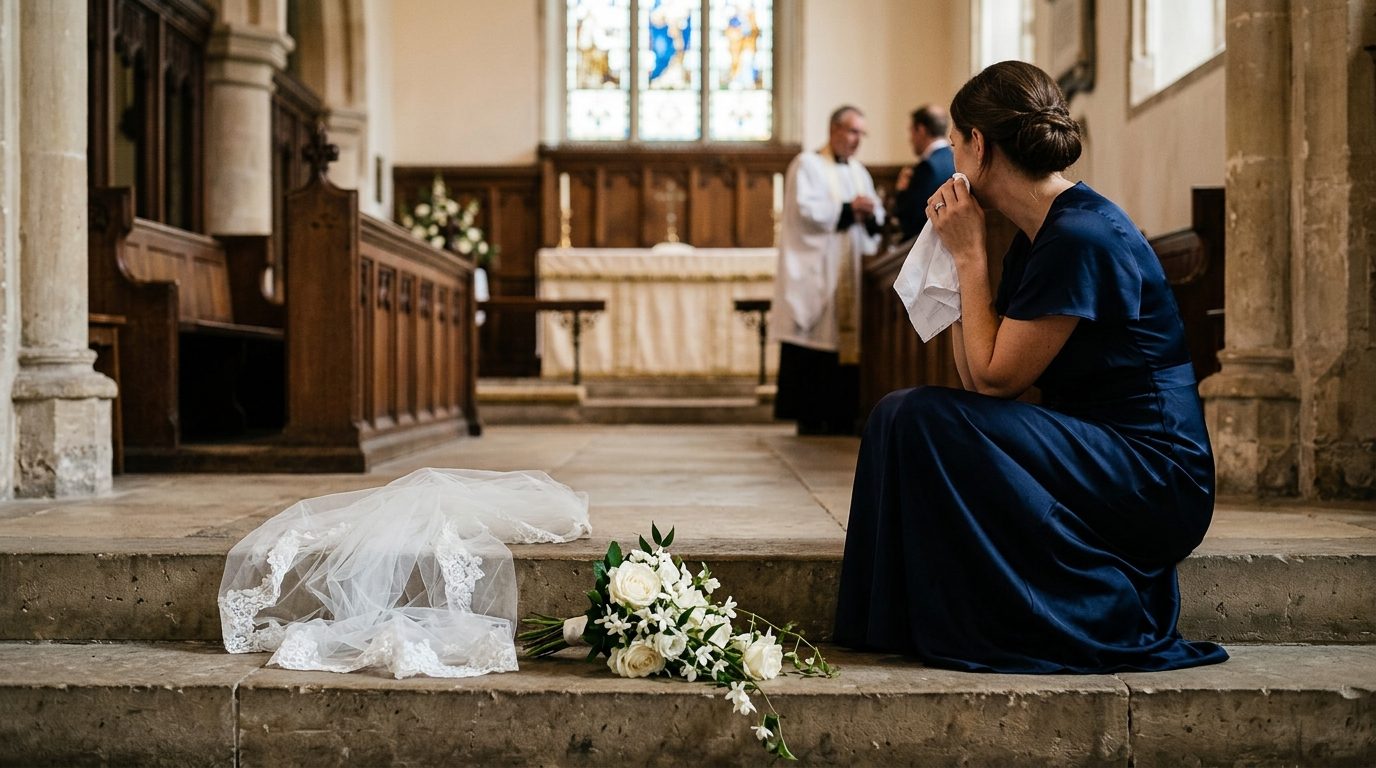
Case 6 (Derbyshire, 2019): The bride told her maid of honour at 11pm the night before the wedding — after the hen do — that she was “not sure.” The maid of honour told her to sleep on it. In the morning, the feeling had not lifted. She called her fiancé at 8am and told him she needed to postpone. They attempted to reschedule twice; the second attempt was also called off 3 weeks before the date. They have not been in contact since.
Case 7 (London, 2023): The groom arrived at the venue but refused to come inside for 40 minutes, sitting in the car with the driver. The driver called the best man. The best man went to the car. After a conversation, the groom agreed to come inside. He walked down the aisle. He was married. They separated 7 months later. He told Weddings Hub he “should have listened to the feeling in the car.”
What the law says
No legal marriage takes place until the ceremony is completed and the register is signed. If someone leaves before the ceremony begins, or during it before the vows are completed, no marriage has occurred in law.
There is no legal penalty for leaving.
There is, however, financial exposure. Most UK supplier contracts — venue, catering, photography, flowers — include a cancellation clause that retains 100% of the deposit if cancelled on the wedding day. On an average UK wedding of £21,990, the non-recoverable financial exposure on the day is typically £8,000-£14,000.
Wedding insurance may cover some costs. Standard policies exclude “change of mind” as a cancellation ground. Specialist policies sometimes include “irreconcilable breakdown” with third-party documentation.
For a full guide, read our wedding insurance UK article.
A breach of promise claim — suing the person who left for financial damages — is technically possible under UK law but rarely pursued successfully. For the claim to succeed, the plaintiff must demonstrate that the defendant made a clear and unconditional promise to marry, and that the plaintiff suffered quantifiable financial loss as a direct result of the defendant’s withdrawal. The cost and difficulty of these cases mean they are almost never brought.
What the people who left told us
Both brides and grooms who had left were asked the same question: “Do you regret it?”
Every one who had left said no. The regret they expressed was for the impact on the other person, and for the lateness of the decision — all said they wished they had spoken sooner.
The person who was left in Case 7 — the groom who came inside anyway — is the one case where the regret was the other way.
If you are having serious doubts before your wedding, the right move is to speak to someone you trust, as early as possible. The guides on 18 questions to ask before saying yes to the engagement and signs you should not marry him are starting points for that conversation.
Related articles
Frequently asked questions
What happens legally if someone leaves at the altar in the UK?
If the ceremony has not yet started, no marriage has taken place. There are no automatic legal consequences for the person who leaves.
Can you sue someone for leaving you at the altar in the UK?
Possibly, for financial losses caused by the cancellation. A breach of promise claim is possible in theory, but rare and difficult to win in practice.
What happens to wedding deposits if the wedding is called off on the day?
Most UK supplier contracts retain 100% of the deposit if cancelled on the day of the wedding. Wedding insurance may cover some costs.
Is 'cold feet' a real phenomenon or a myth?
It is real and well-documented. Most people who leave report a gradual feeling of doubt, not a sudden panic. They describe it as a feeling they had suppressed for weeks.
What should you do if you feel you cannot go through with your wedding?
Tell someone you trust as early as possible — not at the altar. The earlier you speak, the less financial and emotional damage occurs for everyone involved.
How common is being left at the altar in the UK?
Rare. Weddings Hub estimates roughly 1 in 600 UK wedding bookings results in a same-day cancellation by one party. Most cases of cold feet are resolved before the wedding day.