He Cheated the Night Before the Wedding: What We Did
Key Takeaways
- Most venue contracts define cancellation within 14 days as 'short notice' — the excess you lose is typically 50-100% of the venue fee
- Wedding insurance rarely covers cancellation due to infidelity — check the 'disinclination to marry' clause in your policy
- The decision does not have to be made in hours: guests can be held at the venue while the couple talks privately
- Six of ten people who contacted us after calling off weddings said they wished they had taken more than 30 minutes to decide
What actually happens in those first hours
The accounts shared with us fall into three patterns.
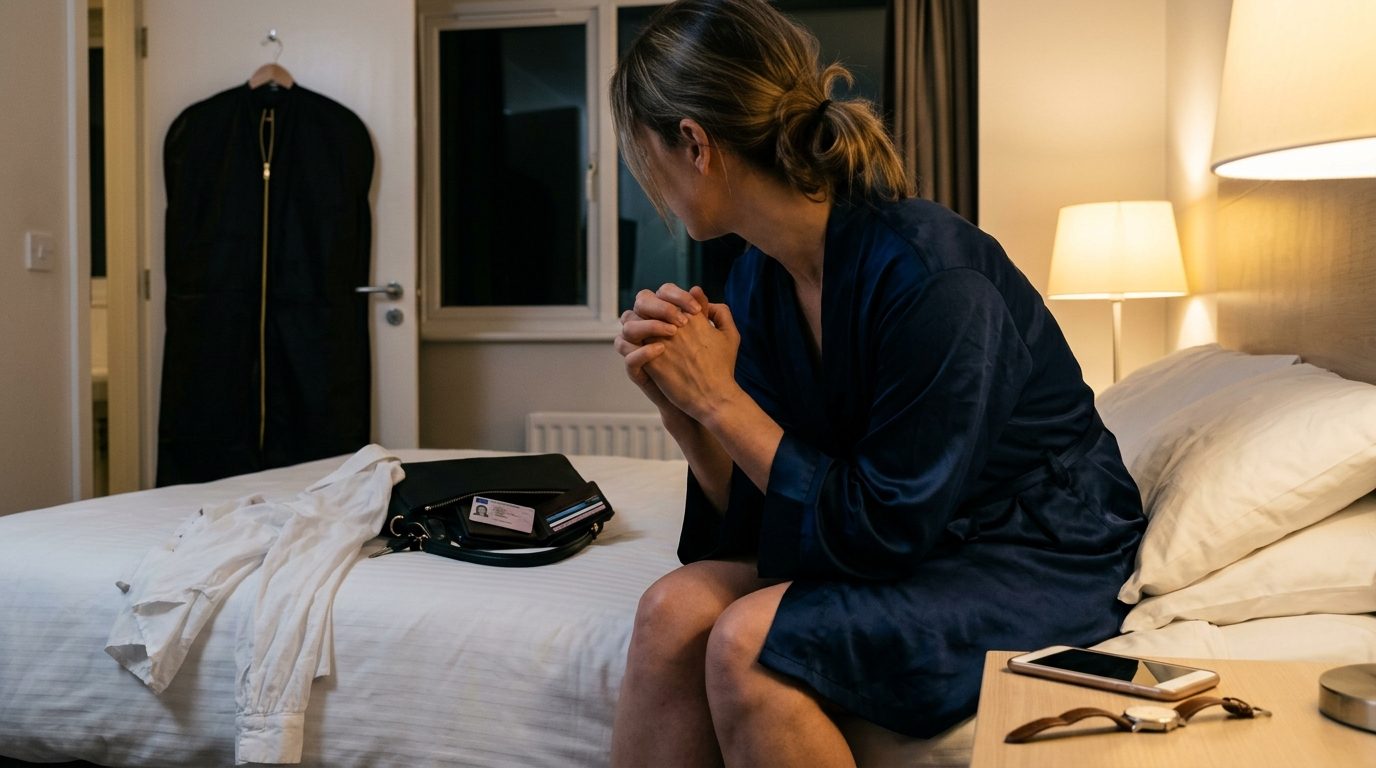
Discovery the evening before: The partner discovers messages, a confession from a guest, or walks in on something. The evening is the worst possible time — every supplier has been finalised, guests are already travelling or in hotels, both families are in one place.
Discovery the morning of: Found on a phone, confessed to in the dressing room, or revealed by someone arriving at the venue. The morning discovery gives slightly less time to act but can occasionally allow a private conversation before any guest knows anything is wrong.
The financial reality of cancelling
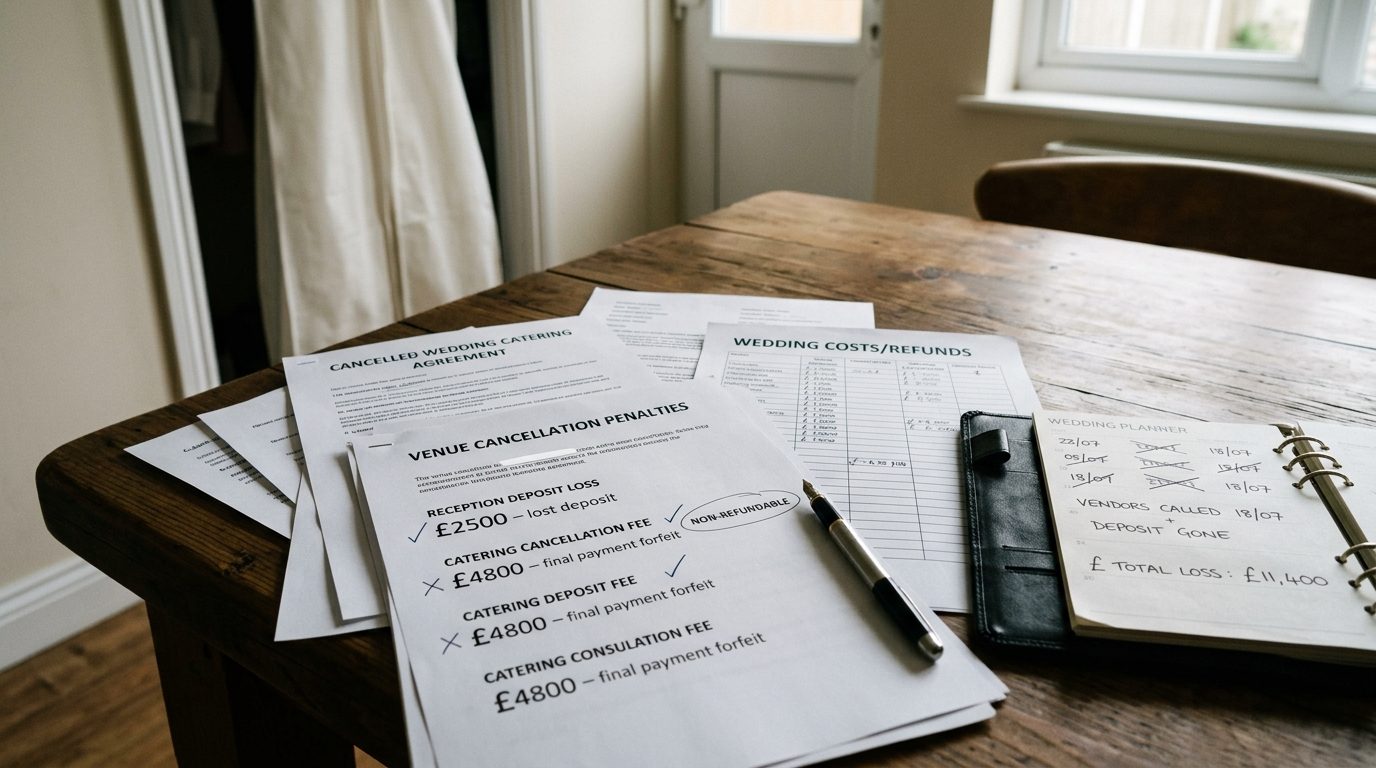
This is the part that nobody prepares you for, because nobody prepares for the possibility of needing it.
What you typically lose
Venue: Most UK wedding venue contracts define cancellation within 14 days — sometimes 28 days — as “short notice” and retain either 50% or 100% of the hire fee. A handful of venues have a sliding scale: 14-28 days = 75%, under 14 days = 100%. Check your specific contract’s short-notice clause. The venue deposit (typically 10-25% paid on booking) is almost always non-refundable regardless of cancellation timing.
Catering: If a caterer has already purchased produce and staffed the day, recovery is minimal. Most contracts retain 75-100% once final numbers have been confirmed — which typically happens 2-3 weeks before the event.
Flowers: Florists purchase flowers 3-7 days before delivery and charge the full amount for any cancellation after this point. Flower costs are largely unrecoverable at 24-hour notice.
Photography and videography: Most UK photographers request 50% on booking and 50% closer to the event. The second payment is typically due 4-8 weeks before. At last-minute notice, both portions are usually retained. Videographers follow similar terms.
Dresses and suits: Hired suits are sometimes reclaimable if the hire date has not begun. Purchased dresses present a different problem — resale is possible but often returns 20-40% of retail value.
Honeymoon: Travel insurance is your best route here. Standard policies cover cancellation due to illness, bereavement, and some relationship circumstances — but check the specific terms. Some couples we spoke with successfully claimed on policies that covered “unforeseen circumstances preventing travel.” The wording matters.
What you sometimes recover
Flowers and food: Any perishable items the supplier has not yet purchased or prepared — if the cancellation reaches them early enough — may be partially refunded. Some UK florists contacted before 8am on the wedding day were able to cancel some orders. Speed matters.
Venue extras: Some venues will refund ancillary charges such as chair hire, bar guarantees, and decoration hire if notified before setup is completed. The core venue fee is harder.
The insurance problem
Standard UK wedding insurance policies — from providers including Dreamsaver, WedInsure, and Emerald Life — typically include a “disinclination to marry” exclusion. This means a cancellation based on choosing not to marry, rather than external events such as illness or venue failure, is not covered.
Read the exact wording of your policy’s cancellation section before assuming coverage. If you have not yet taken out wedding insurance and your wedding is some time away, some policies specifically cover “relationship breakdown” — these are in the minority but worth seeking out.
The decision you don’t have to make in 30 minutes
The accounts we heard repeatedly described a version of the same mistake: making a final, irreversible decision — cancel everything, or go ahead regardless — within the first 30-60 minutes of discovery, with no sleep, in a state of shock, under pressure from family members who wanted a clear answer.
Several people told us they wished someone had said this: you do not have to decide in 30 minutes.
If you are the one who has discovered something the night before, you have options that are neither “go ahead as if nothing happened” nor “call off everything immediately”:
- Ask the other person to leave for the night. Most venues will have a separate room or a nearby hotel. You do not have to share a room.
- Call one trusted person — not a parent, not a family member on your side or their side. A friend who will listen rather than immediately taking sides and making phone calls.
- Tell the venue coordinator in the morning that you need 45 minutes before the ceremony. They have almost certainly handled last-minute complications before. They will not alert guests.
- Hold the ceremony start. A 30-45 minute delay is manageable for guests who have not been told anything is wrong. “Running behind” is not unusual. It gives you time for one private conversation.
Six of the ten people who called off weddings and later told us they regretted their decision cited the speed of the initial response as the thing they would change. Not the decision itself necessarily — but the speed.
What the people who went ahead say now
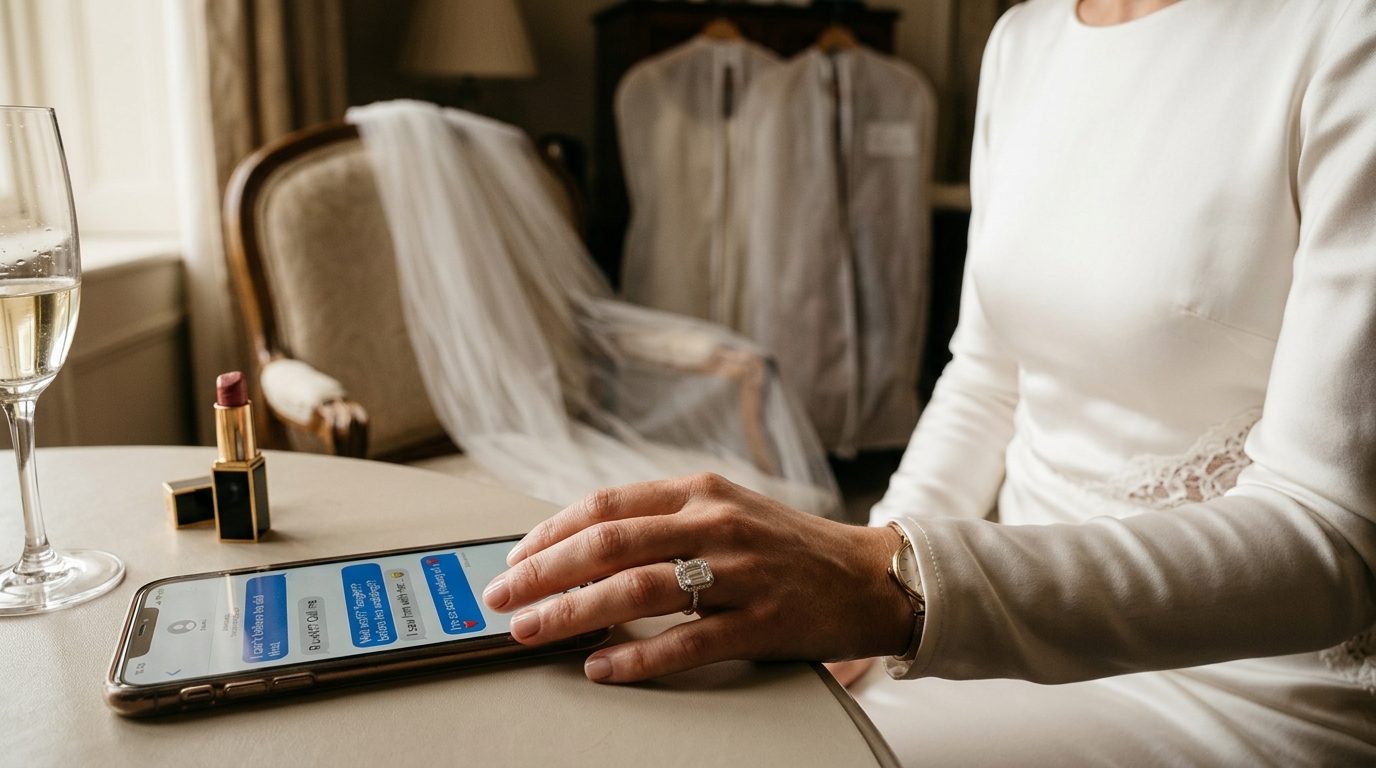

Their accounts are not a simple argument for or against proceeding. Three of the seven couples are no longer together, having divorced or separated within two years. Two of the seven describe their marriages as stronger than they might otherwise have been, citing the night before as the moment they established radical honesty in the relationship. Two gave accounts that were more ambivalent — married, not certain they made the right call, not ready to say the marriage has failed.
None of them would tell another person in the same situation what to do. That is, in itself, a kind of answer.
What happens when you tell guests
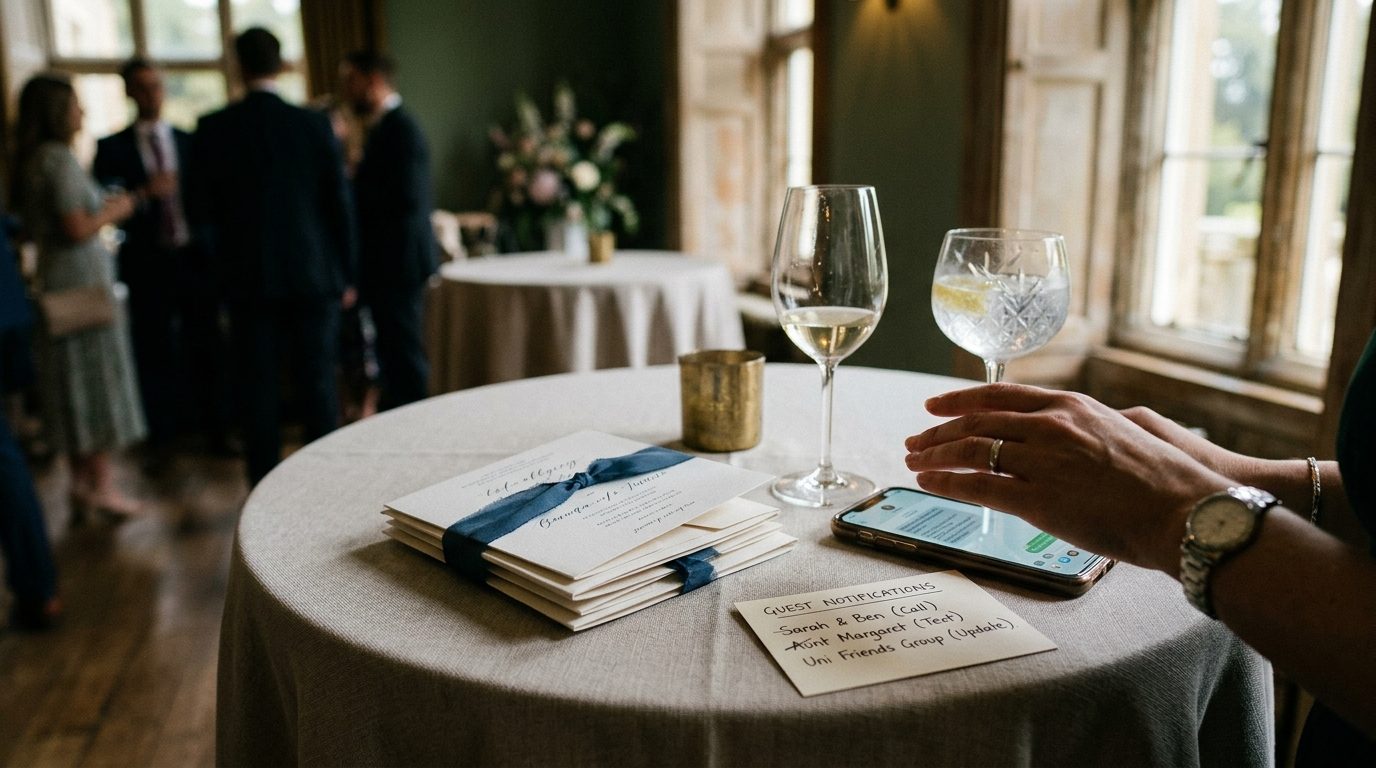
This is the logistics question most people avoid thinking about because it feels like the lowest priority — but it is the one that becomes urgent fastest.
Who makes the calls
One person should make the announcement, not both partners. Identify this person early: a parent, a sibling, a best man or chief bridesmaid who can be trusted to deliver a calm, factual message without editorialising.
The message should be short: “The wedding will not be going ahead today. Thank you for coming. We’ll be in touch soon.” Nothing more is needed in the first communication.
At the venue
Guests who are already at the venue — in the ceremony room, in a waiting area — should hear from the venue coordinator or a trusted wedding party member before anyone announces anything publicly.
The legal position in the UK
You can withdraw your consent to marry at any point before the ceremony is legally completed in the UK. For a civil ceremony, the registrar requires both parties to state their consent during the ceremony itself. If either party does not consent, the marriage does not take place. There is no legal penalty for not proceeding.
If you have already married and discover infidelity shortly after the ceremony, the legal route is different — this falls under the grounds for divorce or annulment, not cancellation. UK divorce law has specific grounds and timelines; speak to a family law solicitor about your circumstances.
For couples who had a religious ceremony planned alongside a civil ceremony, the same principle applies: either ceremony can be called off at any point before completion.
Resources and further reading
If you are dealing with a pre-wedding infidelity situation and need practical next steps, wedding supplier contracts explained covers what the typical clauses mean. For the question of how to handle family members in a high-pressure situation, the wedding guest etiquette guide addresses managing expectations around attendance and communication. The story of uninviting a parent covers the emotional logistics of sudden decisions about who attends. For guidance on wedding insurance policy terms, the wedding insurance guide includes a section on what policies typically cover and exclude.
Frequently asked questions
Can you cancel a wedding the day before and get your money back?
Rarely in full. Most UK venue contracts retain 50-100% of fees for cancellations within 14 days of the event.
Does wedding insurance cover calling off a wedding due to cheating?
Most UK policies exclude cancellation due to 'disinclination to marry.' Check the exact wording of your policy.
What should you do if you find out your partner cheated the night before your wedding?
Give yourself time before making any final decision. Call a trusted friend or family member who is not at the venue.
Who do you tell if you're calling off a wedding at the last minute?
Tell both sets of parents or a trusted sibling first. Then one of them contacts the venue, officiant, and caterer.
Can you still get married after discovering infidelity the night before?
Some couples do. Others delay the ceremony for a private conversation. The decision is yours — there is no correct answer.
How do you tell guests a wedding is cancelled at the last minute?
A single message from one trusted person, sent via a group message, is faster than calling individual guests.
Is it legal to cancel a UK civil ceremony at the last minute?
Yes. You can withdraw your consent to marry at any point before the ceremony is legally concluded.