Funny Wedding Speech Ideas & One-Liners
Key Takeaways
- The funniest wedding speeches use true stories — not borrowed jokes
- Self-deprecating humour (making fun of yourself) is the safest and most likeable kind
- Pause after the punchline — most nervous speakers rush past the laugh
- Two or three genuine laughs is a great speech — you're not doing a stand-up set
- End sincere, not funny — the last 30 seconds should make people feel, not laugh
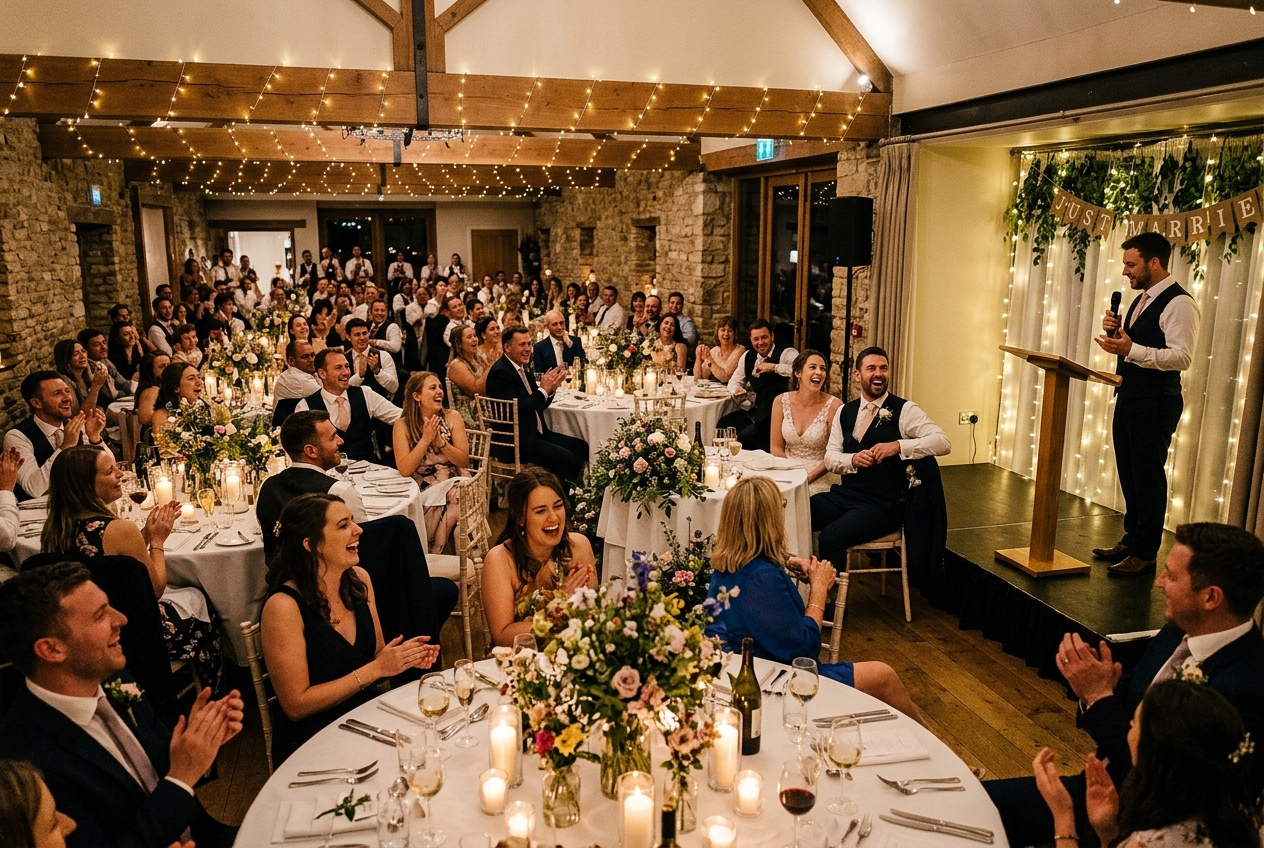
The pressure to be funny in a wedding speech is real — especially for the best man, who’s essentially expected to do 5 minutes of stand-up in front of 120 people, half of whom he’s never met.
The good news: you don’t need to be a comedian. You need 2-3 genuine laughs and one sincere moment. That’s it. Here’s how to get them.
Why true stories beat borrowed jokes
Every funny wedding speech you remember was funny because it was specific and true. The groom really did try to assemble an IKEA wardrobe without instructions. The bride really did send back a sandwich because the butter was uneven. The best man really did get lost on the way to the venue.
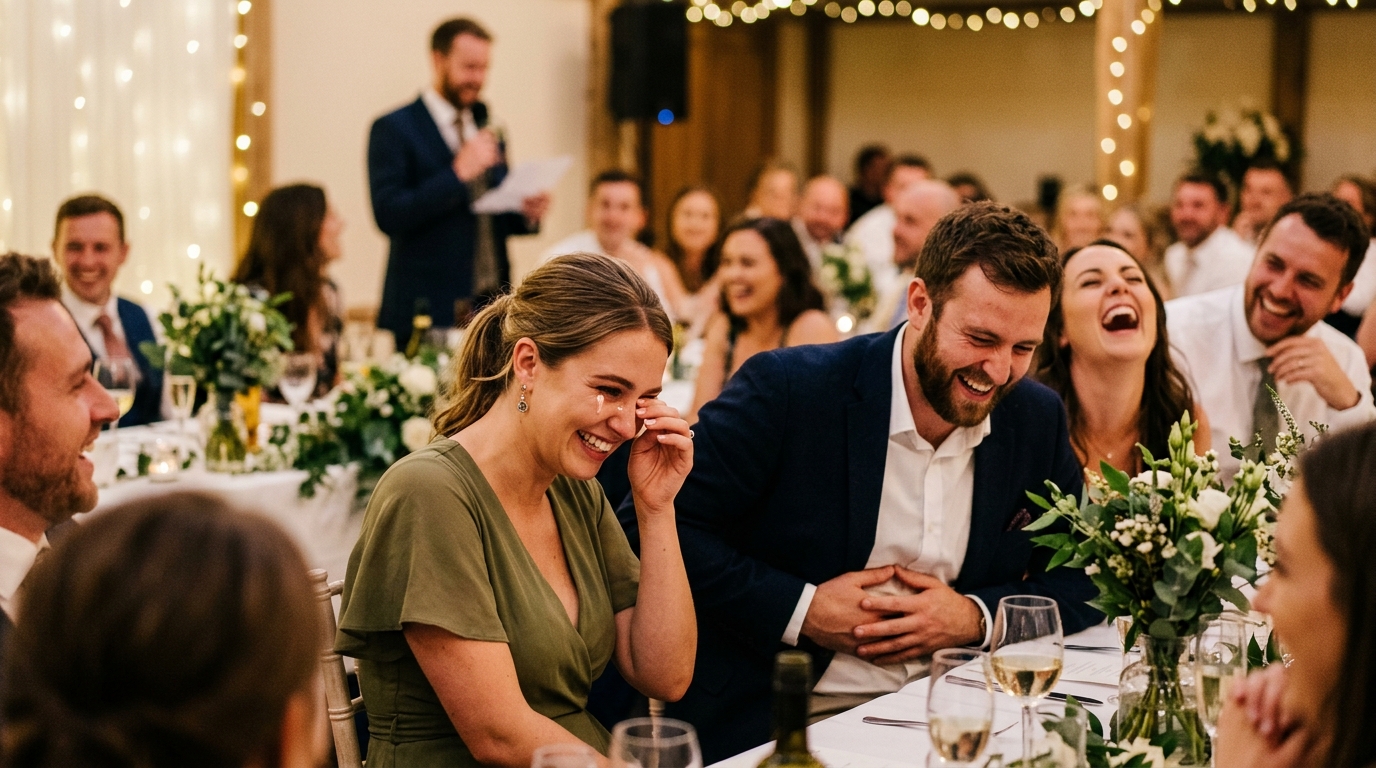
Generic jokes — “marriage is finding that one special person you want to annoy for the rest of your life” — get polite smiles. Specific stories get real laughter. The audience laughs because they recognise the person in the story.
Comedy techniques that work in speeches
1. The rule of three
Set up a pattern with two serious items, then break it with a third.
“[Groom] has three great qualities: he’s loyal, he’s kind, and he once spent £400 on a toaster because it had WiFi.”
“I’ve been asked to describe [groom] in three words: tall, handsome, and delusional.”
2. Self-deprecation
Making fun of yourself is the safest comedy. The audience likes you more for it.
“When [groom] asked me to be his best man, I was honoured. Then I looked up what a best man speech involves and I’ve been having nightmares ever since.”
“I prepared for this speech the way I prepare for everything: badly and at the last minute.”
3. Callbacks
Reference something said earlier in the speech (or earlier in the day) later for a bigger laugh.
[Earlier in speech] “He once insisted he knew a shortcut…” [Later] “And that’s why, when [groom] says ‘trust me,’ [bride] should check Google Maps first.”
4. Understatement
Describe something dramatic in deliberately calm, understated terms.
“He proposed on a beach at sunset, which was romantic. Unfortunately, he’d hidden the ring in a sandcastle and a dog found it first. There was a brief negotiation.”
5. Contrast and comparison
Juxtapose two things for comic effect.
“Before [bride], his idea of a romantic dinner was a Nando’s with extra halloumi. Now he eats quinoa. Voluntarily. Love changes people.”
One-liners that actually work
These are starting points — adapt them to your specific situation. A one-liner about the actual couple is always better than a generic one.
Openers:
“For those who don’t know me, I’m [name]. For those who do, I apologise in advance.” “I’ve been told to keep this short, so I’ll skip straight to the part where [groom] cries.” “They say the best man’s speech should last as long as the groom lasts in bed. So — thank you, and good night.” (Use with caution — works in relaxed crowds, not with the vicar in the front row.)
About the groom:
“[Groom] is the kind of friend who would give you the shirt off his back. He’d also lose it immediately, because he loses everything.” “He’s not the smartest man in the room. But he’s in the room. And that’s progress.”
About the couple:
“They complete each other — in the sense that one of them knows where things are and the other one doesn’t.” “They say opposites attract. [Bride] is organised, punctual, and prepared. [Groom] is… also here.”
Closers:
“Marriage is a partnership. [Groom], you’ll be pleased to know you’re the junior partner.” “May your love be modern enough to survive Instagram, and old-fashioned enough to survive flat-pack furniture.”
How to deliver a joke
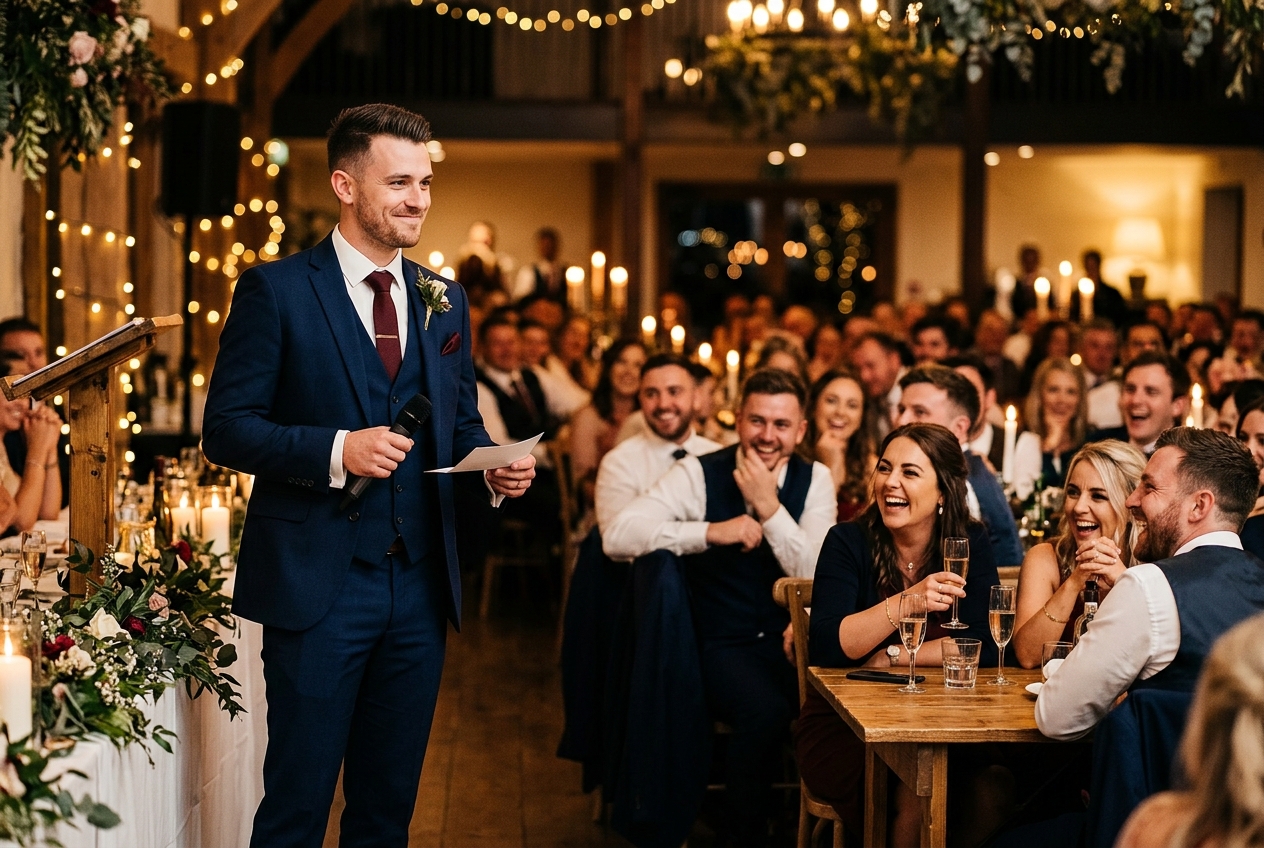
Pause before the punchline. A half-second pause signals to the audience that something funny is coming. It builds anticipation.
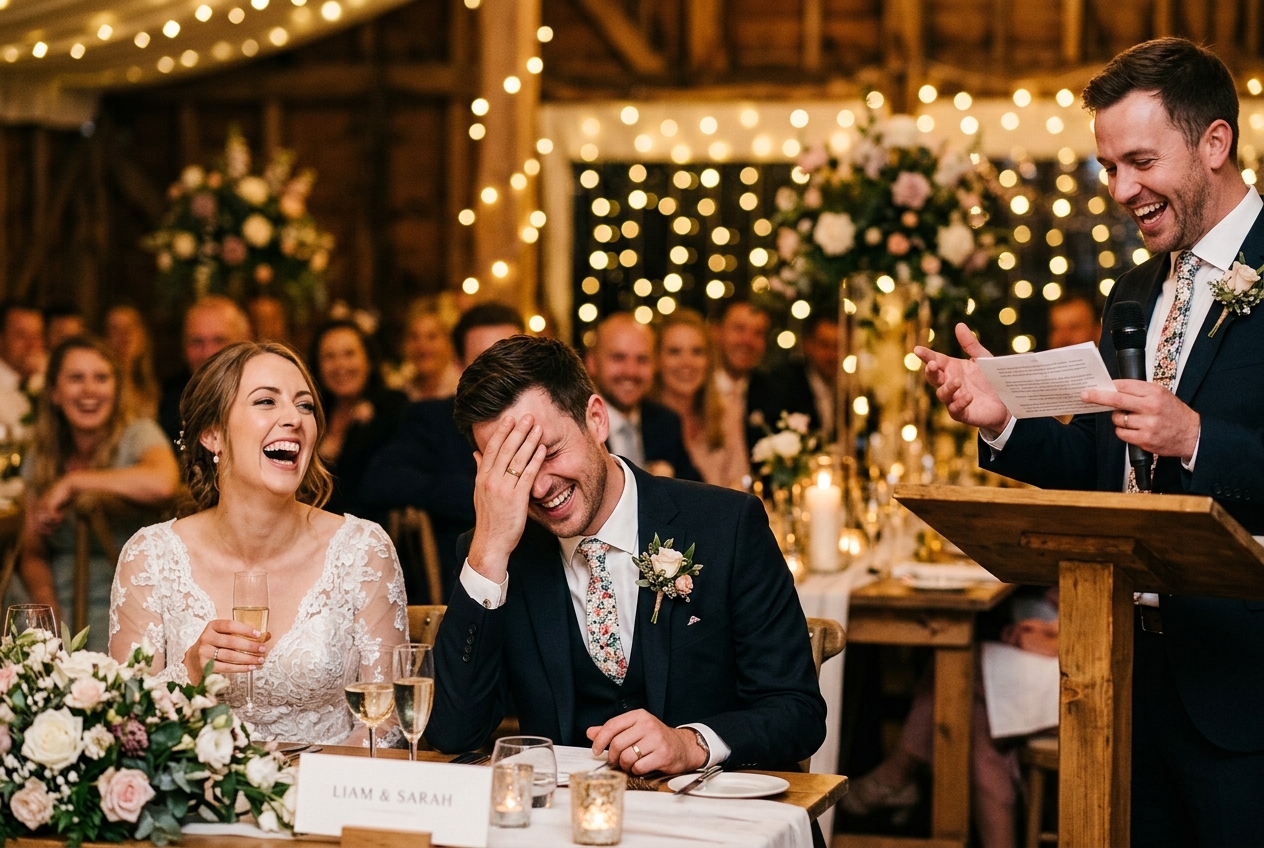
Pause after the punchline. Give the audience time to laugh. If you rush into the next line, you kill the laugh. This is the single biggest mistake nervous speakers make.
Don’t laugh at your own joke. A slight smile is fine. Full laughter at your own material undermines it.
Commit to the delivery. If you set up a joke and then say “sorry, that was terrible” — you’ve killed it. Say the line with confidence. If it doesn’t land, move on. Nobody remembers a joke that didn’t work. They remember the speaker who apologised for it.
Know which laughs are guaranteed. Not every joke needs to bring the house down. Some lines get a knowing chuckle, some get a roar. Place your biggest laugh 2-3 minutes in (when the audience is warmed up) and your sincere moment at the end.
The golden rule: end sincere
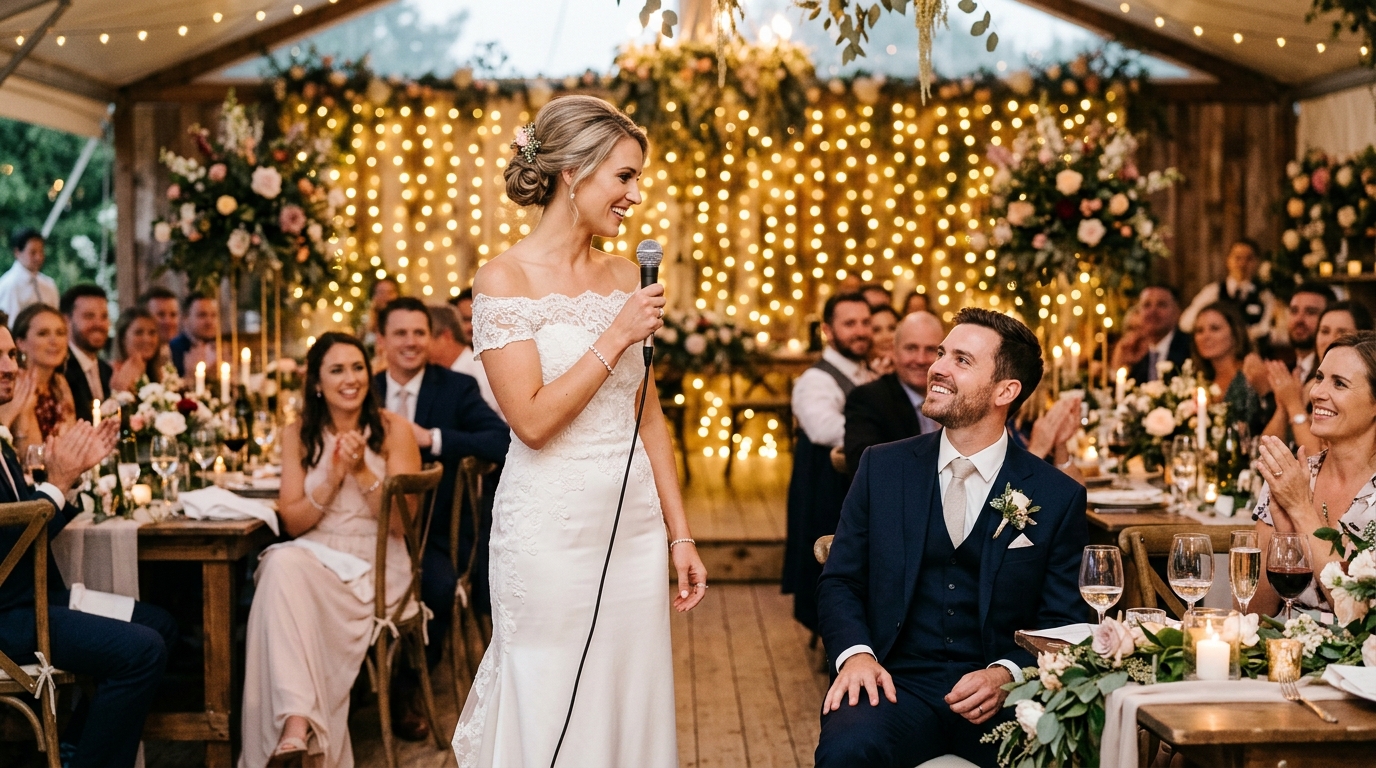
The biggest mistake in a funny wedding speech is ending on a joke. The last thing the audience hears should be heartfelt — about your friendship, the couple’s love, or a genuine wish for their future.
The laughter gets them on your side. The sincerity is what they remember.
“But in all seriousness — [groom], you’re one of the best people I know. And [bride], you’re the reason he’s become even better. I’m proud to stand here today. To the bride and groom.”
Further reading
- Best Man Speech Examples — full examples with humour
- How to Write a Wedding Speech — the complete process
- Short Wedding Speech Examples — comedy works best when brief
- Wedding Toast Etiquette — speech order and traditions
Frequently asked questions
How do I make my wedding speech funny?
Use true, specific stories where the humour comes from the situation — not from rehearsed one-liners. Describe what actually happened in vivid detail and let the audience find it funny. Exaggerate slightly for effect, pause after the punchline, and always punch up (make fun of yourself or the groom, never the bride or guests).
Is it okay to tell jokes in a wedding speech?
Original observations and true stories are better than stock jokes. Internet jokes ('marriage is like a deck of cards') have been heard by every wedding guest alive. If you do use a one-liner, make it relevant to the couple or situation — not a generic marriage joke.
What topics should I avoid in a funny wedding speech?
Never joke about exes, the stag or hen do, the couple's sex life, sensitive family situations (divorce, illness), or anything that makes the bride the punchline. The funniest speeches are funny because they're specific and observational, not because they're edgy or shocking.
What if nobody laughs at my speech?
Most laughter at weddings comes from the audience recognising a truth, not from a punchline landing. If a joke doesn't get the reaction you expected, don't acknowledge it — move on. The audience won't remember a joke that didn't land. They will remember you drawing attention to it.