Wedding Toast Etiquette: Who Speaks & When
Key Takeaways
- Traditional UK order: father of the bride, groom, best man — but there are no rules
- Keep total speech time under 45 minutes — beyond that, guests disengage
- The person who gives the toast should name who they're toasting and ask guests to stand or raise glasses
- Modern weddings add maid of honour, bride, and mother speeches — discuss the order with the MC
- Speeches work best between courses (keeps energy up) or after dessert (lets speakers relax with food first)
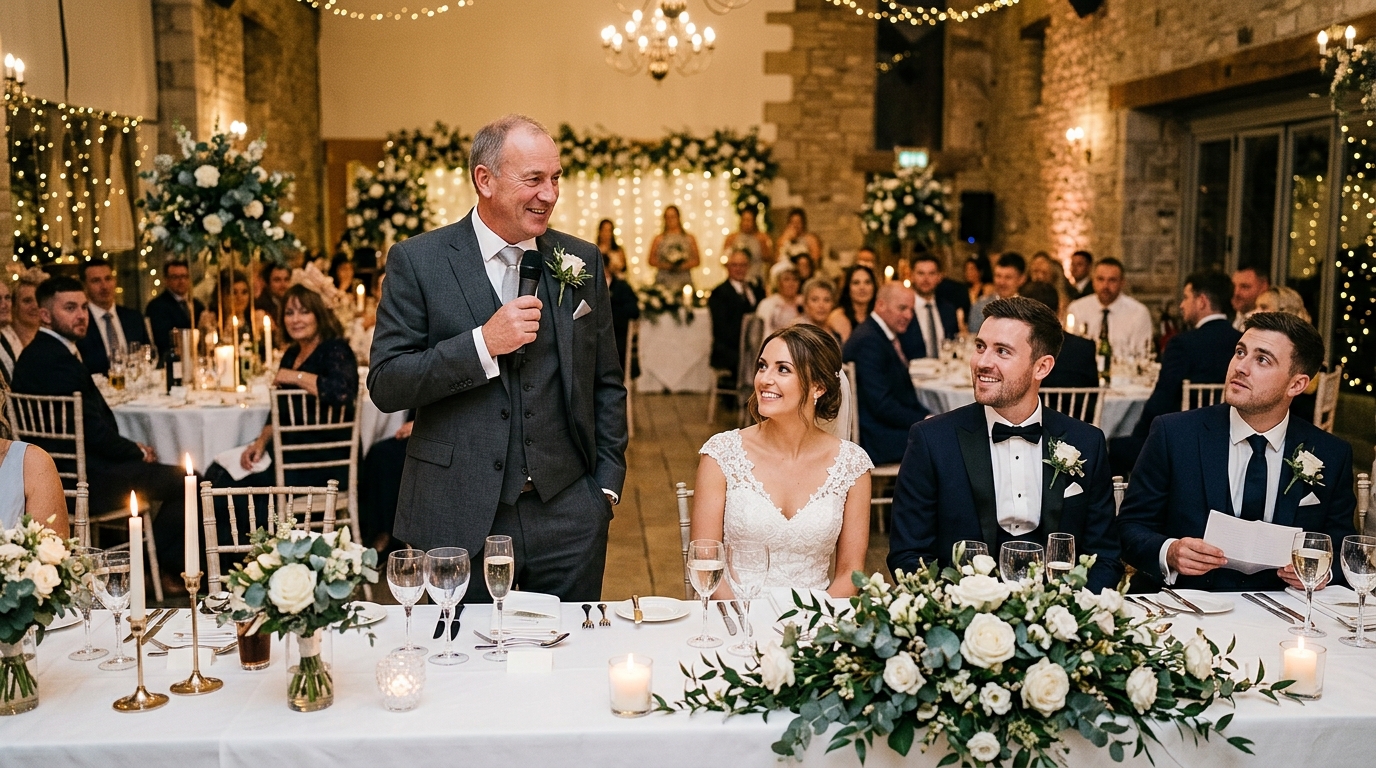
The speech portion of a UK wedding is one of the most anticipated — and most debated — parts of the day. Who speaks? In what order? How long? What do they toast? And what happens when you add a maid of honour, a bride, and a mother to the traditional lineup?
This guide covers the traditions, the modern alternatives, and the practical etiquette that keeps speeches running smoothly.
Traditional UK speech order
| Order | Speaker | Role | Toasts |
|---|---|---|---|
| 1st | Father of the bride | Welcomes guests, shares memories of his daughter, welcomes the groom into the family | Toasts the bride and groom |
| 2nd | Groom | Thanks both sets of parents, the guests, and the wedding party. Speaks about his bride | Toasts the bridesmaids |
| 3rd | Best man | Entertains, tells stories about the groom, compliments the couple | Toasts the bride and groom (or the bridesmaids) |
Total time: 15-25 minutes (5-8 minutes each).
This is the traditional format and still the most common at UK weddings. It works. The father sets the emotional tone, the groom handles the thank-yous, and the best man provides the entertainment.
Modern speech orders
There’s no law that says you must follow the traditional order. Here are popular modern alternatives:
Adding a maid of honour
| Order | Speaker |
|---|---|
| 1st | Father of the bride |
| 2nd | Groom |
| 3rd | Maid of honour |
| 4th | Best man |
The maid of honour speaks between the groom and best man, providing a balance of perspectives.
Adding a bride speech
| Order | Speaker |
|---|---|
| 1st | Father of the bride |
| 2nd | Groom and bride (joint or back-to-back) |
| 3rd | Best man |
Joint speeches work well when the couple want to coordinate their thank-yous and avoid repetition.
Mother of the bride instead of (or alongside) father
| Order | Speaker |
|---|---|
| 1st | Mother of the bride (or both parents) |
| 2nd | Groom |
| 3rd | Best man |
This is common when the father is absent, deceased, or prefers not to speak. Some couples have both parents speak — either together or one after the other.
Non-traditional lineup
| Order | Speaker |
|---|---|
| 1st | Bride’s parent(s) |
| 2nd | Bride |
| 3rd | Groom |
| 4th | Best man / maid of honour |
This puts the couple at the centre of the speeches rather than having other people speak about them.
When to schedule speeches
| Option | Pros | Cons |
|---|---|---|
| Between courses | Keeps energy up, breaks between speeches, food in stomachs | Speakers nervous throughout the meal |
| After dessert | Speakers eat and relax first, natural end to the meal | Guests are full and sleepy, may need the loo |
| Before the meal | Gets it over with, speakers relax for the rest | Guests listen on empty stomachs, low energy |
| After the first dance | Evening guests hear them, more relaxed atmosphere | Unusual, may disrupt the party flow |
Most popular: After the main course or between main course and dessert.
Toast etiquette

How to give a toast
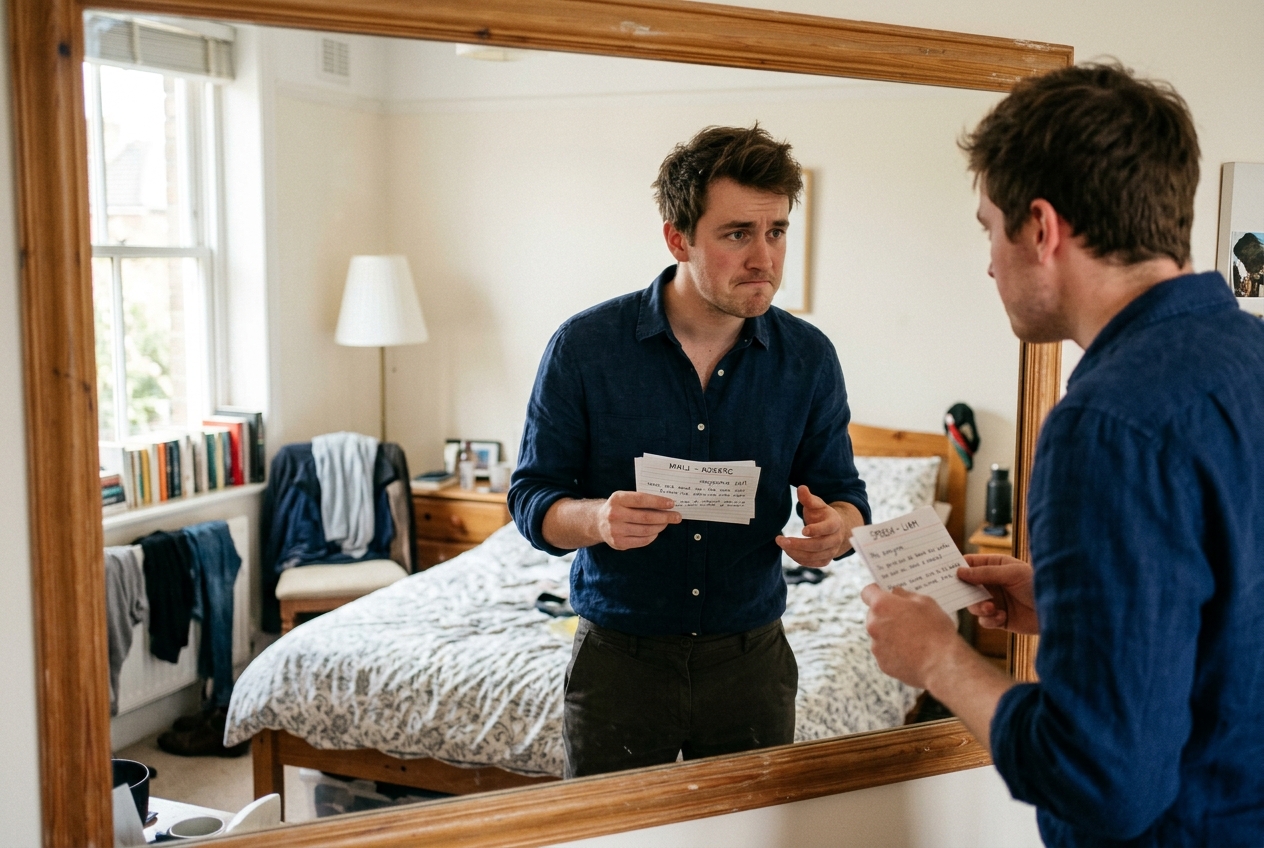
- Stand up. Always stand when giving a toast.
- Signal the room. “Please stand” or “Please raise your glasses” — be clear about what you’re asking.
- Name who you’re toasting. “To [bride] and [groom]” or “To the bridesmaids.”
- Wait for the response. The room repeats the toast and drinks.
- Sit down. Don’t add a second toast or an afterthought. One toast, one sit-down.
How to receive a toast
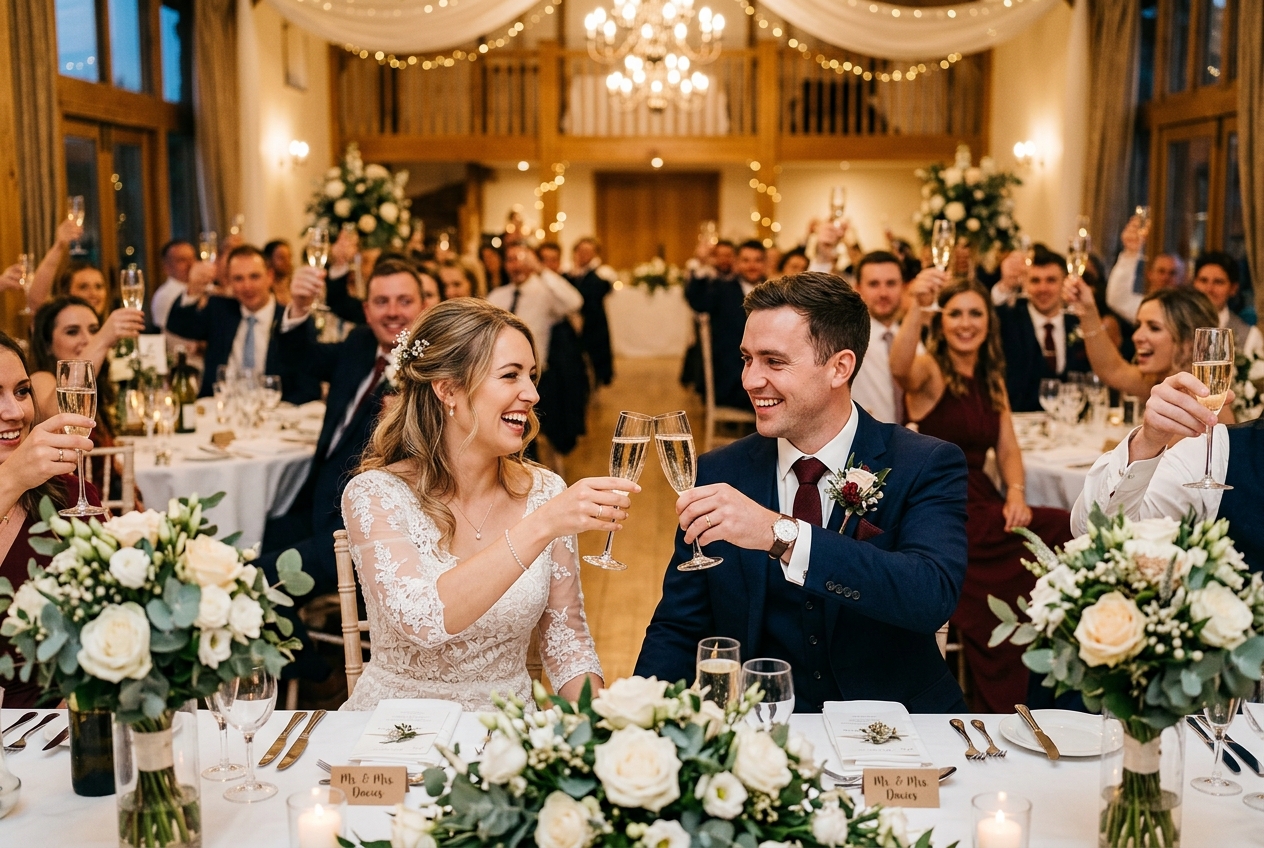
If you’re being toasted: stay seated, don’t drink. The toast is to you — drinking to yourself is considered bad form. Smile, nod, and mouth “thank you.” Stand up only after the toast is complete.
Who toasts whom
| Speaker | Traditional Toast |
|---|---|
| Father of the bride | ”To the bride and groom” |
| Groom | ”To the bridesmaids” |
| Best man | ”To the bride and groom” |
| Maid of honour | ”To the bride and groom” or “To [bride]“ |
| Bride | ”To the guests” or “To my husband/wife” |
Tip: Not every speech needs a formal toast. If you have 4-5 speakers, have 2-3 give toasts and the others simply close their speech without one. Too many toasts (“please raise your glasses… again… and again…”) loses impact.
Timing and coordination
Total speech time
Keep total speech time under 45 minutes. Beyond that, even the most engaged audience starts to drift.
| Speeches | Target Time Each | Total |
|---|---|---|
| 3 speeches | 5-7 minutes | 15-21 minutes |
| 4 speeches | 4-6 minutes | 16-24 minutes |
| 5 speeches | 3-5 minutes | 15-25 minutes |
More speakers means shorter speeches. This is a hard rule. If you have 5 speakers at 7 minutes each, that’s 35 minutes — too long.
Coordinating speakers
Agree the order 2-4 weeks before the wedding. Share it with:
- The MC or toastmaster (they introduce each speaker)
- The venue coordinator (they manage the room transitions)
- Each speaker (so they know when they’re up)
- The photographer and videographer (so they’re in position)
Avoiding repetition
The biggest problem with multiple speeches is repetition — three speakers all thanking the same people, all telling stories about the same holiday, all using the same closing quote.
Solution: Have speakers share their outlines (not full scripts) 1-2 weeks before. A quick group chat message — “I’m covering: our university days, the proposal, and a toast to the couple” — prevents overlap.
Special situations
Same-sex weddings
There’s no “bride’s father” or “groom’s speech” template. Choose speakers based on who wants to speak and who the couple want to hear from. The structure works the same — just swap the labels.
Divorced parents
If both parents want to speak, they can speak separately. If the relationship is strained, separate them in the running order (don’t have them back-to-back). The MC can manage transitions smoothly.
Absent speakers
If someone important can’t attend (illness, distance, bereavement), they can pre-record a video message to play during the speeches. Or another speaker can read a short message on their behalf.
Children speaking
Children’s speeches are charming but unpredictable. Keep them very short (under 1 minute) and have a backup plan if they freeze.
Further reading
- Father of the Bride Speech — the traditional opener
- Groom Speech Examples — the thank-you speech
- Best Man Speech Examples — the entertainment
- Maid of Honour Speech — the modern addition
- How to Write a Wedding Speech — the full writing guide
- Wedding Day Timeline — where speeches fit in the day
Frequently asked questions
What is the traditional wedding speech order in the UK?
The traditional UK order is: (1) Father of the bride — welcomes guests and toasts the couple, (2) Groom — thanks everyone and toasts the bridesmaids, (3) Best man — entertains, gently roasts the groom, and toasts the couple or bridesmaids. This order is a tradition, not a rule — you can change it to suit your wedding.
Who gives a toast at a wedding?
In the traditional format, the father of the bride toasts the couple, the groom toasts the bridesmaids, and the best man toasts the couple. In modern weddings, any speaker can give a toast — the key is that only one person at a time asks the room to raise their glasses. Having every speaker give a toast dilutes the impact.
When should speeches happen at a wedding?
After the wedding breakfast (meal) is the most common time. Speeches between courses keep energy up. Speeches after dessert let speakers eat first and relax. Some couples schedule speeches before the meal to 'get them out of the way' — this works well for nervous speakers but means guests listen on empty stomachs.
How many speeches should there be at a wedding?
Three is traditional (father of bride, groom, best man). Four or five is increasingly common (adding maid of honour and/or mother). More than five risks speech fatigue — even great speeches lose impact after 45 minutes of continuous listening. If you have more people wanting to speak, consider spreading speeches across the day.