Groom Speech: Examples & How to Write One
Key Takeaways
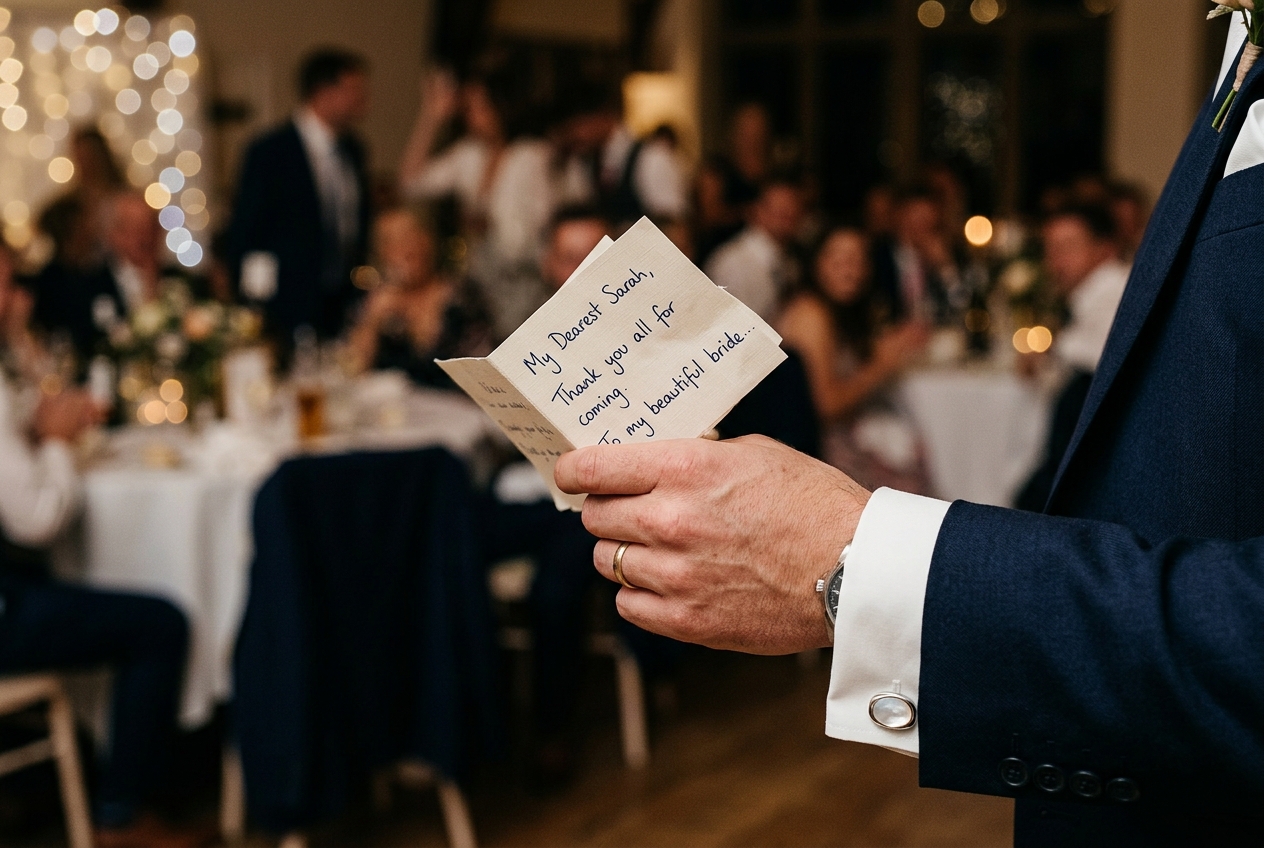
- The groom traditionally speaks second — after the father of the bride and before the best man
- Your speech has two jobs: thank the people who made today happen, and tell your partner why you love them
- Aim for 5-7 minutes — enough to thank everyone properly without losing the room
- The most powerful moment is when you speak directly to your partner — look at them, not the crowd
- You don't have to be funny — sincere and brief beats long and forced every time
The groom’s speech is the most structured of the three traditional speeches — you have a list of people to thank, gifts to give, and a partner to address. That’s actually an advantage. The structure gives you a framework, so you’re never staring at a blank page wondering what to say.
Your speech doesn’t need to compete with the best man’s jokes or the father of the bride’s emotion. It needs to be you: grateful, genuine, and briefly entertaining.
The structure
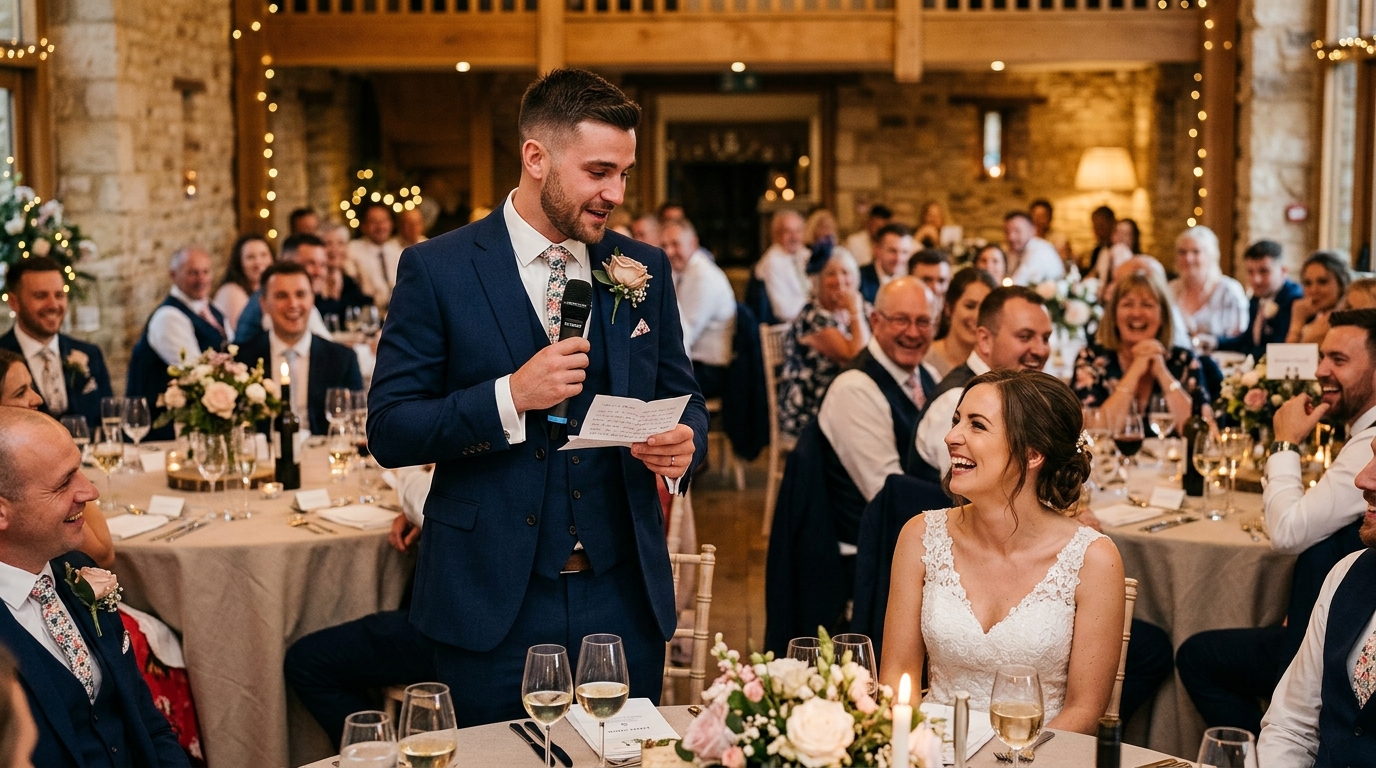
1. Thank the father of the bride (30 seconds)
Respond to his speech. Thank him for his words and, if appropriate, for welcoming you into the family.
“Thank you, [father’s name], for those incredibly kind words — and for not telling the story about the barbecue. I owe you one.”
2. Thank both sets of parents (1 minute)
Thank your in-laws for raising your partner and for their support with the wedding. Thank your own parents for everything they’ve done.
“To [bride]‘s parents — thank you for raising the most extraordinary person I’ve ever met, and for welcoming me into your family from day one. To my own mum and dad — thank you for everything. Not just today, but for the 30 years of patience, support, and questionable cooking that got me here.”
3. Thank the guests (30 seconds)
Brief and warm. Acknowledge anyone who’s travelled a long way.
4. Thank the wedding party (1 minute)
Thank the bridesmaids for looking after your partner today. Thank the groomsmen and best man for looking after you. If you’re giving gifts, this is the moment.
“To the bridesmaids — you look absolutely beautiful today, and I know you’ve done an incredible job keeping [bride] calm this morning. These are for you. [Hand over gifts.] To the groomsmen and [best man] — thank you for everything. [Best man], I’m already dreading your speech, which is why I’m saying nice things about you now.”
5. Talk about your partner (2-3 minutes)
This is the emotional centre. Speak directly to your partner. Tell them what they mean to you, when you knew, and why today matters.
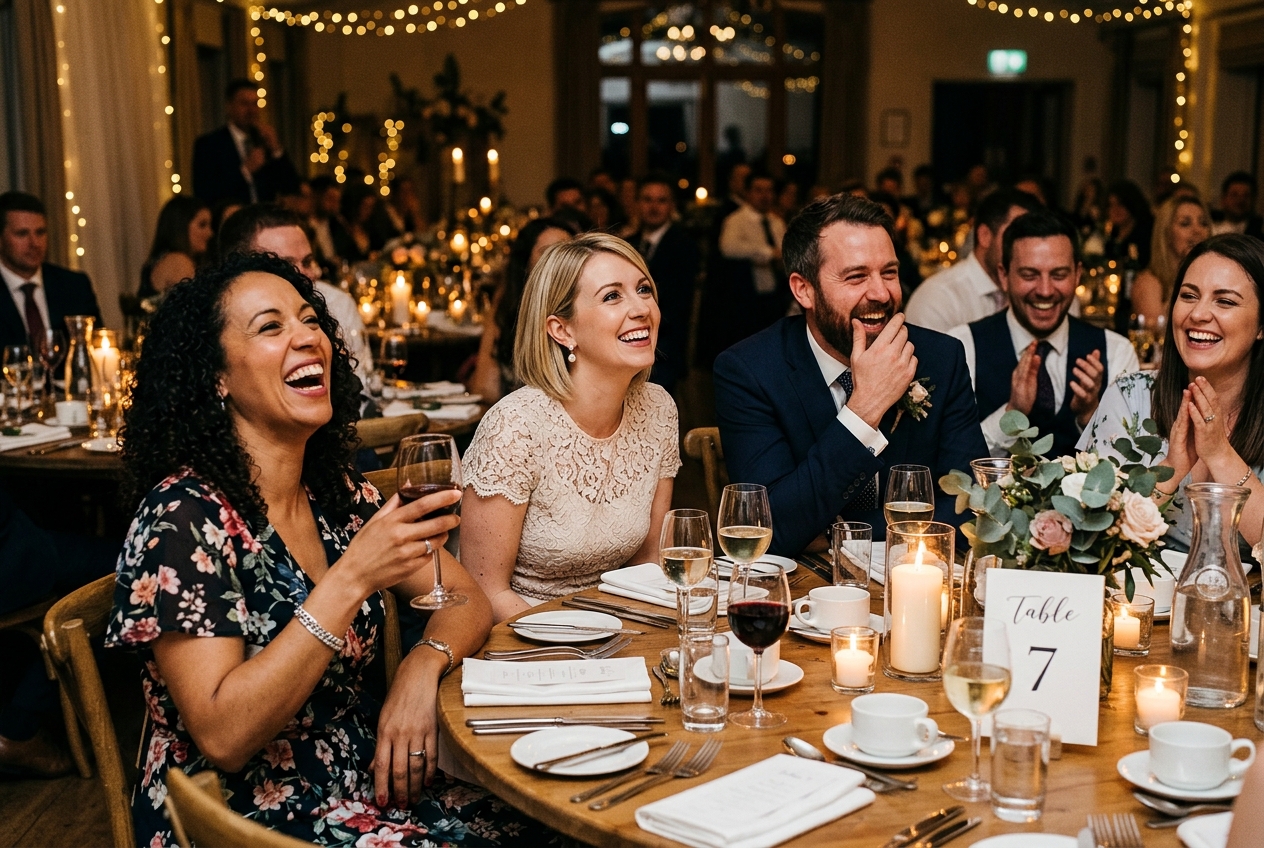
“[Bride], I want to talk to you for a moment. I’ve spent three weeks trying to find the right words, and I’ve come to the conclusion that the right words don’t exist. So I’ll use the simple ones. You make me better. You make me braver. You make me laugh every single day. And marrying you today is the easiest decision I’ve ever made.”
6. Toast (15 seconds)
Toast your new spouse, the guests, or absent friends.
“Please raise your glasses. To my wife/husband/partner — I can’t believe I get to say that. To [bride].”
Example speech: Warm and balanced (6 minutes)

“Thank you, [father of bride], for those wonderful words — and for not making me arm-wrestle for [bride]‘s hand. I wouldn’t have won.
I want to start by thanking everyone for being here today. Some of you have come from the other end of the country, and [uncle] has come from New Zealand, which we’re fairly sure is the longest anyone has ever travelled to hear me speak. Thank you all — it means more than you know.
To [bride]‘s parents — [names] — thank you for raising this woman, for trusting me with her, and for always making me feel like part of the family. To my own parents — thank you for everything. I know I don’t say it enough. You’ve given me every good thing I have, including the slightly irrational confidence to think I deserved someone like [bride].
To the bridesmaids — you’ve been incredible. You look stunning today, and I know the amount of work you’ve put in behind the scenes. These are a small thank you. [Gifts.] To my groomsmen — lads, thank you for getting me here in one piece. And [best man], whatever you’re about to say, I’d like the record to show that I deny everything.
Now, [bride]. I’ve been dreading this bit — not because I don’t know what to say, but because I know I’ll mess it up. So I’ll keep it simple.
When we met, I was living on a diet of Deliveroo and questionable decisions. You introduced me to vegetables, alarm clocks, and the concept of a savings account. You didn’t change who I am — you made me want to change. There’s a difference, and it matters.
Last week, while we were doing the final seating plan at 11pm and I was losing the will to live, you looked at me and said, ‘This is the worst part. The rest is going to be wonderful.’ And standing here now, looking at you — you were absolutely right.
Ladies and gentlemen, please raise your glasses. To my wife — the best decision I ever made. To [bride].”
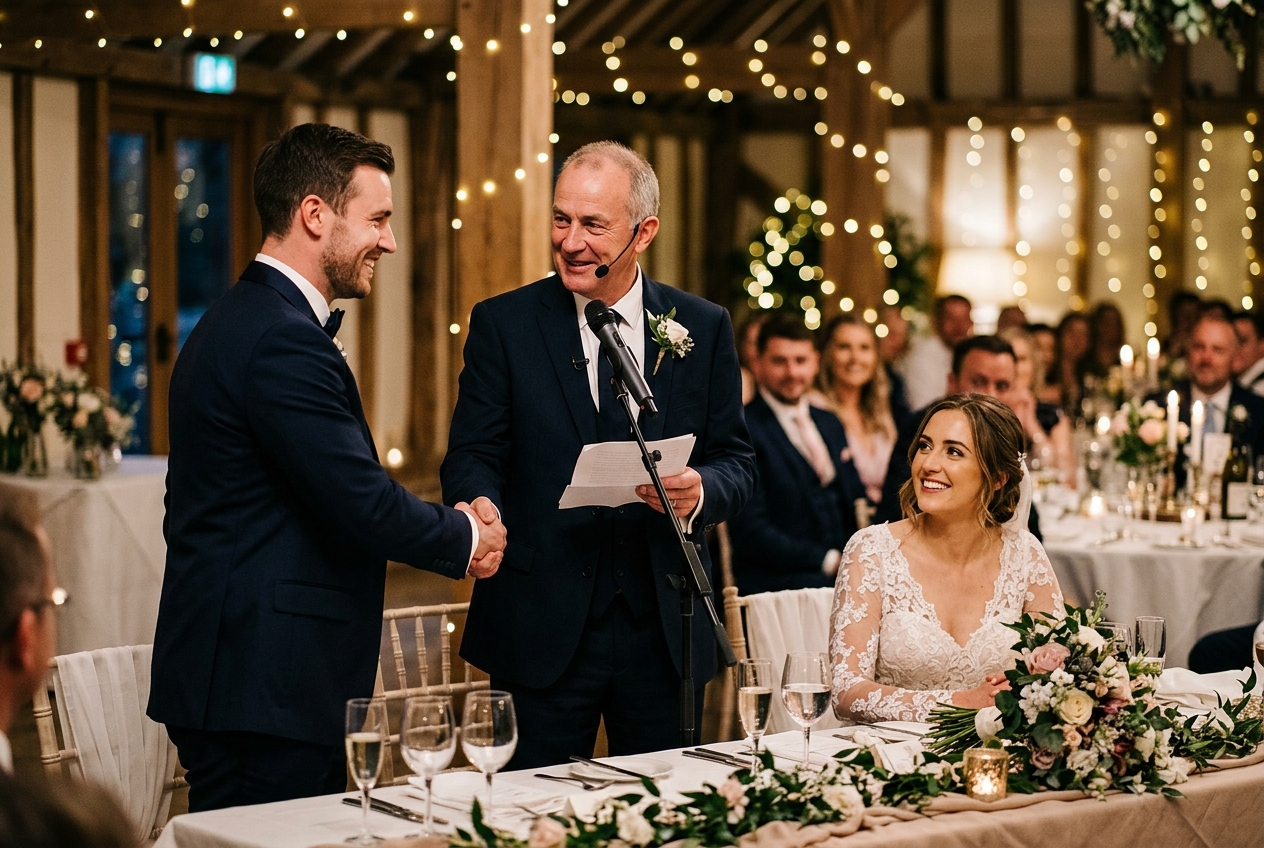
Tips for a great groom speech
Don’t rush the thank-yous. They’re not admin — they’re part of the speech. Make each thank-you specific and genuine, not a roll call.
Speak to your partner directly. The most powerful moment in any groom’s speech is when you turn away from the room and talk directly to your new spouse. The audience watches the reaction. That’s the moment nobody forgets.
Keep it your voice. If you’re naturally funny, be funny. If you’re naturally quiet, be quiet and sincere. The worst groom speeches are the ones where someone tries to be someone they’re not.
Use cue cards, not a full script. Bullet points keep you on track while allowing natural delivery. A full script leads to reading, which kills eye contact and emotion.
Don’t drink until after. One drink to settle nerves. Celebrate after.
Further reading
- How to Write a Wedding Speech — full guide for all speakers
- Father of the Bride Speech — the speech before yours
- Best Man Speech Examples — the speech after yours
- Wedding Toast Etiquette — the running order explained
- Wedding Day Timeline — when speeches happen
Frequently asked questions
How long should a groom's speech be?
5-7 minutes (700-1,000 words). The groom's speech is typically the middle speech of three, so it shouldn't be the longest. Spend 2-3 minutes on thank-yous and 2-3 minutes on your partner and the relationship. Keep it balanced between gratitude and emotion.
Who does the groom thank in his speech?
Thank (in order): both sets of parents, the guests for attending, the wedding party (bridesmaids, groomsmen, best man, ushers), anyone who helped with planning (wedding planner, specific family members), and your partner. The thank-yous are the structure — the personal bits are the heart.
Does the groom give gifts during his speech?
Traditionally, the groom presents gifts to the bridesmaids, best man, and both mothers during or after the speech. This is optional and can be done privately instead. If you do it during the speech, keep it brief — hand over the gifts, say a quick thank-you, and move on. Don't unwrap each one.
Should the groom's speech be funny?
It doesn't have to be. The best man handles the comedy. The groom's job is to be genuine, thankful, and emotional. A few natural laughs are great, but don't force jokes if that's not your style. The most memorable groom speeches are the sincere ones.