Getting Married in Scotland: UK Legal Differences
Key Takeaways
- Scotland has legally recognised humanist marriages since 2005 — England and Wales only introduced a process to do so through the Marriages and Civil Partnerships Bill from 2025
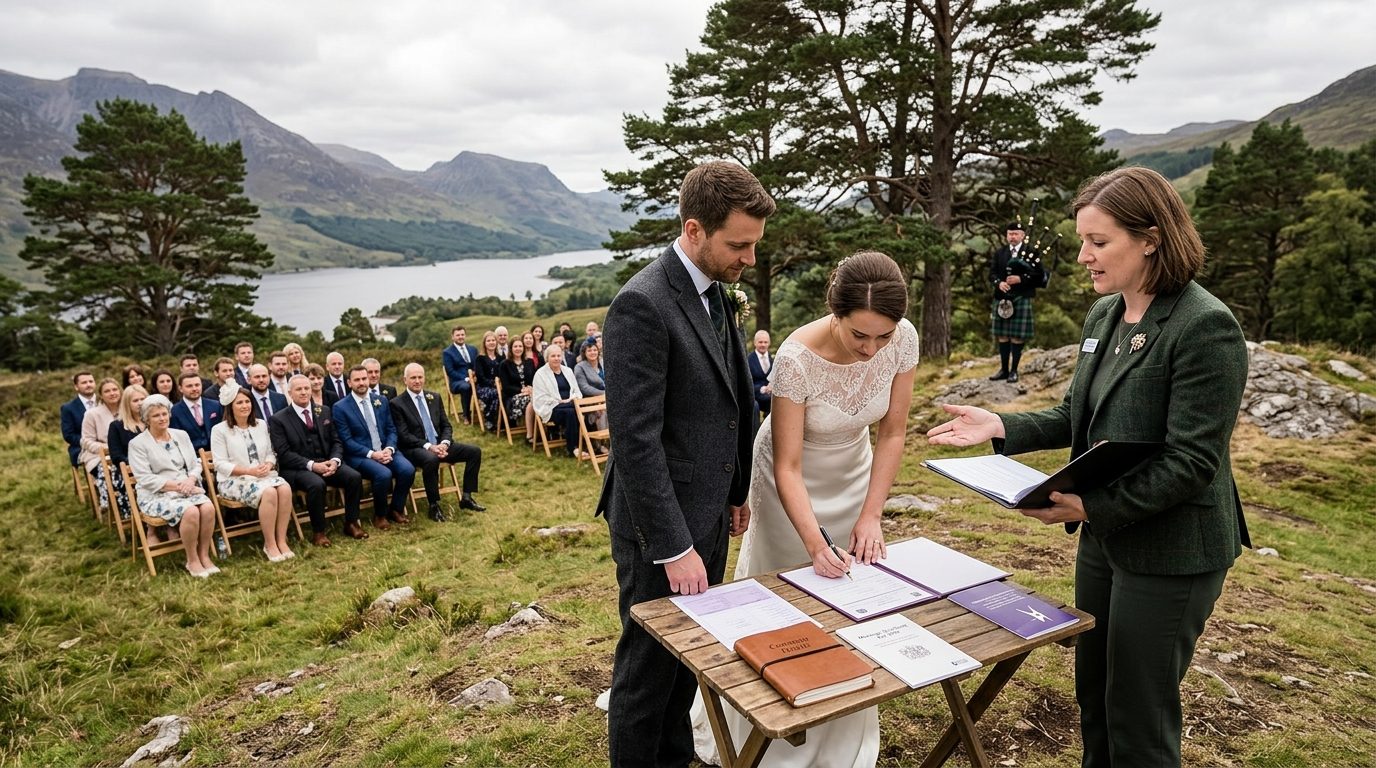
- In Scotland, any location can legally host a marriage ceremony — outdoors, in a private home, on a beach, or in a castle that is not licensed
- Scottish marriage requires a Marriage Notice submitted to the local registrar at least 29 days before the ceremony
- England-based couples can marry in Scotland without being resident there — there is no residency requirement
- The registrar in Scotland issues the Marriage Schedule before the ceremony; it must be signed by the couple, two witnesses, and the celebrant on the day
Key difference 1: venue freedom
In England and Wales, a marriage ceremony must take place at a licensed venue. Outdoor weddings in England and Wales have limited legal recognition — the 2022 rule changes expanded the scope but the venue must still be licensed or approved by local authority.
In Scotland, there is no venue licensing requirement. A legal marriage can take place:
- Outdoors — on a beach, in a field, at a loch, in a forest
- In a private home or garden
- In a castle, country house, or historical building that is not licensed
- In a pub, restaurant, or event space
The only practical requirement is that the Marriage Schedule can be signed at the ceremony location. The ceremony must be a proper ceremony (not just signing a form) conducted by an authorised celebrant or registrar.
This is why Scottish destinations like Glencoe, the Isle of Skye, and Highland estates attract couples from across the UK and internationally — the visual drama of these locations is legally accessible for weddings in a way that comparable English landscapes are not.
Key difference 2: humanist marriages
Scotland introduced legally recognised humanist marriages in 2005, performed by celebrants registered with Humanist Society Scotland. A humanist ceremony in Scotland is fully legally binding without any additional civil ceremony.
In England and Wales, humanist ceremonies have historically not been legally recognised. A separate civil ceremony (at a register office or licensed venue) is required to make the marriage legal. This changed with the Marriages and Civil Partnerships (Approved Premises) (Amendment) (Humanist Marriages) Regulations, but implementation is gradual and not fully in place as of 2026. For certainty, check the current status with the General Register Office for England and Wales.
For couples who want a humanist ceremony without a separate civil ceremony, marrying in Scotland is currently the clearest legal path in the UK. Humanist weddings in England and Wales require a separate legal component.
Key difference 3: the notice process
Scotland
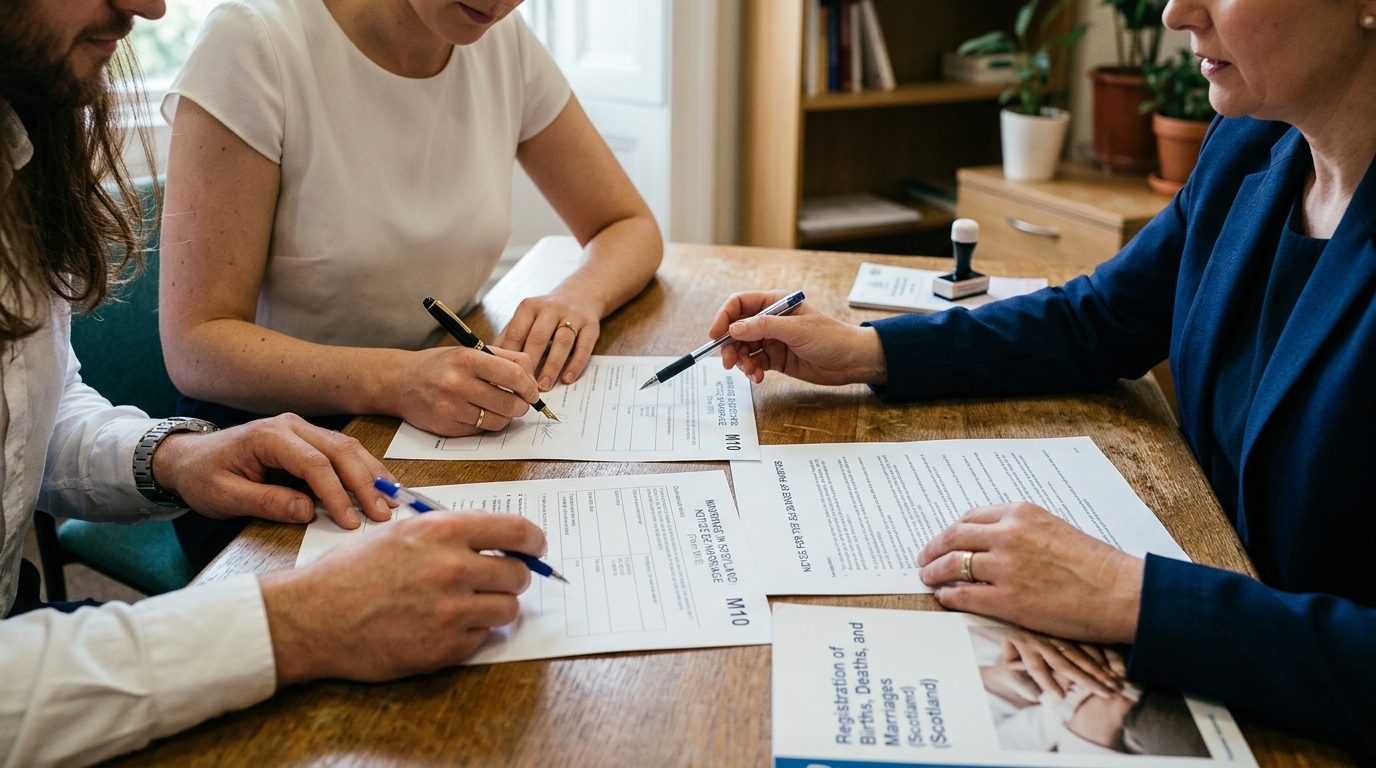
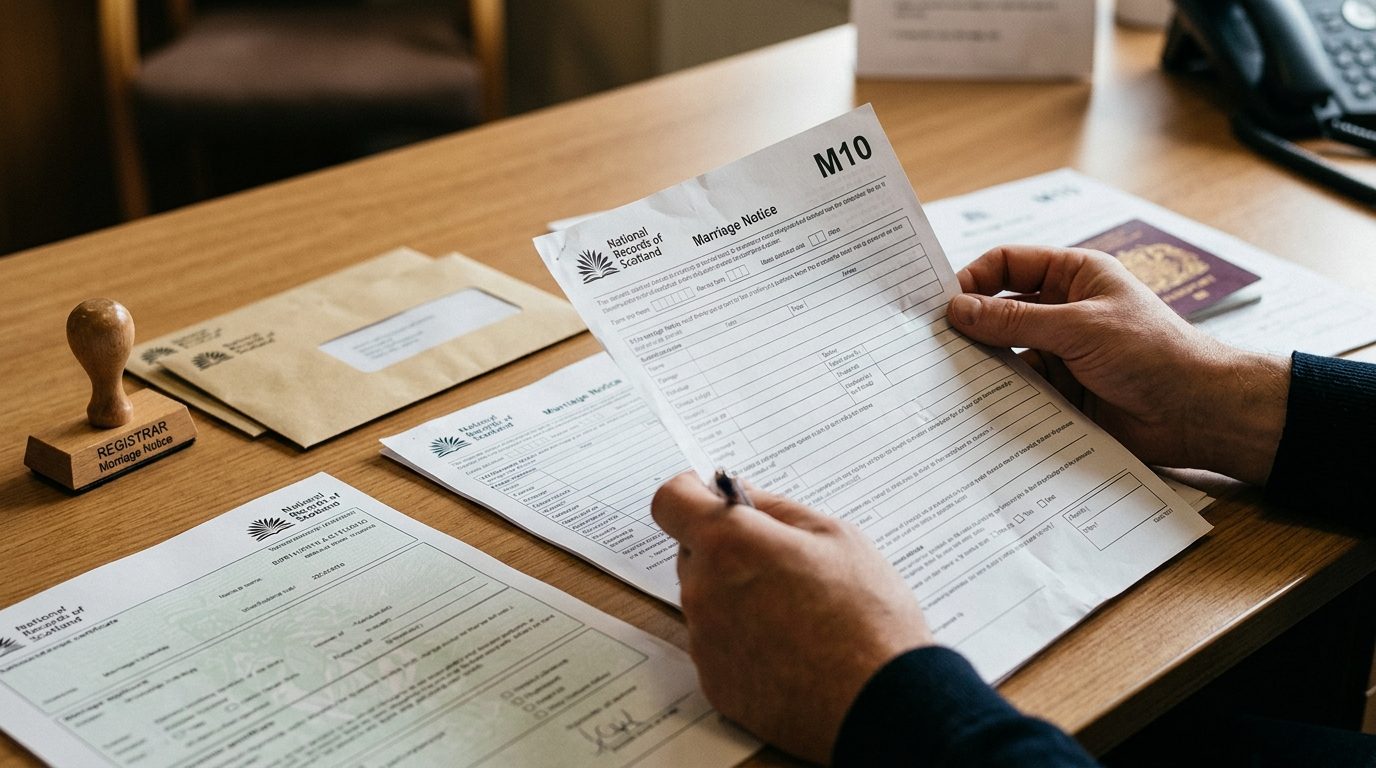
- Complete a Marriage Notice form (form M10) for the registrar in the district where the ceremony will take place
- Submit at least 29 days before the ceremony
- Both parties can submit notices to the same or different registrars — if you live in different districts, one party can submit to their local registrar and that registrar communicates with the ceremony district registrar
- Submit with: passport or birth certificate, proof of any previous marriage dissolution, the fee (varies by registration district, typically £15-£30 per person)
- The registrar checks for any impediment and issues a Marriage Schedule approximately 2 weeks before the ceremony
- The Marriage Schedule is collected before the ceremony or posted to the couple
On the wedding day:
- The signed Marriage Schedule must be present throughout the ceremony
- Both parties, two witnesses (aged 16+), and the celebrant/registrar all sign the Schedule at the ceremony
- The signed Schedule must be returned to the issuing registrar within 3 days
England and Wales (for comparison)
- Give Notice at the register office in your district
- At least 28 days before (longer if one party is a non-EEA national)
- The Notice is displayed publicly for 28 days
- After the waiting period, the Certificate of No Impediment is issued
- A civil ceremony at a licensed venue or register office makes the marriage legal
The Scottish process is slightly faster (29 days vs 28 days, but without the public display period) and more integrated with the ceremony-day process.
Key difference 4: celebrant types
Scotland authorises a broader range of celebrants than England and Wales:
| Celebrant type | Scotland | England and Wales |
|---|---|---|
| Registrar (civil) | Yes | Yes |
| Church of Scotland minister | Yes | N/A |
| Roman Catholic priest | Yes | Yes (approved premises) |
| Other approved religious bodies | Yes (many) | Yes (licensed venues only) |
| Humanist celebrant | Yes (Humanist Society Scotland) | Not yet fully in force |
| Independent / secular celebrant | No — must be from an approved body | No |
Note: a secular, independent celebrant who is not registered with an approved body cannot conduct a legally binding marriage in either Scotland or England. The ceremony would be a symbolic ceremony only, requiring a separate civil registration.
Practical steps for an English couple marrying in Scotland
-
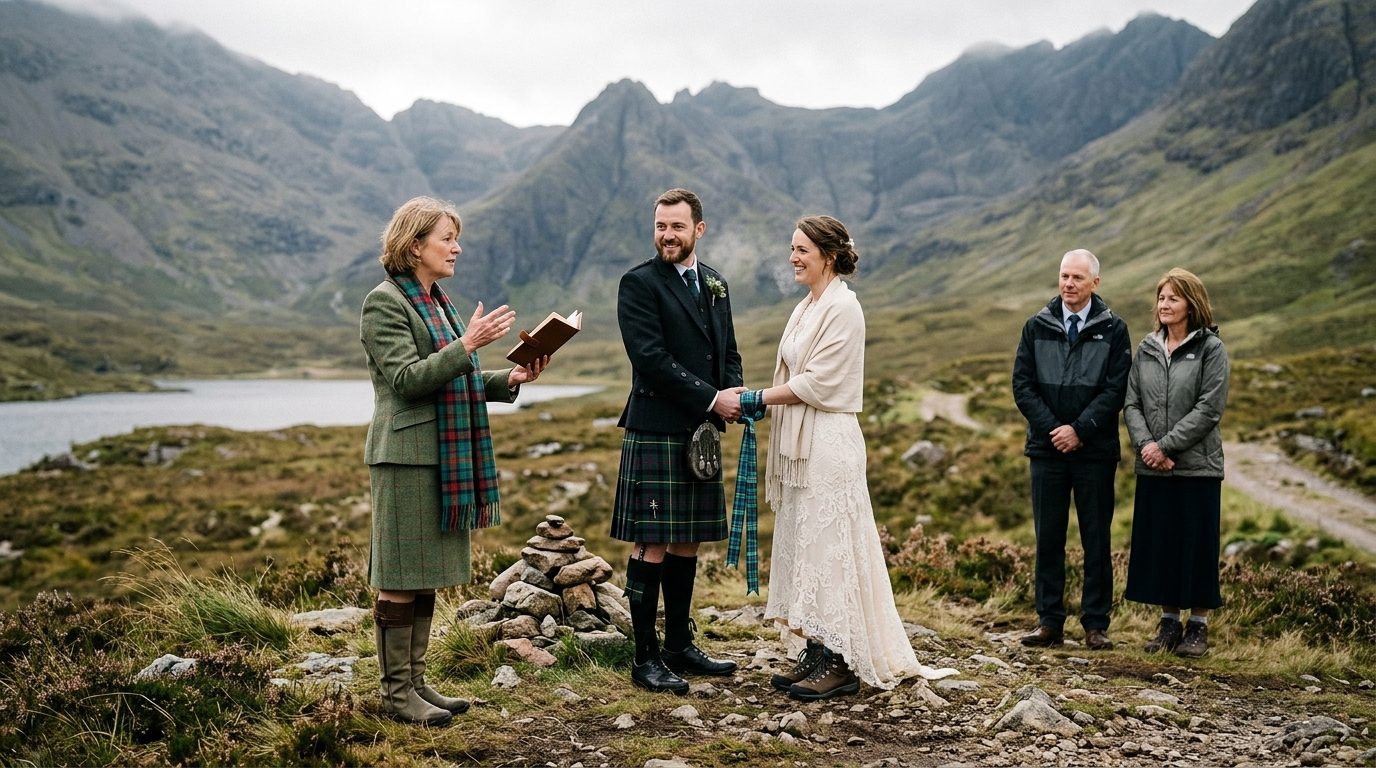
Choose your location and date. In Scotland, this is genuinely open — you are not constrained to licensed venues.
-
Book your celebrant. If you want a humanist ceremony, book a Humanist Society Scotland-registered celebrant. If you want a civil ceremony, book a registrar from the National Records of Scotland.
-
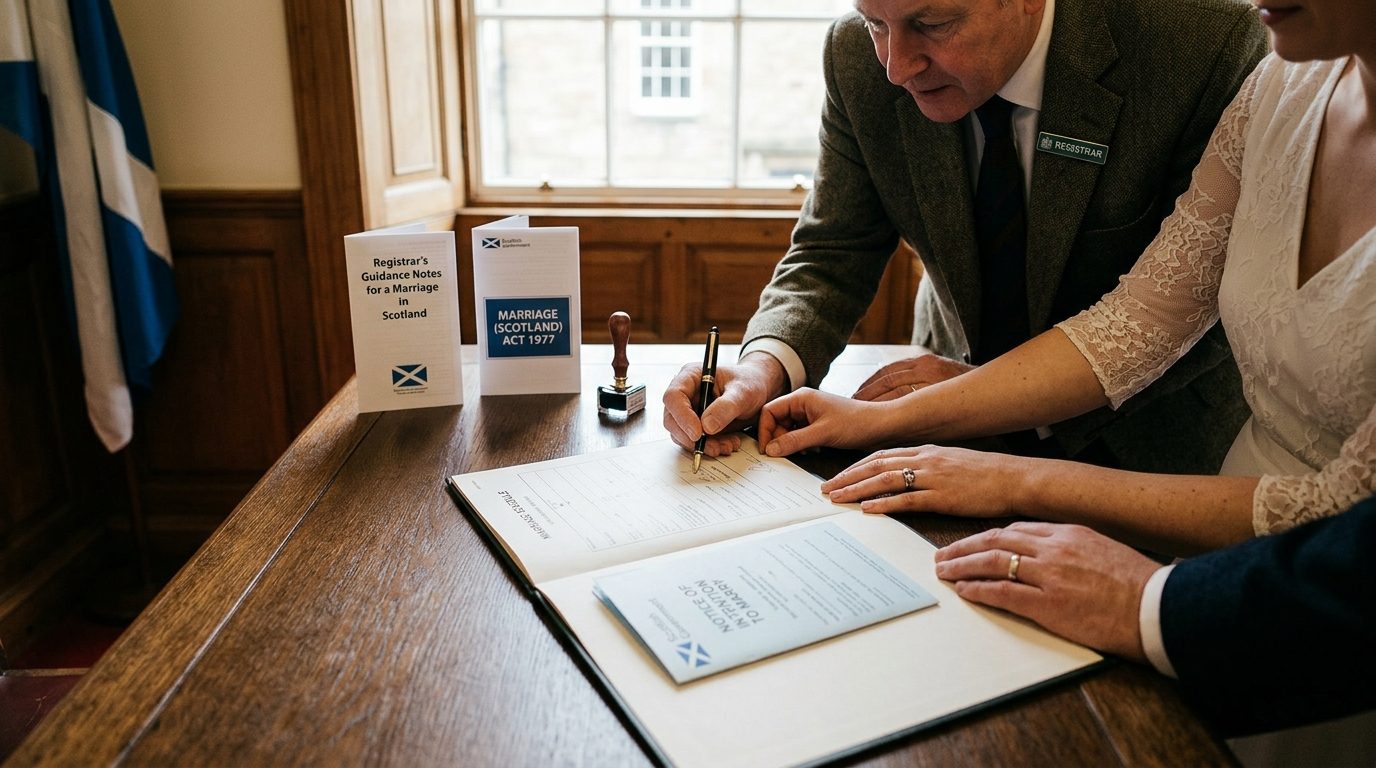
Submit the Marriage Notice to the registration district where the ceremony will take place. Do this at least 29 days before. You can do this by post or in person.
-
Receive and collect the Marriage Schedule approximately 2 weeks before the ceremony.
-
On the day: the celebrant conducts the ceremony. All parties sign the Marriage Schedule. Two witnesses (aged 16+) must be present.
-
Return the Marriage Schedule within 3 days. Your registrar will typically post the Marriage Certificate to you within a few weeks.
Gretna Green: the historical context
Gretna Green’s reputation as a wedding destination comes from a historical difference in English and Scottish law. Before 1929, Scottish law allowed anyone over 16 to marry without parental consent, while English law required parental consent until age 21. English couples who eloped to Scotland could marry quickly at the border in Gretna.
Today, the minimum marriage age in both Scotland and England is 16, and parental consent is not required. Gretna Green still hosts weddings as a destination and tradition, but the legal urgency that created its reputation no longer applies. The village retains multiple licensed venues and facilities specifically for weddings.
Scottish wedding traditions
While legal differences drive some decisions, there are also cultural traditions associated with Scottish weddings that couples from elsewhere in the UK may want to incorporate:
- Luckenbooth brooch: A traditional Scottish brooch exchanged between couples, often given by the groom to the bride.
- Handfasting: An ancient Celtic tradition involving binding the couple’s hands with ribbons or cords. Not a legal requirement but frequently used in Scottish humanist and outdoor ceremonies as a symbolic gesture.
- Quaich ceremony: The couple drinks from a shared two-handled cup (the quaich). A symbol of welcome, sharing, and trust.
- Kilts: Highland dress is not required at a Scottish wedding but widely worn, especially by Scottish grooms and wedding parties.
Related articles
- Are Humanist Weddings Legally Recognised in England and Wales?
- Outdoor Wedding Ceremonies in England and Wales: The 2022 Rule Change
- Legal Marriage Reform UK 2026: What Engaged Couples Need to Know
- Civil Partnership vs Marriage UK 2026: Legal and Tax Differences
- Father of the Groom UK Style Guide 2026
Frequently asked questions
Can I marry anywhere in Scotland legally?
Yes. Scottish law allows marriage to take place at any location — outdoors, in a private home, in a castle, or on a beach. There is no requirement for the location to be licensed or approved, unlike in England and Wales where the venue must hold a marriage licence. The flexibility of Scottish venue law is one of the main reasons English couples choose Scotland for their wedding.
Are humanist weddings legally recognised in Scotland?
Yes. Scotland has legally recognised humanist marriages since 2005, performed by celebrants registered with the Humanist Society Scotland. This makes Scotland one of the most progressive marriage law systems in the UK. England and Wales began a similar reform process in 2025 but full recognition is not yet in force.
Do I need to live in Scotland to get married there?
No. There is no residency requirement to marry in Scotland. Couples from anywhere in England, Wales, or other countries can marry legally in Scotland. You must submit a Marriage Notice to the registrar in the registration district where the ceremony will take place at least 29 days before the ceremony.
What is the Marriage Schedule in Scotland?
The Marriage Schedule is the legal document issued by the local registrar before the ceremony. It must be collected before the wedding day or, in some districts, is posted in advance. On the day of the ceremony, the couple, two witnesses (aged 16+), and the officiant or celebrant all sign the Marriage Schedule. The signed Schedule is then returned to the registrar within 3 days of the wedding.
How do I give notice of marriage in Scotland?
Submit a Marriage Notice to the registrar in the registration district where the ceremony will take place. This must be done at least 29 days before the ceremony. Both parties complete the form and provide identity documents (passport or birth certificate) and proof of any previous marriage dissolution. The registrar issues a Certificate of No Impediment and prepares the Marriage Schedule.
What is the minimum age to marry in Scotland?
Since 2019, the minimum age to marry in Scotland is 16, and parental consent is not required. Scotland has always had a lower age requirement than England, which is why Gretna Green became famous as a wedding destination — English couples under 21 once needed parental consent, so eloped to Scotland. Today both countries have 16 as the minimum, and parental consent is not required in either.
Can a Church of England minister marry us in Scotland?
Not as the legally recognised celebrant. Church of England clergy are not automatically authorised to conduct legal marriages in Scotland. Scottish marriages must be conducted by a registrar (civil ceremony), a minister of the Church of Scotland, a celebrant of another approved religious body, or an approved celebrant (including humanist celebrants registered with Humanist Society Scotland). An English Anglican vicar would need to be separately authorised under Scottish marriage law.