Wedding Law Reform 2026: Can You Marry Anywhere?
The government is consulting on major wedding-law reform in England and Wales. Proposals include legal weddings in private homes, on beaches and aboard some ships. Humanist and independent officiants could also conduct legal ceremonies. None of these proposals is law yet. Couples should follow current rules unless Parliament passes legislation and a commencement date is confirmed.
Key Takeaways
- The consultation closes on 24 September 2026, but the proposals are not law.
- Current civil weddings still need a register office or approved premises.
- The proposals could allow weddings in private homes, on beaches and on some ships.
- Humanist and independent officiants could conduct legal ceremonies under the proposed system.
- Plan using today's rules until legislation and a commencement date are confirmed.
Wedding law has not changed in England and Wales in 2026. A major government consultation is open, but its ideas are proposals.
The consultation closes on 24 September 2026. Parliament would still need to pass legislation before any reform could take effect.
That distinction matters if you are planning a garden, beach or humanist wedding. Do not sign contracts on the assumption that the proposed rules will apply.
Is wedding law changing in 2026?
The government intends to reform weddings law when parliamentary time allows. Its July 2026 consultation asks how the new system should work.
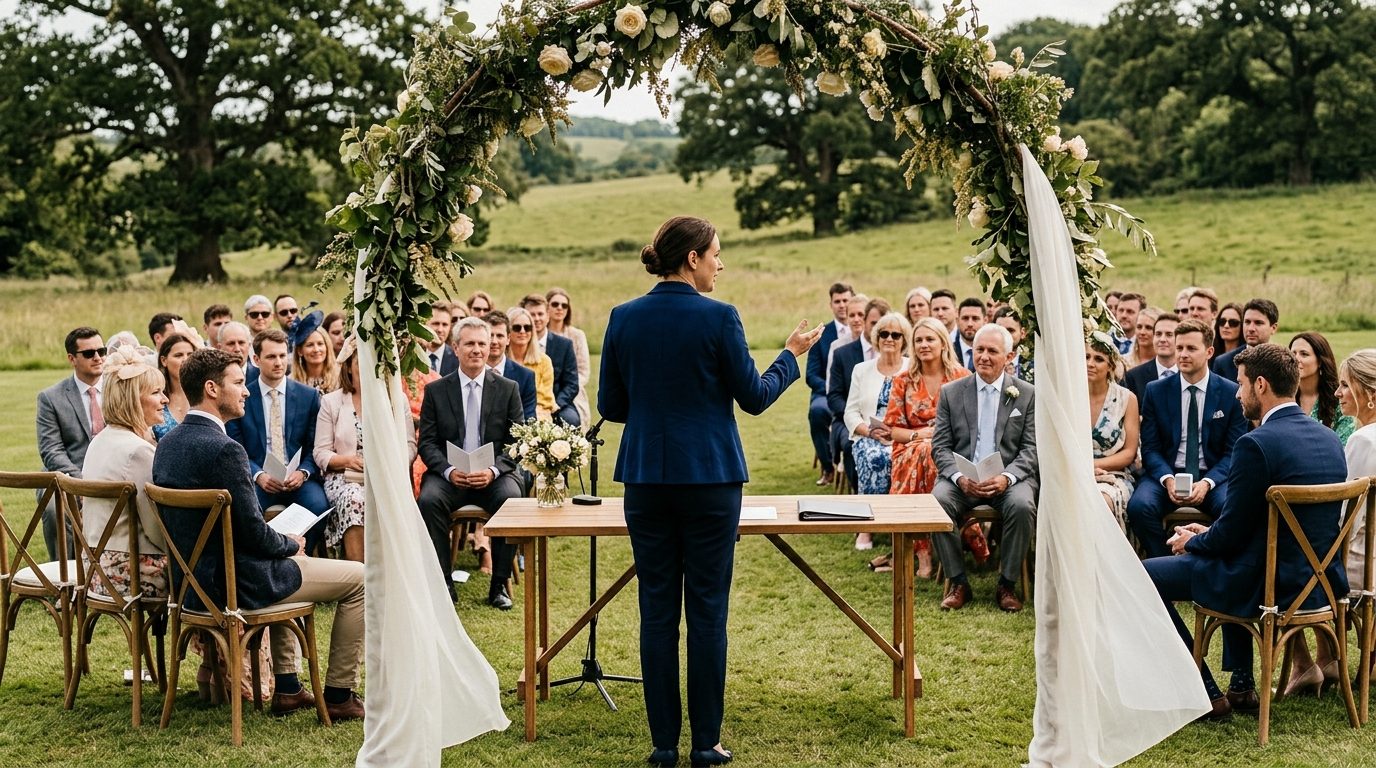
The central change would move legal responsibility away from the building. It would instead focus on the authorised person leading the ceremony.
This is called an officiant-based system. It could widen both venue choice and the types of ceremony that receive legal recognition.
The consultation follows the Law Commission’s 2022 review. That review described the current system as inconsistent, inefficient, unfair and restrictive.
However, a consultation is not an Act of Parliament. It does not alter your current booking, notice appointment or ceremony requirements.
What is the law today?
For most civil weddings in England and Wales, you can currently marry at:
- a register office; or
- a venue approved by the local council.
You need at least two witnesses. A registrar must conduct or attend the ceremony.
You must normally give notice at your local register office at least 29 days before the ceremony. The ceremony must follow within 12 months.
You must usually have lived in that registration district for the previous seven days. Different processes can apply in some immigration and Anglican cases.
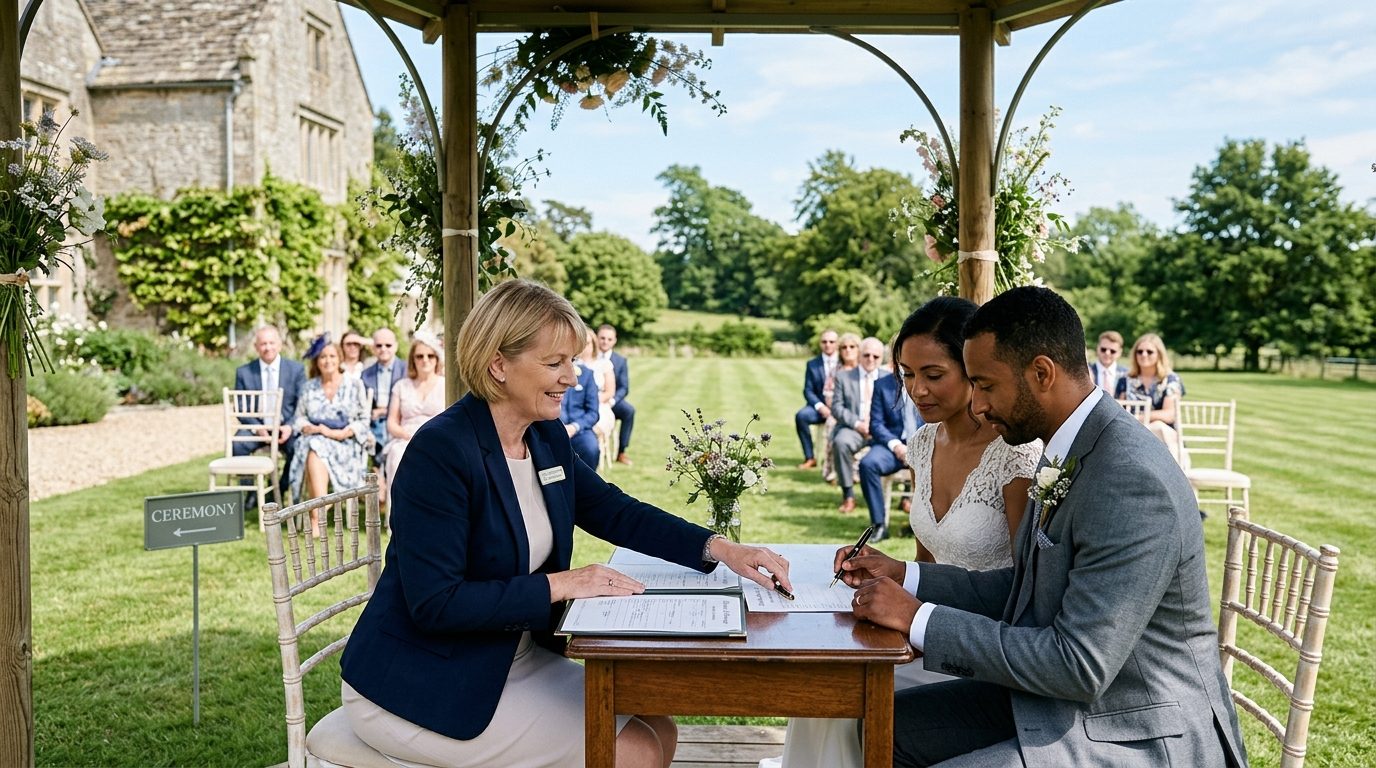
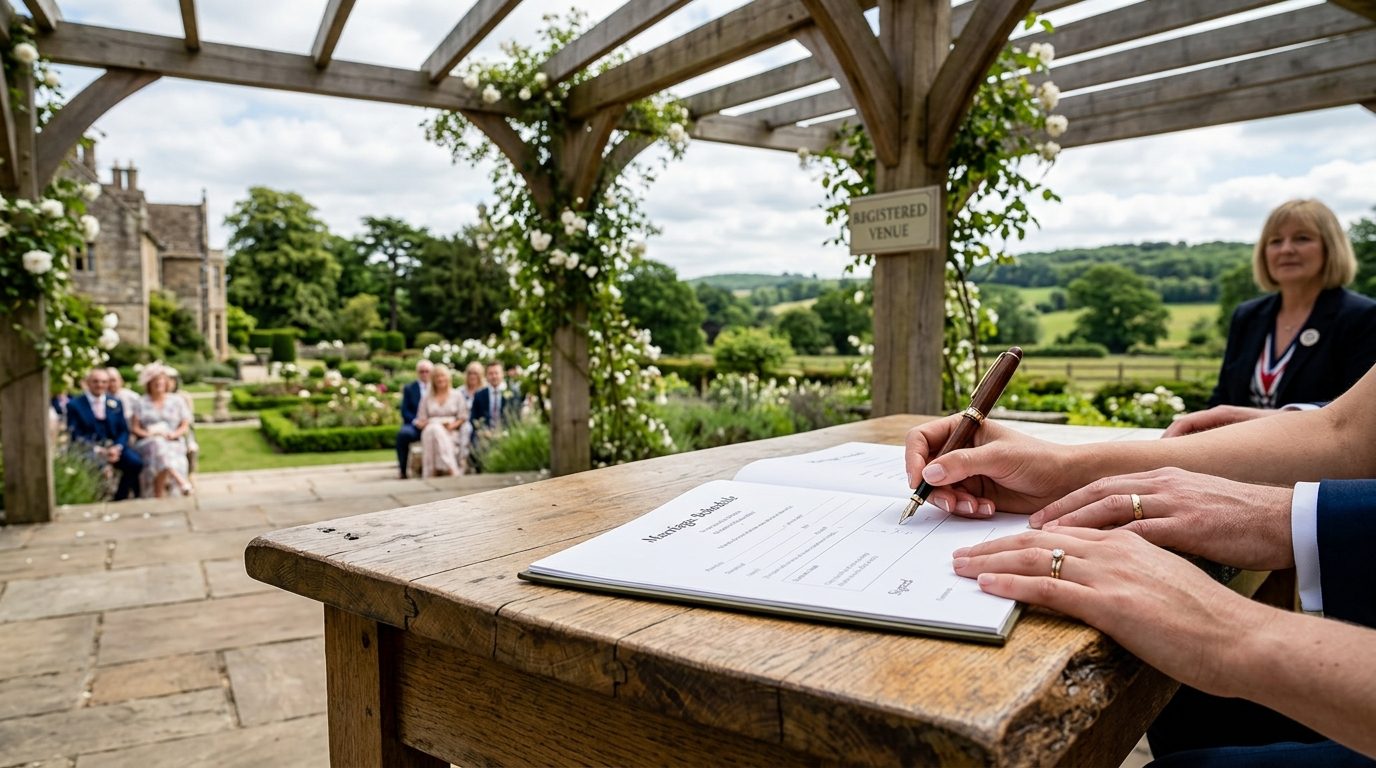
Outdoor civil ceremonies are possible at qualifying areas linked to approved premises. Ask the venue to identify the exact approved area in writing.
A lawn belonging to an approved venue is not automatically approved. A standard civil wedding cannot simply move to any garden or beach.
Our outdoor wedding ceremony guide explains the present position in more detail.
What does the government propose?
The consultation develops several linked proposals. Together, they could change who conducts a wedding, where it happens and how couples give notice.
| Part of the process | Current position | Proposal under consultation |
|---|---|---|
| Legal focus | The building and ceremony rules matter | An authorised officiant would carry legal responsibility |
| Civil wedding locations | Register offices or approved premises | A wider range of safe and dignified locations |
| Humanist ceremonies | Not independently legally binding | Authorised belief officiants could conduct legal weddings |
| Independent celebrants | Cannot create a legal marriage | Authorised independent officiants could conduct legal weddings |
| Giving notice | Usually completed in person | Administrative stage completed online |
| Safeguarding interview | Part of the present notice process | Separate compulsory in-person interviews would remain |
| Wedding notices | Displayed at register offices | Published online, with safety exemptions |
None of the right-hand column is available simply because the consultation has opened.
Could you marry in a private home or garden?
The government is minded to permit weddings in private homes, subject to safeguards. That could include a family garden.
The officiant would need to judge whether the location is safe and dignified. Further protections may apply to reduce forced, predatory or sham marriages.
This could give couples a meaningful and lower-cost option. It could also help people who find a commercial venue difficult to access.
Private-home weddings remain restricted under current law, except in limited circumstances. Plan a separate legal ceremony if your main celebration uses an unapproved home or garden.
Could you legally marry on a beach or in a forest?
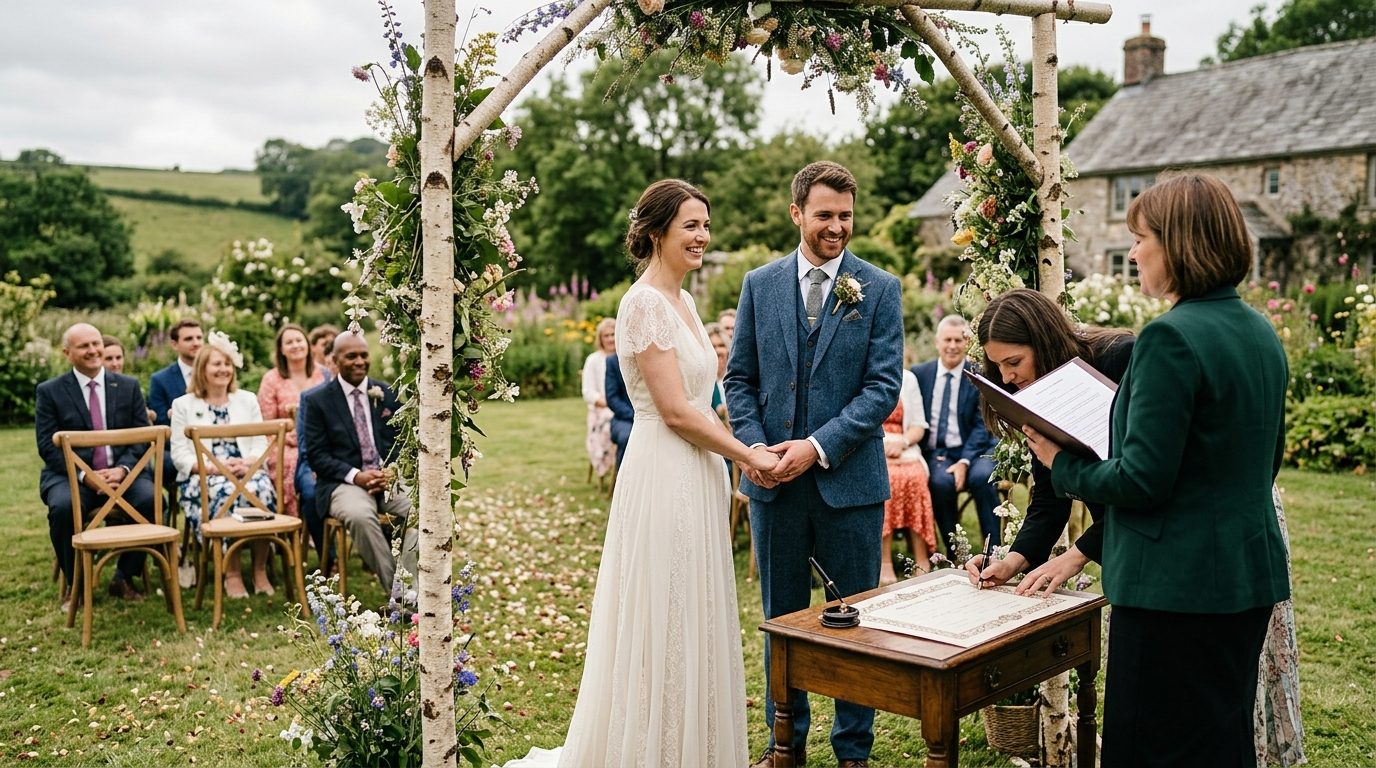
The proposed approach could allow ceremonies in a much wider range of places. The consultation specifically discusses beaches and forests.
The broad test would be safety and dignity, overseen by the officiant. Commercial venues could also seek optional pre-authorisation.
Pre-authorisation could help couples and officiants know that a regular ceremony space meets the rules. It would not recreate today’s compulsory venue-licensing system.
For now, an English or Welsh beach wedding normally needs two parts. Complete the legal marriage at an approved place, then hold a personal ceremony on the beach.
What about weddings on boats and cruise ships?
The proposals include weddings on inland waters and within territorial seas. They also cover certain UK-registered cruise ships in international waters.
A cruise-ship ceremony would need an authorised maritime officiant. The government’s preference is for a captain or another suitable deck officer.
Safety, notice, consent and registration requirements would still apply. This is not a general proposal allowing a legal wedding on any hired boat.
Could a humanist celebrant legally marry you?
Not independently under current England and Wales law. A humanist ceremony can be deeply personal, but it does not itself create the legal marriage.
The government proposes recognising authorised officiants nominated by non-religious belief organisations. That route could include humanist weddings.
It also proposes authorised independent officiants. These professionals would not act for the state or a religious or belief organisation.
Both groups would have legal duties, training and oversight. The consultation asks which organisation should act as the central regulator.
Until the law changes, couples should keep their legal arrangements separate. Read our guide to humanist wedding recognition before booking.
Would giving notice move online?
The proposed notice process has two stages.
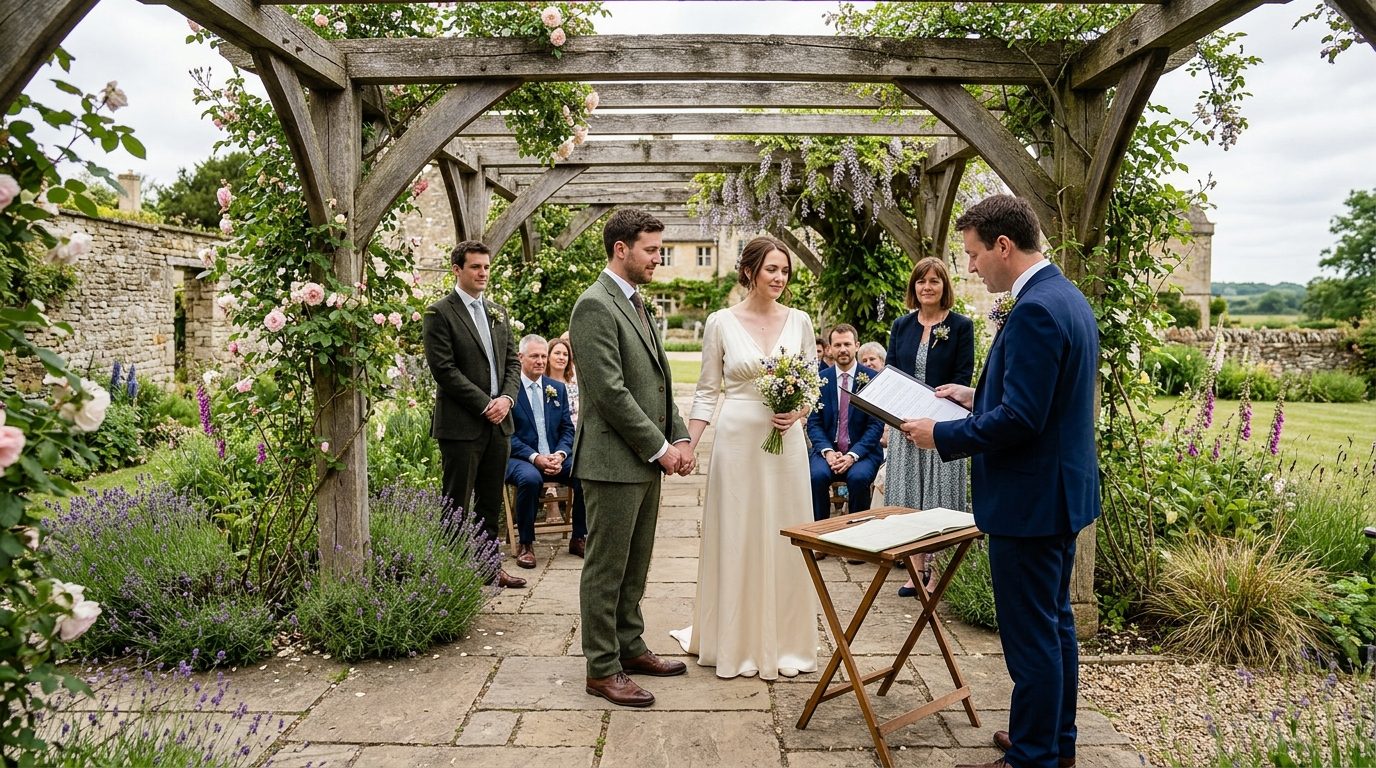
First, couples would submit information and identity documents online. A registrar would review them before the interview.
People unable to use the online service would still need another route. The government also supports removing the seven-day residence requirement.
Second, each person would attend a separate, compulsory interview with a registrar. The interview would focus on identity, eligibility, free consent and safeguarding.
Marriage notices would normally appear online. A harm-based exemption could protect people facing an identifiable risk of abuse or coercion.
The proposed system is therefore not an online wedding. The legal ceremony, witnesses and authorised officiant would still matter.
Would civil weddings need fewer registrars?
The consultation supports requiring one registration officer at a civil wedding. Current arrangements can require two officers in some circumstances.
That may reduce staffing pressure and simplify bookings. The consultation does not promise lower ceremony fees for couples.
Always ask your council for an itemised current price. Our register office wedding cost guide explains the usual fee components.
What should couples planning for 2026 or 2027 do?
Use the current law as your booking baseline. Treat future flexibility as a possible benefit, not a confirmed saving.
If you want an approved venue ceremony
Ask the venue for its approval details. Confirm the exact indoor or outdoor space and book the registrar separately when required.
If you want a private-garden or beach ceremony
Plan a legal register-office or approved-venue ceremony as well. Check cancellation terms before paying for arrangements that depend on reform.
If you want a humanist or independent ceremony
Book it as a personal ceremony under today’s rules. Complete the legal marriage through a route that is already recognised.
If your date is after possible reform
Do not assume the law will change by then. Ask suppliers to state what happens if the old rules still apply.
A useful contract question is: “Can this booking proceed unchanged under the law in force today?”
Should you delay booking because of the consultation?
Usually, no. There is no confirmed Bill, parliamentary timetable or commencement date.
Delaying could cost you a preferred date without guaranteeing more options. A safer plan works under current law and can adapt later.
Use these checks before paying a deposit:
- Is the exact ceremony space currently approved?
- Who will complete the legal marriage under today’s rules?
- Does the booking depend on proposed reform?
- Can the ceremony move indoors without extra charges?
- Can you change the officiant or format later?
- Which payments are refundable if the law remains unchanged?
What happens after 24 September 2026?
The Ministry of Justice will analyse consultation responses. The government can then refine its policy and publish a response.
Primary legislation would still be needed. Parliament would have to approve the new law, followed by detailed rules and a commencement date.
Training, regulation and digital systems may also need preparation. Couples should wait for official commencement information before changing legal plans.
We will update this guide when the government publishes the next formal step.
The practical answer
Wedding reform could eventually make ceremonies more personal and flexible. It could widen locations and give more officiants legal responsibility.
It has not done so yet.
If you are marrying in England or Wales, plan within the current system. Build flexibility into contracts, and verify legal details with your register office.
That approach protects the marriage while leaving room to benefit from reform later.
Sources
We opened these pages when checking the guide. Prices and rules can change, so follow the link before booking.
- Ministry of Justice: Tying the Knot consultation — Confirms the consultation status, publication date and proposed officiant-based approach. Checked 10 September 2026
- Ministry of Justice: wedding-law consultation document — Primary source for the location, officiant, notice and safeguarding proposals. Checked 10 September 2026
- GOV.UK: plan your ceremony — Current rules for civil venues, witnesses and registrar attendance. Checked 10 September 2026
- GOV.UK: give notice — Current 29-day notice, residence and 12-month ceremony rules. Checked 10 September 2026
- Law Commission: Weddings — Background to the 2022 recommendations and the officiant-based model. Checked 10 September 2026
- House of Commons Library: humanist marriage ceremonies — Current legal position for humanist ceremonies in England and Wales. Checked 10 September 2026
Keep planning
Frequently asked questions
Has wedding law changed in England and Wales in 2026?
No new reform has taken effect in 2026. The government is consulting on proposals, which still need legislation.
Can you legally marry anywhere in England and Wales?
Not under the current rules. Most civil weddings need a register office or approved premises, including an approved outdoor area.
Can you legally marry in a private garden?
Usually not as a standard civil wedding. You can hold a personal ceremony there after completing the legal marriage elsewhere.
Will humanist weddings become legally recognised?
The government proposes legal recognition through authorised belief officiants. Parliament must legislate before that change can take effect.
Will couples give notice online?
That is the proposed first stage. A separate compulsory in-person interview would remain for identity and safeguarding checks.
When could the new wedding law start?
There is no confirmed start date. Plan under the current law until legislation and commencement arrangements are published.