Wedding Table Plan Ideas UK: Layouts, Tools & Tips
Key Takeaways
- Round tables (8-10 guests) create better conversation than long trestle tables (12-14 guests) for most wedding groups
- Assign guests to tables, not specific seats — this removes 80% of the complexity without reducing the guest experience
- Digital tools (Planning Pod, Seating Arrangement AI, AllSeated) cut table plan time from 8+ hours to under 2 hours
- Always keep 3-5 spare seats distributed across tables for last-minute changes — do not finalise until 2 weeks before
- The top table is optional: 67% of UK couples in 2026 are choosing alternatives (sweetheart table, family table, no top table)
Step 1: Decide on table layouts and sizes
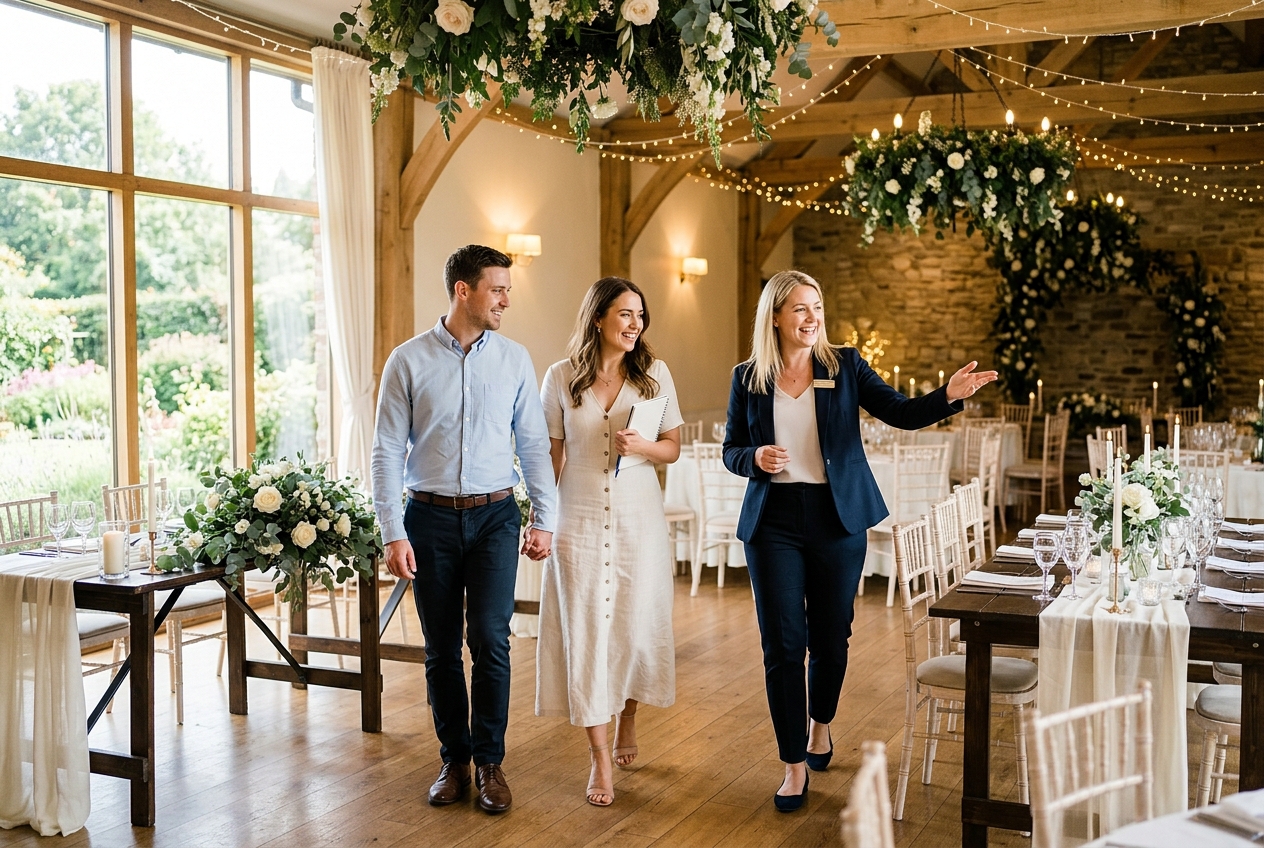
Before you assign a single person, confirm the physical layout with your venue. The layout defines the number of tables, the seating capacity per table, and the flow of the room.
Round tables
The standard choice for UK wedding receptions. Round tables allow all guests to see each other and have conversations across the table. A 6ft diameter round table seats 10 comfortably; a 5ft table seats 8.
Pros: natural conversation; easy to see the top table from all positions; flexible for different group sizes.
Cons: difficult to seat large family groups together (10 is the practical maximum). A mixed table of 10 strangers has less intimacy than 8 mutual friends.
Long trestle (banquet) tables
Pros: dramatic visual impact; accommodates large family groups along one run; creates a social atmosphere.
Cons: guests at opposite ends of a long table may not interact at all. Speeches are harder to deliver to a long-table room. Requires more space per guest than rounds.
Mixed layouts
A growing trend — a sweetheart or head table for the couple, plus mixed rounds and one or two long trestle tables for specific groups (full family groups, large friend clusters). Gives the room visual variety.
Table size guide
| Table type | Diameter/Length | Comfortable capacity |
|---|---|---|
| Round | 4ft (120cm) | 6 guests |
| Round | 5ft (150cm) | 8 guests |
| Round | 6ft (180cm) | 10 guests |
| Trestle | 6ft (180cm) | 6-8 guests (each side) |
| Trestle | 8ft (240cm) | 8-10 guests (each side) |
Do not overcrowd tables. WeddingsHub recommends leaving at least 2ft (60cm) of space between tables for service access and guest movement.
Step 2: Group your guests
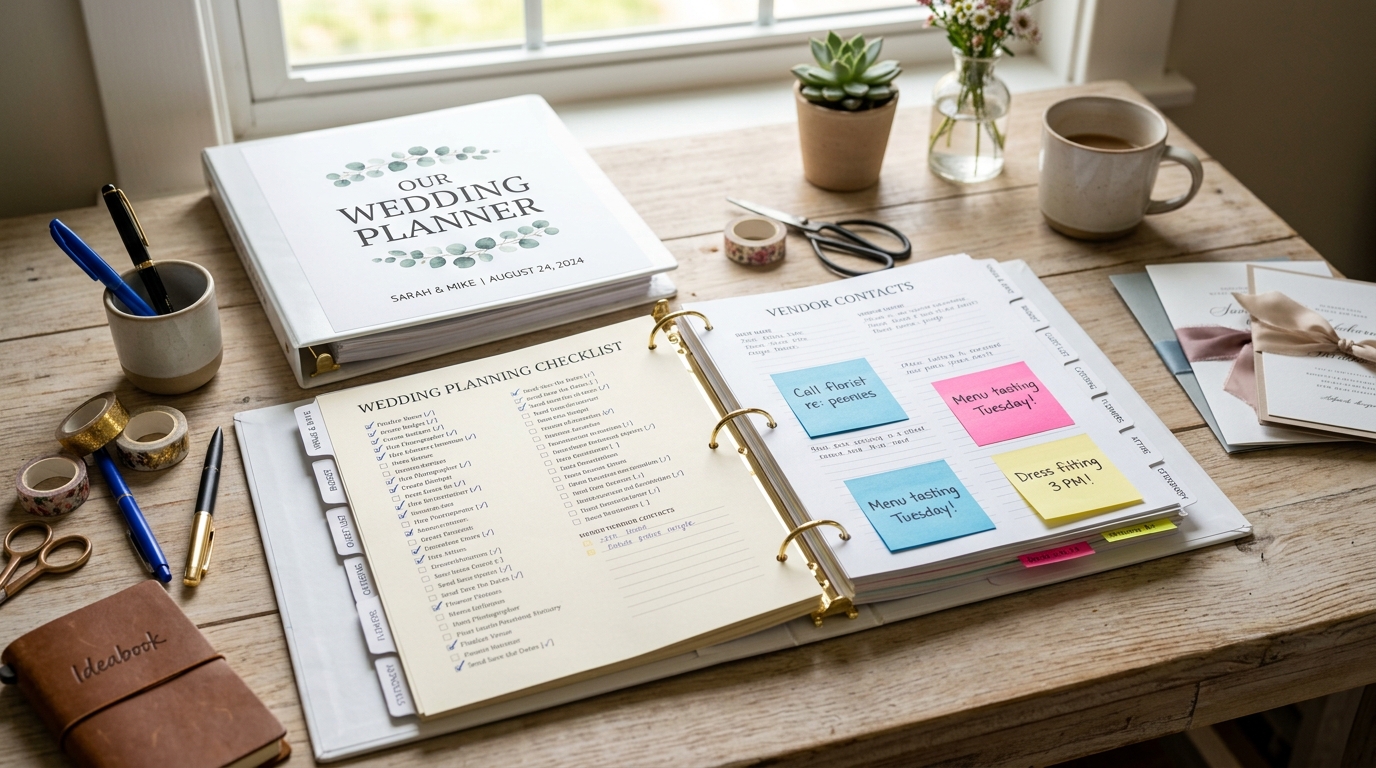
Before using any tool, map out your guests on paper or a simple spreadsheet. Group them:
- Family clusters: immediate family, extended family, in-law family
- Friend clusters: school friends, university friends, work friends, couple’s shared friends
- Mixed groups: guests who know both of you and can bridge different friend groups
- Solo attendees: guests coming alone — seat them with approachable, sociable groups
The goal is that every guest has at least 2-3 people at their table they already know or have something in common with.
Step 3: Handle the difficult dynamics
 This is where most of the stress comes from. Identify problem combinations early and plan around them.
Divorced or separated parents: never at the same table unless they have a genuinely civil relationship. Each parent should be at a table with their own family or close friends. Most guests will recognise and understand this without any explanation.
Feuding relatives or friends: give them tables far enough apart that they do not have to walk past each other repeatedly. Inform your venue coordinator discreetly.
Plus-ones who don’t know anyone: seat them next to their partner’s existing friendship group, with people who are sociable. Do not put all the plus-ones together.
Children: if you have children attending, seat them with their parents rather than at a separate children’s table — unless you have enough children (6+) and a dedicated children’s entertainer. A lone child at a table of adults is uncomfortable for everyone.
Ex-partners: seat on opposite sides of the room. If both are close to other guests, brief those guests discreetly. This rarely becomes an issue if the geometry is managed.
Step 4: Use a digital tool
Doing a seating plan on paper or in Excel works, but it takes 8-12 hours for a wedding of 80+ guests. Digital tools cut this to 1-2 hours.
The best UK-accessible tools in 2026:
AllSeated — the most feature-complete tool. Imports your guest list, lets you build the exact room layout, and drag-and-drop assigns guests to tables. Free for basic use. Best for weddings of 80+ guests.
Planning Pod — combines guest list management with seating. Good for couples who want one tool for multiple planning tasks.
AI Seating Chart tools — newer entrants that use logic rules (family relationships, conflicts, interests) to auto-suggest placements. AI seating chart tools UK reviews the 2026 options with honest assessments.
The WeddingsHub seating planner — basic but fast, available on WeddingsHub free of charge for couples with a listed wedding.
Alternatively: use a Google Slides or PowerPoint with table shapes, guest name text boxes, and colour coding. Manual but flexible for visual thinkers.
Step 5: The top table question
The traditional UK top table seats the couple in the centre, flanked by parents and best man or maid of honour. For many families, this works perfectly. For others — divorced parents, step-families, complex blended families — it creates a seating dilemma before you even start.
The three alternatives:
Family table: a round or rectangular table with both sets of parents, siblings, and the couple. Creates a family-centred feel without the formality of a linear top table.
No formal top table: the couple sits among their guests at their own table, no elevated position. Works particularly well for informal, festival-style, or intimate weddings.
Step 6: Design and display
 Once the plan is finalised, you need to present it to guests clearly. The table plan display is the first thing guests encounter after the drinks reception — it sets the tone.
Popular display formats in 2026:
Acrylic mirror plans: the most requested format. Printed or hand-lettered on a large mirror (typically 70x100cm or larger). Clean, photogenic, works in any venue. Cost: £80-£200 from a calligraphy or design supplier.
Large-format printed poster: a clean, graphic design printed at A1 or A0 size. Most print shops can turn this around in 24-48 hours. Cost: £15-£40 for the print; design cost varies (£30-£120 if designed by a stationer).
Escort card wall: individual cards (one per guest) arranged alphabetically or by table on a wall display. Allows guests to take their card to the table. Adds a tactile, personalised element. Cost: £60-£180 for design and printing.
Framed prints: two or three A3 frames side by side for medium-sized weddings (80-120 guests). Simple and affordable.
Digital screen: a tablet or monitor at the entrance displaying a rotating table plan. Works well for tech-forward venues. Requires a contact at the venue to manage and charge the device.
Position the display at the entrance to the dining room, not in the ceremony space. Guests should be able to consult it while others are still finishing their drinks, not in a bottleneck. For 120+ guests, consider two identical displays on either side of the entrance.
Step 7: Handle last-minute changes
Changes will happen. The question is how you manage them.
Build in flexibility: do not finalise the plan until 10-14 days before the wedding. RSVPs and cancellations continue until much closer than guests admit. Keep 3-5 spare seats spread across multiple tables — not grouped at one “spare” table.
Communicate changes to your coordinator: give your venue coordinator a printed copy of the final plan at least 48 hours before the wedding. Any changes after that point must go to them directly.
Have a printed backup copy: the display plan is beautiful but fragile. Have a plain printed copy in the coordinator’s folder. If the display falls over or gets splashed, the show continues.
On the day: the best man, maid of honour, or a nominated friend should be the first point of contact for confused guests. Brief them with a copy of the plan.
For more on managing difficult wedding family situations, what to do if parents refuse to come and can I refuse to invite my stepmother cover the edge cases.
The numbers: how long should the table plan take?
- Average time spent on the seating plan (without a digital tool): 9.5 hours
- Average time spent using a digital tool: 2.8 hours
- Couples who described the seating plan as “stressful”: 61%
- Couples who described it as “fine” after using a digital tool: 52%
The takeaway: use a tool. The time saving is real and the stress reduction is significant.
Related articles
- Wedding Seating Plan: UK Etiquette and Table Plan Templates
- AI Seating Chart Tools UK: Tested & Ranked 2026
- Wedding Table Decorations: 30 Ideas for Every Style
- Botanical Maximalism: The Anti-Minimalist Tablescape Trend
- Mixed-Pattern Table Linens: How to Clash Without Chaos
- The 12 Wedding Etiquette Rules Every UK Guest Gets Wrong
Frequently asked questions
How do I create a wedding table plan?
Start with your confirmed guest count and table sizes. Group guests into clusters (families, friendship groups, work colleagues) and assign each cluster to a table. Aim for tables of 8-10 for rounds, or 12-14 for long trestles. Use a digital tool like AllSeated or Seating Arrangement AI to drag-and-drop and test different configurations. Finalise 10-14 days before the wedding.
How many guests per table at a wedding?
Round tables typically seat 8-10 guests. Long trestle tables seat 12-14. The capacity depends on table diameter or length — 5ft round tables seat 8; 6ft round tables seat 10; 8ft trestle tables seat 10-14. Leave some flexibility: a table of 7 is better than 9 people crammed at a table designed for 8.
Should I assign specific seats or just tables?
Assigning guests to tables (not specific seats) is now the standard UK approach. Table assignment removes the logistics of seat numbering while still ensuring friendship groups sit together and potential conflicts are separated. Only assign specific seats if you have a complex family dynamic that requires it, or if the venue has a specific seating format.
How do I display the wedding table plan?
Popular UK table plan displays in 2026: acrylic mirror plans (most requested), large format prints on easels, bespoke calligraphy boards, escort card walls, and digital screens. A display measuring at least 60x90cm is needed for 60+ guests. Place the display at the entrance to the dining room so guests can find their table before being seated.
What do I do if guests cancel last minute?
Do not fill the gap at their table with a random reassignment — an empty seat is less disruptive than moving someone at the last minute. Keep 3-5 spare seats across multiple tables. If a whole table group cancels, consolidate the remaining guests and notify the venue coordinator at least 48 hours before.
Should I have a top table at my UK wedding?
The top table is optional. 67% of UK couples in 2026 are choosing alternatives: a sweetheart table for just the couple, a family table that includes both sets of parents and siblings, or no top table at all (with the couple seated among their guests). The main reason to keep a top table is if key family members would feel slighted not to be on it.
What is the correct seating etiquette for divorced or separated parents?
Divorced or separated parents should not sit at the same table unless they have a civil relationship. A family table with two hostile parents creates tension for everyone nearby. The simplest solution: put each parent at a separate table with their own family members or close friends. This is common enough that most guests will understand the arrangement immediately.