What Happens If Someone Objects at a UK Wedding?
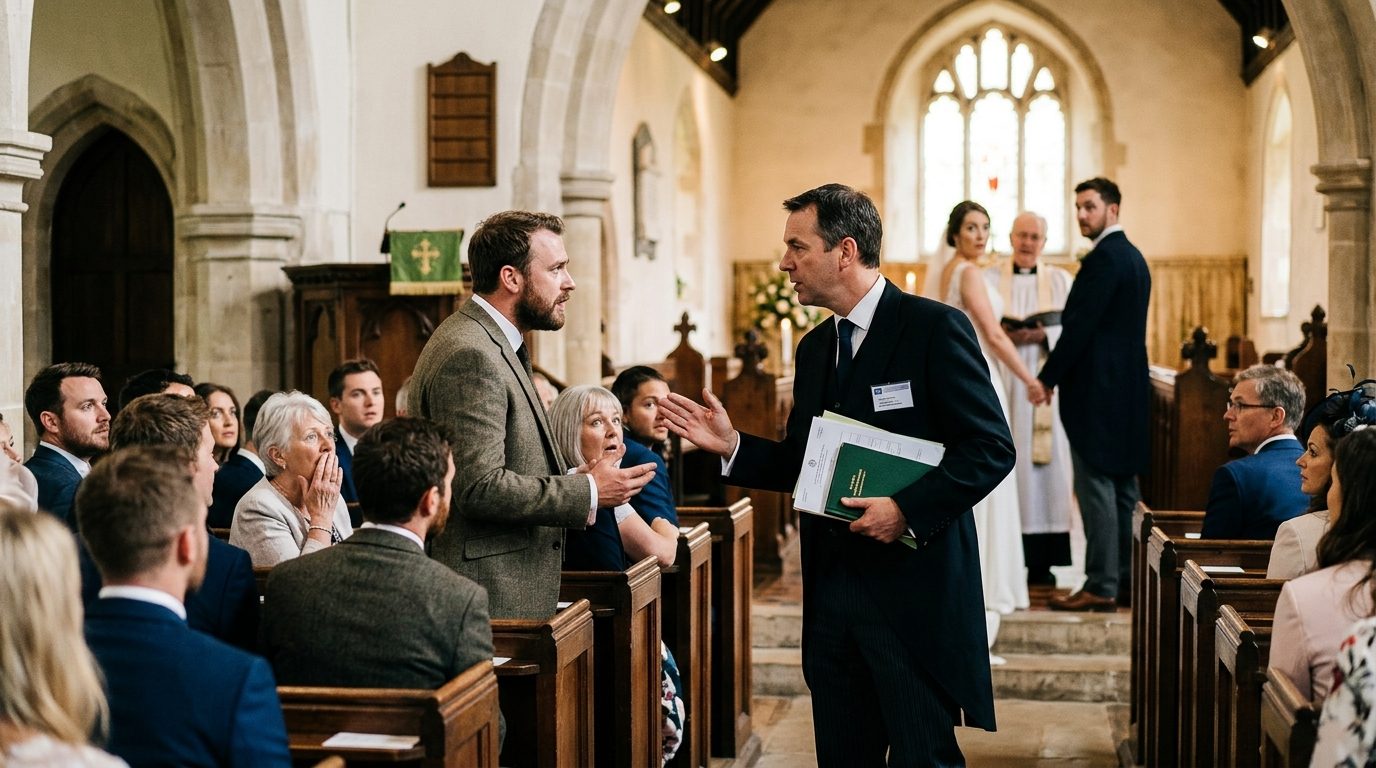
A romantic or personal objection cannot stop a lawful wedding in England and Wales. An objection matters when it points to a legal impediment, lack of capacity or absence of free consent. A registrar or authorised person should pause to examine a genuine concern, and the marriage must wait if legality cannot be confirmed.
Key Takeaways
- A personal or romantic objection does not create a legal barrier to marriage
- Official guidance lists being under 18, an existing marriage or civil partnership and prohibited relationships as legal impediments
- A concern about capacity, coercion or a forced marriage must also be taken seriously
- Most checks happen when the couple gives notice, before the wedding day
- Anyone with a genuine concern should contact the register office or relevant safeguarding service as early as possible
The film version of a wedding objection is about unrequited love. The legal version is much narrower.
In England and Wales, an objection matters only when it identifies a genuine legal barrier to the marriage.
This article gives general information, not legal advice. Scotland and Northern Ireland have separate marriage systems.
What counts as a legal impediment?
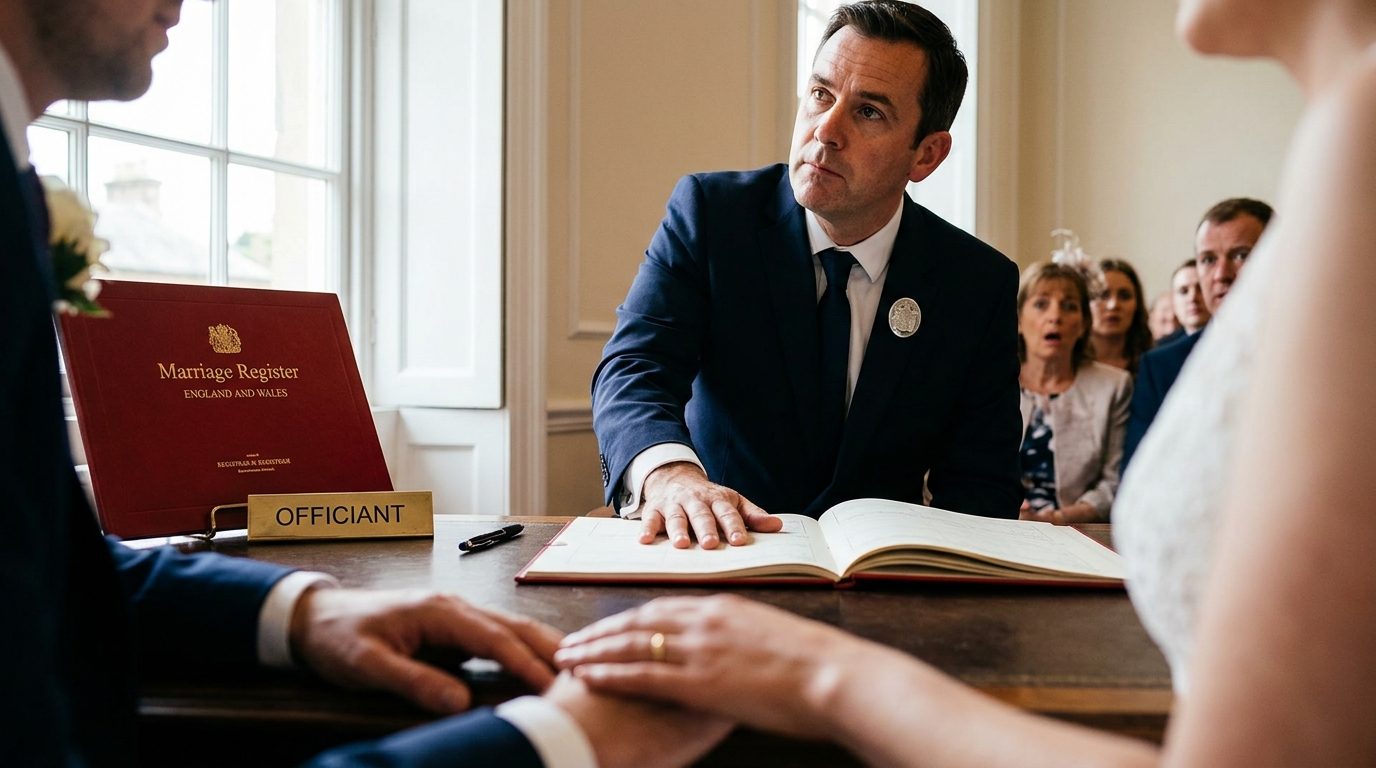
The General Register Office guide for authorised persons lists three clear legal impediments:
- either person is under 18
- either person is already married or in a civil partnership
- the couple is within a prohibited degree of relationship
GOV.UK gives the same basic eligibility test. Both people must be adults, free to marry and not closely related.
Free consent and mental capacity also matter. An official must not ignore a concern that someone is being forced to marry or cannot understand the decision.
What does not count?
These statements do not create a legal impediment:
- “I am in love with one of them”
- “The family does not approve”
- “They are making a mistake”
- “One of them was unfaithful”
- “They promised to marry me instead”
They may cause distress or disruption, but they do not change the couple’s legal eligibility.
What happens during the ceremony?
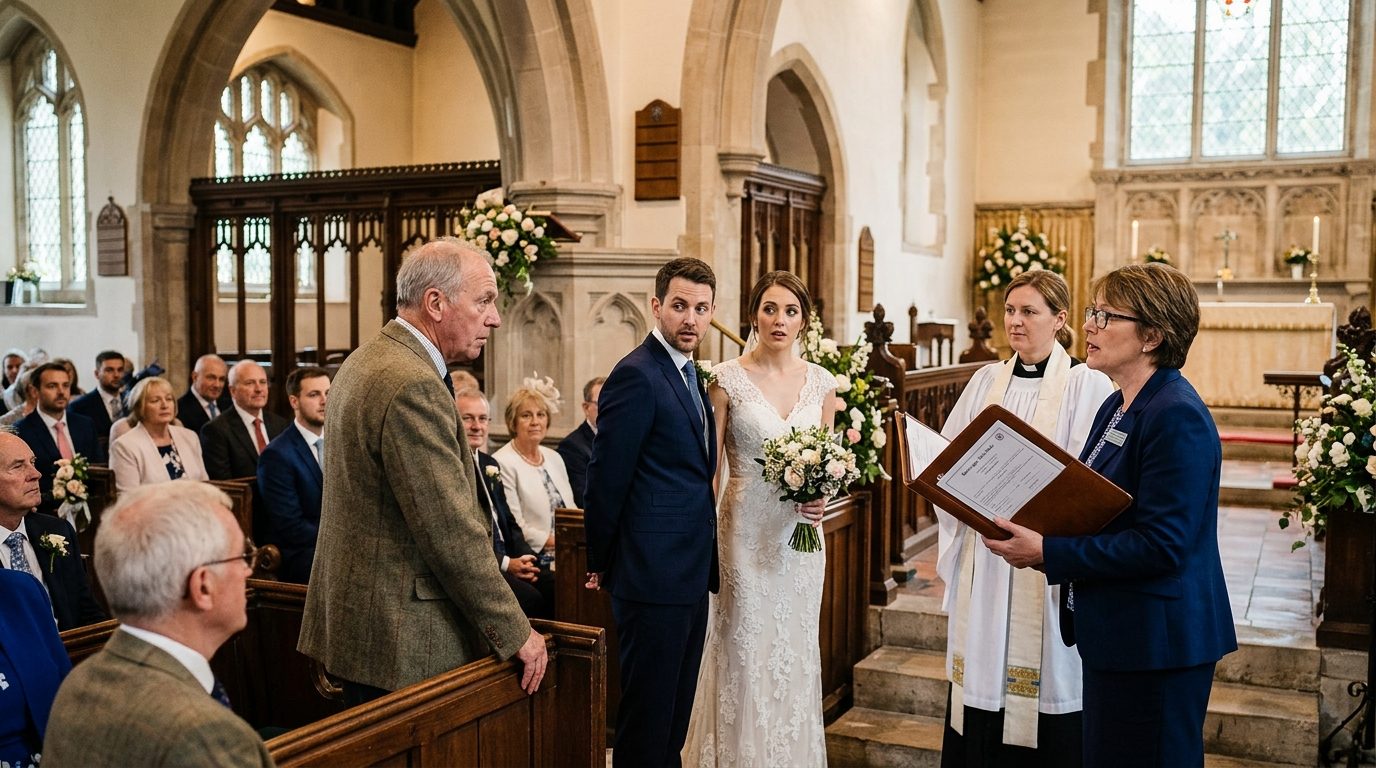
If someone raises a specific legal concern, the responsible official should stop and establish what is being alleged.
They cannot treat a possible existing marriage, prohibited relationship or lack of consent as a joke.
The next step depends on the claim and the ceremony. The official may speak to the objector and the couple separately.
They can check available documents and contact another relevant authority.
If the concern cannot be resolved, the marriage should not proceed until the legal position is clear. That may mean the ceremony is postponed.
A groundless romantic interruption can be dealt with as disruption. Venue staff may ask the person to leave. Threatening conduct is a separate matter and can require police assistance.
| What is raised | Is it a legal impediment? | Likely response |
|---|---|---|
| A former partner still has feelings | No | Treat it as disruption, not a legal objection |
| One person may already be married | Potentially | Pause and check the legal position |
| One person is being forced | Serious safeguarding concern | Stop and involve the relevant authorities |
| A family member disapproves | No | It does not change the couple’s eligibility |
Why most problems are found earlier
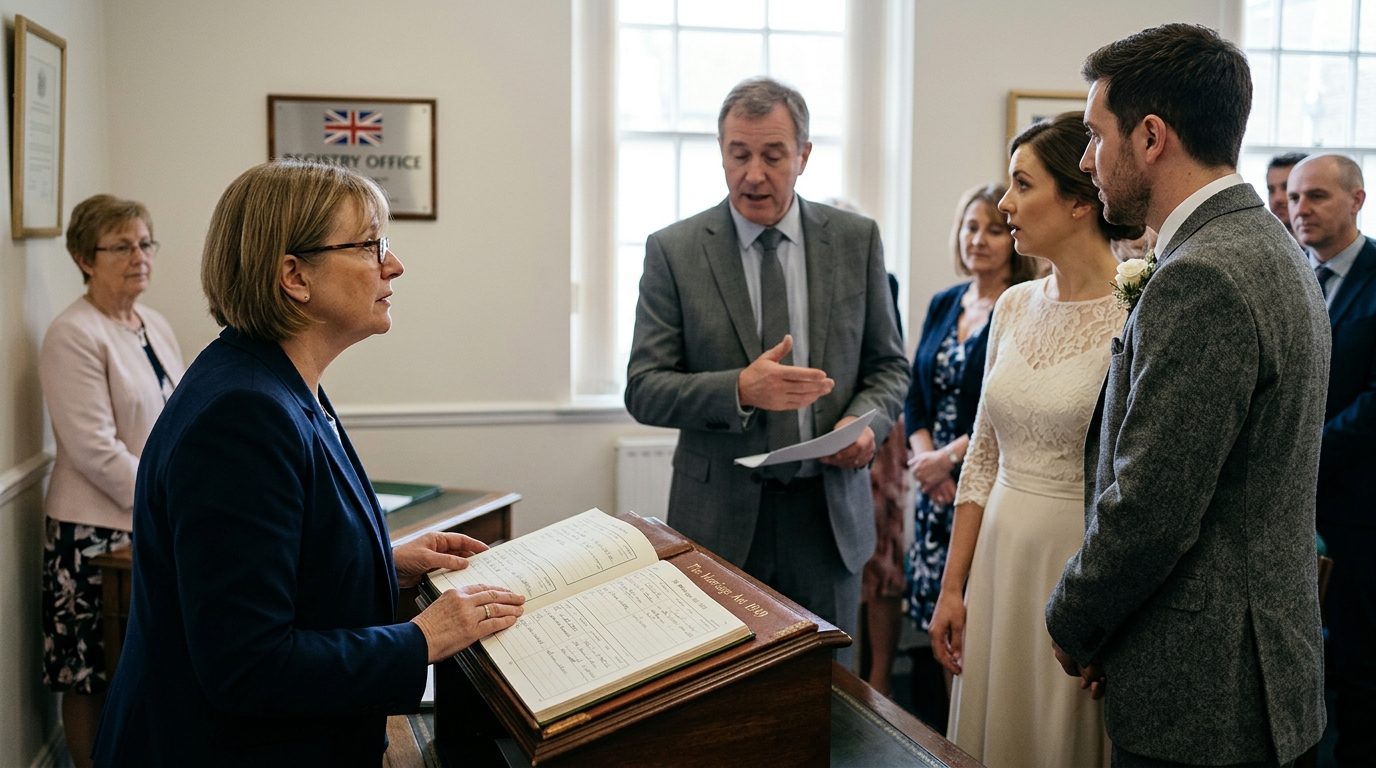 For most civil marriages, both partners give notice before the ceremony. GOV.UK says notice must usually be given at least 29 days beforehand.
The process records identity, nationality, marital status and the intended venue. Registrars can ask for divorce documents, death certificates or immigration evidence where relevant. These checks make a surprise, ceremony-day discovery less likely.
Church preliminaries, such as banns or a common licence, serve a related purpose. The exact route depends on the church and the couple’s circumstances.
Is “speak now” required?
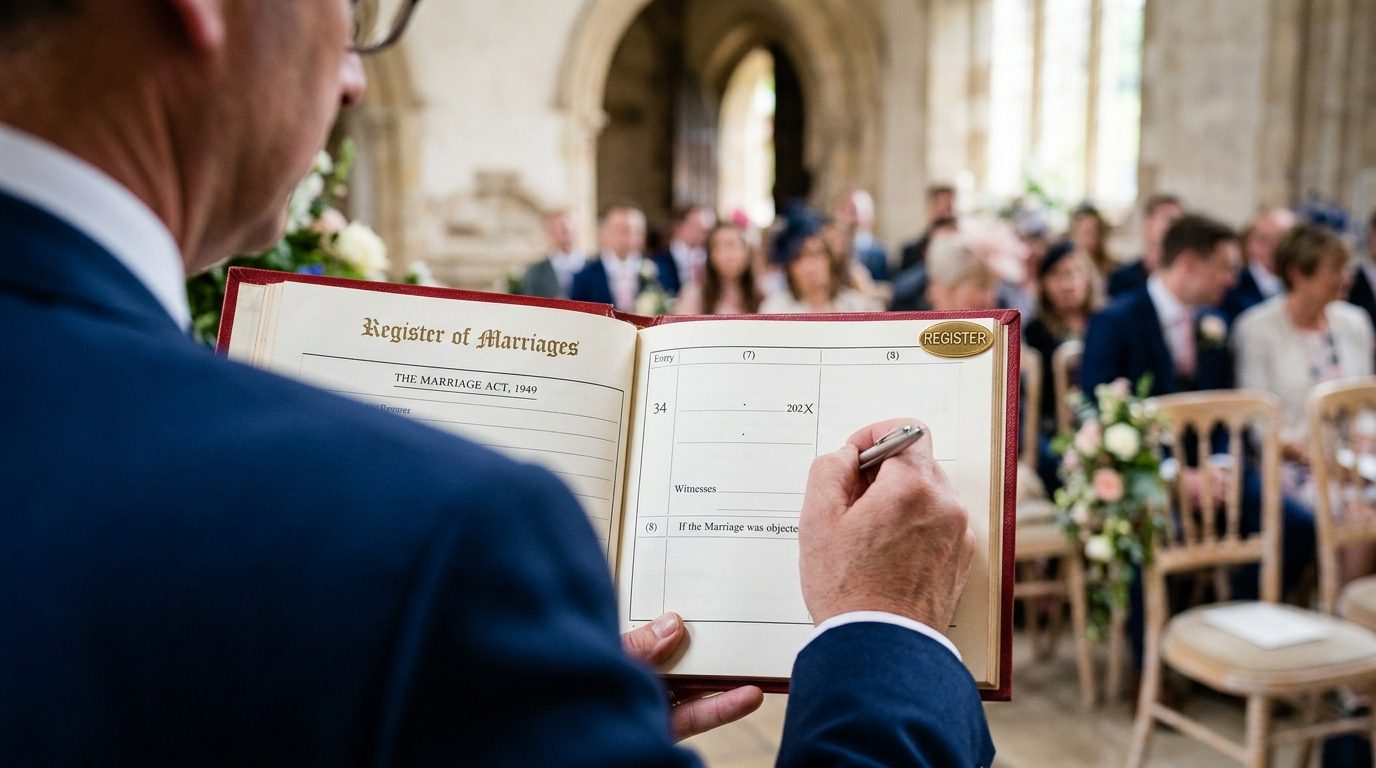
No universal rule requires a civil registrar to use the dramatic phrase “speak now or forever hold your peace”. Civil ceremonies follow legal declarations and locally approved scripts.
Marriage Act wording includes a declaration by each partner that they know of no lawful impediment. That is a statement from the couple, not an invitation for guests to express an opinion.
If you have a genuine concern
Do not save it for the wedding day.
- Contact the register office responsible for the ceremony.
- Give facts and documents, not rumours.
- If someone is in immediate danger, call 999.
- For a possible forced marriage, contact the Forced Marriage Unit.
- If the issue is legal capacity, seek specialist legal advice promptly.
Forced marriage is illegal. GOV.UK explains that physical pressure, threats and emotional or psychological pressure can all be relevant.
If you simply disapprove
Raise personal concerns privately and well before the event, if it is appropriate to do so. Interrupting a ceremony is unlikely to help the couple and may permanently damage relationships.
The legal question is whether the couple can marry. The personal question is whether you support the decision. They are not the same.
Sources
We opened these pages when checking the guide. Prices and rules can change, so follow the link before booking.
- GOV.UK: marriage eligibility — The basic legal eligibility test for England and Wales. Checked 3 September 2026
- General Register Office: guide for authorised persons — Official operational guidance on legal impediments and ceremony responsibilities. Checked 3 September 2026
- GOV.UK: Forced Marriage Unit — Current help and emergency routes for possible forced marriage. Checked 3 September 2026
- Marriage Act 1949 — Primary legislation for marriage procedure in England and Wales. Checked 3 September 2026
- Law Commission: weddings law project — Background on proposed reform; proposals are not described as current law. Checked 3 September 2026
Keep planning
Frequently asked questions
Can someone stop a wedding because they love the bride or groom?
No. Personal feelings, family disapproval and a former relationship are not legal impediments to marriage.
What legal grounds could stop a marriage?
Only a legal impediment can stop it. Examples include being under 18, an existing marriage, a prohibited relationship or missing consent.
What happens if someone raises a genuine legal concern?
The registrar, authorised person or minister should pause and check it. The ceremony cannot proceed until they are satisfied that it is lawful.
Do civil ceremonies use the phrase speak now or forever hold your peace?
It is not a required standard phrase. Civil ceremonies use approved legal wording and local ceremony scripts.
What should I do if I suspect a forced marriage?
Do not wait for the ceremony. Contact the Forced Marriage Unit, police in an emergency or the relevant register office.